
Trump Declares Himself ‘Acting President of Venezuela’ on Truth Social After Maduro Arrest
President’s controversial social media post escalates US involvement in Venezuela following military operation that captured Nicolás Maduro
Published: January 12, 2026
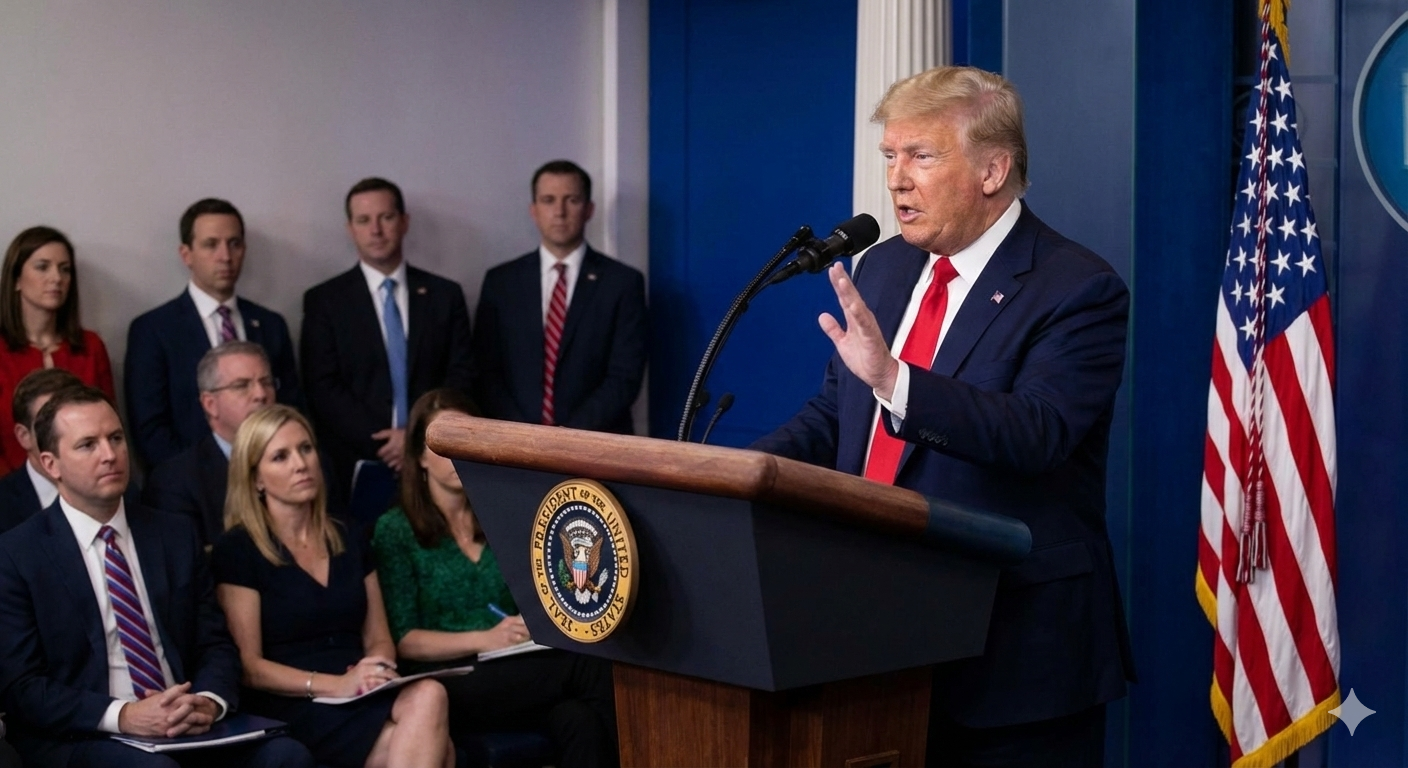
President Donald Trump ignited a firestorm of controversy Sunday night after posting an image to Truth Social showing himself as Venezuela’s “Acting President,” intensifying scrutiny over America’s military intervention in the South American nation.
The post, which quickly amassed more than 24,000 likes, displayed Trump’s official White House portrait with the caption “Acting President of Venezuela, Incumbent January 2026” — a bold declaration that has lawmakers, foreign policy experts, and international leaders questioning the administration’s true intentions in Latin America.
Military Operation Captures Maduro in Overnight Raid
The provocative social media post follows a dramatic US special forces operation on January 3 that successfully captured Venezuelan strongman Nicolás Maduro and his wife from their fortified compound in Caracas. The duo was immediately transported to the United States to face federal narco-terrorism charges in a New York courtroom.
Trump’s self-proclaimed Venezuelan leadership isn’t merely online bluster. In an exclusive interview with The New York Times, the president acknowledged that while Venezuela’s interim government is “giving us everything that we feel is necessary,” he stopped short of committing to a timeline for withdrawing American oversight, stating “only time will tell.”

US Eyes Venezuela’s Oil Reserves Worth Billions
The Trump administration has made Venezuela’s massive oil sector a central focus of its intervention strategy. Trump revealed that Venezuelan interim authorities have agreed to transfer between 30 and 50 million barrels of “high-quality, sanctioned oil” to the United States for sale at market rates — a deal valued at approximately $4.2 billion.
Venezuela possesses the world’s largest proven crude oil reserves, making it an attractive target for American energy interests despite years of economic sanctions and infrastructure decay under Maduro’s authoritarian regime.
Power Vacuum: Who’s Really in Charge in Caracas?
Following Maduro’s capture, Vice President Delcy Rodríguez was sworn in as interim president. However, her authority appears severely constrained as Trump has repeatedly insisted the US will “run” Venezuela throughout what he describes as an extended “transition period.”
Rodríguez has publicly resisted claims of American control, declaring that “the Venezuelan people govern here” and emphasizing her “responsibility to lead the country” during Maduro’s detention. Despite this defiance, the Venezuelan government has quietly initiated diplomatic discussions with Washington aimed at restoring official relations between the two nations.
Big Oil Divided on Venezuela Investment Opportunities
Trump has aggressively courted American energy executives, hosting White House meetings with leadership from Chevron, ExxonMobil, ConocoPhillips, and other petroleum giants. But the industry response has been lukewarm at best.
The president expressed frustration after ExxonMobil CEO labeled Venezuela “uninvestable,” even threatening to block the company from entering the Venezuelan market if it doesn’t reverse course. The reluctance stems from concerns about political instability, crumbling infrastructure, and potential legal complications.
International Community Condemns Military Intervention
The operation to remove Maduro has drawn sharp criticism from major world powers including China, Russia, Colombia, and Spain, all of which characterized the raid as a flagrant violation of international law. Critics warn the military action establishes a dangerous precedent for unilateral American foreign policy.
The Trump administration has defended its actions as a legitimate law enforcement operation targeting an indicted criminal. Deputy Attorney General Todd Blanche told NBC News that “the United States has an absolute legal right to go and arrest people charged with horrible crimes.”
Former Trump national security advisor John Bolton told Newsweek the current approach “marks a 180-degree turn from the policy in the first Trump term,” which prioritized supporting Venezuelan opposition forces rather than direct military intervention.
Elections Delayed Indefinitely as US Maintains Control
Trump has indicated that democratic elections will eventually occur in Venezuela, but only after the United States “rebuilds the oil and oil infrastructure” — a process that could take years according to administration officials.
Venezuelan opposition leader María Corina Machado, who claims to have won the country’s legitimate mandate, stated she is “ready and willing to serve our people.” However, her political future depends entirely on negotiations with the Trump administration.
The situation remains in flux as diplomatic channels between Washington and Caracas slowly reopen. State Department officials have begun preliminary assessments for reopening the US Embassy in Venezuela, which shuttered in 2019 during Trump’s first presidency.
Another News :
Social Connect

