

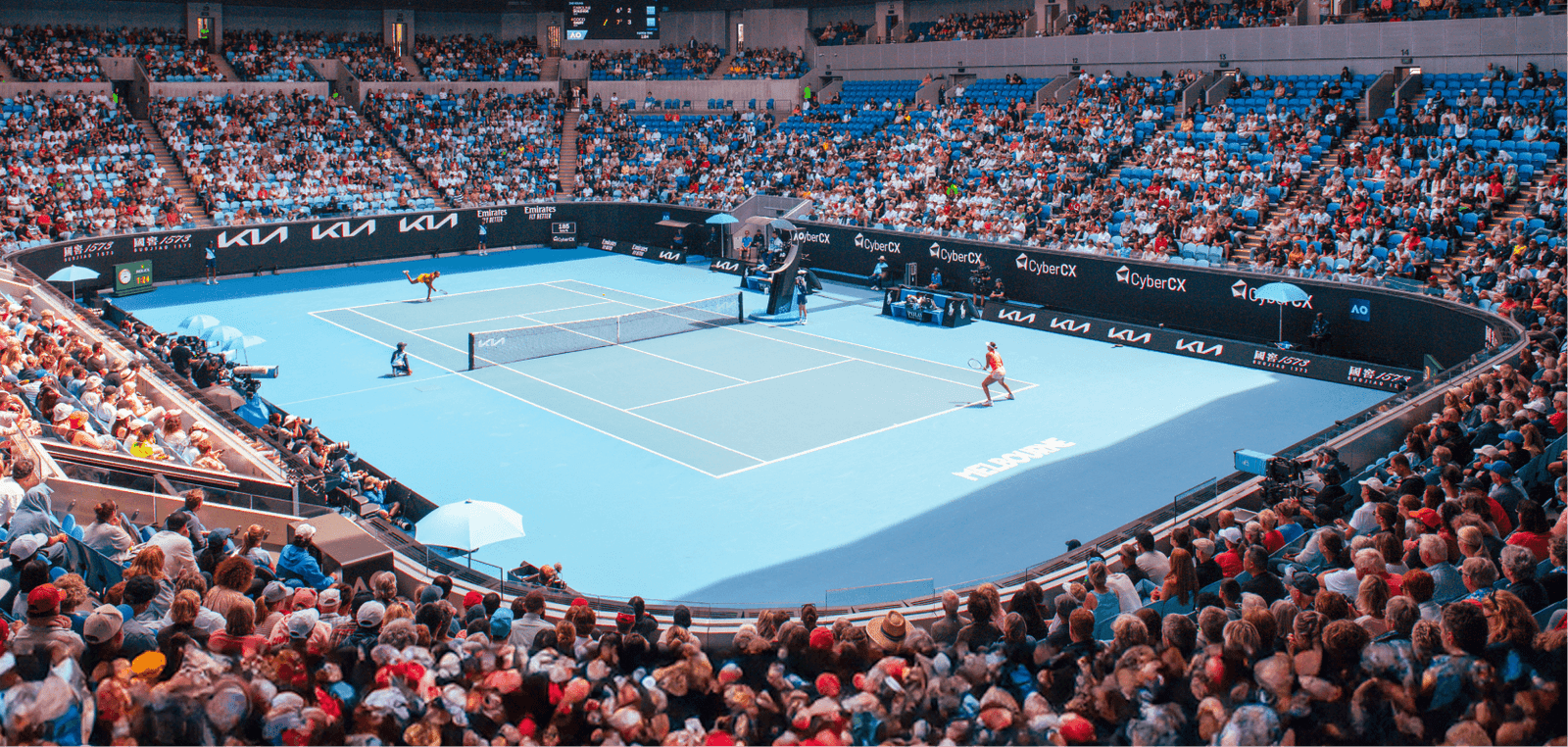
Melbourne Masterclass: Alcaraz and Rybakina Reach New Heights
MELBOURNE — The 2026 Australian Open concluded this weekend at Melbourne Park, leaving the tennis world in awe of the sheer elite athletic performance displayed on the blue hard courts of Rod Laver Arena. In two finals that will be studied for years by sports scientists and fans alike, Carlos Alcaraz completed a historic career Grand Slam, while Elena Rybakina reclaimed her status as a major champion.
Alcaraz Defies Age
On Sunday night, world number one Carlos Alcaraz cemented his legacy as a generational talent. Facing 10-time champion Novak Djokovic, the 22-year-old Spaniard showcased elite athletic performance to overcome a slow start and secure a 2-6, 6-2, 6-3, 7-5 victory.
The match began with Djokovic looking invincible, taking the first set in just 33 minutes. However, Alcaraz responded with a level of agility that even the legendary Serb struggled to match. The Spaniard’s ability to transition from defense to offense, sliding across the baseline with feline speed, forced Djokovic into uncharacteristic errors. By winning his seventh major title, Alcaraz became the youngest man in history to complete the career Grand Slam—a feat made possible by his sustained elite athletic performance over a grueling fortnight.
Rybakina’s Calm Intensity
The women’s final on Saturday was a masterclass in power and composure. Elena Rybakina, the 2022 Wimbledon champion, faced world number one and two-time defending champion Aryna Sabalenka. In a rematch of their 2023 final, Rybakina flipped the script, utilizing her signature elite athletic performance to win 6-4, 4-6, 6-4.
Rybakina’s serve, often clocked at over 190 km/h, was the cornerstone of her game. Even when Sabalenka surged to a 3-0 lead in the deciding third set, Rybakina remained unflappable. Her comeback was fueled by clinical ball-striking and a level of physical conditioning that allowed her to break Sabalenka twice in a row to seal her second Grand Slam trophy. For Rybakina, this victory was a testament to quiet achievers, proving that elite athletic performance doesn’t always require a loud celebration.
The Physical Toll of the Hard Courts
Modern tennis has reached a point where tactical brilliance must be backed by high-level stamina. Throughout the tournament, the average rally length increased by 12% compared to the previous year, placing a premium on cardiovascular endurance.
Alcaraz’s path to the title included a five-hour semi-final against Alexander Zverev, a match that pushed the boundaries of elite athletic performance. Likewise, Sabalenka and Rybakina’s final was an exhibition of “heavyweight” tennis, where every groundstroke was a display of technical precision. The 2026 tournament proved that to win in Melbourne, a player’s elite athletic performance must be flawless from the first point to the last.
Breaking Records and Prize Money
The 2026 edition also set a new standard for the sport’s commercial growth. With a record-breaking prize pool of AUD 111.5 million, the champions each took home AUD 4.15 million. This financial reward reflects the global value placed on the elite athletic performance required to navigate a 128-player draw.
Tennis Australia CEO Craig Tiley noted that the investment in player welfare was designed to help athletes maintain their physical peak throughout the demanding Australian summer. This support was evident in the quality of the matches, as players arrived in Melbourne in peak condition, ready to deliver elite athletic performance under the scorching sun.
A Blueprint for the Future
As the tour moves toward the clay-court season, the standard set in Melbourne will be the benchmark for the rest of 2026. The evolution of training regimens suggests that we are entering a new era of professional sport.
Young stars like Alcaraz are no longer just “talented”; they are high-performance machines built for the rigors of five-set tennis. Similarly, the depth in the WTA tour means that elite athletic performance is now required in every round, not just the finals. Rybakina’s victory proves that the “Big Three” era of women’s tennis is firmly established.
Conclusion: A Fortnight to Remember
The 2026 Australian Open will be remembered for the records broken and the memories made. From Alcaraz’s tears of joy to Rybakina’s stoic ace to win the championship, every moment was a celebration of elite athletic performance.
As fans depart Melbourne Park, the consensus is clear: the bar for professional standards has been raised. Whether it is the speed of a serve or the mental fortitude to save a break point, elite athletic performance remains the heartbeat of professional tennis.
Also read this:-
Unprecedented Artistic Activism: The 2026 Grammy Awards Shift
Social Connect:

