

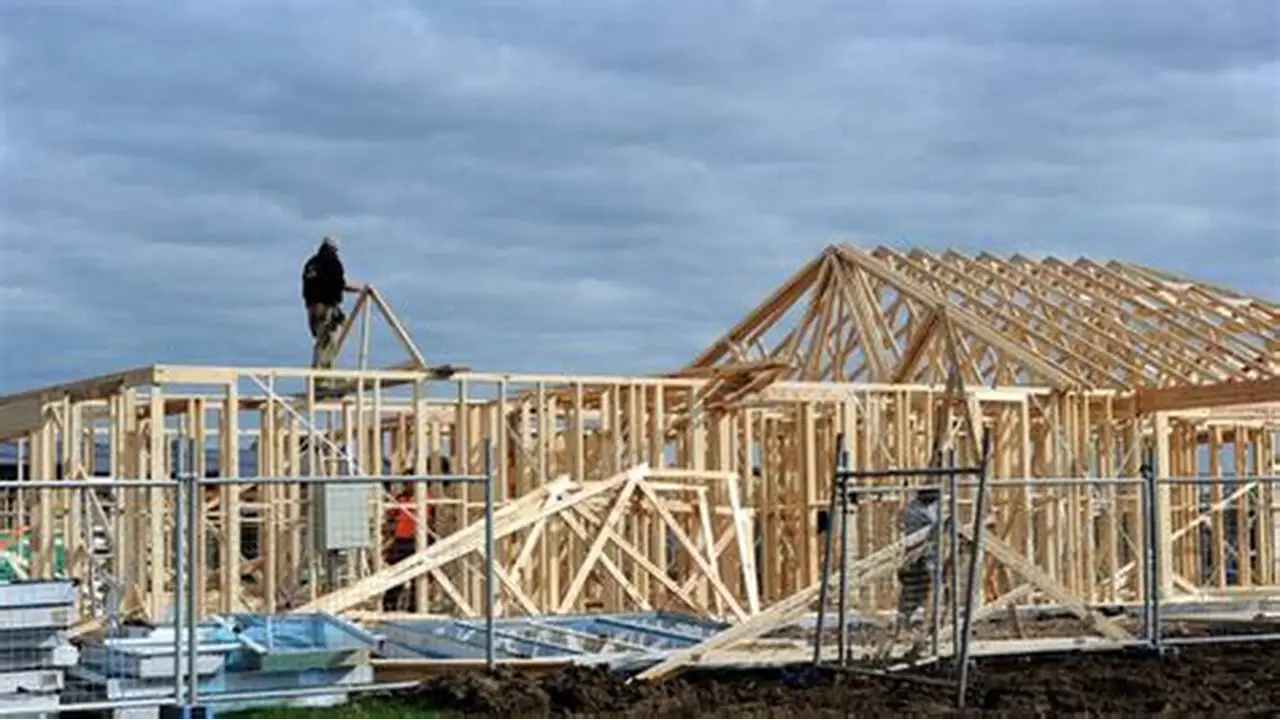
Trump Homes: US Builders Propose 1 Million Units to Solve Housing Crisis
WASHINGTON, D.C. – In a bold move to align with the White House’s economic agenda, a coalition of the nation’s largest construction firms is pitching a massive initiative to develop up to 1 million “Trump Homes.” This ambitious proposal, spearheaded by industry giants like Lennar and Taylor Morrison, aims to tackle the chronic American housing affordability crisis by introducing a new category of entry-level, “pathway-to-ownership” properties.
The concept of “Trump Homes” emerged this week as a strategic response to President Trump’s recent calls for builders to “restore the American Dream.” By branding the project with the President’s name, industry leaders are seeking to secure federal backing, regulatory relief, and private investor interest for a project estimated to be worth over $250 billion.
The Blueprint: How “Trump Homes” Would Work
Unlike traditional residential developments, the “Trump Homes” initiative is built on a unique rent-to-own model designed specifically for first-time buyers who have been sidelined by high interest rates and stagnant inventory.
Under the current proposal:
-
Private Funding: The construction would be financed by private investors rather than direct government spending, shielding the federal deficit.
-
The Three-Year Pathway: Tenants would move into a newly built “Trump Home” and pay monthly rent for a period of three years.
-
Equity Conversion: A portion of those monthly rental payments would be credited toward a down payment, allowing the tenant to transition into a homeowner at the end of the term.
“The goal is to move beyond the ‘nation of renters’ model,” a source close to the negotiations stated. “By creating a dedicated inventory of ‘Trump Homes,’ we are essentially building a bridge for young families who currently lack the capital for a traditional 20% down payment.”
Market Impact: A Surge for Homebuilders
The announcement of the “Trump Homes” plan has already sent ripples through Wall Street. Shares of Lennar (LEN) and Taylor Morrison (TMHC) saw immediate gains as investors weighed the potential for a government-sanctioned building boom.
Analysts suggest that if the administration adopts the “Trump Homes” branding as an official policy, it could lead to:
-
Fast-Tracked Permitting: Easing of local zoning laws and environmental regulations that typically delay construction by years.
-
Federal Land Access: The potential use of underutilized federal lands for high-density, entry-level housing tracts.
-
Standardized Design: Lowering costs through modular and “template” construction techniques to ensure that every “Trump Home” remains affordable.
Addressing the 4 Million Home Shortage
The U.S. currently faces a housing supply deficit estimated by Goldman Sachs at between 3 to 4 million units. While the proposed 1 million “Trump Homes” would not solve the crisis entirely, it represents the largest single supply-side intervention in modern history.
The White House has remained cautious but “encouraged” by the discussions. This follows the President’s January executive order banning large institutional investors from purchasing single-family homes, a move intended to clear the field for individual families. The “Trump Homes” project would serve as the supply-side counterpart to that demand-side restriction.
Challenges and Skepticism
Despite the optimism, the “Trump Homes” initiative faces significant hurdles. Critics argue that rent-to-own schemes can be risky for consumers if property values fluctuate during the three-year rental period. Additionally, economist Peter Schiff noted that true affordability can only be achieved by lowering home prices, whereas a massive injection of new demand via federal incentives might actually keep prices elevated for existing owners.
Furthermore, the President’s recent rhetoric has shifted between wanting to lower costs for buyers and wanting to keep existing homeowners “wealthy and happy” by maintaining high property values. Whether the “Trump Homes” program can balance these conflicting goals remains to be seen.
Trump Homes: Identifying the First-Wave Cities for the Million-Unit Expansion
The proposal for 1 million “Trump Homes” is strategically designed to bypass the traditional “not-in-my-backyard” (NIMBY) roadblocks that have historically stifled urban construction. While the plan is still in its formative stages, industry analysts and urban planners have identified several regions where the necessary alignment of land availability, builder dominance, and political support will likely trigger the first wave of developments.
Based on current land pipelines from firms like Lennar and Taylor Morrison, the following areas are the top contenders for “Trump Homes” pilot programs:
Top 5 Candidate Regions for “Trump Homes”
| Region | Primary Advantage | Builder Presence |
| Phoenix-Mesa, AZ | High availability of undeveloped desert tracts. | Lennar / D.R. Horton |
| Dallas-Fort Worth, TX | Business-friendly zoning and rapid population growth. | Taylor Morrison |
| Orlando-Tampa, FL | High demand for entry-level “retirement and family” starts. | Lennar |
| The Inland Empire, CA | Relieves pressure from coastal pricing via modular builds. | KB Home |
| Charlotte, NC | Expanding tech hub with critical “missing middle” housing gaps. | PulteGroup |
Why These Cities? The “Path of Least Resistance”
The selection of these cities for the initial “Trump Homes” rollout is not accidental. Builders are prioritizing regions where state governments have already shown a willingness to simplify permitting.
-
Texas and Arizona: These states have the most expansive portfolios of “build-ready” land. Because the “Trump Homes” model relies on high-velocity construction to remain profitable, the flat topography and streamlined local regulations in these states make them ideal testing grounds.
-
Florida’s “Sun-Belt” Boom: With the administration’s focus on veterans and young families, Florida represents a massive market. Builders are looking to leverage the “Trump Homes” brand to unlock state-level subsidies that are currently tied up in bureaucratic red tape.
The Federal Land Wildcard
A key component of the discussions between builders and the White House involves the use of federal land transfers. Under the proposed “Homes for People” initiative, the administration could designate underutilized federal parcels in Nevada and Utah for residential use. If this occurs, we could see the emergence of entire new municipalities composed exclusively of “Trump Homes.”
“If we can secure federal land at a reduced cost, the ‘entry-level’ price point for a “Trump Home” becomes a reality rather than a slogan,” says a lead consultant for the builder coalition. “It allows us to build in areas where private land costs would normally force us to build luxury units.”
Impact on Local Markets
For existing residents in these cities, the arrival of “Trump Homes” is a double-edged sword. While it promises to solve the affordability crisis for first-time buyers, some local economists warn that a massive influx of 1 million homes could suppress property value growth for current owners. However, the administration has countered this by stating that the project focuses on “newly unlocked” land, minimizing the impact on established neighborhoods.
Also Read this:
Trump Strikes U.S.-India Trade Deal, Slashing Tariffs From 50% To 18% — But Key Details Remain Murky
Social Connect:

