

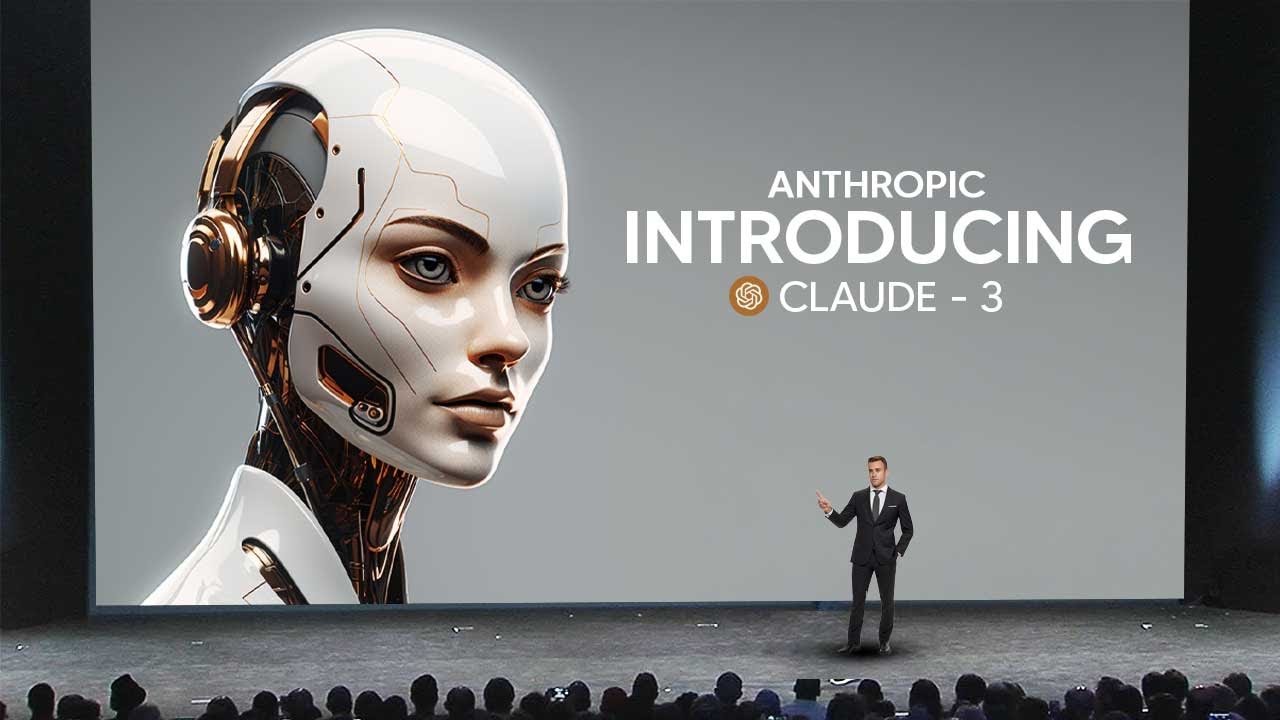
Claude Cowork: How Anthropic’s New AI Tool Sparked a $300 Billion “SaaSpocalypse”
SAN FRANCISCO – The global technology sector has been plunged into a state of high-alert following the launch of a new agentic platform that many are calling an existential threat to the software industry. Claude Cowork, the latest innovation from the US-based startup Anthropic, has triggered a massive sell-off across international markets, wiping out an estimated $285 billion to $300 billion in market capitalization in a single trading session.
The chaos, dubbed by Wall Street analysts as the “SaaSpocalypse,” reflects a fundamental shift in investor sentiment. While AI was previously seen as a supportive tool for existing software-as-a-service (SaaS) companies, the autonomous capabilities of Claude Cowork have convinced the market that AI is no longer just a helper—it is now a direct competitor.
The Trigger: What is Claude Cowork?
Launched in late January 2026, Claude Cowork is an “agentic” AI work platform designed to move beyond simple chat-based interactions. Unlike traditional AI assistants that merely suggest ideas or draft text, Claude Cowork can autonomously plan, execute, and review multi-step tasks directly on a user’s computer.
The panic reached a fever pitch this Wednesday when Anthropic released a suite of 11 specialized plugins for Claude Cowork. These plugins allow the AI to perform complex functions that were previously the exclusive domain of expensive enterprise software and human professional services:
-
The Legal Plugin: Capable of document review, contract analysis, and compliance tracking.
-
The Finance Plugin: Handles payroll calculations, stock market analysis, and tax preparation.
-
The Data Plugin: Automates deep-dive analytics and visualization without needing external BI tools.
“With Claude Cowork, you don’t just get an assistant; you get a digital employee,” an Anthropic spokesperson stated. “It doesn’t just show you how to do the work—it gets the work done.”
Market Carnage: Winners and Losers
The release of Claude Cowork hit traditional software giants and IT services firms with brutal efficiency. Investors are increasingly worried that if a single AI subscription can perform the tasks of ten different software platforms, the “per-seat” licensing model used by companies like Salesforce and SAP is essentially dead.
Global Impact Table: February 4-5, 2026
| Company/Index | Daily Loss | Market Context |
| Thomson Reuters | -18.2% | Heavily hit by the Claude Cowork Legal Plugin. |
| Salesforce | -7.1% | Concerns over AI agents bypassing CRM interfaces. |
| Infosys (ADR) | -5.6% | Fears of AI replacing headcount-based IT services. |
| Wipro | -6.0% | Sharpest decline in months due to automation fears. |
| S&P 500 Software Basket | -6.0% | Broad-based “SaaSpocalypse” sell-off. |
The “SaaSpocalypse” Explained
The term “SaaSpocalypse” highlights the erosion of the “competitive moats” that software companies have relied on for decades. Historically, businesses paid for specialized interfaces (like ServiceNow or Oracle) to manage their data. However, Claude Cowork demonstrates that AI can now interact directly with raw data and file systems, rendering those interfaces—and their high subscription fees—unnecessary.
JPMorgan analysts noted in a February 3 memo that the software industry is facing a “structural reset.” The fear is that the rapid advancement of Claude Cowork is outpacing the ability of legacy tech firms to adapt their business models. Instead of “Software-as-a-Service,” the market is moving toward “Service-as-a-Software,” where the AI provides the end result, not just the tool to achieve it.
Impact on the Indian IT Sector
The ripple effects of Claude Cowork were felt acutely on Dalal Street. Indian IT giants, which employ millions of junior engineers to handle routine data and business processes, saw their valuations tumble. The Nifty IT index lost nearly Rs 2 lakh crore in market value in a single day.
Industry veterans like Zoho founder Sridhar Vembu have warned that the AI revolution is “popping an inflated balloon.” Because firms like TCS and Infosys rely on billable hours, the efficiency of Claude Cowork—which can do in minutes what a human team takes days to complete—poses a direct threat to their core revenue streams.
Looking Ahead: Evolution or Obsolescence?
Despite the immediate market panic, some analysts argue that the “SaaSpocalypse” is a necessary correction. Anthropic CEO Dario Amodei has consistently urged lawmakers and businesses to prepare for a world where 50% of white-collar work is automated by 2030. The launch of Claude Cowork is simply the first major milestone in that transition.
The long-term survivors will likely be companies that integrate these agents deeply into their own platforms rather than trying to compete with them. For now, the message from the markets is clear: the era of paying for “software seats” is ending, and the era of the autonomous Claude Cowork has begun.
Claude Cowork: The “SaaSpocalypse” Trigger or the Ultimate Productivity Unlock?
The launch of Claude Cowork by Anthropic has sent shockwaves through the tech industry, leading to a massive $300 billion sell-off in SaaS stocks. While investors fear the “SaaSpocalypse”—the idea that AI agents will replace traditional subscription software—early adopters are discovering a tool that fundamentally changes how we interact with computers.
Unlike typical AI that merely answers questions, Claude Cowork is an agentic platform with “eyes and hands.” It can see your screen, control your mouse, and execute multi-step workflows across your entire file system and web browser [00:06].
Cost Savings: Claude Cowork vs. Traditional SaaS & Human Labor
For businesses, the shift from a “per-seat” software model to an agentic model like Claude Cowork represents a massive reduction in operational overhead. Here is how the costs and efficiency stack up:
| Feature/Cost | Traditional SaaS & Human Labor | Claude Cowork Agentic Model |
| Subscription Fees | $50–$200/month per app (Salesforce, Canva, Notion, etc.) | $20 (Pro) to $200 (Max) per month for all-in-one execution [02:14]. |
| Administrative Labor | $25+/hr for Virtual Assistants or Data Entry [28:38]. | Included in subscription; works 24/7 without fatigue. |
| Workflow Speed | 90 minutes for a presentation or data report [09:56]. | ~5 minutes for the same task using agentic automation [09:56]. |
| Integration | Requires manual data moving or complex Zapier setups. | Native integration via “Connectors” (Gmail, Drive, Canva, Notion) [12:28]. |
The Efficiency “Steal”
If your time is worth more than $25 an hour, Claude Cowork pays for itself by saving just four hours of manual work per month [28:44]. In practice, power users report saving upwards of 30 hours per week by automating repetitive tasks like email management, file organization, and content repurposing [00:52].
Core Capabilities: Beyond Simple Chat
The reason Claude Cowork triggered such a sharp fall in tech stocks is its ability to render specialized software interfaces redundant. Key capabilities include:
-
Autonomous File Management: It can instantly tidy a cluttered desktop, sorting hundreds of files into project-specific folders and remembering their locations for future retrieval [08:53].
-
Video & Content Editing: It can recognize specific people in footage (e.g., “the woman with red hair”) and autonomously create short-form clips for social media, a task that traditionally requires expensive editing software [10:32].
-
Business Operations: The tool can log into complex dashboards like PostHog, extract daily metrics, and build formatted Google Sheets with zero human intervention [19:54].
-
Custom “Skills”: Users can teach Claude Cowork repeatable, custom instructions—such as following brand guidelines—which the AI then applies to every task it performs [25:58].
The “SaaSpocalypse” Risks: Security and Usage
While the potential for savings is high, the “SaaSpocalypse” narrative is fueled by the risks inherent in such powerful tools. Claude Cowork operates in a research preview/beta state, meaning it is not yet a perfectly polished product [28:59].
-
Security & Permissions: The tool requires deep access to your computer. While it runs in an isolated Ubuntu environment, risks like “prompt injection” (where malicious instructions could trick the AI) are still being monitored by Anthropic [06:17].
-
Inference Costs: Running an agent that “thinks” through every mouse click consumes tokens significantly faster than a regular chat window. Users on the Max plan may find they hit usage limits quickly when processing large video files or massive dataset.
Also Read this:
Social Connect :

