

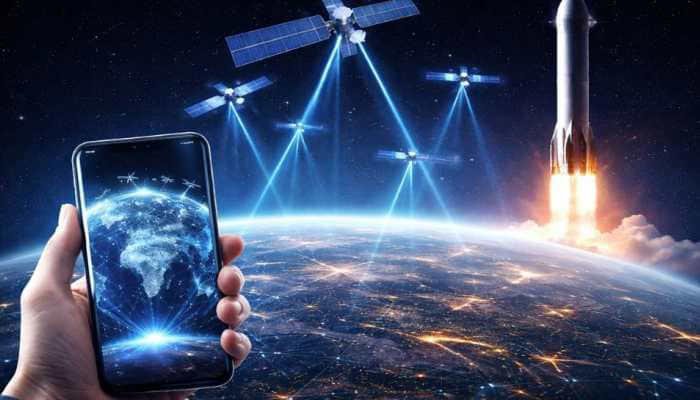
Starlink Direct-to-Device: SpaceX Set to Disrupt Global Telecom with Satellite-to-Mobile Launch
HAWTHORNE, CA – The global telecommunications landscape is on the brink of a radical transformation as SpaceX prepares to flip the switch on its most ambitious project since the inception of the Falcon 9. In a move that promises to eliminate “dead zones” across the planet, the company has detailed its final roadmap for Starlink Direct-to-Device services, a breakthrough technology that allows standard, unmodified LTE smartphones to connect directly to satellites in low Earth orbit.
The initiative, which has been in beta testing throughout late 2025, is scheduled for a full-scale commercial rollout in 2026. By utilizing a specialized fleet of “v2 mini” and full-sized v3 satellites equipped with advanced phased-array antennas, Starlink Direct-to-Device will provide seamless text, voice, and data connectivity to users regardless of their proximity to traditional cell towers.
The End of the Dead Zone: How Starlink Direct-to-Device Works
The primary hurdle for satellite-to-phone connectivity has historically been the massive distance between the device and the satellite. Traditionally, satellite phones required large, unsightly antennas to catch a signal from geostationary orbits 22,000 miles away. However, the Starlink Direct-to-Device architecture leverages SpaceX’s massive constellation in Low Earth Orbit (LEO), approximately 340 miles above the surface.
This proximity allows the Starlink Direct-to-Device hardware on the satellites to act essentially as “cell towers in space.” Utilizing the 1900 MHz spectrum through a landmark partnership with T-Mobile in the U.S., and similar carriers globally (such as Rogers in Canada and Optus in Australia), the system transmits a signal that your existing 4G or 5G phone can recognize as a standard roaming signal.
“You won’t need a new phone, a special app, or a firmware update,” explained SpaceX CEO Elon Musk during a recent Starbase briefing. “Starlink Direct-to-Device is designed to just work the moment you step out of terrestrial coverage. It is a peace-of-mind service that ensures you are never truly alone.”
[Image: A infographic showing a smartphone connecting to a Starlink v3 satellite, highlighting the ‘Cell Tower in Space’ concept]
Phase One: SMS and Emergency Alerts (The 2026 Launch)
The initial rollout of Starlink Direct-to-Device focuses on low-bandwidth, high-reliability communication. Starting in the first quarter of 2026, the service will provide:
-
Ubiquitous SMS: Send and receive text messages from the middle of the Pacific Ocean or the heart of the Sahara.
-
Emergency SOS: A universal safety net that allows users to contact emergency services even if their primary carrier has zero bars.
-
IoT Integration: Connecting remote sensors for agriculture, weather tracking, and logistics directly to the Starlink Direct-to-Device network.
Industry analysts suggest that this initial phase will be a “killer feature” for outdoor enthusiasts, maritime workers, and rural communities that have long been ignored by the terrestrial “Big Three” carriers.
The Economic Impact: Disrupting the $1.5 Trillion Telecom Market
The launch of Starlink Direct-to-Device is sending ripples through the financial markets, much like the “SaaSpocalypse” rattled software stocks earlier this month. Investors are increasingly concerned that the traditional model of building expensive, land-based infrastructure—towers, fiber optics, and repeaters—is becoming a legacy cost.
Comparative Market Analysis: Satellite vs. Terrestrial
| Feature | Traditional Mobile Carriers | Starlink Direct-to-Device |
| Coverage Area | Limited by tower density and geography. | 100% global (where spectrum is licensed). |
| Infrastructure Cost | Billions in land leases and hardware. | Billion-dollar satellite launches (reusable). |
| Setup Time | Months to years for new tower permits. | Instantaneous once satellite is in orbit. |
| User Barrier | High (Requires signal proximity). | Zero (Uses existing LTE/5G hardware). |
The Starlink Direct-to-Device model allows SpaceX to bypass the geographic and political limitations of terrestrial infrastructure. For developing nations with rugged terrain, this isn’t just an upgrade—it’s the first time reliable high-speed mobile internet will ever be accessible.
Strategic Partnerships: T-Mobile and Beyond
SpaceX is not acting as a direct competitor to mobile carriers—yet. Instead, Starlink Direct-to-Device acts as a “coverage extension” partner. By licensing their space-based backhaul, carriers can offer 100% coverage to their subscribers without actually building more towers.
In the U.S., T-Mobile has already integrated Starlink Direct-to-Device into its “Coverage Above and Beyond” plan. Early testing in the remote regions of Alaska and the Grand Canyon has shown nearly 99% uptime for text messaging, with voice calls expected to stabilize as more v3 satellites reach their final orbital slots by mid-2026.
Challenges and the “Orbital Congestion” Debate
Despite the excitement, the Starlink Direct-to-Device program faces significant hurdles. Astronomers have expressed renewed concerns about the brightness of the new, larger satellites, which are necessary to support the high-gain antennas required for mobile connectivity. SpaceX has responded with its “DarkSat” and “VisorSat” mitigation strategies, but the debate remains heated.
Furthermore, there is the issue of regulatory approval. To operate Starlink Direct-to-Device, SpaceX must obtain spectrum rights in every country where it wishes to provide service. While Western nations have moved quickly to approve the service, regions with strict state-controlled telecommunications are moving more cautiously.
Looking Ahead: Mobile Broadband and the “Phone in the Sky”
By 2027, SpaceX aims to move beyond simple text and voice, upgrading Starlink Direct-to-Device to support full mobile broadband. This would allow for web browsing, video streaming, and data-heavy applications directly from space.
The implications are staggering. If Starlink Direct-to-Device can achieve even 10% of the speed of a standard 5G tower, it would effectively commoditize mobile internet globally.
The battle for the “cell tower in the sky” has reached its peak in early 2026. While Starlink Direct-to-Device has the advantage of sheer scale, specialized competitors like AST SpaceMobile and Apple are carving out distinct territories based on speed and safety.
Here is how the 2026 satellite-to-phone market stacks up.
2026 Satellite Connectivity Comparison
| Feature | Starlink Direct-to-Device | AST SpaceMobile | Apple Emergency SOS |
| Primary Goal | Ubiquitous SMS/Voice. Aiming for “peace of mind” coverage for everyone. | Broadband from Space. Aiming to replace 4G/5G towers entirely. | Life-Saving Safety. Focused on emergency rescue and basic iMessage. |
| Max Speed | 2–10 Mbps. Primarily optimized for text and voice calls. | Up to 120 Mbps. Capable of 4K video streaming and full web browsing. | Extremely Low. Bits per second; optimized for text packets only. |
| Hardware | Works with any standard LTE/5G phone (T-Mobile/Rogers/Optus). | Works with standard phones (AT&T/Verizon/Vodafone). | Exclusive to iPhone 14 and newer. |
| Constellation | ~9,500+ satellites (650+ D2D dedicated). | ~10-15 “BlueBirds” in orbit (Targeting 45-60 by end of 2026). | Uses Globalstar’s established LEO network. |
The Competitor Deep Dive
1. The “Powerhouse”: AST SpaceMobile (ASTS)
In early 2026, AST SpaceMobile is the “enthusiast’s choice.” While SpaceX focuses on getting everyone some signal, AST is focused on giving a few people all the signal.
-
The “Giant Satellite” Advantage: Their BlueBird satellites feature the largest commercial arrays in orbit (2,400 sq. ft.). This massive surface area allows them to deliver true 5G broadband directly to your phone—something Starlink Direct-to-Device is still working toward.
-
Carrier Partnerships: By securing both AT&T and Verizon in the U.S., they have positioned themselves as the premium “broadband” alternative for the most profitable mobile subscribers.
2. The “Specialist”: Apple & Globalstar
Apple remains the king of the “Emergency” niche. In late 2025, iOS 18 expanded their satellite features beyond 911 calls to include standard iMessage and SMS via satellite.
-
Seamless Integration: Because Apple controls both the hardware (iPhone) and the software (iOS), their satellite connection feels like a native part of the phone.
-
Limited Scope: Unlike the Starlink Direct-to-Device model, which aims to be a full roaming service, Apple’s service is still primarily a “backup” meant for when you are truly off the grid, rather than a daily-use data connection.
3. The “Wildcard”: Amazon “Leo” (Project Kuiper)
A massive shift occurred on February 4, 2026, when Amazon and AT&T announced a “fiber-to-space” partnership. Rebranded as Amazon Leo, this constellation is the direct rival to SpaceX’s dominance. While Amazon is currently behind in satellite count (aiming for 700 by July 2026), their deep integration with AWS cloud services makes them a massive threat in the enterprise and government sectors.
Also Read this:
Claude Opus 4.6 Vs GPT-5.3 Codex: 2026’s Ultimate AI Showdown
Social Connect :

