

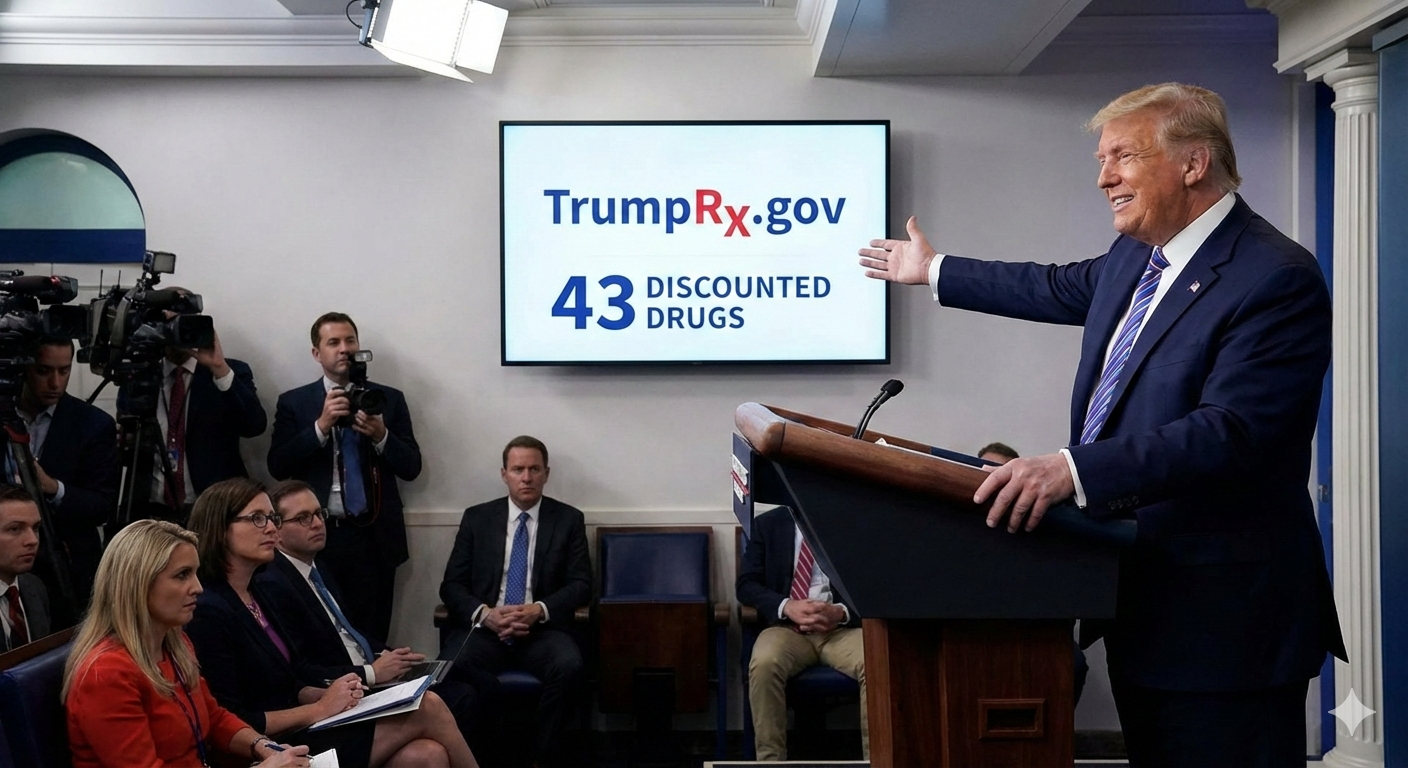
Trump Launches TrumpRx.gov With 43 Discounted Drugs — But Experts Warn Most Americans Won’t Save Money
President Donald Trump unveiled TrumpRx.gov on Thursday evening, a government-run website offering cash-pay discounts on 43 brand-name medications including blockbuster weight-loss drugs Wegovy and Ozempic. The president hailed the launch as “the biggest thing to happen in health care in many, many decades,” claiming Americans would “save a fortune.” However, health policy experts are warning that the platform will likely benefit only a small fraction of patients — primarily those without insurance — while the vast majority of Americans with health coverage will pay less by continuing to use their existing insurance plans.
LATEST UPDATE (Feb. 6, 2026 — 12:00 AM EST):TrumpRx.gov officially launched Thursday at 7 p.m. with 43 medications from five pharmaceutical companies: AstraZeneca, Eli Lilly, EMD Serono, Novo Nordisk, and Pfizer. The site partners with GoodRx for technology integration and does not sell drugs directly — instead directing users to drugmakers’ own direct-to-consumer platforms or providing pharmacy coupons. Discounts range from 33% to 93% off list prices, but purchases do not count toward insurance deductibles. Senate Democrats have questioned the platform’s legality, while health economists note that 9 in 10 prescriptions filled in the U.S. are for generic drugs not featured on TrumpRx.
How TrumpRx Works: A Portal, Not a Pharmacy
Despite the White House’s promotional fanfare, TrumpRx.gov does not function as a direct pharmacy where Americans can purchase medications. Instead, the government-hosted website serves as an aggregator or clearinghouse that directs patients to pharmaceutical companies’ own direct-to-consumer websites or provides downloadable coupons for use at retail pharmacies.
For example, clicking on Eli Lilly’s weight-loss drug Zepbound on TrumpRx redirects users to the company’s LillyDirect platform, where they can submit prescription details and order the medication for cash payment. Similarly, Novo Nordisk’s Wegovy listings send users to the company’s own direct-pay website.
GoodRx Powers the Platform
TrumpRx has partnered with GoodRx, the popular prescription drug discount website, as its “key integration partner.” GoodRx provides the underlying technology infrastructure, hosts drugmakers’ self-pay prices, and integrates that pricing data onto the TrumpRx platform through its API. This ensures the website displays the most up-to-date pricing information from participating pharmaceutical companies.
The collaboration has raised eyebrows among some health policy experts, who note that GoodRx already offers many similar discounts independently. “It’s nice that they are aggregating coupons in one place,” said Benjamin Jolley, PharmD, a senior fellow for health care at the American Economic Liberties Project. However, he and others question whether a government-branded version adds significant value beyond what existing discount platforms already provide.
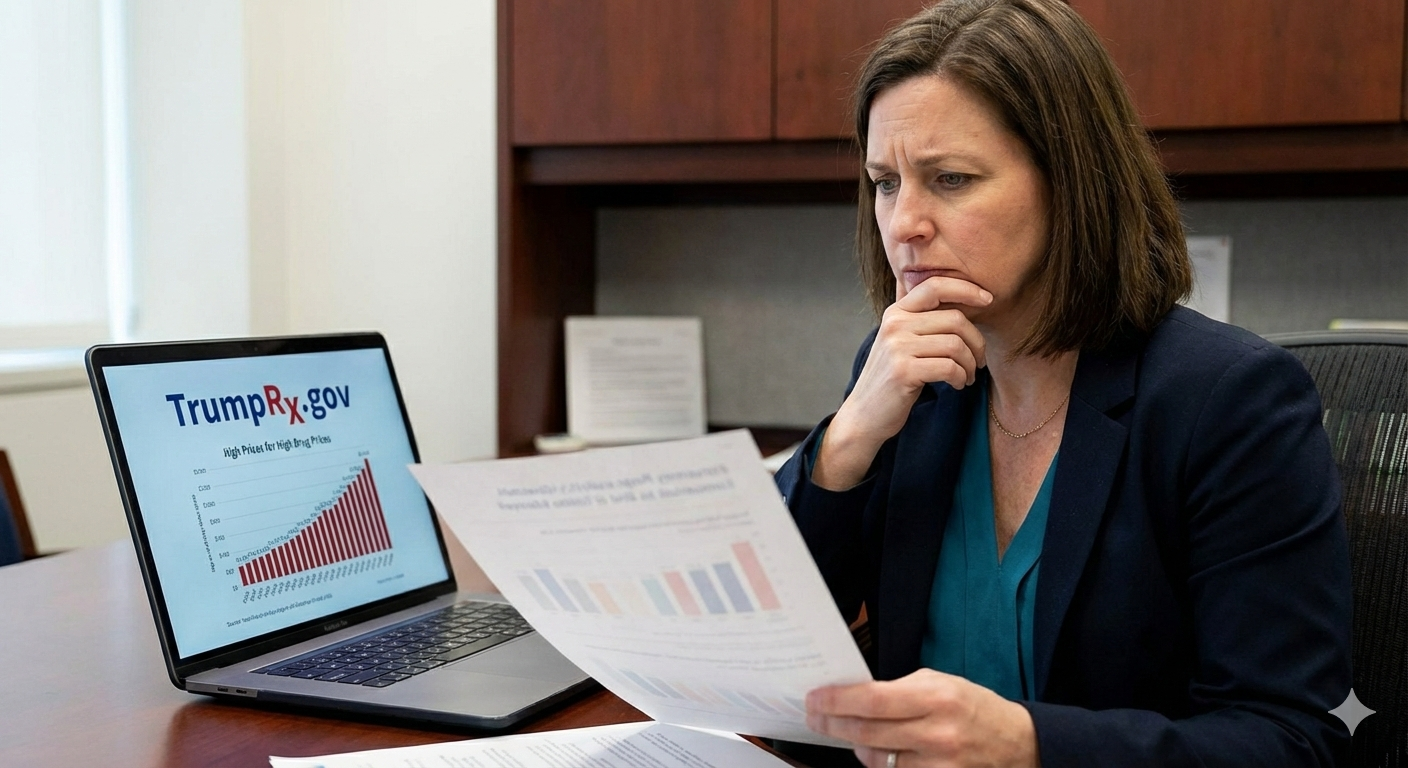
The Drugs Available on TrumpRx — And What They Cost
At Thursday’s launch, TrumpRx featured 43 brand-name medications spanning several therapeutic categories. The administration heavily promoted discounts on popular GLP-1 weight-loss drugs, which have become some of the most expensive and sought-after medications in America.
| MEDICATION | MANUFACTURER | USE | TRUMPRX PRICE | ORIGINAL LIST PRICE |
|---|---|---|---|---|
| Wegovy (pill) | Novo Nordisk | Weight loss | $149/month | $1,349/month |
| Wegovy (injection) | Novo Nordisk | Weight loss | $199-$349/month |
$1,349/month |
| Gonal-F | EMD Serono | Fertility treatment | $168 | Variable |
| Cetrotide | EMD Serono | Fertility treatment | 93% discount | Variable |
| Zavzpret | Pfizer | Migraine | $549 | $1,189 |
| Xeljanz | Pfizer | Autoimmune disorders | 33% discount | Variable |
Notable Absences and Coming Attractions
While 16 pharmaceutical companies have signed “Most Favored Nation” deals with the Trump administration, only five companies had their products listed at Thursday’s launch. Dozens of medications from major drugmakers including Amgen, Merck, Gilead, and Bristol Myers Squibb were conspicuously absent, though the White House promises “many more drugs are coming soon.”
Bristol Myers Squibb CEO Chris Boerner told CNBC in January that the company has multiple products on its existing direct-to-consumer platform, which initially offered cash-pay discounts on its blood thinner Eliquis. That platform “will eventually link to TrumpRx,” he said, adding that Bristol Myers is “aligned with the administration” on reducing health care system complexity.
The “Most Favored Nation” Policy Explained
TrumpRx represents the consumer-facing component of Trump’s broader “Most Favored Nation” (MFN) drug pricing initiative, which the president first teased back in September 2025 when Pfizer became the first major drugmaker to sign a deal.
Under MFN agreements, participating pharmaceutical companies commit to three key provisions:
- Lower Medicaid prices: Sell certain medicines to the federal Medicaid program at discounts matching the lowest prices available in other developed nations
- New drug launch pricing: Introduce future new drugs in the United States at prices no higher than those paid in peer countries like Canada, Germany, or the United Kingdom
- Direct-to-consumer discounts: Offer cash-paying patients discounted prices through TrumpRx and companies’ own platforms
In exchange for these commitments, drugmakers receive exemptions from certain tariffs that the Trump administration has threatened or imposed on pharmaceutical imports and active ingredients.
International Price Benchmarking
The policy aims to address a longstanding frustration among Americans: prescription drug prices in the United States are typically two to three times higher than those in other developed nations, and can run up to 10 times more than in certain countries, according to research from the RAND Corporation, a public policy think tank.
The TrumpRx website prominently declares its goal of delivering “the world’s lowest prices on prescription drugs” and calls the effort “the most impactful prescription price reset in the history of our country.” Whether these claims will prove accurate remains to be seen as the platform expands.
Who Actually Benefits From TrumpRx?
Health policy experts and economists have expressed skepticism about how many Americans will genuinely save money by using TrumpRx instead of their existing insurance coverage. The consensus among analysts is that the platform will help a relatively narrow slice of the population.
Who Might Save Money on TrumpRx:
- Uninsured patients: The approximately 26 million Americans without health insurance coverage
- Underinsured individuals: Those with high-deductible plans who haven’t yet met their deductible
- Patients needing non-covered drugs:People prescribed medications not covered by their insurance formularies, particularly obesity treatments and fertility drugs
- Medicare Part D “donut hole” patients: Seniors in the coverage gap before catastrophic protection kicks in
“TrumpRx might support access and affordability for a very small number of people. There is a real question about the value of this for people with insurance.”
Why Most Insured Patients Won’t Benefit
Juliette Cubanski, deputy director of the Medicare Policy program at KFF (formerly the Kaiser Family Foundation), explained that for the vast majority of Americans with prescription drug coverage, using TrumpRx makes little financial sense.
“If they’re able to get a drug covered by their insurance at a relatively affordable copay, then there’s not a great upside to using the TrumpRx website,” Cubanski said. She noted that about 84% of the U.S. population has prescription drug coverage through employer plans, individual insurance, Medicare, or Medicaid.
Additionally, people with insurance who buy drugs through TrumpRx face a critical disadvantage: those purchases do not count toward their insurance deductibles or out-of-pocket maximums. The website’s FAQ section explicitly states, “At this time, TrumpRx discounted pricing is only available for cash-paying patients.” For Novo Nordisk’s GLP-1 treatments specifically, patients must agree not to count direct drug purchases toward their deductibles.
“My guess is that for most drugs, at least most brand-name medications, people are likely to get a better deal using their insurance rather than purchasing a drug through a direct-to-consumer website,” Cubanski added.
Are the Discounts Real? Examining the Math
While the Trump administration has touted steep percentage discounts — some as high as 93% — health economists caution that these figures are calculated against inflated list prices that few payers actually pay.
The List Price vs. Net Price Problem
Drug list prices represent the sticker price before any negotiations, rebates, or discounts are applied. In reality, insurance companies, pharmacy benefit managers (PBMs), and government programs like Medicare and Medicaid negotiate substantial reductions from these list prices.
Researchers at Georgetown University’s Medicare Policy Initiative have noted that the announced TrumpRx discounts may not represent as much savings as they appear. Studies show that average discounts on brand-name drugs in Medicare Part D run around 40% of list prices, while Medicaid discounts exceed 75%, according to Congressional Budget Office research.
This means that for many medications, the “discounted” TrumpRx prices may be comparable to — or even higher than — what insurers and government programs are already paying after their own negotiations.
Comparing TrumpRx to Existing Discount Platforms
Critics also point out that TrumpRx offers little that isn’t already available through existing drug discount platforms. Dr. Ben Rome, a health policy researcher at Brigham and Women’s Hospital in Boston, noted that the site “isn’t dissimilar from other drug discount sites like GoodRx” or Mark Cuban’s Cost Plus Drugs website.
For example, the heartburn medication Protonix is listed at $200 on TrumpRx. However, the generic version (pantoprazole) costs just $30 with a coupon from GoodRx — representing far greater savings than the brand-name discount Trump is promoting.
Important Note for Consumers:TrumpRx features only brand-name medications, which are generally far pricier than generic alternatives. According to the FDA, 9 out of 10 prescriptions filled in the United States are for generic drugs. For most common conditions, significantly cheaper generic alternatives exist that aren’t featured on TrumpRx.
The Weight-Loss Drug Focus: Strategic or Symbolic?
The Trump administration devoted significant attention during Thursday’s launch event to discounts on GLP-1 weight-loss medications like Wegovy and Zepbound. This focus makes strategic sense for several reasons.
Obesity Drugs: High Demand, Low Insurance Coverage
GLP-1 drugs represent one of the few medication categories where TrumpRx could genuinely help large numbers of patients. These medications are extremely expensive — with list prices exceeding $1,300 per month — and are often not covered by commercial insurance plans or government programs.
Medicare will begin covering weight-loss treatments for the first time later in 2026 as part of the deals Eli Lilly and Novo Nordisk struck with the Trump administration. However, many employers remain hesitant to add obesity drugs to their insurance formularies due to the enormous potential costs of covering millions of employees.
“For those types of medicines, there is a market for patients who want to access those medicines and don’t really have an option through insurance,” said Dr. Rome. “And for them, it absolutely makes sense that they would shop around and find the best price available.”
Pre-Existing Discounts Rebranded
However, it’s important to note that both Eli Lilly and Novo Nordisk were already offering their blockbuster obesity drugs at substantial discounts to cash-paying patients well before Trump’s Thursday announcement. Novo has been selling injectable Wegovy at cash prices ranging from $199 to $349 for months, along with a newly launched pill version priced from $149 to $299. Similarly, Lilly has been offering Zepbound from $299 to $449 through its LillyDirect platform.
Eli Lilly CEO Dave Ricks told CNBC last week that the company “was the first drugmaker to sell obesity treatments directly to patients, and that TrumpRx is ‘taking that and expanding it across the industry’ to other medicines. We’re all for that,” Ricks said.
In other words, much of what TrumpRx is advertising as new savings actually represents the continuation and aggregation of discount programs that pharmaceutical companies had already implemented independently.
Political and Legal Questions Surrounding TrumpRx
The TrumpRx initiative has drawn scrutiny from Democratic lawmakers and legal experts who question both its effectiveness and its legality.
Senate Democrats Question Legality
On January 29, three Senate Democrats sent a letter questioning the legal authority under which the Trump administration is operating the TrumpRx program. The senators expressed concerns about whether the executive branch has the statutory authority to create government-run platforms that direct consumers to private company websites, and whether the arrangements with pharmaceutical companies constitute improper coordination between regulators and regulated entities.
The administration has not publicly addressed these legal concerns, and details of the formal agreements with participating drugmakers remain largely undisclosed.
Delayed Launch Raises Questions
TrumpRx has faced multiple unexplained delays. Dr. Mehmet Oz, administrator of the Centers for Medicare and Medicaid Services, told Trump in the fall that the site would launch before the end of 2025. An expected late January launch was subsequently pushed back. The administration has not publicly explained the reasons for these delays.
Some industry observers speculate that technical challenges in integrating multiple pharmaceutical companies’ systems, legal review processes, or ongoing negotiations over pricing details may have contributed to the postponements.
The Broader Healthcare Cost Context
TrumpRx arrives at a moment when healthcare costs — and prescription drug prices in particular — rank as Americans’ top economic concern. A recent KFF poll found that more than 4 in 10 U.S. adults cite prescription drug affordability as their primary healthcare worry.
Trump’s “Great Healthcare Plan”
TrumpRx represents one component of President Trump’s “Great Healthcare Plan,” which he called on Congress to enact on January 15, 2026. The plan proposes to:
- Codify savings from the Most Favored Nation pricing initiative into law
- Send money directly to Americans to purchase health insurance
- Lower insurance premiums through unspecified mechanisms
- Increase price transparency across the healthcare system
- Hold insurance companies accountable (details unclear)
The plan has been criticized by policy experts for lacking specific details on implementation, funding mechanisms, and how it would interact with existing programs like the Affordable Care Act.
Other Recent Drug Pricing Efforts
TrumpRx also exists alongside the Medicare drug price negotiation program created by the Inflation Reduction Act of 2022 (passed under President Biden). That program allows Medicare to directly negotiate prices for certain high-cost medications, resulting in lower costs for Medicare Part D enrollees.
The Trump administration has negotiated additional lower prices for several prescription drugs for Medicare enrollees through this existing program, though it’s unclear how these efforts coordinate with the TrumpRx initiative.
What Pharmaceutical Companies Are Saying
Drugmakers have generally responded positively to TrumpRx, viewing direct-to-consumer sales as a way to circumvent pharmacy benefit managers (PBMs) and other middlemen in the drug supply chain whom they blame for high patient costs.
“What we like about these [direct-to-consumer models], where they make sense from a business standpoint, is you’re able to circumvent some of that.”
However, pharmaceutical companies have been careful in their messaging, emphasizing that direct-to-consumer platforms make sense for certain medications where insurance coverage is limited, rather than as a wholesale replacement for the traditional pharmacy benefit system.
PBM Reform Momentum
The Trump administration has simultaneously pursued reforms targeting pharmacy benefit managers. The Federal Trade Commission recently settled a lawsuit with PBM Express Scripts, and additional regulatory actions targeting PBM practices are reportedly in development.
Drugmakers hope that attacking PBMs’ role in the drug supply chain will shift public perception about who bears responsibility for high prescription costs — a debate that has raged for years between pharmaceutical manufacturers, PBMs, and insurance companies, with each side blaming the others.
Expert Verdict: Limited Impact for Most Americans
Despite the White House’s promotional enthusiasm, the consensus among independent health policy experts is that TrumpRx will have limited impact on drug costs for the majority of Americans.
“This is a website that has undergone a lot of hype, but it’s not clear exactly how much it’s going to help those people who use prescription drugs,” said Dr. Rome. “And for the vast majority of people, it’s going to continue to be less expensive for patients to purchase their medicines using their insurance than it is to pay cash prices for the medicines, even if those cash prices are discounted.”
Juliette Cubanski summed up the situation more diplomatically: “TrumpRx doesn’t seem like it is the only solution to that issue for most Americans.” She acknowledged potential for the platform to expand access to certain drugs at more affordable prices, “particularly medicines not covered widely by insurance in the U.S., such as obesity drugs.”
The Uninsured May Benefit Most
If TrumpRx does deliver meaningful value, it will likely be for the approximately 26 million uninsured Americans who have no access to negotiated insurance prices. For this population, aggregating cash-pay discount options in one government-run portal could reduce the confusion and comparison shopping currently required across multiple discount platforms.
“It’s nice that they are aggregating coupons in one place,” noted Dr. Jolley, though he questioned whether a government platform was necessary for this function given that private companies like GoodRx already serve this purpose.
What Consumers Should Know Before Using TrumpRx
For Americans considering whether to use TrumpRx for their medications, health experts offer several pieces of guidance:
Check your insurance first: For most medications, your insurance copay or coinsurance will be lower than TrumpRx cash prices, especially after you’ve met your deductible. Always compare the TrumpRx price to what you’d pay using insurance.
Consider generics: If a generic version of your medication exists, it will almost always be cheaper than the brand-name discount offered on TrumpRx. Ask your doctor or pharmacist about generic alternatives.
Check other discount platforms: TrumpRx is not the only option for cash-pay discounts. Websites like GoodRx, Mark Cuban’s Cost Plus Drugs, and individual pharmacy discount programs may offer comparable or better prices.
Understand deductible implications:Purchases through TrumpRx do not count toward your insurance deductible or out-of-pocket maximum. This could cost you more money over the course of the year even if the individual purchase seems cheaper.
Verify you can use TrumpRx: The site’s discounts are only available to cash-paying patients. If you’re enrolled in Medicare, Medicaid, or other government insurance programs, you may not be eligible for certain discounts.
Ask your doctor: “This suggests it pays for consumers to check their insurance coverage and ask their regular doctor or pharmacist before they use this service,” advised Dr. Conti.
The Road Ahead for TrumpRx
As TrumpRx expands to include medications from the remaining 11 pharmaceutical companies that have signed Most Favored Nation deals, its impact will become clearer. Key questions remain unanswered:
- Will the discounts be sustained long-term, or could they change as political priorities shift?
- How will the platform evolve if legal challenges succeed?
- Will more pharmaceutical companies join the program, or will some major drugmakers decline to participate?
- Can the administration successfully expand the model to cover a broader range of medications beyond the current 43 drugs?
- Will insurance companies and PBMs respond by lowering their own prices to remain competitive?
Bottom Line: Modest Help for a Small Number of Patients
TrumpRx represents an ambitious attempt to tackle America’s prescription drug affordability crisis through a novel direct-to-consumer approach. For the approximately 26 million uninsured Americans and patients needing medications not covered by insurance — particularly expensive obesity and fertility treatments — the platform may provide genuine savings and easier access to discounts.
However, for the vast majority of Americans with health insurance coverage, the evidence suggests that using existing insurance benefits will continue to deliver lower out-of-pocket costs than TrumpRx’s cash-pay model. The platform’s focus on brand-name drugs, when 90% of prescriptions are filled with cheaper generics, further limits its potential impact.
As one health economist succinctly put it, TrumpRx is “not the only solution” to America’s drug pricing problem — and for most Americans, it may not be a solution at all.
Medical Disclaimer: This article is for informational purposes only and should not be construed as medical or pharmaceutical advice. Patients should consult with their healthcare providers and pharmacists before making decisions about how to fill prescriptions or whether to use discount programs. Prescription drug costs can vary significantly based on individual insurance coverage, pharmacy choice, and specific medication formulations.
Also Read this:
Starlink Direct-to-Device: SpaceX’s Global Satellite-to-Mobile Launch
Social Connect :

