

European Stocks Defy US Tech Sell-Off as Stoxx 600 Holds Near Record Highs: What American Investors Need to Know
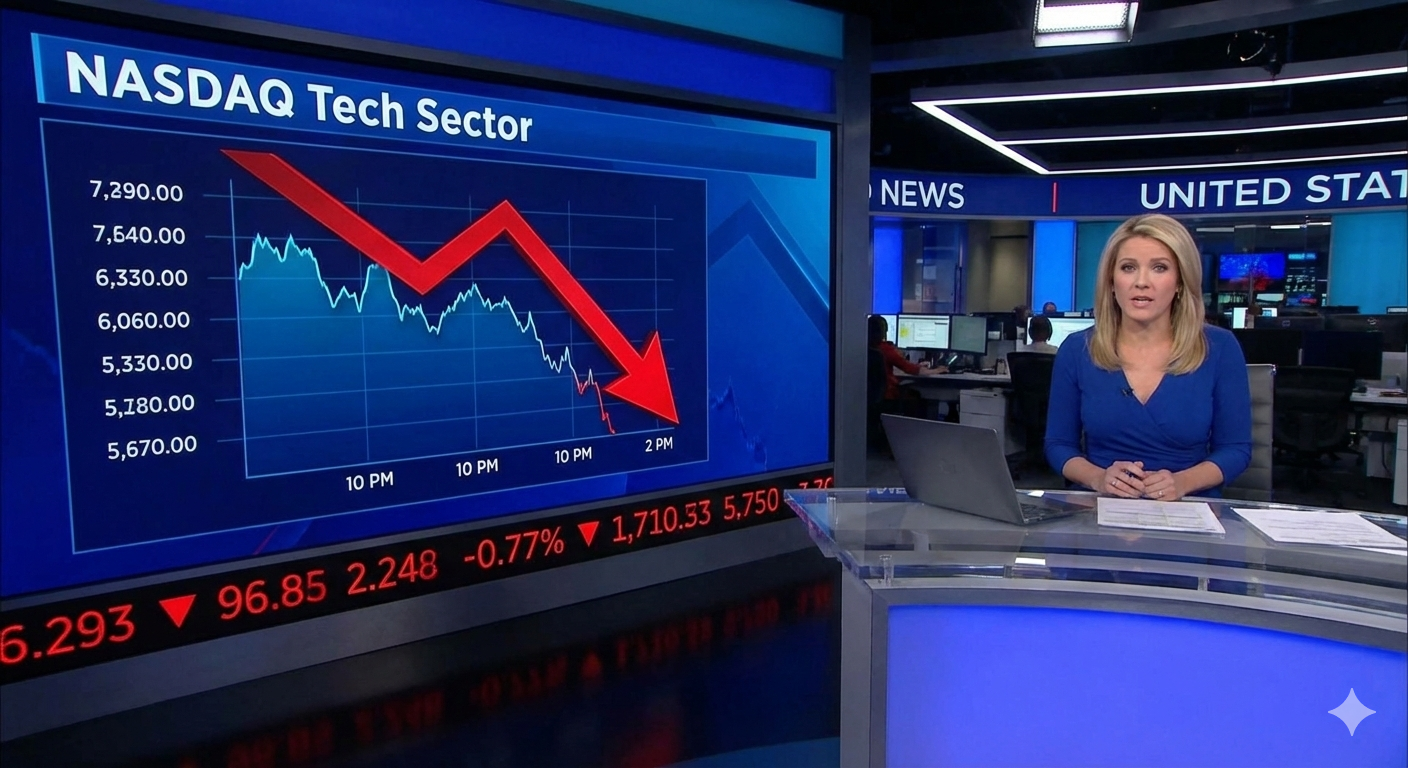
Tech Rotation Puts European Markets Back in Focus as S&P 500 Plunges 30% from October 2025 Peaks While Stoxx 600 Rallies
NEW YORK — While Wall Street’s technology giants crater amid mounting concerns about artificial intelligence valuations, European stocks are charting a strikingly different course—one that has American investors taking notice and potentially rethinking their portfolios.
The pan-European Stoxx Europe 600 Index is hovering near all-time record highs after posting its seventh positive week in eight, shrugging off the tech-led devastation that has pummeled US markets. The benchmark closed at 612 points on February 6, 2026—just shy of its record 616.5 peak—even as the S&P 500 has tumbled nearly 30% from its October 2025 highs.
This remarkable divergence marks a potential turning point in global capital flows, with European equities offering American investors an increasingly compelling alternative to frothy US technology stocks trading at sky-high valuations.
The Great Divergence: Europe vs. America in 2026
S&P 500 Draws Dot-Com Bubble Comparisons
Deutsche Bank analysts have begun drawing uncomfortable parallels to the dot-com bubble of 2000, warning that the recent sell-off in AI and software-exposed stocks shows no signs of easing. The bank’s chief equity strategist wrote in a recent note that current valuations in the technology sector have reached “irrational exuberance” levels not seen since the turn of the millennium.
The S&P 500’s 30% decline from its October 2025 peak of approximately 6,400 to current levels around 4,480 represents one of the steepest corrections since the 2022 bear market. Technology and AI-related stocks have borne the brunt of the selling pressure, with the Nasdaq Composite down even more sharply.
“We’re seeing a massive rotation out of mega-cap tech and into value sectors, defensive plays, and international markets—particularly Europe,” said Steve Sosnick, chief market strategist at Interactive Brokers. “European stocks had been left behind during the AI mania, and now they’re catching up.”
European Resilience: What’s Different This Time?
The Stoxx 600’s resilience stands in sharp contrast to the historical pattern where European markets typically followed Wall Street lower during major corrections. Several factors explain Europe’s outperformance:
Valuation Advantage:
European stocks trade at just 15 times forward earnings—a 71st percentile valuation over the past 25 years but still attractive compared to other assets. By comparison, the S&P 500 currently trades at approximately 18 times forward earnings despite the recent correction.
Goldman Sachs Research forecasts the Stoxx 600 will deliver an 8% total return in 2026, supported by global economic growth, falling interest rates, and rising corporate earnings. The investment bank expects 5% earnings-per-share growth for European companies in 2026 and 7% in 2027.
Sector Composition:
Unlike the US market’s heavy concentration in technology (which represents roughly 30% of the S&P 500), European markets offer more balanced exposure across sectors including financials, industrials, healthcare, and consumer goods. This diversification has provided downside protection during the tech sell-off.
Currency Tailwinds:
The euro has strengthened to $1.16 as of early February 2026, with Goldman Sachs forecasting it will reach $1.25 within 12 months. While euro strength could pressure export-dependent European companies, it boosts returns for dollar-based American investors.
Economic Momentum:
Germany’s fiscal stimulus package and falling European Central Bank interest rates have improved the economic outlook for the eurozone, which is projected to grow 1.3% in 2026 according to Goldman Sachs economists.
This Week’s Critical Earnings Tests
A barrage of major European corporate earnings reports this week will test whether the region’s stock market resilience can withstand scrutiny of underlying business fundamentals. For American investors considering European exposure, these results carry particular significance.
Banking Sector Takes Center Stage

UniCredit Reports Monday: M&A Activity in Focus
Italy’s UniCredit, one of Europe’s most acquisitive banks, reports fourth-quarter earnings on Monday, February 10, at 4:00 AM EST (10:00 AM CET). CEO Andrea Orcel will brief analysts and investors in Milan on results expected to show approximately €10.5 billion in full-year net profit—up from previous guidance of €9.3 billion.
The earnings call comes at a pivotal moment for UniCredit’s aggressive expansion strategy. The bank holds significant minority stakes in two key targets:
- Commerzbank (Germany): 26% stake, with plans to increase to just under 30%
- Alpha Bank (Greece): Strategic holding generating strong returns
According to UniCredit’s third-quarter report, these minority stakes have delivered approximately 20% returns on investment, validating Orcel’s cross-border consolidation strategy despite political resistance in Germany.
“UniCredit represents one of the most compelling value stories in European banking,” noted Sharon Bell, senior strategist at Goldman Sachs Research. “The bank is benefiting from multiple tailwinds: improving net interest margins, robust M&A activity, and pickup in primary markets across Europe.”
For American investors, UniCredit offers exposure to European banking consolidation without the regulatory headaches of US regional bank stress. The stock trades on US over-the-counter markets under ticker UNCFF.
Commerzbank Earnings Wednesday: Takeover Defense Continues
Germany’s Commerzbank reports Wednesday, with CEO Bettina Orlopp expected to emphasize the bank’s standalone strategy amid UniCredit’s persistent courtship. During the World Economic Forum in Davos in January, Orlopp told CNBC’s Squawk Box that a deal with UniCredit is “not sensible” given Commerzbank’s high current valuation.
The German bank has mounted a vigorous defense against UniCredit’s advances, implementing a €600 million share buyback program (approved by regulators in January 2026) and raising profit targets. Commerzbank delivered record operating results of approximately €3.4 billion in the first nine months of 2025, up 21% year-over-year.
Key Questions for Wednesday’s Call:
- Can Commerzbank sustain double-digit earnings growth without a merger?
- Will political opposition from German authorities continue blocking UniCredit?
- How will rising competition from digital banks impact traditional German lenders?
Shares of European financial stocks experienced a volatile week, ultimately closing in the red despite strong underlying fundamentals. Goldman Sachs maintains an overweight rating on European banks, citing near-perfect operating conditions: stable GDP growth, steady ECB policy rates around 2%, and benign asset quality supporting 5.5% annual pre-provision profit growth through 2027.
Healthcare Giants Face Scrutiny
AstraZeneca Focuses on China Weight-Loss Drug Market
British-Swedish pharmaceutical giant AstraZeneca reports Tuesday, with investors closely watching the company’s strategy for accessing China’s lucrative weight-loss drug market. The company has poured billions of dollars into Chinese operations and recently listed shares on the New York Stock Exchange to improve access to US capital markets.
However, warning bells are sounding following Danish rival Novo Nordisk’s sharp sell-off after disappointing sales projections for its blockbuster GLP-1 weight-loss drugs Ozempic and Wegovy. Novo Nordisk shares plunged nearly 25% in a single session last month, wiping out over $100 billion in market value.
AstraZeneca’s Tuesday earnings call will likely address:
- Progress on weight-loss drug development and Chinese market access
- Competitive positioning against Novo Nordisk and Eli Lilly
- Impact of potential US-China trade tensions on pharmaceutical operations
- Outlook for oncology drug portfolio
CEO Pascal Soriot will appear on CNBC’s Squawk Box Europe following the earnings release.
Philips Leverages AI Tools in Medical Technology
Dutch medical technology company Philips (ticker: PHG on NYSE) reports Tuesday, aiming to continue a positive performance streak driven by new AI-powered diagnostic tools. The company has rebounded strongly from quality issues that plagued its sleep apnea device business in previous years.
Philips’ AI-enhanced imaging systems have gained market share in hospital radiology departments, with the company positioning itself as a leader in applying artificial intelligence to medical diagnostics. This contrasts sharply with the AI skepticism currently hammering software companies—healthcare AI applications deliver measurable clinical outcomes rather than speculative productivity gains.
American investors can access Philips directly through NYSE-listed shares, providing easier exposure than most European healthcare stocks.
Consumer Sector: L’Oreal Faces US-China Demand Test
Thursday: French Beauty Giant Updates Growth Outlook
L’Oreal, the world’s largest cosmetics company, reports Thursday with CEO Nicolas Hieronimus addressing analysts from Paris. Last quarter’s results disappointed despite recovery in both the US and Chinese markets—the company’s two largest revenue sources—with shares falling on a narrow sales miss.
The French beauty conglomerate has positioned itself for potential acquisitions after raising €3 billion in M&A financing late last year. L’Oreal recently doubled its stake in Swiss dermatology specialist Galderma in a deal expected to close during the first quarter of 2026.
Critical Questions for L’Oreal:
- Has US consumer spending on premium beauty products stabilized after holiday weakness?
- Is China’s economic slowdown impacting luxury beauty purchases?
- Which acquisition targets might L’Oreal pursue with its €3 billion war chest?
- Can the company sustain premium valuations amid increasing competition from K-beauty brands?
L’Oreal trades on Paris Euronext under ticker OR, with American depositary receipts available over-the-counter under LRLCY.
Sector Rotation: Where American Investors Should Look
Financial Services: The Clear Winner
Goldman Sachs strategists identify European banks and financial services as the top pick for 2026, expecting the sector to benefit from:
- Deregulation initiatives across the European Union
- Accelerating M&A activity (UniCredit-Commerzbank, cross-border consolidation)
- Recovery in primary markets (IPOs and corporate bond issuance)
- Stable net interest margins despite ECB rate cuts
The European banking sector trades at just 8.9 times 2027 estimated earnings versus significantly higher multiples for major US banks, while generating forecast returns on tangible equity of 16.2%. JP Morgan calculates this implies at least 12% upside over the next year at the sector level.
For American investors seeking financial sector exposure without US regional bank risk, European banks offer an attractive alternative.
Technology: Europe’s Hidden Value
European technology stocks have underperformed their US counterparts dramatically over the past decade, creating a valuation gap that Goldman Sachs views as “too wide given relative growth expectations.”
Key European tech plays include:
- ASML (ASML): Dutch semiconductor equipment maker, essential supplier to chipmakers worldwide
- SAP (SAP): German enterprise software giant competing with Oracle and Salesforce
- Infineon (IFNNY): Automotive and industrial semiconductor manufacturer
- STMicroelectronics (STM): European chip producer with automotive focus
ASML jumped 7% on January 2, 2026, after Taiwan Semiconductor Manufacturing Company reported blockbuster fourth-quarter earnings and the US government granted annual licenses allowing TSMC to continue importing US chip equipment to Chinese facilities.
“European tech offers much of the growth potential of US tech but at a fraction of the valuation,” noted Sharon Bell. “These are world-class companies trading at depressed multiples due to home-bias and underappreciation by American investors.”
Defense: Geopolitical Tensions Drive Outperformance
European defense stocks have emerged as top performers, advancing 3.3% on January 2 alone and posting consistent gains amid ongoing tensions related to:
- Russia-Ukraine conflict entering third year
- Increased NATO military spending commitments across Europe
- Trump administration pressure on European allies to boost defense budgets
- Middle East instability
Top European defense names include:
- Leonardo (Italy): Aerospace and defense conglomerate
- Thales (France): Defense electronics and cybersecurity
- Saab (Sweden): Aircraft and military systems
- Rolls-Royce (UK): Jet engines and defense systems
- Kongsberg (Norway): Maritime and defense technology
The Stoxx Europe Aerospace & Defense Index has posted four consecutive days of gains as of early February 2026, significantly outperforming broader markets.
Sectors to Avoid: Chemicals and Autos Under Pressure
Goldman Sachs warns that European chemicals and automotive companies will likely remain under pressure due to Chinese competition and sluggish demand. However, these sectors represent a relatively small share of the Stoxx 600’s market capitalization.
“Most of the Stoxx 600—financials, services, commodities—has little or no China exposure,” Bell writes, suggesting the index’s overall resilience won’t be derailed by weakness in these two sectors.
German automakers including Volkswagen, BMW, and Mercedes-Benz face particular challenges from:
- Chinese electric vehicle competition in European markets
- Weakening demand in China, traditionally a profit center
- Costly transition from combustion engines to EVs
- Potential US tariffs on European auto imports
How American Investors Can Access European Stocks
For US-based investors looking to capitalize on European market strength, several accessible options exist:
Exchange-Traded Funds (ETFs)
Broad European Exposure:
- Vanguard FTSE Europe ETF (VGK): Largest European stock ETF with $20+ billion in assets
- iShares MSCI Eurozone ETF (EZU): Focused on eurozone countries
- SPDR Euro Stoxx 50 ETF (FEZ): Tracks Europe’s 50 largest blue-chip companies
Sector-Specific ETFs:
- iShares MSCI Europe Financials ETF (EUFN): Targets European banks and insurers
- Global X MSCI Europe Health Care ETF: Healthcare sector exposure
American Depositary Receipts (ADRs)
Many major European companies trade directly on US exchanges through ADRs:
- Philips (PHG) – Dutch medical technology
- AstraZeneca (AZN) – British pharmaceutical
- SAP (SAP) – German enterprise software
- ASML (ASML) – Dutch semiconductor equipment
- Novo Nordisk (NVO) – Danish pharmaceuticals
Over-the-Counter (OTC) Trading
Additional European stocks trade OTC in the US:
- UniCredit (UNCFF)
- L’Oreal (LRLCY)
- Commerzbank (CRZBY)
Considerations for American Investors
Currency Risk:
Dollar-euro exchange rate fluctuations can significantly impact returns. A strengthening euro boosts returns for US investors, while euro weakness erodes gains.
Tax Implications:
European countries may withhold taxes on dividends paid to US investors, though tax treaties often allow partial or full recovery through foreign tax credits.
Trading Hours:
European markets operate on different schedules than US exchanges, with most trading occurring during US morning hours (3:00 AM – 11:30 AM EST).
Political Risk:
European political developments—from EU policy changes to national elections—can create volatility absent in US markets.
Market Outlook: Can Europe’s Rally Continue?
Bull Case: Multiple Tailwinds Support Further Gains
Optimists point to several factors supporting continued European outperformance:
- Valuation Gap: At 15x forward P/E, European stocks remain cheaper than US equivalents despite recent rallies
- Earnings Growth: Projected 5-7% annual EPS growth through 2027 provides fundamental support
- Falling Interest Rates: ECB rate cuts boost valuations for rate-sensitive sectors
- M&A Activity: Cross-border bank consolidation and corporate deals create shareholder value
- Fiscal Stimulus: Germany’s infrastructure spending provides economic support
Goldman Sachs maintains its 8% total return forecast for the Stoxx 600 in 2026, implying a year-end target around 660—roughly 8% above current levels.
Bear Case: Headwinds Could Derail Rally
Skeptics warn of potential obstacles:
- Global Recession Risk: US economic slowdown would inevitably impact export-dependent Europe
- China Weakness: Continued Chinese economic struggles hurt European luxury goods and industrial exports
- Geopolitical Shocks: Russia-Ukraine escalation or Middle East conflict could spike energy costs
- Weak Dollar: Further euro strength could hurt European exporters and reduce US investor returns
- Political Instability: European parliamentary elections and coalition governments create policy uncertainty
Deutsche Bank analysts caution that if the US tech correction morphs into a broader market collapse, European stocks won’t remain immune indefinitely.
The Week Ahead: What to Watch
As earnings season hits full stride, American investors monitoring European markets should focus on:
Monday, February 10:
- UniCredit earnings (4:00 AM EST) – Watch for M&A commentary and Commerzbank strategy
- ASML order book data – Semiconductor industry demand indicator
Tuesday, February 11:
- AstraZeneca results – Weight-loss drug progress and China exposure
- Philips earnings – AI medical device adoption rates
- European Central Bank speakers – Interest rate policy hints
Wednesday, February 12:
- Commerzbank results (3:00 AM EST) – Standalone strategy vs. UniCredit merger
- German inflation data – ECB policy implications
Thursday, February 13:
- L’Oreal earnings – US and China consumer demand trends
- Eurozone industrial production – Economic health indicator
Friday, February 14:
- European PMI data – Manufacturing and services sector strength
- Stoxx 600 weekly close – Technical support at 600 level crucial
Final Analysis: When the US Sneezes, Europe No Longer Catches Cold
The old Wall Street adage that “when America sneezes, the world catches a cold” may no longer apply in 2026. European stocks have demonstrated remarkable resilience amid the worst US technology sell-off in years, suggesting genuine decoupling of the two markets.
For American investors, this creates both opportunity and imperative. Opportunity, because European valuations remain attractive and corporate fundamentals are improving. Imperative, because concentration risk in US technology stocks has reached levels that demand geographic and sector diversification.
As this week’s critical earnings reports from UniCredit, Commerzbank, AstraZeneca, Philips, and L’Oreal demonstrate, European companies are executing well despite macroeconomic headwinds. Banks are consolidating and generating strong returns. Healthcare companies are innovating with AI. Consumer brands are adapting to changing demand patterns.
The rotation from US tech into European value may be just beginning. Smart investors will pay attention.
Market Data as of February 7, 2026:
- Stoxx Europe 600: 612.3 (+0.1% week)
- Euro Stoxx 50: 6,005.2 (-0.4% week)
- FTSE 100 (London): 10,045.7 (+0.8% week)
- DAX (Germany): 22,187.5 (-0.6% week)
- CAC 40 (France): 8,932.1 (+1.2% week)
- S&P 500: 4,487.2 (-2.1% week, -29.8% from Oct 2025 peak)
Last Updated: February 8, 2026, 6:00 AM EST
Social Connect:

