

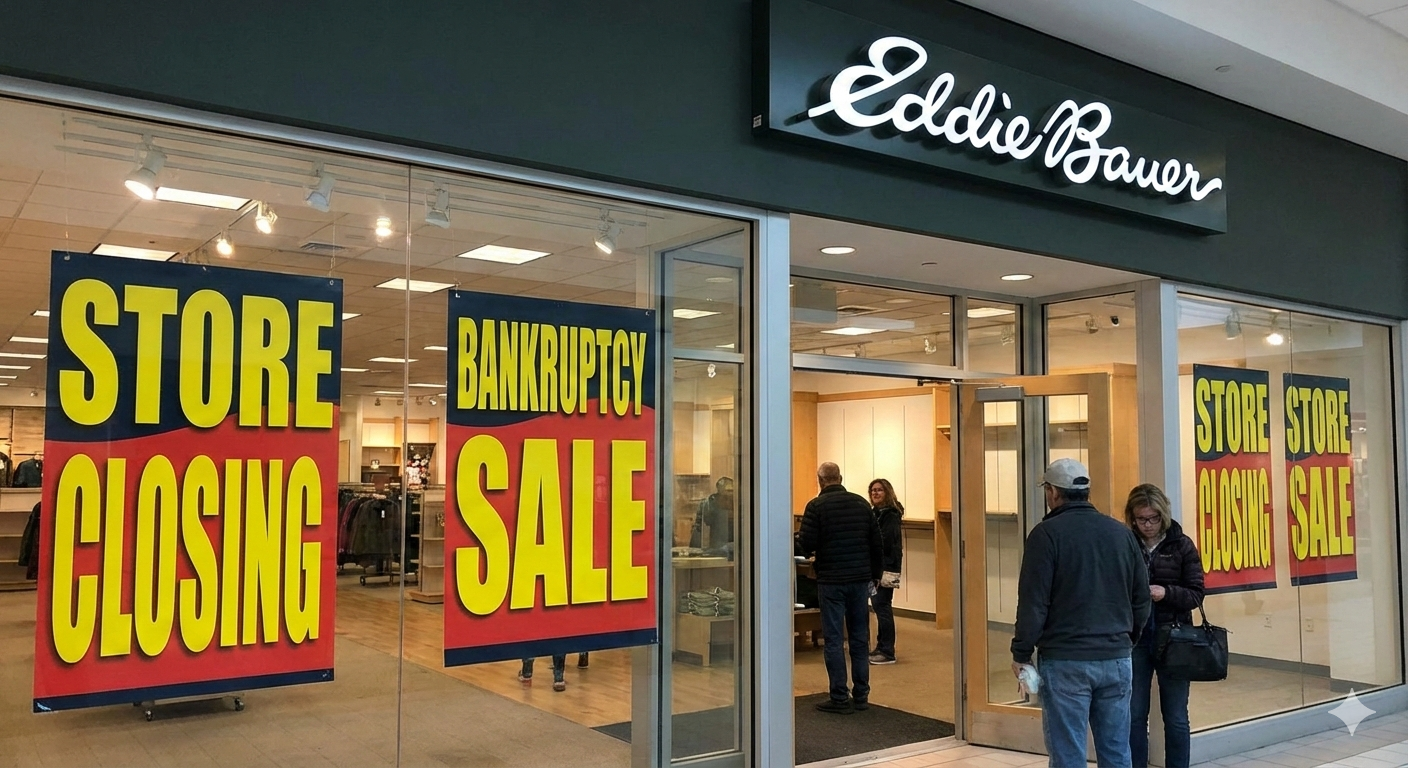
Eddie Bauer Files for Bankruptcy: Iconic Outdoor Retailer Faces Uncertain Future Amid Economic Turbulence
In a significant blow to American retail heritage, Eddie Bauer LLC, the operator of approximately 200 outdoor sportswear stores across the United States and Canada, filed for Chapter 11 bankruptcy protection on Monday. This marks the third time in just over two decades that the venerable outdoor brand has sought court protection from creditors, underscoring the mounting challenges facing traditional brick-and-mortar retailers in an increasingly complex economic landscape.
The Seattle-based retailer, which has been a fixture in the American outdoor apparel industry for more than a century, cited a confluence of factors that have created what company executives describe as insurmountable financial headwinds. These include persistently declining sales, ongoing supply chain disruptions that have plagued retailers since the COVID-19 pandemic, and mounting economic pressures that have fundamentally altered consumer spending patterns across the United States.
The bankruptcy filing comes at a particularly challenging moment for the retail sector, as companies navigate an uncertain economic environment characterized by stubborn inflation, fluctuating interest rates, and growing consumer caution about discretionary spending. For Eddie Bauer, a brand synonymous with quality outdoor gear and American adventure, this latest financial crisis represents not just a corporate setback but a potential turning point in the company’s storied history.
The Perfect Storm: Multiple Challenges Converge on Eddie Bauer
In a candid statement released Monday following the bankruptcy filing, Eddie Bauer LLC painted a picture of a company struggling against multiple simultaneous pressures. The retailer indicated it would continue operating the majority of its brick-and-mortar locations throughout the United States and Canada while actively pursuing a sale of the business to a qualified buyer who can restore the brand to financial stability.
However, the company delivered a sobering warning to employees, customers, and stakeholders: if the search for a suitable buyer proves unsuccessful, stores operated by Eddie Bauer LLC in the U.S. and Canada could face permanent closure. This scenario would represent a devastating blow not only to the thousands of employees who work at these locations but also to shopping centers and communities that have relied on Eddie Bauer as an anchor tenant and employer for decades.
“While the leadership team at Catalyst was able to make significant strides in the brand, including rapid improvements in product development and marketing, those changes could not be implemented fast enough to fully address the challenges created over several years,” explained Marc Rosen, chief executive of Catalyst Brands, the parent company that owns the Eddie Bauer brand. His statement reflects a familiar refrain in modern retail: even when companies recognize problems and implement solutions, the pace of change in today’s marketplace often outstrips the ability of traditional retailers to adapt.
Tariff Uncertainty Creates Additional Pressure
One of the most significant factors cited by Eddie Bauer in its bankruptcy filing is the uncertainty surrounding trade policy and tariffs under the current administration. The company specifically pointed to the Trump administration’s unpredictable tariff policies as a major contributor to its financial distress, adding a layer of complexity to an already challenging business environment.
The outdoor apparel industry has proven particularly vulnerable to trade policy fluctuations. Unlike some retail segments that can source products domestically, outdoor gear manufacturers have developed extensive supply chains spanning multiple countries, particularly in Asia. When tariff policies change rapidly or remain unclear, retailers face difficult decisions about pricing, inventory management, and supplier relationships.
For Eddie Bauer, these tariff concerns have manifested in several ways. First, the uncertainty makes it difficult to accurately forecast costs and set competitive prices. When a retailer cannot predict whether a 10%, 25%, or even higher tariff might be applied to imported goods, it becomes nearly impossible to maintain stable pricing while protecting profit margins. This uncertainty forces companies to either absorb potentially higher costs—reducing profitability—or pass those costs to consumers through price increases, potentially driving customers to competitors.
Second, tariff uncertainty disrupts long-term planning and investment decisions. Retailers need to commit to product designs, manufacturing contracts, and inventory purchases months in advance of selling seasons. When trade policies remain in flux, these commitments become riskier, and retailers may find themselves locked into unfavorable arrangements as policies shift.
Industry analysts have noted that outdoor retailers face particular challenges with tariffs because their products often contain components from multiple countries. A single jacket might include fabric from one nation, zippers and hardware from another, insulation from a third, and final assembly in yet another location. Each component potentially faces different tariff treatment, creating a complex web of costs that can shift unexpectedly.
Inflation Squeezes Consumer Spending and Retail Margins

Beyond tariff concerns, Eddie Bauer’s bankruptcy filing highlights inflation as a critical factor in its financial decline. The persistent inflation that has characterized the American economy over the past several years has created a double-squeeze effect on retailers: costs have risen while consumer purchasing power has declined.
On the cost side, retailers have faced increases across virtually every category of expense. Real estate costs have climbed as property values and rents have increased in many markets. Labor costs have risen significantly as companies compete for workers in a tight employment market and as minimum wage requirements have increased in numerous states and municipalities. Utilities, insurance, and other operational expenses have all trended upward, forcing retailers to find ways to cut costs elsewhere or accept lower profit margins.
Simultaneously, inflation has fundamentally altered consumer behavior. As prices for essentials like groceries, gasoline, housing, and healthcare have increased, American households have been forced to make difficult choices about where to allocate their limited budgets. Discretionary spending categories—including apparel, particularly in the mid-to-premium price range where Eddie Bauer traditionally operates—have suffered as consumers prioritize necessities or trade down to discount retailers.
Recent consumer spending data from early 2025 confirms this trend. Americans have increasingly directed household budgets toward essential categories while pulling back on non-essential purchases. Apparel spending, in particular, has shown weakness as consumers extend the life of existing clothing, shop at discount retailers, or simply reduce their purchases. This shift has proven especially challenging for mid-market retailers like Eddie Bauer, which face pressure from both discount competitors offering lower prices and premium brands that successfully position their products as aspirational purchases worth the investment.
A Troubled History: Eddie Bauer’s Previous Bankruptcy Filings
For those familiar with retail industry history, Eddie Bauer’s latest bankruptcy filing carries an unsettling sense of déjà vu. This marks the third time the outdoor retailer has sought Chapter 11 protection, following previous filings in 2003 and 2009. This pattern of repeated financial distress raises important questions about the fundamental viability of the Eddie Bauer business model in the modern retail environment.
The company’s first bankruptcy filing in 2003 came during a period of significant transition in American retail. E-commerce was beginning to gain traction, traditional mall traffic was starting to decline in some markets, and outdoor retailers faced increasing competition from big-box sporting goods stores and specialty chains. Eddie Bauer emerged from that bankruptcy under new ownership, but the underlying challenges facing the brand persisted.
Just six years later, in 2009, Eddie Bauer filed for bankruptcy protection again, this time as a direct consequence of the Great Recession and the 2008 financial crisis. As the American economy plunged into its worst downturn since the Great Depression, consumer spending collapsed, credit markets froze, and retailers found themselves struggling to survive. Eddie Bauer was among hundreds of retail chains that sought bankruptcy protection during this period, joining a roster that included numerous well-known brands that either liquidated entirely or emerged as shadows of their former selves.
The fact that Eddie Bauer has now filed for bankruptcy a third time, despite successfully emerging from two previous restructurings, highlights the persistent structural challenges the brand faces. Each bankruptcy provides an opportunity to reduce debt, renegotiate leases, and reset the business on more sustainable footing. However, if the fundamental business model remains challenged—whether due to brand positioning, cost structure, competitive dynamics, or management execution—even successful bankruptcy restructurings may only delay rather than prevent future financial crises.
Lessons from Retail History
Retail history is littered with once-dominant brands that filed for bankruptcy multiple times before ultimately liquidating. The pattern typically follows a predictable arc: an initial bankruptcy allows the company to shed debt and unprofitable locations, creating a brief period of improved financial performance. However, if the company fails to fundamentally transform its business model, address competitive weaknesses, or adapt to changing consumer preferences, the same problems that caused the first bankruptcy eventually resurface.
For Eddie Bauer, the challenge has been navigating a retail landscape that has changed dramatically over the past two decades. The brand built its reputation during an era when Americans shopped primarily at physical stores, when outdoor recreation was growing in popularity, and when brand heritage and quality carried significant weight with consumers. While these attributes still matter, they must now compete against an array of new factors: price transparency through online shopping, the convenience of home delivery, the influence of social media on brand perception, and the rise of direct-to-consumer brands that bypass traditional retail channels entirely.
Operational Changes: What Happens Next for Stores and Customers
As Eddie Bauer navigates the bankruptcy process, the company has outlined several key operational changes designed to preserve value while searching for a buyer. Understanding these changes is crucial for employees, customers, landlords, suppliers, and other stakeholders who have relationships with the retailer.
Store Operations During Bankruptcy
According to company representatives, there is currently no specific timeline for when individual Eddie Bauer store closures might occur. This uncertainty reflects the nature of Chapter 11 bankruptcy, which is designed to allow companies to continue operating while reorganizing their finances. Unlike Chapter 7 liquidation bankruptcy, where a company immediately ceases operations and sells assets, Chapter 11 provides breathing room for companies to pursue alternatives that might preserve the business.
Eddie Bauer has emphasized that most of its approximately 200 locations across the United States and Canada will remain open during the bankruptcy proceedings. This decision serves multiple purposes. First, operating stores generate revenue that helps fund the bankruptcy process and demonstrates to potential buyers that the brand retains customer loyalty and market presence. Second, maintaining operations preserves jobs for employees, at least temporarily, and fulfills obligations to customers who may have outstanding orders, gift cards, or loyalty program benefits. Third, keeping stores open maintains relationships with landlords and shopping centers, which can be important if a buyer emerges who wants to continue operating some locations.
However, the company’s statement included an important caveat: if the sale process fails to identify a suitable buyer, closures could follow. This scenario would likely unfold in phases, with underperforming locations closing first while the company attempts to find buyers for remaining stores, potentially in smaller groups or individual locations. Alternatively, the company might liquidate inventory through going-out-of-business sales across all locations simultaneously.
International Operations Remain Separate
An important distinction for customers and employees outside the United States and Canada is that Eddie Bauer locations in other countries will remain unaffected by this bankruptcy filing. These international stores operate under licensing agreements with separate companies that have the rights to use the Eddie Bauer brand name and sell Eddie Bauer products in specific geographic markets.
This licensing model is common in retail, allowing brands to expand internationally without the capital investment and operational complexity of opening company-owned stores in foreign markets. Instead, local partners who understand their markets handle real estate, staffing, inventory, and daily operations, paying the brand owner a royalty based on sales.
For the Eddie Bauer brand, these international licensing relationships represent valuable assets that could make the brand more attractive to potential buyers. Even if the U.S. and Canadian retail operations ultimately close, the brand could continue to exist internationally and potentially be relaunched in North America under new ownership at some future date.
E-Commerce and Wholesale Transition
Recognizing that online sales represent an increasingly important revenue channel, Eddie Bauer has arranged for its e-commerce and wholesale operations to transition to a different entity called Outdoor 5 LLC. This move ensures that customers can continue shopping online even as the bankruptcy process unfolds and provides continuity for wholesale partners who sell Eddie Bauer products.
The decision to separate digital operations from physical retail reflects broader industry trends. Many retailers have discovered that their e-commerce operations are more profitable and have better growth prospects than their store fleets. By transferring these operations to a separate entity, Eddie Bauer preserves what may be the most valuable component of its business while the future of physical stores remains uncertain.
For customers, this transition should be largely seamless. The Eddie Bauer website is expected to remain operational, accepting orders and fulfilling shipments. Online inventory, pricing, and promotional activities should continue largely as before, though customers may notice changes in product selection or offerings as the new entity establishes its operations.
Wholesale operations—selling Eddie Bauer products through other retailers or distribution channels—represent another revenue stream that benefits from separation from the bankruptcy proceeding. Wholesale partners often become nervous when retailers file for bankruptcy, worrying about product quality, delivery reliability, and brand reputation. By moving these operations to Outdoor 5 LLC, Eddie Bauer provides reassurance to wholesale partners and protects these business relationships.
Part of a Broader Retail Crisis in 2025
Eddie Bauer’s bankruptcy filing represents just one chapter in what has become a challenging year for American retailers. The company joins a growing list of retail brands that have sought bankruptcy protection in 2025, raising concerns about the health of the broader retail sector and the sustainability of traditional shopping mall and department store models.
Saks Global Bankruptcy Signals Luxury Market Troubles
Perhaps the most notable retail bankruptcy of early 2025 came from Saks Global, the luxury department store operator that filed for Chapter 11 protection in January. The Saks bankruptcy carries particular significance because it demonstrates that even high-end retailers serving affluent customers are not immune to broader economic pressures.
Saks Global’s financial troubles stem from multiple sources. The company was carrying enormous debt loads following its acquisition of rival luxury department store chain Neiman Marcus, a deal that was intended to create synergies and strengthen both brands’ competitive positions against online luxury retailers. However, the combined company found itself burdened with debt service obligations that consumed cash flow and limited investment in necessary improvements to stores and technology.
Additionally, the luxury retail market has experienced a significant downturn as wealthy consumers have become more cautious about conspicuous consumption. Economic uncertainty, stock market volatility, and concerns about the future have caused even affluent shoppers to reduce discretionary spending. The luxury resale market has also grown dramatically, allowing consumers to buy and sell high-end items secondhand, effectively competing with traditional luxury retailers.
For the retail industry, the Saks bankruptcy sends a troubling signal. If even luxury retailers serving the wealthiest consumers are struggling, it suggests systemic challenges that extend beyond any single company’s execution or strategy. It indicates that fundamental changes in how Americans shop, what they value, and where they spend their money are reshaping retail in ways that may leave many traditional players struggling to survive.
Analyzing Broader Retail Sector Trends
Industry analysts tracking retail bankruptcies in 2025 have identified several common themes among struggling companies. First, many retailers facing financial distress carry excessive debt, often from leveraged buyouts or acquisitions that occurred during periods when credit was cheap and readily available. When business conditions deteriorate or interest rates rise, these debt obligations become unsustainable.
Second, retailers with extensive physical store fleets face structural disadvantages compared to digital-native competitors. Real estate costs, staffing requirements, and inventory management complexities create fixed costs that online retailers largely avoid. While physical stores can provide valuable customer experiences and serve as distribution points for online orders, many retailers have struggled to optimize their store fleets for this new role.
Third, shifting consumer preferences continue to disrupt traditional retail categories. Younger consumers, in particular, prioritize experiences over possessions, sustainability over fast fashion, and authenticity over traditional brand prestige. Retailers that fail to adapt to these evolving values find themselves losing relevance, particularly among the demographic groups that represent future growth.
Fourth, the rise of social media and influencer marketing has transformed how consumers discover products and make purchasing decisions. Traditional advertising and brand-building approaches that worked for decades have lost effectiveness, while new marketing channels require different expertise and approaches. Established retailers often struggle to compete against digitally-native brands that built their businesses around social media from inception.
The Outdoor Retail Segment Faces Unique Challenges
Within the broader retail landscape, the outdoor apparel and equipment category where Eddie Bauer competes faces its own set of unique challenges and opportunities. Understanding these dynamics provides important context for Eddie Bauer’s struggles and the likelihood that a buyer will emerge to rescue the brand.
Market Saturation and Intense Competition
The outdoor retail market has become increasingly crowded over the past two decades. Where Eddie Bauer once competed primarily against a handful of specialty outdoor retailers and general sporting goods stores, today’s competitive landscape includes dozens of brands targeting various price points and customer segments.
At the premium end, brands like Patagonia, Arc’teryx, and The North Face have successfully positioned themselves as aspirational outdoor brands that command high prices based on technical performance, sustainability credentials, and lifestyle cachet. These brands have cultivated devoted customer bases willing to pay substantial premiums for products that signal environmental values, adventure aspirations, and discerning taste.
In the mid-market where Eddie Bauer traditionally operates, competition has intensified from multiple directions. Brands like Columbia Sportswear, L.L. Bean, and REI offer similar product categories at comparable price points, creating a crowded field where differentiation becomes challenging. Additionally, general apparel retailers like J.Crew, Banana Republic, and even fast-fashion chains have introduced outdoor-inspired casual wear that competes for customer dollars without making technical performance claims.
At the value end of the market, retailers like Costco, Sam’s Club, and Amazon have begun offering outdoor apparel and equipment at prices that undercut specialty retailers by significant margins. While these products may not offer the same performance characteristics or durability as premium brands, they meet the needs of many consumers who participate in outdoor activities occasionally rather than seriously.
Changing Participation Patterns in Outdoor Recreation
The outdoor recreation industry experienced significant growth during the COVID-19 pandemic as Americans sought safe activities they could enjoy while maintaining social distance. Hiking, camping, cycling, and other outdoor pursuits saw surges in participation, and outdoor retailers initially benefited from increased demand.
However, as pandemic restrictions eased and people returned to indoor activities, gyms, travel, and other pre-pandemic pursuits, some of the COVID-era outdoor recreation participation proved temporary. While overall outdoor recreation remains popular, the explosive growth that outdoor retailers enjoyed during 2020 and 2021 has moderated, leaving companies that expanded capacity or inventory to meet pandemic-era demand facing oversupply situations.
Additionally, how people participate in outdoor activities has evolved in ways that don’t always benefit traditional outdoor retailers. Many outdoor enthusiasts now rent equipment rather than purchasing it, use peer-to-peer platforms to buy used gear, or shop online for the lowest prices rather than visiting specialty stores where they might receive expert advice but pay higher prices.
Sustainability and Ethical Consumption
Modern outdoor consumers, particularly younger demographics, increasingly prioritize sustainability and ethical production practices when making purchasing decisions. Brands like Patagonia have built enormous customer loyalty by authentically committing to environmental causes, transparent supply chains, and durable products designed to last for years rather than seasons.
For Eddie Bauer, adapting to these evolving consumer values has proven challenging. The brand’s heritage and history provide authenticity, but translating that into credible sustainability credentials requires significant investment in supply chain changes, materials sourcing, and transparent reporting—investments that may be difficult for a financially struggling company to make.
Additionally, the rise of the outdoor industry’s focus on diversity and inclusion has created opportunities for brands that authentically represent and serve diverse communities while potentially leaving behind brands perceived as catering primarily to traditional (predominantly white, male) outdoor enthusiasts. Successfully navigating these cultural shifts requires more than marketing—it demands genuine commitment reflected in hiring, community partnerships, and product development.
The Bankruptcy Process: What Happens Next
For those unfamiliar with corporate bankruptcy, understanding the Chapter 11 process helps clarify what Eddie Bauer faces in coming months and what outcomes are possible. Chapter 11 bankruptcy is specifically designed to allow companies to reorganize their finances while continuing operations, ideally emerging as stronger, more viable businesses.
Immediate Effects of the Filing
When Eddie Bauer filed for Chapter 11 bankruptcy, an automatic stay immediately went into effect, preventing creditors from pursuing collection actions against the company. This stay provides breathing room for Eddie Bauer to develop a reorganization plan without facing immediate demands for payment from suppliers, landlords, lenders, or other creditors.
The bankruptcy court will appoint a trustee or allow Eddie Bauer to operate as a “debtor in possession,” continuing to manage the business under court oversight. The company must provide regular financial reports to the court and obtain approval for major business decisions, such as closing significant numbers of stores, signing large contracts, or selling substantial assets.
Creditors will be organized into committees representing different groups with claims against Eddie Bauer. Secured creditors (typically lenders with collateral backing their loans) generally have priority, followed by unsecured creditors (suppliers, landlords, and others), with equity holders (owners of the company) typically receiving value only after all creditors are satisfied.
The Sale Process
Eddie Bauer has indicated its intention to pursue a sale of the business rather than developing a standalone reorganization plan. This approach, sometimes called a “363 sale” after the relevant section of bankruptcy code, allows companies to auction their assets to the highest qualified bidder under court supervision.
The sale process typically begins with Eddie Bauer and its advisors identifying potential buyers and soliciting preliminary indications of interest. Potential buyers might include private equity firms specializing in retail turnarounds, competitors in the outdoor retail space, licensing companies interested in the Eddie Bauer brand, or other investors who believe they can restore the company to profitability.
Qualified bidders will receive access to detailed financial information and operational data through a process called due diligence. They’ll examine Eddie Bauer’s sales trends, real estate leases, supply contracts, customer data, and other information necessary to evaluate the business. Based on this analysis, bidders will submit offers that might include acquiring all Eddie Bauer stores, just profitable locations, only the brand and online business, or various other combinations.
The bankruptcy court will ultimately approve any sale, ensuring that creditors receive fair value and that the process has been conducted appropriately. If multiple qualified bids emerge, the court may conduct an auction where bidders can compete, potentially driving up the price and maximizing value for creditors.
Possible Outcomes
Several scenarios could unfold from Eddie Bauer’s bankruptcy filing. In the best-case scenario, a qualified buyer emerges who sees value in the Eddie Bauer brand and believes they can operate the business profitably. This buyer might acquire most or all stores, retain much of the workforce, and invest in revitalizing the brand. Under this scenario, customers might notice relatively little change beyond new ownership and perhaps gradual improvements to products, stores, and marketing.
Alternatively, a buyer might acquire only portions of the business—perhaps the brand and online operations while closing most or all physical stores. This outcome would preserve the Eddie Bauer brand and allow it to continue serving customers digitally while eliminating the costs and complexities of operating retail locations. Employees at stores would lose their jobs, but corporate and e-commerce positions might continue.
A third scenario involves liquidation if no qualified buyer emerges. Under this outcome, Eddie Bauer would hold going-out-of-business sales at all locations, sell remaining inventory, terminate leases, and distribute proceeds to creditors according to bankruptcy priority rules. The Eddie Bauer brand might be sold separately to a company interested in licensing it for use in other countries or product categories, but Eddie Bauer as an operating company in North America would cease to exist.
Impact on Stakeholders
Eddie Bauer’s bankruptcy affects multiple groups of stakeholders, each facing different risks and uncertainties as the process unfolds.
Employees Face Job Uncertainty
For the thousands of Eddie Bauer employees working in stores, distribution centers, and corporate offices, the bankruptcy filing creates profound uncertainty. While the company has pledged to minimize impacts on workers, bankruptcy proceedings inevitably result in job losses as companies reduce costs and restructure operations.
Store employees face the greatest risk, particularly those working at underperforming locations that a potential buyer might not want to retain. Even if stores remain open during the bankruptcy process, the knowledge that closures could come at any time creates stress and may cause some employees to seek other opportunities rather than risk unemployment.
Distribution center and logistics employees face similar uncertainty, as a new owner might consolidate operations or move fulfillment to different facilities. Corporate employees may have somewhat better prospects if a buyer emerges who wants to retain institutional knowledge and relationships, but restructurings typically include significant corporate staff reductions.
Beyond job security, employees face practical concerns about benefits, accrued vacation time, and retirement accounts. Bankruptcy law provides some protections for employee wages and benefits, but workers often find themselves among many creditors competing for limited resources.
Customer Considerations
For Eddie Bauer customers, the bankruptcy raises several immediate questions. Those holding gift cards or store credits worry about whether these will be honored, particularly if liquidation becomes necessary. Generally, bankruptcy courts allow retailers to honor gift cards during restructuring to maintain customer goodwill, but there are no guarantees.
Customers with outstanding orders face uncertainty about whether products will be delivered as expected. Again, companies typically attempt to fulfill existing orders to maintain customer relationships, but disruptions can occur, particularly if suppliers reduce shipments due to payment concerns.
Loyalty program members wonder whether their accumulated points or status will retain value. These programs represent liabilities for companies and may be modified or eliminated as part of restructuring efforts.
Beyond these immediate concerns, loyal Eddie Bauer customers face the prospect of potentially losing a brand they trust and stores they frequent. For some customers, particularly in smaller communities where Eddie Bauer may be the only specialty outdoor retailer, store closures could eliminate convenient access to products they rely on.
Landlord and Real Estate Impacts
Shopping centers and landlords that lease space to Eddie Bauer face their own set of challenges. Eddie Bauer’s bankruptcy allows the company to reject unfavorable leases, potentially leaving landlords with vacant space in an already challenging retail real estate market.
Anchor tenants like Eddie Bauer often play crucial roles in shopping centers, generating foot traffic that benefits smaller retailers and helping maintain property values. When anchor tenants close, shopping centers can enter downward spirals as remaining tenants struggle with reduced traffic, leading to additional closures and declining property values.
Landlords typically have claims in bankruptcy for unpaid rent and for damages from rejected leases, but they often recover only a fraction of what they’re owed. This dynamic has contributed to broader struggles in the retail real estate sector, where property owners face declining values and limited refinancing options as traditional retail tenants disappear.
Supplier Relationships at Risk
Companies that supply products, materials, or services to Eddie Bauer face significant risks from the bankruptcy. Suppliers often have substantial amounts owed to them for goods delivered or services provided before the bankruptcy filing. In Chapter 11, these pre-bankruptcy debts become unsecured claims that may receive only partial payment, forcing suppliers to write off significant losses.
Looking forward, suppliers must decide whether to continue doing business with Eddie Bauer during the bankruptcy. While the company’s post-bankruptcy obligations generally receive priority treatment, suppliers worry about payment reliability and whether the business will survive. Some suppliers may demand cash on delivery or other protections, while others may reduce or eliminate shipments, potentially creating inventory shortages that undermine Eddie Bauer’s sale prospects.
For smaller suppliers for whom Eddie Bauer represents a significant customer, these decisions can be agonizing. Continuing to supply Eddie Bauer risks further losses if the company liquidates, but cutting off the relationship guarantees the loss of a major customer and may make liquidation more likely.
Can Eddie Bauer Be Saved? Analyzing Turnaround Prospects
As Eddie Bauer pursues a sale, potential buyers will evaluate whether the brand and business can be restored to profitability. Several factors will influence this assessment and determine whether serious bidders emerge.
Brand Value and Customer Loyalty
Despite its financial struggles, Eddie Bauer retains significant brand recognition and a base of loyal customers who value the company’s heritage, product quality, and outdoor lifestyle associations. This brand equity represents real value that could be leveraged by new ownership with the capital and expertise to revitalize the business.
Brand turnarounds in retail are certainly possible. Companies like J.Crew, Converse, and others have successfully emerged from difficulties under new ownership that repositioned products, updated marketing, and reconnected with core customers. The question for Eddie Bauer is whether similar potential exists and whether the brand’s challenges are primarily executional or reflect more fundamental issues with market positioning.
Real Estate Portfolio Considerations
Eddie Bauer’s portfolio of approximately 200 store locations will receive close scrutiny from potential buyers. Some stores may occupy valuable real estate in strong shopping centers with favorable lease terms, representing assets rather than liabilities. Other locations may be in struggling malls or strip centers with unfavorable economics, representing obligations a buyer would want to shed.
A sophisticated buyer might see opportunity in rightsizing Eddie Bauer’s store fleet, retaining profitable locations while closing underperformers and renegotiating lease terms for marginal stores. This approach could potentially create a smaller but more profitable retail footprint that complements rather than competes with online sales.
E-Commerce and Digital Opportunity
The separation of Eddie Bauer’s e-commerce operations into Outdoor 5 LLC preserves what may be the business’s most valuable component. Online sales generate higher margins than stores, require less capital investment, and can reach customers across North America and potentially globally.
A buyer interested primarily in the digital business might acquire the brand and online operations while allowing physical stores to close, using remaining store locations primarily as fulfillment points or limited showrooms rather than traditional retail spaces. This approach aligns with broader retail trends toward digitally-led business models.
Competition for Distressed Retail Assets
Eddie Bauer will compete for buyer attention against other distressed retail opportunities. Private equity firms and turnaround specialists have limited capital and must choose which opportunities offer the best risk-reward profiles. If more attractive retail investments are available, Eddie Bauer may struggle to generate competitive bids.
Additionally, the track record of retail turnarounds in recent years is mixed at best. Many retail acquisitions that seemed promising have ultimately failed as industry headwinds proved too powerful to overcome. This history may make potential buyers cautious about committing significant capital to Eddie Bauer without clear evidence that sustainable profitability can be achieved.
Conclusion: An Uncertain Future for an American Icon
As Eddie Bauer navigates its third bankruptcy in just over two decades, the outdoor retailer stands at a crossroads that will determine whether this American brand survives or joins the growing list of retail casualties unable to adapt to 21st-century commerce.
The challenges facing Eddie Bauer reflect broader forces reshaping American retail: the shift to e-commerce, changing consumer preferences, economic uncertainty, and intense competition from both premium brands and discount retailers. The company’s specific struggles with tariff uncertainty, inflation, and supply chain challenges have accelerated a decline that began years before these recent pressures emerged.
For the thousands of Eddie Bauer employees showing up to work each day amid uncertainty about their futures, the coming months will be anxious ones. For customers who have relied on Eddie Bauer for outdoor gear and apparel, the bankruptcy raises questions about where they’ll shop if their local stores close. For landlords, suppliers, and other business partners, the filing creates financial losses and operational challenges.
Yet bankruptcy also represents opportunity—a chance to reset Eddie Bauer’s business model, shed unprofitable obligations, and potentially find new ownership with the vision and resources to restore the brand to relevance. The outdoor retail market remains substantial, and Americans’ interest in outdoor recreation remains strong. A well-executed turnaround could position Eddie Bauer to serve this market profitably for decades to come.
Whether such a turnaround materializes depends on factors that will unfold in coming months: whether qualified buyers emerge, what they’re willing to pay, and how they envision Eddie Bauer’s future. The bankruptcy court will oversee this process, attempting to maximize value for creditors while providing opportunity for the business to continue if viable.
For now, most Eddie Bauer stores remain open, the website continues taking orders, and employees continue serving customers. But everyone connected to the brand understands that this period of apparent normalcy may be temporary, and that significant changes lie ahead.
The Eddie Bauer story reminds us that even brands with century-long histories and strong customer loyalty are not guaranteed survival in today’s rapidly evolving retail landscape. Success requires not just heritage and quality products, but also adaptability, financial discipline, and the ability to meet customers where they are rather than where retailers wish they would be.
As this chapter in Eddie Bauer’s long history unfolds, stakeholders across the retail industry will watch closely. The outcome will provide insights into whether traditional outdoor retailers can successfully navigate current challenges or whether the future of outdoor retail belongs primarily to premium lifestyle brands, discount operators, and digital-native companies that never embraced the store-based model that Eddie Bauer and similar retailers built their businesses around.
Related News :
ICE Agent Fatally Shoots U.S. Citizen in Minneapolis During Immigration Raid: What We Know
Social Connect

