

Debt Consolidation vs. Bankruptcy: Which Financial Relief Option Is Right for You in 2025?
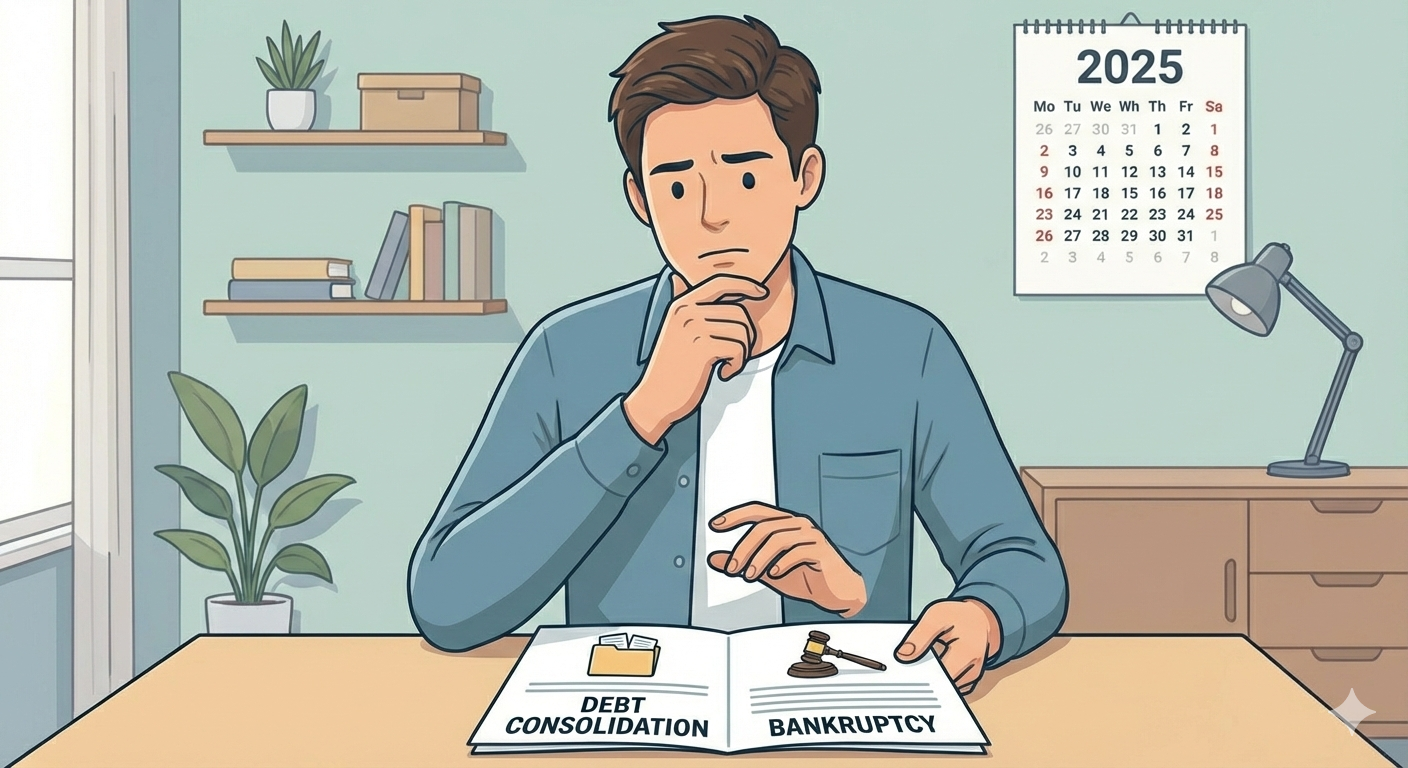
As American households grapple with rising credit card debt, student loans, and mounting financial pressures in 2025, millions are searching for viable solutions to regain control of their finances. Two of the most common debt relief strategies—debt consolidation and bankruptcy—offer dramatically different paths to financial recovery, each with distinct advantages, drawbacks, and long-term implications for your credit and financial future.
With consumer debt in the United States reaching unprecedented levels—totaling over $17 trillion according to recent Federal Reserve data—understanding your options for managing overwhelming financial obligations has never been more critical. Whether you’re dealing with maxed-out credit cards, medical bills, personal loans, or a combination of debts, choosing the right strategy can mean the difference between a fresh financial start and years of continued struggle.
This comprehensive guide examines both debt consolidation and bankruptcy in detail, helping you understand when each option makes sense, how they work, their impact on your credit score, and what alternatives might be available based on your unique financial situation.
Understanding the American Debt Crisis in 2025
Before diving into specific debt relief solutions, it’s important to understand the broader context of consumer debt in America today. The financial landscape has shifted dramatically over the past several years, creating unprecedented challenges for ordinary households.
Record-High Consumer Debt Levels
American consumers are carrying more debt than ever before. Credit card balances have surged past $1.1 trillion nationally, with the average American household carrying approximately $8,000 to $10,000 in credit card debt alone. When you add student loans (over $1.7 trillion collectively), auto loans, personal loans, and medical debt, the total picture becomes overwhelming for millions of families.
What makes this situation particularly challenging is that interest rates on credit cards have climbed to levels not seen in decades. Many credit cards now charge annual percentage rates (APRs) of 20% to 30% or even higher, making it extremely difficult for consumers to pay down principal balances when minimum payments barely cover monthly interest charges.
Inflation and Economic Pressures
The persistent inflation that characterized 2022 through 2024 continues to affect household budgets in 2025. While inflation rates have moderated somewhat from their peaks, prices for essentials like groceries, housing, utilities, and transportation remain significantly higher than just a few years ago.
This squeeze between stagnant wages and higher costs has forced many Americans to rely increasingly on credit cards to bridge the gap between income and expenses. What often begins as temporary reliance on credit for emergencies or unexpected expenses can quickly spiral into unmanageable debt loads as interest compounds and balances grow.
Rising Interest Rates Impact Debt Servicing
The Federal Reserve’s actions to combat inflation included raising interest rates multiple times, and these higher rates have directly impacted consumers carrying variable-rate debt. Credit card rates, which are typically tied to the prime rate, have increased substantially, meaning that consumers are paying more each month just to service existing debt.
For households already stretched thin, even a few percentage points of additional interest can make the difference between manageable monthly payments and financial crisis. This environment has driven record numbers of Americans to seek debt relief solutions.
What Is Debt Consolidation?
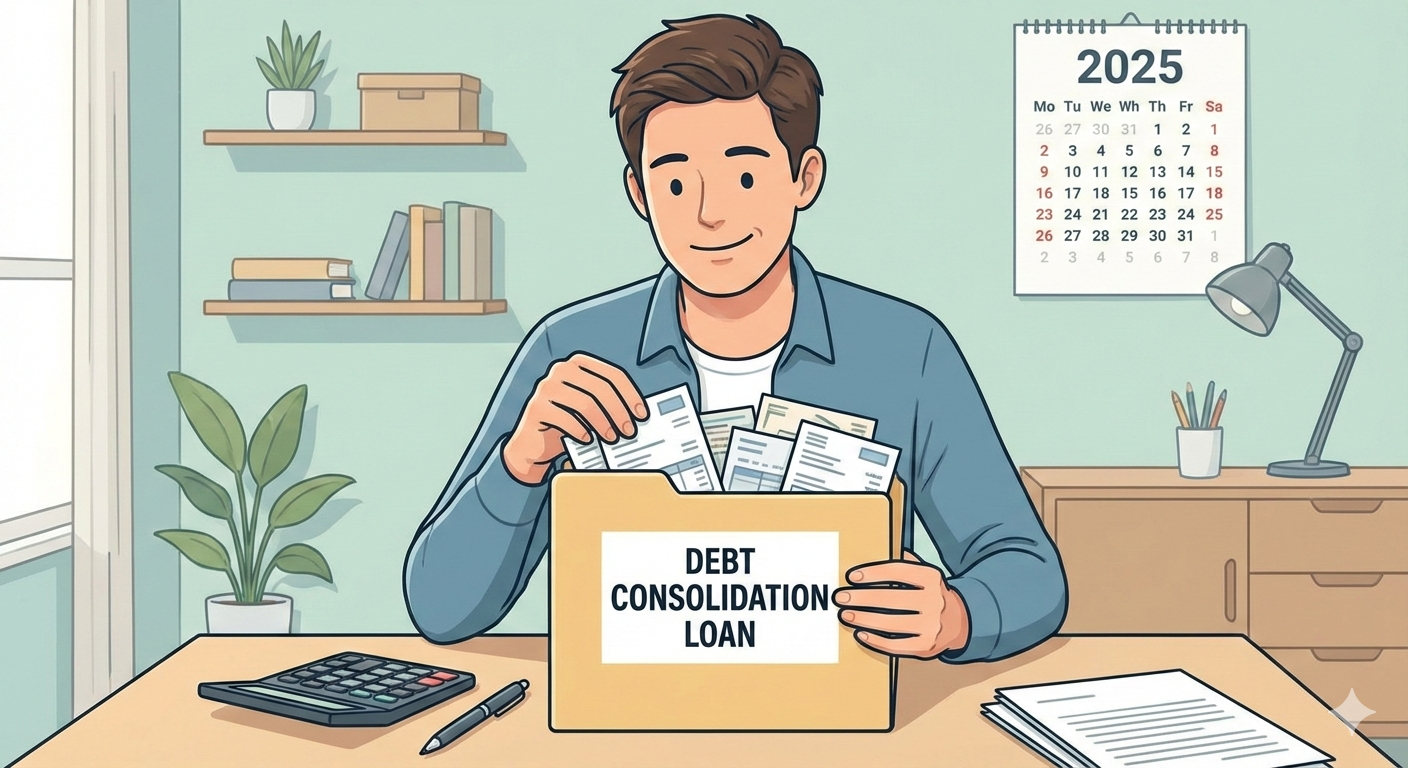
Debt consolidation is a financial strategy that involves combining multiple debts into a single new loan or payment plan, ideally with a lower interest rate or more manageable monthly payment. The goal is to simplify your finances while potentially reducing the total amount you pay in interest over time.
How Debt Consolidation Works
The basic concept of debt consolidation is straightforward: instead of juggling multiple credit card payments, personal loans, and other debts with different due dates, interest rates, and minimum payments, you take out one new loan large enough to pay off all your existing debts. You then make a single monthly payment on this consolidation loan.
For example, imagine you have:
- Credit Card A: $5,000 balance at 24% APR
- Credit Card B: $3,000 balance at 21% APR
- Personal Loan: $4,000 balance at 18% APR
- Medical Bill: $2,000 at 0% but in collections
Rather than managing four separate payments totaling perhaps $400-500 monthly, you might obtain a debt consolidation loan for $14,000 at 12% APR with a single monthly payment of $315 over five years. You use this loan to immediately pay off all four debts, then focus on repaying just the consolidation loan.
Types of Debt Consolidation Options
Several different methods exist for consolidating debt, each with its own requirements, benefits, and potential drawbacks:
1. Personal Debt Consolidation Loans
Personal loans from banks, credit unions, or online lenders are among the most common consolidation tools. These unsecured loans typically offer fixed interest rates and repayment terms ranging from two to seven years.
Advantages:
- Fixed monthly payment that doesn’t change
- Potentially lower interest rates than credit cards
- Clear payoff timeline
- No collateral required for unsecured loans
Disadvantages:
- Requires good to excellent credit for best rates
- May include origination fees (1% to 8% of loan amount)
- Doesn’t address underlying spending habits
- Taking on new debt to pay old debt
2. Balance Transfer Credit Cards
Balance transfer cards offer promotional periods (typically 12 to 21 months) with 0% APR on transferred balances. This allows you to pay down debt without accumulating additional interest during the promotional period.
Advantages:
- Zero interest during promotional period
- Can save substantial money on interest
- Keeps credit lines open (may help credit score)
- Rewards programs on some cards
Disadvantages:
- Balance transfer fees (typically 3% to 5%)
- High interest rates after promotional period ends
- Requires good credit for approval
- Risk of accumulating new debt on old cards
- Must pay off balance before promotional period ends
3. Home Equity Loans or HELOCs
Homeowners with equity in their properties can borrow against that equity through a home equity loan (fixed rate, lump sum) or home equity line of credit (HELOC – variable rate, revolving credit line).
Advantages:
- Generally lower interest rates (secured by property)
- Interest may be tax-deductible in some cases
- Large borrowing amounts available
- Longer repayment terms possible
Disadvantages:
- Your home becomes collateral (risk of foreclosure)
- Closing costs and fees can be substantial
- Reduces home equity you’ve built
- Converts unsecured debt to secured debt
- Not available to renters or those without sufficient equity
4. Debt Management Plans (DMPs)
Offered through nonprofit credit counseling agencies, DMPs involve working with a counselor who negotiates with your creditors for lower interest rates and waived fees. You make a single monthly payment to the agency, which distributes funds to your creditors.
Advantages:
- Professional guidance and support
- Potential interest rate reductions
- Single monthly payment
- Creditors may waive late fees and over-limit charges
- No new loan required
Disadvantages:
- Monthly fees to the credit counseling agency
- Must close credit card accounts (impacts credit score)
- Typically takes 3-5 years to complete
- Not all creditors participate
- Requires consistent monthly payments
5. 401(k) Loans
Some employer retirement plans allow participants to borrow against their 401(k) balance, typically up to 50% of the vested balance or $50,000, whichever is less.
Advantages:
- No credit check required
- Relatively low interest rates
- Interest paid goes back to your own account
- No tax penalties if repaid on schedule
Disadvantages:
- Reduces retirement savings and growth
- Must repay if you leave your job (often within 60-90 days)
- Opportunity cost of lost investment returns
- Potential tax consequences if defaulted
- Not recommended except in extreme circumstances
When Debt Consolidation Makes Sense
Debt consolidation can be an effective strategy if you meet certain criteria:
- You have good to excellent credit (typically 670+ FICO score)
- You can qualify for an interest rate lower than your current average rate
- You have steady income to make consistent monthly payments
- Your total debt is manageable (generally less than 40% of gross income)
- You’re committed to not accumulating new debt
- You have a plan to address the behaviors that led to debt accumulation
Debt consolidation works best for people who have gotten into debt due to temporary circumstances (medical emergency, job loss, unexpected expenses) rather than chronic overspending, and who have stabilized their financial situation enough to commit to a structured repayment plan.
When Debt Consolidation May Not Be Appropriate
Conversely, debt consolidation may not help—and could even worsen your situation—if:
- Your debt exceeds 50% of your gross annual income
- You cannot qualify for a lower interest rate than you currently pay
- You haven’t addressed underlying spending problems
- Your credit score is too low to qualify for favorable terms
- You’re considering using retirement funds (except as absolute last resort)
- You’re already missing payments or facing collection actions
- You have judgments, liens, or garnishments against you
In these circumstances, debt consolidation may simply delay inevitable financial reckoning while potentially adding new debt obligations you can’t sustain.
Understanding Bankruptcy: A Fresh Start or Last Resort?
Bankruptcy represents a legal process through which individuals or businesses can seek relief from debts they cannot reasonably repay. While bankruptcy carries significant consequences and social stigma, it exists precisely to provide honest debtors with a path to financial recovery when circumstances become truly overwhelming.
The Constitutional Right to Bankruptcy
Bankruptcy protection is actually written into the U.S. Constitution (Article I, Section 8), reflecting the founders’ belief that people should have legal recourse to recover from financial disasters. The modern bankruptcy code, last substantially revised in 2005, balances the interests of debtors seeking relief against creditors seeking repayment.
Types of Personal Bankruptcy
Two primary bankruptcy chapters apply to individuals and families:
Chapter 7 Bankruptcy: Liquidation
Chapter 7, often called “straight bankruptcy” or “liquidation bankruptcy,” involves a court-appointed trustee potentially selling (liquidating) your non-exempt assets to repay creditors. Most unsecured debts are then discharged (legally eliminated).
How Chapter 7 Works:
- You file a petition with the bankruptcy court listing all assets, debts, income, and expenses
- An automatic stay immediately stops most collection actions, lawsuits, and garnishments
- A trustee is appointed to review your case
- Creditors may file claims for repayment
- The trustee determines which assets are exempt (protected) under federal or state law
- Non-exempt assets may be sold to repay creditors
- Most remaining unsecured debts are discharged (eliminated)
- The process typically takes 4-6 months from filing to discharge
Debts Typically Discharged in Chapter 7:
- Credit card debt
- Medical bills
- Personal loans
- Utility bills
- Collection accounts
- Old income taxes (meeting specific criteria)
- Lawsuit judgments (with some exceptions)
Debts NOT Discharged in Chapter 7:
- Recent income taxes (less than 3 years old)
- Student loans (except in cases of undue hardship)
- Child support and alimony
- Debts from fraud or intentional injury
- DUI-related obligations
- Most government fines and penalties
- Debts not listed in bankruptcy filing
Chapter 7 Eligibility – Means Test:
Not everyone qualifies for Chapter 7. The 2005 bankruptcy reform law instituted a “means test” to prevent abuse. You must either:
- Have income below your state’s median income for your household size, OR
- Pass a complex calculation showing insufficient disposable income to repay debts
If your income is too high, you may be required to file Chapter 13 instead.
Advantages of Chapter 7:
- Relatively quick process (4-6 months)
- Most unsecured debts completely eliminated
- Fresh financial start
- Immediate relief from collection efforts
- Keep exempt property (often includes home, car, retirement accounts, household goods)
- No repayment plan required
Disadvantages of Chapter 7:
- Severe negative impact on credit score (can drop 200+ points)
- Remains on credit report for 10 years
- May lose non-exempt property
- Public record (appears in court records)
- Not all debts are dischargeable
- May face difficulty obtaining credit afterwards
- Possible denial of future employment in some fields
- Can only file Chapter 7 once every 8 years
Chapter 13 Bankruptcy: Reorganization
Chapter 13, sometimes called “wage earner’s bankruptcy,” allows individuals with regular income to create a repayment plan to pay all or part of their debts over three to five years while keeping their property.
How Chapter 13 Works:
- You file a petition with the bankruptcy court
- You propose a repayment plan showing how you’ll pay creditors over 3-5 years
- Automatic stay stops collection actions
- Court holds a confirmation hearing to approve the plan
- You make monthly payments to a court-appointed trustee
- Trustee distributes funds to creditors according to the plan
- After completing all payments, remaining dischargeable debts are eliminated
- The process takes 3-5 years from filing to discharge
Chapter 13 Eligibility Requirements:
- Must have regular income (employment, self-employment, benefits, etc.)
- Unsecured debt must be less than $465,275 (as of 2024, adjusted periodically)
- Secured debt must be less than $1,395,875
- Must be current on tax filings
- Must complete credit counseling before filing
- Cannot have had a bankruptcy dismissed in past 180 days
Advantages of Chapter 13:
- Keep all property, including non-exempt assets
- Can catch up on missed mortgage or car payments
- Stops foreclosure and repossession
- Co-signers on consumer debts are protected
- Less severe credit impact than Chapter 7
- Remains on credit report for only 7 years
- Can strip off junior liens in some cases
- Flexible repayment based on your income
Disadvantages of Chapter 13:
- Long commitment (3-5 years of payments)
- Must have sufficient regular income
- All disposable income goes to debt repayment
- Creditors must receive at least as much as they would in Chapter 7
- Can be dismissed if you miss payments
- Court permission required for new debt
- May still impact employment and housing opportunities
- Complex process requiring attorney assistance
The Bankruptcy Process: Step by Step
Whether filing Chapter 7 or Chapter 13, the bankruptcy process follows certain common steps:
1. Credit Counseling Requirement
Before filing, you must complete credit counseling from an approved agency within 180 days. This typically involves a 60-90 minute session (can be done online, by phone, or in person) reviewing your financial situation and alternatives to bankruptcy.
2. Gathering Documentation
You’ll need extensive financial documentation:
- Pay stubs for the past 6 months
- Tax returns for the past 2-4 years
- List of all debts with creditor information and amounts
- List of all assets with current values
- Monthly income and expense details
- Bank statements
- Retirement account statements
- Property deeds and vehicle titles
- Documentation of extraordinary expenses
3. Filing the Petition
You (or your attorney) file a petition with the bankruptcy court in your district. The filing includes:
- Detailed financial schedules
- Statement of financial affairs
- Statement of intentions (what you plan to do with secured property)
- Current income and expenses
- Credit counseling certificate
- Proposed Chapter 13 repayment plan (if applicable)
4. Automatic Stay Takes Effect
The moment your petition is filed, an automatic stay goes into effect. This is a court order that immediately stops:
- Foreclosure proceedings
- Repossession actions
- Wage garnishments
- Collection calls and letters
- Lawsuits for debt collection
- Utility shut-offs
The automatic stay provides immediate relief and breathing room while your case proceeds.
5. Meeting of Creditors (341 Meeting)
Approximately 20-40 days after filing, you attend a “341 meeting” named after the bankruptcy code section requiring it. Despite the name, creditors rarely attend. The trustee asks questions about your finances and bankruptcy paperwork under oath. This meeting typically lasts 10-15 minutes unless complex issues arise.
6. Trustee Review and Creditor Claims
The bankruptcy trustee reviews your case to:
- Verify information in your petition
- Identify non-exempt assets (Chapter 7)
- Review your proposed repayment plan (Chapter 13)
- Ensure compliance with bankruptcy laws
Creditors have a deadline (typically 60-90 days) to file claims for repayment.
7. Financial Management Course
Before receiving a discharge, you must complete a debtor education course from an approved provider. This course covers budgeting, money management, and using credit responsibly.
8. Discharge
In Chapter 7, discharge typically occurs about 60-90 days after the 341 meeting, assuming no complications. In Chapter 13, discharge comes after completing all plan payments (3-5 years).
The discharge is a court order permanently eliminating your legal obligation to repay discharged debts. Creditors can never attempt to collect these debts again.
When to Consider Bankruptcy
Bankruptcy becomes worth considering when:
- Your total debt exceeds your annual income
- You’re facing foreclosure or repossession
- Wages are being garnished
- You’re using credit cards for necessities like food and utilities
- You’ve depleted savings and retirement accounts trying to pay debts
- You’re experiencing severe stress, anxiety, or health problems from financial pressure
- Debt consolidation is not viable due to poor credit or insufficient income
- You see no realistic path to repaying debts within 5 years
- Medical debt from serious illness has overwhelmed your finances
- Creditor lawsuits threaten your ability to maintain basic living standards
When Bankruptcy May Not Be the Answer
Bankruptcy may not help if:
- Most of your debt is non-dischargeable (student loans, recent taxes, child support)
- You have valuable non-exempt assets you want to keep (Chapter 7)
- You recently took on debt with no intention of repaying (fraud)
- You’re facing criminal charges
- You filed bankruptcy recently (8 years for Chapter 7, 2-4 years for Chapter 13)
- Your financial problems stem from criminal activity
- You can realistically pay debts through consolidation or budgeting
Comparing Debt Consolidation and Bankruptcy: Key Differences
Understanding the fundamental differences between these two approaches helps clarify which might be appropriate for your situation.
Impact on Credit Score
Debt Consolidation:
- May initially decrease score by 5-10 points (hard inquiry, new account)
- Improves over time with consistent payments
- Positive impact if credit utilization decreases
- Closing old accounts may hurt score temporarily
- Can rebuild credit while repaying consolidation loan
Bankruptcy:
- Chapter 7: Drops score 130-200+ points, remains 10 years
- Chapter 13: Drops score 100-150 points, remains 7 years
- Devastating short-term impact
- Rebuilding takes years of responsible credit use
- Some lenders won’t extend credit for 2-4 years post-bankruptcy
Time to Complete
Debt Consolidation:
- Typically 2-7 years depending on loan term
- Flexible – can pay off early without penalty (usually)
- Timeline established at outset
Bankruptcy:
- Chapter 7: 4-6 months to discharge
- Chapter 13: 3-5 years of payments
- Chapter 13 can be dismissed if you miss payments
Cost
Debt Consolidation:
- Interest on consolidation loan
- Possible origination fees (1-8% of loan)
- Balance transfer fees (3-5%)
- Credit counseling fees ($25-50/month)
Bankruptcy:
- Attorney fees: $1,500-$3,500 (Chapter 7), $3,500-$6,000+ (Chapter 13)
- Court filing fees: $338 (Chapter 7), $313 (Chapter 13)
- Credit counseling and debtor education courses: $50-100 total
- Total cost Chapter 7: $2,000-$4,000
- Total cost Chapter 13: $4,000-$7,000 (often paid through the plan)
Assets at Risk
Debt Consolidation:
- Generally no asset risk with unsecured loans
- Home at risk with home equity loans/HELOCs
- Retirement accounts at risk if you borrow from them
Bankruptcy:
- Chapter 7: Non-exempt assets may be liquidated
- Chapter 13: Keep all assets but must pay unsecured creditors at least what they’d receive in Chapter 7
- Most states protect home (to certain equity limits), car, retirement accounts, household goods, tools of trade
Effect on Co-Signers
Debt Consolidation:
- Co-signers on old debts are released when debt is paid off through consolidation
- No impact if consolidation loan has no co-signer
Bankruptcy:
- Chapter 7: Co-signers become fully liable for debts you discharge
- Chapter 13: Co-signers on consumer debts are protected during your plan
Public Record
Debt Consolidation:
- Not a matter of public record
- Private transaction between you and lender
- Only visible on your credit report
Bankruptcy:
- Public court record
- Anyone can access bankruptcy filings
- May appear in news for business bankruptcies
- Potential embarrassment factor
Eligibility Requirements
Debt Consolidation:
- Credit score typically 640-680+ for decent rates
- Debt-to-income ratio under 40-50%
- Stable income and employment
- No recent defaults or collections (for best terms)
Bankruptcy:
- Chapter 7: Must pass means test or have income below state median
- Chapter 13: Must have regular income and debt under statutory limits
- Both: Must complete credit counseling
- Cannot have filed bankruptcy recently
Debts Eliminated
Debt Consolidation:
- No debts eliminated – all debts must be repaid
- May save on interest charges
- Total debt owed remains the same or higher
Bankruptcy:
- Chapter 7: Most unsecured debts completely discharged
- Chapter 13: Remaining dischargeable debts eliminated after completing plan
- Provides legal discharge preventing future collection
Alternative Debt Relief Options
Between the extremes of debt consolidation and bankruptcy lie several other options worth considering:
Debt Settlement
Debt settlement involves negotiating with creditors to accept less than the full amount owed. You (or a debt settlement company acting on your behalf) offer a lump sum payment representing a percentage of the debt in exchange for the creditor forgiving the remainder.
How It Works:
- Stop making payments to creditors (creating hardship)
- Save money in a dedicated account
- Negotiate settlements for 40-60% of balances
- Pay lump sums to settle debts
- Continue until all debts settled
Advantages:
- Pay less than full amount owed
- Avoid bankruptcy
- May resolve debts faster than minimum payments
- No new loan required
Disadvantages:
- Severe credit score damage (similar to bankruptcy)
- Creditors may sue during process
- Tax consequences (forgiven debt is taxable income)
- Debt settlement company fees (15-25% of enrolled debt)
- No guarantee creditors will settle
- Must have lump sums available
- Doesn’t stop collections initially
Credit Counseling and Debt Management Plans
Nonprofit credit counseling agencies provide budget counseling and may enroll you in a Debt Management Plan where they negotiate with creditors for lower interest rates and waived fees.
Advantages:
- Professional guidance
- Lower interest rates (typically 6-10%)
- Single monthly payment
- Stops late fees and over-limit charges
- Educational resources
Disadvantages:
- Must close credit card accounts
- Monthly fees ($25-50)
- Takes 3-5 years
- Not all creditors participate
- Shows on credit report as “enrolled in DMP”
Borrowing from Family or Friends
While often uncomfortable, borrowing from loved ones can provide debt relief without formal credit requirements or interest charges.
Considerations:
- Put agreements in writing
- Establish clear repayment terms
- Consider tax implications (IRS imputed interest rules)
- Understand relationship risks
- Have backup plan if circumstances change
Hardship Programs
Many creditors offer hardship programs for customers experiencing temporary financial difficulties:
Examples:
- Reduced minimum payments
- Temporary interest rate reductions
- Payment deferrals
- Waived late fees
- Modified payment schedules
To Access:
- Contact creditors directly
- Explain your hardship situation
- Request specific assistance
- Get agreements in writing
- Understand impact on credit reporting
Selling Assets
Converting non-essential assets to cash can provide funds to pay down or eliminate debt:
Potential assets:
- Second vehicles
- Recreational vehicles, boats
- Collectibles and valuables
- Excess furniture and electronics
- Investment accounts (understanding tax consequences)
Increasing Income
Sometimes the solution involves earning more rather than borrowing or filing bankruptcy:
Options:
- Second job or side gig
- Freelancing using your skills
- Selling items online
- Renting out space (room, parking, storage)
- Asking for raise or seeking higher-paying position
Making the Right Choice for Your Situation
Choosing between debt consolidation, bankruptcy, or alternatives requires honest assessment of your financial situation and future prospects.
Questions to Ask Yourself
- How much debt do I have compared to my annual income?
- Less than 40%: Consolidation likely viable
- 40-100%: Depends on other factors
- More than 100%: Bankruptcy may be necessary
- Can I afford monthly payments on a consolidation loan?
- Calculate realistically including all expenses
- Consider potential income changes
- Factor in emergency fund needs
- What caused my debt accumulation?
- One-time crisis: Consolidation may work
- Chronic overspending: Need behavioral changes
- Medical debt from ongoing condition: Consider bankruptcy
- Job loss (now employed): Consolidation possible
- What’s my credit score?
- 700+: Excellent consolidation options
- 640-699: Good consolidation options
- 580-639: Limited consolidation options
- Below 580: Bankruptcy may be only option
- Am I facing immediate legal action?
- Foreclosure/repossession: Bankruptcy’s automatic stay helps
- Wage garnishment: Bankruptcy stops it immediately
- Lawsuits filed: Bankruptcy may be necessary
- Just collection calls: Time for other options
- What assets do I need to protect?
- Home with equity: Chapter 13 or consolidation
- Car essential for work: Chapter 13 protects it
- Minimal assets: Chapter 7 viable
- Substantial non-exempt assets: Avoid Chapter 7
- How quickly do I need relief?
- Immediate crisis: Bankruptcy’s automatic stay
- Time to work through it: Consolidation or settlement
- Want it done fast: Chapter 7 (4-6 months)
- Can commit to long-term: Chapter 13 or consolidation
Getting Professional Advice
These complex decisions benefit from professional guidance:
Nonprofit Credit Counselors:
- Free or low-cost consultations
- Unbiased advice (no financial interest in your decision)
- Can explain all options
- Provide budget analysis
- National Foundation for Credit Counseling (NFCC.org)
Bankruptcy Attorneys:
- Most offer free initial consultations
- Can explain whether you qualify for Chapter 7 vs. 13
- Outline exemptions in your state
- Discuss alternatives
- No obligation to file after consultation
Financial Planners:
- May provide broader perspective
- Help with long-term planning
- Consider tax implications
- Fee-only planners avoid conflicts of interest
Common Mistakes to Avoid
Don’t:
- Drain retirement accounts to pay unsecured debt
- Take out new debt to consolidate without addressing spending
- Hide assets or provide false information in bankruptcy
- Wait until you’ve lost everything before seeking help
- Fall for debt settlement scams promising unrealistic results
- File bankruptcy to discharge non-dischargeable debts (student loans, child support)
- Assume bankruptcy ruins your life forever
- Ignore the problem hoping it resolves itself
Do:
- Seek professional advice early
- Be completely honest about your finances
- Address underlying causes of debt
- Research options thoroughly
- Get everything in writing
- Understand all consequences before proceeding
- Start emergency fund even while in debt repayment
- Learn from the experience to prevent recurrence
Life After Debt Relief: Rebuilding Your Financial Future
Whether you choose debt consolidation, bankruptcy, or another path, the end of the debt relief process marks the beginning of rebuilding your financial life.
Rebuilding Credit After Bankruptcy
While bankruptcy severely damages credit scores initially, recovery is possible:
Immediate Steps (First 6 Months):
- Obtain your credit reports and ensure bankruptcy is reported accurately
- Dispute any errors (debts not included should show zero balance)
- Open a secured credit card (requires deposit, reports to credit bureaus)
- Become authorized user on someone else’s account (if possible)
- Consider credit-builder loan from credit union
Short-Term (6-24 Months):
- Pay all bills on time, every time (most important factor)
- Keep credit utilization under 30% (preferably under 10%)
- Gradually add credit accounts (but don’t apply for many at once)
- Monitor credit reports quarterly
- Build emergency fund to avoid future debt
Long-Term (2-7+ Years):
- Credit score can exceed 700 within 2-3 years post-bankruptcy
- FHA mortgages available 2 years after Chapter 7, 1 year after Chapter 13
- Conventional mortgages available 4 years after Chapter 7, 2 years after Chapter 13
- Continue responsible credit use
- Maintain diverse credit mix over time
Maintaining Success After Debt Consolidation
Successfully completing a consolidation loan doesn’t guarantee future financial health:
Critical Practices:
- Don’t accumulate new debt on paid-off credit cards
- Build 3-6 months emergency fund
- Live below your means
- Track spending religiously
- Address emotional/behavioral spending triggers
- Celebrate consolidation loan payoff
- Continue paying yourself what the loan payment was (into savings)
Long-Term Financial Health Strategies
Regardless of which debt relief path you took:
Budgeting:
- Use zero-based budgeting (every dollar assigned a purpose)
- Track spending with apps (Mint, YNAB, EveryDollar)
- Review monthly and adjust as needed
- Include irregular expenses (annual insurance, gifts, car maintenance)
Emergency Fund:
- Start with $1,000 minimum
- Build to 1 month expenses
- Ultimately reach 3-6 months expenses
- Keep in separate savings account
- Replenish immediately after use
Smart Credit Use:
- Pay balances in full monthly
- Only charge what you can afford to pay cash for
- Use credit cards for rewards/protection, not to borrow
- Set up automatic payments to avoid missed payments
- Review statements for fraud and errors
Financial Education:
- Read personal finance books and blogs
- Listen to financial podcasts
- Take free online courses
- Follow reputable financial educators
- Learn about investing for retirement
Income Growth:
- Invest in skills and education
- Negotiate salary increases
- Develop side income streams
- Max out employer retirement matching
- Consider entrepreneurship if appropriate
Understanding Recent Changes and 2025 Trends
The debt relief landscape continues to evolve with economic conditions and regulatory changes:
2024-2025 Regulatory Updates
Bankruptcy Dollar Limits: The bankruptcy code adjusts dollar limits every three years based on Consumer Price Index changes. Most recent adjustments took effect in 2022, with next updates scheduled for April 2025.
Credit Card Regulations: The Consumer Financial Protection Bureau has proposed new rules limiting late fees on credit cards to $8 (down from $30-$41 typically charged). If implemented, this would reduce a revenue source for card issuers but help consumers avoid fee spirals.
Debt Collection Practices: Updated regulations clarify how debt collectors can contact consumers, including limits on email, text messages, and social media contacts. Collectors must provide validation information earlier in the process.
Economic Trends Affecting Debt Relief
Credit Card Delinquencies Rising: Major banks report increasing delinquency rates on credit card accounts, suggesting more consumers are struggling. This may lead to:
- Tighter lending standards for consolidation loans
- More aggressive collection efforts
- Increased bankruptcy filings
Student Loan Payment Resumption: Following the pandemic-era payment pause, federal student loan payments resumed in 2023. For many households, this additional payment strained budgets already tight from inflation, potentially pushing some toward debt consolidation or bankruptcy.
Housing Market Impact: High home prices and interest rates have made home equity loans less accessible for many homeowners, removing one consolidation option while simultaneously making housing costs more burdensome.
Technology and Debt Relief
AI-Powered Tools:
- Budgeting apps with AI recommendations
- Automated debt payoff calculators
- Credit score simulators
- Personalized financial coaching apps
Online Bankruptcy Filing:
- Increasing availability of software-assisted filings
- Video court appearances becoming standard
- Digital document submission
- Lower-cost legal services through online platforms
Debt Relief Scams:
- Sophisticated phishing targeting people in financial distress
- Fake debt consolidation companies
- Advanced fee scams
- Warning signs: upfront fees, unrealistic promises, pressure tactics
Frequently Asked Questions
Q: Will debt consolidation hurt my credit score? A: Initially, it may cause a small decrease (5-10 points) due to the hard inquiry and new account. However, if it helps you make on-time payments and reduces credit utilization, your score should improve over time.
Q: Can I keep my house and car in bankruptcy? A: In most cases, yes. Homes and vehicles (up to certain equity limits) are typically exempt in Chapter 7 if you can continue making payments. In Chapter 13, you can keep all property while catching up on missed payments through your repayment plan.
Q: How long does bankruptcy stay on my credit report? A: Chapter 7 remains for 10 years from the filing date. Chapter 13 remains for 7 years from the filing date. However, its impact on your credit score diminishes significantly over time, especially if you rebuild credit responsibly.
Q: Can I get a mortgage after bankruptcy? A: Yes, though waiting periods apply. FHA loans are available 2 years after Chapter 7 discharge or 1 year into a Chapter 13 plan (with court permission). Conventional loans require 4 years after Chapter 7 or 2 years after Chapter 13 discharge. VA loans have similar timelines.
Q: Are there debts that cannot be eliminated in bankruptcy? A: Yes. Student loans (absent undue hardship), recent taxes, child support, alimony, debts from fraud or intentional injury, DUI obligations, and most government fines cannot be discharged.
Q: Should I use my 401(k) to pay off debt? A: Generally no. Retirement accounts are protected in bankruptcy, but once withdrawn, that money becomes fair game for creditors. Additionally, you’ll pay taxes and penalties on early withdrawals, and lose years of tax-advantaged growth.
Q: How do I know if I should file Chapter 7 or Chapter 13? A: The means test determines eligibility for Chapter 7. If your income is too high, you must file Chapter 13. Even if you qualify for Chapter 7, you might choose Chapter 13 to keep non-exempt property, catch up on mortgage arrears, or protect co-signers.
Q: Can debt collectors still call me during bankruptcy? A: No. The automatic stay prohibits creditors from contacting you about debts included in the bankruptcy. If they continue calling, they’re violating the stay and could face sanctions.
Q: Is it better to settle debts or file bankruptcy? A: It depends. Settlement requires lump sums and still damages credit severely while creating tax liability for forgiven debt. Bankruptcy provides legal discharge without tax consequences but has its own drawbacks. Compare options with a bankruptcy attorney.
Q: Can I file bankruptcy without an attorney? A: Legally yes, but it’s strongly discouraged. Bankruptcy law is complex, mistakes can lead to dismissal or loss of property, and statistics show much lower success rates for pro se (self-represented) filers. Most courts require Chapter 13 filers to have attorneys.
Conclusion: Taking Control of Your Financial Future
Whether overwhelming debt stems from medical bills, job loss, divorce, business failure, or simply living beyond your means, solutions exist. Debt consolidation and bankruptcy represent two very different paths, each appropriate for different circumstances.
Debt consolidation works best when:
- You have manageable debt levels and good credit
- You can qualify for lower interest rates
- You’re committed to addressing spending habits
- You want to avoid bankruptcy’s severe consequences
Bankruptcy becomes the better option when:
- Debt exceeds your ability to repay within 5 years
- You face foreclosure, repossession, or garnishment
- Consolidation isn’t viable due to credit or income limitations
- You need immediate relief through the automatic stay
Remember that seeking debt relief—whether through consolidation, bankruptcy, or alternatives—doesn’t represent personal failure. Economic circumstances, medical emergencies, and unexpected life events affect millions of Americans. The real failure would be refusing to address the problem and allowing financial stress to destroy your health, relationships, and future opportunities.
Take action today:
- Assess your situation honestly – Calculate total debt, income, and expenses
- Research your options – Understand what’s available and appropriate for your circumstances
- Seek professional guidance – Consult credit counselors and bankruptcy attorneys
- Make an informed decision – Choose the path that best serves your long-term interests
- Commit to change – Address the underlying causes of your debt
- Execute your plan – Follow through consistently
- Rebuild responsibly – Use this as an opportunity to create lasting financial health
The path from financial distress to stability isn’t easy, but thousands of Americans successfully travel it every year. With accurate information, professional guidance, and commitment to change, you can regain control of your finances and build the secure future you deserve.
Your financial situation today doesn’t define your future. Taking the first step toward debt relief—whether consolidation, bankruptcy, or another solution—marks the beginning of your journey to financial freedom.
Social Connect:

