

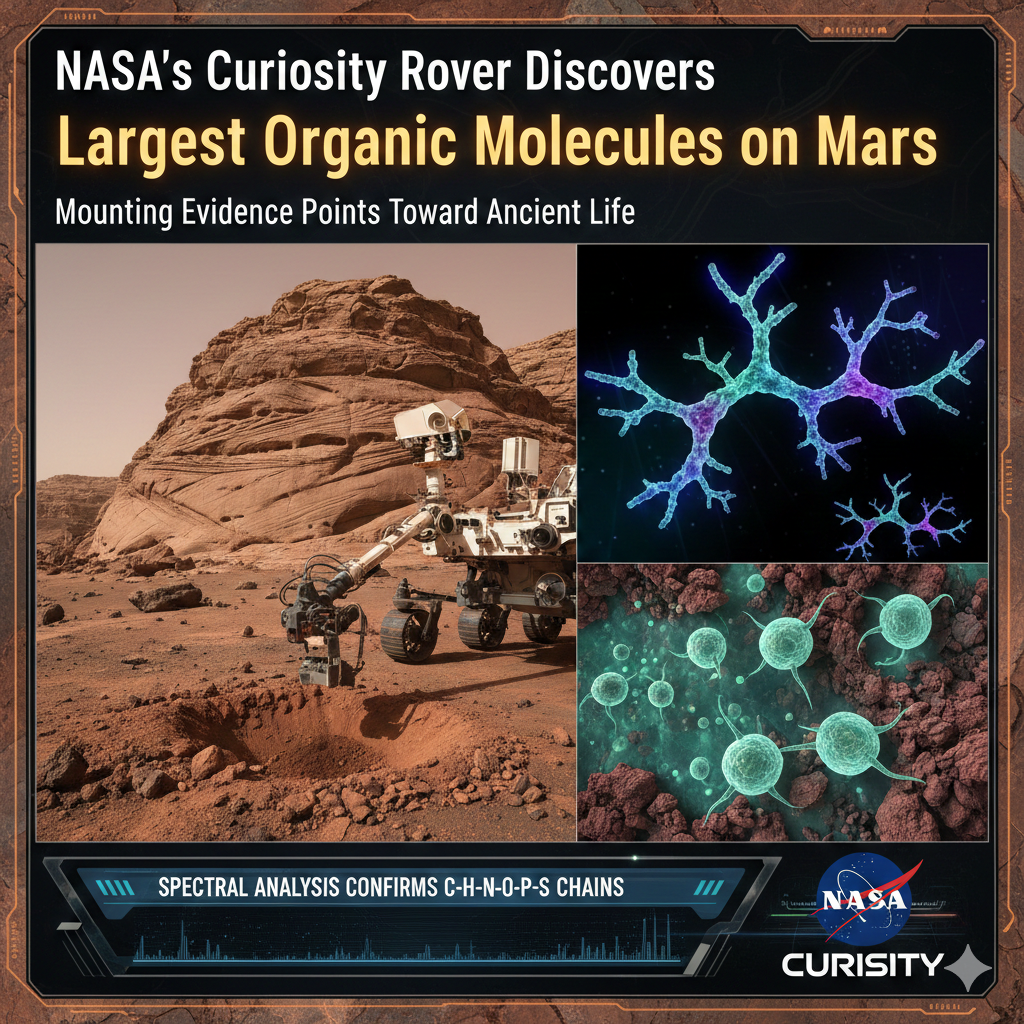
NASA’s Curiosity Rover Discovers Largest Organic Molecules on Mars: Mounting Evidence Points Toward Ancient Life
Revolutionary Finding Challenges Non-Biological Explanations for Complex Organic Compounds on the Red Planet
In what could represent one of the most significant breakthroughs in the search for extraterrestrial life, scientists analyzing data from NASA’s Curiosity rover have discovered that non-biological sources cannot fully explain the abundance of organic compounds detected on Mars. The findings, published in February 2026 in the journal Astrobiology, suggest that while definitive proof remains elusive, biological processes cannot be ruled out—and may in fact offer the most compelling explanation for the complex organic chemistry found in ancient Martian rocks.
The research builds upon a groundbreaking discovery announced in March 2025, when scientists analyzing pulverized rock onboard NASA’s Curiosity rover found the largest organic compounds on the Red Planet to date. These molecules—decane, undecane, and dodecane—represent a quantum leap in our understanding of Mars’ organic chemistry and have reignited intense scientific debate about whether the Red Planet once harbored life.
The Cumberland Sample: A Decade-Old Discovery Yields New Secrets
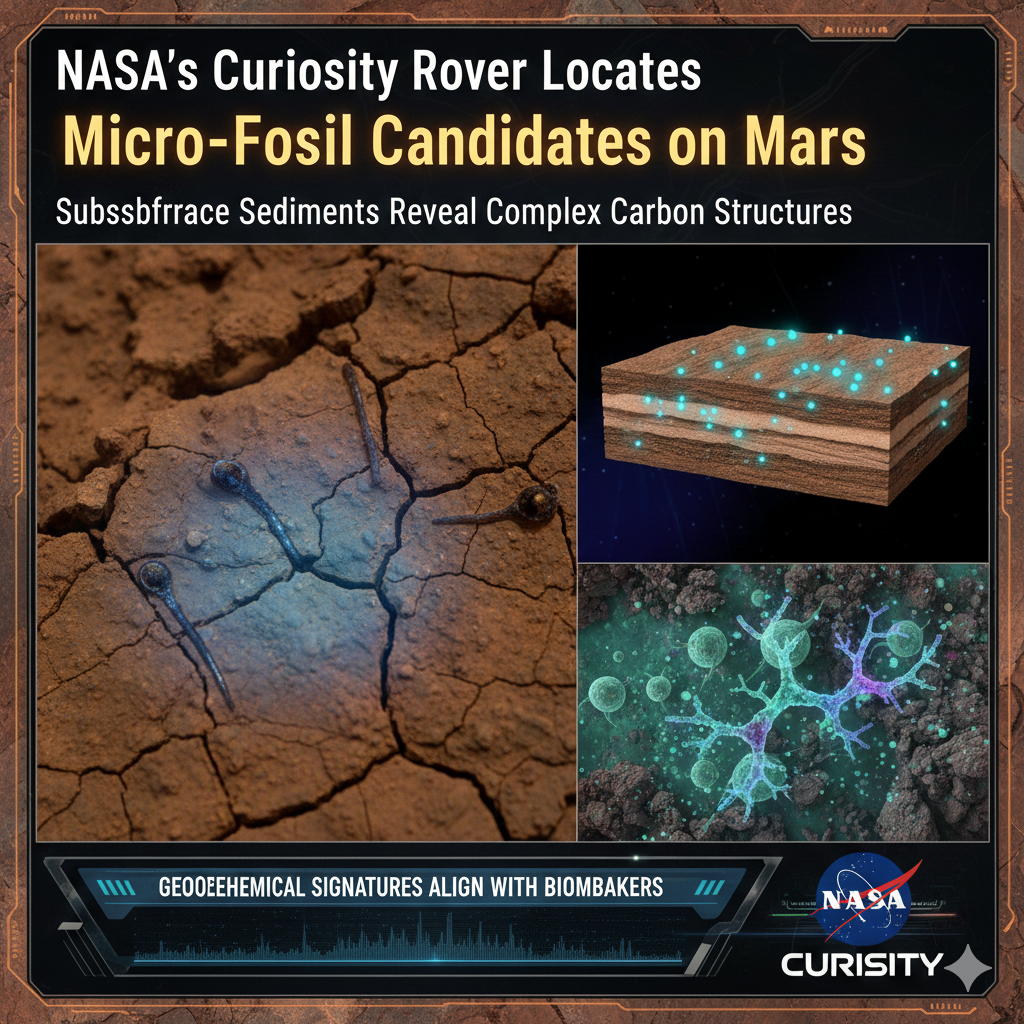
The story of this remarkable finding begins not in 2025, but more than a decade earlier. NASA’s Curiosity rover drilled into this rock target, “Cumberland,” during the 279th Martian day, or sol, of the rover’s work on Mars (May 19, 2013) and collected a powdered sample of material from the rock’s interior. Located in an area called Yellowknife Bay within Mars’ massive Gale Crater, the Cumberland drilling site has proven to be one of the most scientifically valuable locations the rover has investigated.
What makes the Cumberland sample so extraordinary is not just what it contained, but also where it came from. Scientists chose Gale as the landing site for Curiosity because it has many signs that water was present over its history. The crater, which spans approximately 96 miles in diameter, formed when an asteroid or comet hit Mars in its early history, about 3.5 to 3.8 billion years ago.
Cumberland turns out to be packed with tantalizing chemical clues to Gale Crater’s 3.7-billion-year past, including clay minerals that form in water, abundant sulfur that can preserve organic molecules, and nitrates essential to plant and animal health on Earth. These geological indicators suggested that billions of years ago, this site was covered by water—potentially for millions of years.
An Accidental Discovery
The detection of these complex organic molecules came through an unexpected route. The recent organic compounds discovery was a side effect of an unrelated experiment to probe Cumberland for signs of amino acids, the building blocks of proteins. Scientists had instructed Curiosity’s Sample Analysis at Mars (SAM) laboratory to heat the Cumberland sample twice in its miniature oven, searching for amino acids that would be strong indicators of biological processes.
When scientists measured the mass of the molecules released during heating, there weren’t any amino acids, but they found something entirely unexpected. The sample released small amounts of three specific molecules: decane (containing 10 carbon atoms), undecane (11 carbon atoms), and dodecane (12 carbon atoms). These are the largest organic molecules ever confirmed on Mars, doubling the previous record of six-carbon molecules detected by earlier analyses.
What Are These Molecules, and Why Do They Matter?
Scientists probed an existing rock sample inside Curiosity’s Sample Analysis at Mars (SAM) mini-lab and found the molecules decane, undecane, and dodecane. These compounds, which are made up of 10, 11, and 12 carbons, respectively, are thought to be the fragments of fatty acids that were preserved in the sample.
On Earth, fatty acids serve as fundamental components of life. They form the lipid membranes that surround every living cell, create energy storage molecules, and participate in countless biological processes. Some scientists believe that fatty acids such as decanoic acid and dodecanoic acid formed the membranes of the first simple cell-like structures on Earth, making them not just markers of life but potentially essential precursors to life itself.
The Biological Connection
Living things produce fatty acids to help form cell membranes and perform various other functions. In animals, these molecules are predominantly synthesized in the liver, adipose tissue, and mammary glands. In plants, fatty acids appear in seeds, nuts, and other tissues. Essentially, wherever life exists on Earth, fatty acids are present.
However, the presence of these molecules on Mars doesn’t automatically indicate biology. Fatty acids also can be made without life, through chemical reactions triggered by various geological processes, including the interaction of water with minerals in hydrothermal vents. This dual origin—both biological and geological—makes fatty acids a fascinating but ambiguous biosignature.
Working Backwards from Fragments
The molecules Curiosity detected—decane, undecane, and dodecane—are not themselves fatty acids, but rather their molecular fragments. The team was surprised to detect small amounts of decane, undecane and dodecane, so it had to conduct a reverse experiment on Earth to determine whether these organic compounds were the remnants of the fatty acids undecanoic acid, dodecanoic acid and tridecanoic acid, respectively.
The scientists tested their prediction in the lab, mixing undecanoic acid into a Mars-like clay and conducting a SAM-like experiment. After being heated, the undecanoic acid released decane, as predicted. This laboratory confirmation provided strong evidence that the molecules Curiosity detected were indeed breakdown products of larger fatty acid molecules.
A Tantalizing Detail About Chain Length
The authors found an additional intriguing detail in their study related to the number of carbon atoms that make up the presumed fatty acids in the sample. The backbone of each fatty acid is a long, straight chain of 11 to 13 carbons, depending on the molecule. Notably, non-biological processes typically make shorter fatty acids, with less than 12 carbons.
This observation is crucial. While non-biological processes can create fatty acids, they typically produce shorter molecular chains. The fact that the Cumberland sample appears to contain longer-chain fatty acids (or their fragments) tilts the evidence slightly toward biological origins—though it certainly doesn’t prove them.
Gale Crater: An Ancient Oasis in a Desert World
To understand why finding these molecules in Gale Crater is so significant, we need to comprehend what this location once was. The evidence overwhelmingly suggests that billions of years ago, Gale Crater hosted a substantial body of water—possibly for millions of years.
A Habitable Ancient Lake
On June 1, 2017, NASA reported that the Curiosity rover provided evidence of an ancient lake in Gale on Mars that could have been favorable for microbial life; the ancient lake was stratified, with shallows rich in oxidants and depths poor in oxidants; and, the ancient lake provided many different types of microbe-friendly environments.
Geological reconstructions from Curiosity rover data have revealed an ancient, habitable lake environment fed by rivers draining into the crater. This wasn’t a fleeting puddle or temporary flood, but rather a persistent water system that could have provided stable conditions for life to emerge and evolve.
Scientific observations suggest that individual lakes were stable on the ancient surface of Mars for 100 to 10,000 years, a minimum duration when each lake was stable both thermally (as liquid water) and in terms of mass balance (with inputs effectively matching evaporation). Even more significantly, researchers estimate that the stratigraphy traversed thus far by Curiosity would have required 10,000 to 10,000,000 years to accumulate.
Millions of Years of Liquid Water
There is evidence that liquid water existed in Gale Crater for millions of years and probably much longer, which means there was enough time for life-forming chemistry to happen in these crater-lake environments on Mars. This extended timeframe is critical—life as we know it didn’t emerge instantaneously on Earth, but rather developed through complex chemical evolution over vast spans of time.
The lake system in Gale Crater wasn’t static. About 3.8 billion years ago, there were repeated bouts of deposition in river deltas and lakebeds that may have lasted a million years or more. Rivers flowing from the crater rim carried sediments that gradually built up layers of material on the lake floor, creating the mudstone formations that Curiosity now studies.
The layered rocks are part of a nearly 300 meters (close to 1,000 feet) thick sequence of layers that were deposited in an ancient lake that occurred in Gale crater. This enormous thickness of sedimentary rock tells a story of sustained water presence stretching across geological epochs.
The Chemistry of Habitability
What made this ancient lake potentially habitable wasn’t just the presence of water, but its chemical composition. Close to the surface, there were plenty of oxidizing agents and rocks formed from large, dense grains, whereas the deeper layers had more reducing agents and were formed from finer material. This redox stratification led to very different environments in different layers.
On Earth, this kind of chemical stratification in lakes creates diverse ecological niches where different types of microorganisms can thrive. Organisms living in shallow, oxygen-rich waters face very different chemical challenges than those inhabiting the deeper, more reducing zones. This diversity of chemical environments could have provided multiple pathways for life to emerge and adapt.
The Radiation Problem: Rewinding Mars’ Clock
One of the biggest challenges in interpreting Curiosity’s organic discoveries is accounting for the destructive effects of time and radiation. Unlike Earth, which enjoys protection from a thick atmosphere and a global magnetic field, Mars’ surface has been directly exposed to intense cosmic radiation for billions of years.
The 80-Million-Year Exposure
To reach their conclusion, scientists combined lab radiation experiments, mathematical modeling, and Curiosity data to “rewind the clock” about 80 million years — the length of time the rock would have been exposed on the Martian surface. This 80-million-year timeframe represents how long the Cumberland mudstone has been sitting at or near the Martian surface, constantly bombarded by cosmic rays and solar radiation.
Radiation doesn’t just damage living organisms—it also gradually destroys organic molecules. High-energy particles strike complex molecules, breaking chemical bonds and fragmenting large molecules into smaller pieces. Over millions of years, this process can erase molecular evidence of past biology or chemistry.
Calculating Original Abundance
By combining laboratory experiments that simulate Martian radiation conditions with mathematical models of radiation damage accumulation, researchers were able to estimate how many organic molecules must have originally been present in the Cumberland sample. The results were striking.
The researchers noted that the Cumberland mudstone may originally have contained between 120 and 7,700 parts per million of long-chain alkanes or their fatty-acid precursors before surface exposure. These concentrations are far higher than what Curiosity actually measured, reflecting the destructive power of millions of years of radiation exposure.
This calculation fundamentally changes the question scientists must answer. It’s not simply: “Can known non-biological processes produce the amounts of organics Curiosity detected?” Instead, it becomes: “Can known non-biological processes produce the much larger amounts that must have originally existed before radiation destroyed most of them?”
Evaluating Non-Biological Explanations
With this revised understanding of the original organic abundance, researchers systematically examined every known non-biological process that might explain the Cumberland findings. Each potential explanation fell short in significant ways.
Meteorite Delivery
One of the most obvious potential sources for Martian organics is delivery from space. Throughout its history, Mars has been bombarded by meteorites, comets, and interplanetary dust particles, many of which contain organic compounds synthesized in space.
Carbonaceous chondrites—a type of primitive meteorite—are particularly rich in organic matter, including fatty acids. If enough of these meteorites landed in Gale Crater over millions of years, could they account for the organic abundances researchers calculated?
Delivery of organics by interplanetary dust particles and meteorites was one of the first scenarios the research team evaluated. However, delivery by meteorites and interplanetary dust particles is insufficient by many orders of magnitude, given the estimated sedimentation rates. Even accounting for billions of years of meteorite bombardment, the delivery rate simply doesn’t add up to the concentrations observed.
Atmospheric Production
Another possibility is that organic molecules formed in Mars’ ancient atmosphere and rained down onto the surface. On Saturn’s moon Titan, photochemical reactions in the atmosphere create complex organic molecules that fall to the surface as a kind of “organic snow.”
Could a similar process have operated on ancient Mars? Atmospheric production of organic haze is unlikely, because early Mars probably lacked the methane-rich conditions required to generate substantial haze deposition. While Mars’ ancient atmosphere was likely thicker and more chemically complex than today’s thin envelope, it probably didn’t have the right composition to generate the kinds and amounts of organics found in Cumberland.
Hydrothermal Synthesis
Perhaps the most promising non-biological explanation involves hydrothermal chemistry. When hot water interacts with minerals in volcanic or geothermal systems, it can drive chemical reactions that create organic molecules, including fatty acids. This process, known as Fischer-Tropsch synthesis or serpentinization, occurs in Earth’s deep-sea hydrothermal vents and generates simple organic compounds that support entire ecosystems of microbes.
Laboratory experiments have demonstrated that hydrothermal processes can indeed produce long-chain organic molecules. However, there’s a critical problem with this explanation for Cumberland: the mineralogy of the Cumberland mudstone indicates it did not experience the high temperatures associated with such reactions.
The clay minerals and other components of the mudstone preserve a record of the temperatures and chemical conditions they experienced. If the sample had undergone intense hydrothermal alteration, its mineralogy would look very different. The absence of high-temperature mineral assemblages strongly argues against hydrothermal production of the organic compounds.
Other Abiotic Processes
Researchers also considered other non-biological mechanisms, including:
- Lightning strikes generating organic molecules through atmospheric electrical discharge
- Photochemical reactions driven by ultraviolet radiation
- Organic synthesis through electrochemical reduction of carbon dioxide
- Indigenous organic-oxidized fluid interactions in ancient Martian rocks
While each of these processes can create some organic molecules under specific conditions, none could adequately explain the calculated original abundances in the Cumberland sample. High concentrations of long-chain alkanes are inconsistent with a few known abiotic sources of organic molecules on ancient Mars.
The Biological Hypothesis: Life as an Explanation
Having systematically ruled out or found insufficient every non-biological explanation they examined, the research team arrived at a provocative conclusion: As the non-biological sources they considered could not fully explain the abundance of organic compounds, it is therefore reasonable to hypothesize that living things could have formed them.
This statement, carefully worded and hedged with appropriate scientific caution, represents a significant moment in Mars exploration. For decades, scientists have discovered tantalizing hints of organic chemistry on Mars but have always been able to invoke non-biological explanations. This new study suggests that we may have reached a threshold where non-biological explanations, while not impossible, are becoming increasingly strained.
What Would Martian Life Have Looked Like?
If life did produce the fatty acids found in Cumberland, what form would that life have taken? Scientists think that, if life ever emerged on Mars, it was probably microbial in nature. We’re not talking about Martian dinosaurs or even visible multicellular organisms, but rather microscopic single-celled organisms similar to Earth’s bacteria or archaea.
These hypothetical Martian microbes would have lived in the ancient lake that filled Gale Crater approximately 3.5 to 3.8 billion years ago. They would have had access to liquid water, essential chemical elements, and energy sources from the environment. The stratified lake, with its varying chemical conditions at different depths, could have supported multiple types of microorganisms adapted to different niches.
Biosignatures and the Carl Sagan Standard
Despite their findings, the research team emphasized that they are not claiming to have discovered proof of Martian life. The researchers acknowledged that extraordinary claims require extraordinary evidence and understand that any purported detection of life on Mars will necessarily be met with intense scrutiny.
In addition, in practice with established norms in the field of astrobiology, scientists note that the certainty of a life detection beyond Earth will require multiple lines of evidence. This rigorous standard is appropriate—the discovery of extraterrestrial life would be perhaps the most profound scientific finding in human history, and such a claim demands the highest levels of evidence and scrutiny.
The Preservation Advantage
One encouraging aspect of this discovery is what it suggests about the preservation of organic molecules on Mars. The new study also increases the chances that large organic molecules that can be made only in the presence of life, known as “biosignatures,” could be preserved on Mars, allaying concerns that such compounds get destroyed after tens of millions of years of exposure to intense radiation and oxidation.
For years, some scientists worried that even if life once existed on Mars, its molecular signatures might have been completely erased by radiation and oxidation over geological time. The Cumberland findings suggest that in the right geological contexts—such as in fine-grained mudstones with abundant sulfur—organic molecules can survive for billions of years, albeit in degraded form.
A History of Methane Mysteries
The Cumberland organic discovery is just the latest chapter in a long series of intriguing organic detections on Mars. The story begins not with Curiosity but with an earlier mission orbiting the Red Planet.
In 2004, the European Space Agency’s Mars Express orbiter detected methane in Mars’ atmosphere. This discovery was significant because methane is relatively short-lived in the Martian atmosphere—radiation and chemical reactions break it down within a few hundred years. Therefore, detecting methane suggests there must be an ongoing source replenishing it.
Following this orbital detection, Curiosity made its own methane discoveries after landing in 2012. The rover detected methane spikes in 2013 and 2014 while exploring the floor of Gale Crater. These weren’t constant background levels, but rather intermittent bursts of elevated methane concentration.
Curiosity detected an even larger methane spike in 2019 while investigating an area called “Teal Ridge,” an outcropping of layered bedrock. Scientists have proposed various explanations for these methane detections, ranging from geological processes like serpentinization to the tantalizing possibility of active subsurface microbial communities.
The relationship between the methane detections and the organic molecule discoveries remains unclear. They could be related—perhaps both originating from similar geological or biological processes—or they could be entirely separate phenomena. Unraveling this mystery is one of many challenges facing Mars researchers.
The Cumberland Sample’s Unique Geochemical Signature
Beyond the organic molecules themselves, the Cumberland sample stands out for its unusual geochemical characteristics. The combined results from the Cumberland sample suggest a unique geochemical history at Yellowknife Bay compared to overlying strata; in addition to the qualitative and quantitative wider detection of organic molecules, nitrates were reported, a large sulfur isotopic fractionation was observed, and highly depleted carbon-13 signature in methane released from the sample was observed.
Each of these observations adds another piece to the puzzle. Nitrates are nitrogen-oxygen compounds that on Earth are essential nutrients for plant and animal life. Their presence in Cumberland suggests that ancient Mars had a nitrogen cycle that could have supported living organisms.
The sulfur isotopic fractionation refers to differences in the ratios of different sulfur isotopes. On Earth, biological processes often create distinctive isotopic signatures because organisms preferentially use certain isotopes over others. While isotopic fractionation can also occur through non-biological processes, the combination of multiple unusual geochemical signatures makes Cumberland especially interesting.
The highly depleted carbon-13 signature in methane is particularly intriguing. On Earth, biological methane production by microorganisms creates methane that is “light” in carbon isotopes—enriched in carbon-12 relative to carbon-13. The Cumberland sample showed similar characteristics, though this alone doesn’t prove biological activity, as some geological processes can also produce isotopically light methane.
What Comes Next: The Path Forward
Where does Mars research go from here? The Cumberland findings have opened up exciting new avenues for investigation, but they’ve also highlighted how much we still don’t understand about organic chemistry on Mars.
Understanding Degradation Rates
The team says more study is needed to better understand how quickly organic molecules break down in Mars-like rock under Mars-like conditions — and before any conclusions can be reached about the absence or presence of life. This is a critical knowledge gap.
Current estimates of how radiation damages organic molecules in Martian rocks are based on laboratory experiments and theoretical models. However, the actual Mars environment is incredibly complex, with variations in temperature, mineral composition, water content, and radiation exposure that are difficult to fully replicate in Earth laboratories.
More sophisticated laboratory studies are needed that better simulate the full range of Martian conditions. Only by understanding degradation rates more precisely can scientists confidently work backward from degraded organic molecules to estimate their original abundances and sources.
The Role of Mars Sample Return
Perhaps the most anticipated development in Mars exploration is the Mars Sample Return mission. NASA’s Perseverance rover, which landed in Jezero Crater in February 2021, has been collecting and caching rock samples specifically selected for their potential to contain biosignatures or other evidence of past Martian conditions.
The current plan calls for these samples to be retrieved by a future mission and returned to Earth sometime in the 2030s. Once in terrestrial laboratories, scientists will be able to analyze these samples with instruments far more sophisticated and sensitive than anything that can be sent to Mars on a spacecraft.
Instruments like high-resolution mass spectrometers, advanced microscopes, and isotopic analyzers could detect and characterize organic molecules with unprecedented precision. If samples similar to Cumberland are returned, scientists could search for specific biomarker molecules, analyze their three-dimensional structures, and conduct experiments impossible to perform on Mars.
Curiosity’s Continued Exploration
Meanwhile, Curiosity continues its exploration of Gale Crater, now more than 13 years into a mission originally planned for two years. The rover has been steadily climbing the slopes of Mount Sharp (officially named Aeolis Mons), the central peak that rises about 18,000 feet from the crater floor.
As Curiosity climbs higher, it encounters progressively younger rock layers, providing a chronological record of Mars’ environmental history. NASA further reported that the Curiosity rover will continue to explore higher and younger layers of Mount Sharp in order to determine how the lake environment in ancient times on Mars became the drier environment in more modern times.
This transition from wet to dry Mars is one of the great mysteries of planetary science. Understanding when, how, and why Mars lost its water and thick atmosphere could provide crucial context for interpreting organic molecule discoveries like Cumberland.
Perseverance in Jezero Crater
While Curiosity explores Gale Crater, its younger sibling Perseverance is investigating Jezero Crater, another ancient lake bed located about 2,300 miles away. Jezero’s floor definitely hosted a sizable, if transient, lake long ago, and the crater contains a well-preserved river delta that once fed the ancient lake.
Perseverance carries an upgraded suite of instruments specifically designed to search for biosignatures. One of these instruments, SHERLOC (Scanning Habitable Environments with Raman & Luminescence for Organics & Chemicals), can detect organic molecules and analyze their composition without destroying samples. Another instrument, PIXL (Planetary Instrument for X-ray Lithochemistry), can map the fine-scale distribution of chemical elements in rocks, potentially revealing biosignature patterns.
By comparing findings from two different ancient lake systems on Mars, scientists can begin to understand whether the organic chemistry Curiosity found in Gale Crater represents a unique local phenomenon or a more widespread characteristic of ancient Martian environments.
The Broader Implications for Astrobiology
The Cumberland findings have implications that extend far beyond Mars itself. They inform our understanding of how life emerges, survives, and leaves traces that can persist across billions of years—knowledge directly applicable to the search for life throughout the universe.
The Resilience of Biosignatures
One major question in astrobiology is whether biosignatures can survive long enough to be detected. If life emerged on Mars billions of years ago but then went extinct as the planet dried out, would we still be able to find chemical evidence of that ancient biosphere today?
The Cumberland sample suggests the answer may be yes—at least under certain conditions. The fact that complex organic molecules have survived in this mudstone for more than 80 million years of surface exposure (and potentially billions of years since their formation) demonstrates that the right geological contexts can preserve molecular information across vast timescales.
This has important implications for missions to other worlds. Europa, Enceladus, and Titan—moons of Jupiter and Saturn with potentially habitable subsurface oceans—might preserve biosignatures in their surface ices or in material ejected from their interiors. Ancient lake beds on other planets might similarly retain chemical records of past habitability or biology.
The Definition of Habitability
The Cumberland findings also refine our understanding of what makes an environment habitable. It’s not enough for a place to have liquid water—it must have that water for long enough for complex chemistry to occur. There is evidence that liquid water existed in Gale Crater for millions of years and probably much longer, which means there was enough time for life-forming chemistry to happen in these crater-lake environments on Mars.
This multi-million-year persistence of habitable conditions appears to be a key factor. Transient water that only exists for years or decades might not provide sufficient time for the chemical evolution from simple organics to self-replicating systems—the essential transition required for life to emerge.
As we search for habitable environments on exoplanets orbiting other stars, this Mars research suggests we should focus on worlds where conditions remain stable for geologically significant periods, not just those with fleeting surface water.
Addressing Alternative Interpretations
While the February 2026 Astrobiology study makes a compelling case that non-biological processes cannot fully explain the Cumberland organics, it’s important to acknowledge alternative interpretations and ongoing debates within the scientific community.
Unknown Abiotic Processes
One crucial caveat is that there might be non-biological mechanisms for producing organic molecules that scientists haven’t yet identified or fully understood. Mars is a different world with a different geological and atmospheric history than Earth. Processes that are rare or nonexistent on Earth might have been common on ancient Mars.
There could be still-unknown, non-biological processes we don’t know about that could have resulted in the observed concentration of long-chain carbon molecules on Mars. Ruling out the biological explanation would require not just explaining the organic abundances through known abiotic processes, but also demonstrating that all possible abiotic processes have been considered.
This is an inherently difficult standard to meet, which is why the research team carefully framed their conclusion as “it is reasonable to hypothesize that living things could have formed them” rather than “these molecules prove life existed.”
The Allochthonous Delivery Hypothesis
Another possibility mentioned in the research is allochthonous delivery—the transport of organic molecules from one location to another. Allochthonous delivery of hydrothermally synthesized organics could have contributed to the abundance of alkanes found in the Cumberland mudstone.
In this scenario, organic molecules might have been created through hydrothermal processes elsewhere on Mars—perhaps in volcanic regions or deep underground—and then transported by water to Gale Crater where they accumulated in the lake sediments. This would explain why the Cumberland mudstone itself doesn’t show signs of high-temperature alteration while still accounting for the presence of complex organics.
This hypothesis represents a middle ground: the organics would be abiotic in origin but would have accumulated through environmental transport to concentrations higher than local non-biological processes could produce. Distinguishing between in situ biological production, allochthonous delivery, and some combination of both will require additional evidence.
The Small Lakes Hypothesis
Not all scientists agree on the interpretation of Gale Crater’s geological history. While the mainstream view holds that the crater hosted a large, long-lasting lake, an alternative hypothesis suggests a very different past.
A recent study suggests that Mars’ Gale Crater hosted a handful of small lakes rather than a single big one in the ancient past. According to this interpretation, those little lakes were probably relatively transient, persisting for a maximum of a few tens of thousands of years at a time.
If this alternative view is correct, the habitability of ancient Gale Crater would be significantly reduced. Brief, intermittent lakes might not provide sufficient time for life to emerge and establish itself. However, even relatively short-lived lakes could potentially support life if it originated elsewhere and was transported to Gale Crater.
The debate over the size and persistence of ancient Martian lakes remains active, with different research teams interpreting the same geological evidence in different ways. Resolving this debate will require additional data from both Curiosity and future missions.
The Public and Scientific Reception
The Cumberland organic molecule findings and their follow-up analysis have generated significant attention in both the scientific community and the general public. Headlines have ranged from cautiously optimistic to boldly speculative, capturing the genuine scientific uncertainty while emphasizing how close we may be to answering fundamental questions about life beyond Earth.
The scientific community itself has responded with a mixture of excitement and appropriate skepticism. The findings are undoubtedly significant—they represent the largest organic molecules ever found on Mars and the first time that known non-biological processes appear insufficient to explain Martian organic chemistry. At the same time, extraordinary claims require extraordinary evidence, and most scientists agree that much more work is needed before biological origins can be confirmed.
Conclusion: A New Era in the Search for Martian Life
The discovery of complex organic molecules in the Cumberland mudstone, combined with the February 2026 analysis showing that non-biological processes cannot fully explain their abundance, marks a turning point in Mars exploration. For the first time, scientists are seriously considering biological explanations not as wild speculation but as reasonable scientific hypotheses that fit the available data.
This doesn’t mean we’ve found life on Mars—far from it. The molecules could still have abiotic origins through processes we don’t yet understand. Even if they were produced by life, they would represent evidence of ancient life that existed billions of years ago, not present-day organisms.
Nevertheless, the Cumberland findings remind us that Mars was once a very different world. Sediment patterns show a lot of water was present, continually, over many millions of years – both as persistent groundwater, and a long-standing lake with occasional dry spells. This ancient Mars, with its lakes, rivers, and potentially habitable chemistry, might have been a place where life could emerge and thrive.
As Curiosity continues its climb up Mount Sharp, as Perseverance collects samples in Jezero Crater, and as scientists prepare for the eventual return of Martian rocks to Earth, the search for life on Mars enters its most promising phase. The next decade of Mars exploration will likely provide the data needed to finally answer one of humanity’s oldest questions: Are we alone in the universe?
The Cumberland sample, collected by a robot on a dusty plain billions of miles from Earth, might hold the key to that answer. Whatever we ultimately discover, the journey to understand Mars’ past and its potential for life continues to captivate scientists and public alike, pushing the boundaries of our knowledge and imagination.
Social Connect:

