

Gold Market Volatility Intensifies: MCX Prices Slip as Investors Pivot Toward Dollar Strength and Geopolitical Talks
MUMBAI – The precious metals sector witnessed a significant shift today as the Multi Commodity Exchange (MCX) recorded a notable dip in bullion prices. This recent bout of Gold Market Volatility is being attributed to a combination of aggressive profit booking by institutional investors and the lingering unpredictability of the US Dollar. As traders keep a close eye on the unfolding diplomatic discussions between Washington and Tehran, the safe-haven asset is facing a period of intense price correction.
Early morning trade in India saw the yellow metal retreat from its previous highs, a move that analysts say is a natural reaction to the overextended rally seen over the last fiscal quarter. This Gold Market Volatility has left retail investors questioning whether the bullish run has reached a temporary ceiling or if this is merely a “buy-on-dip” opportunity in an otherwise inflationary environment.
The Role of Profit Booking on the MCX
The MCX is often the heartbeat of the Indian bullion trade, and the recent sell-off suggests that large-scale traders are locking in gains. After gold hit record-breaking milestones last month, the current Gold Market Volatility is largely a result of technical corrections. When prices reach psychological resistance levels, it is common for automated trading systems and portfolio managers to liquidate portions of their holdings to realize profits.
This systematic exit from long positions has accelerated the downward pressure on prices, further fueling the Gold Market Volatility. Despite the drop, market experts suggest that the underlying demand for physical gold in India remains robust, especially with the festive and wedding seasons on the horizon. However, the paper-gold market—dominated by futures and options—is where the impact of the current Gold Market Volatility is most visible.
The Dollar Factor: A Seesaw Effect
One cannot discuss Gold Market Volatility without referencing the performance of the US Dollar Index (DXY). Historically, gold and the dollar share an inverse relationship. Today, as the dollar gained strength against a basket of major currencies, the relative cost of gold for international buyers increased, leading to a cooling of demand. This currency-driven Gold Market Volatility is a recurring theme in 2026, as the Federal Reserve’s monetary policy continues to shift based on domestic labor data.
The dollar’s volatility acts as a catalyst for the Gold Market Volatility we see on the MCX. When the greenback fluctuates, it creates a ripple effect across all commodities denominated in USD. For Indian traders, this is doubled by the rupee’s own movement against the dollar. Consequently, the Gold Market Volatility in the local market is a complex interplay of global currency strength and domestic liquidity conditions.
Geopolitics: The US-Iran Factor
The eyes of the financial world remain fixed on the diplomatic corridors where US and Iranian officials are reportedly making progress on the “Islamabad Accord.” The prospect of a long-term peaceful resolution in West Asia has reduced the “geopolitical risk premium” that usually props up gold prices. In times of war or high tension, gold thrives; however, as peace talks gain momentum, the Gold Market Volatility tends to lean toward the downside as investors shift capital back into riskier assets like equities.
Should the talks result in a formal treaty, the Gold Market Volatility could stabilize, albeit at a lower price floor. Conversely, any breakdown in these sensitive negotiations would likely send prices skyrocketing back toward record territory. This “wait-and-watch” sentiment among global hedge funds is a primary driver of the current Gold Market Volatility, as no one wants to be on the wrong side of a major geopolitical announcement.
Technical Analysis and Resistance Levels
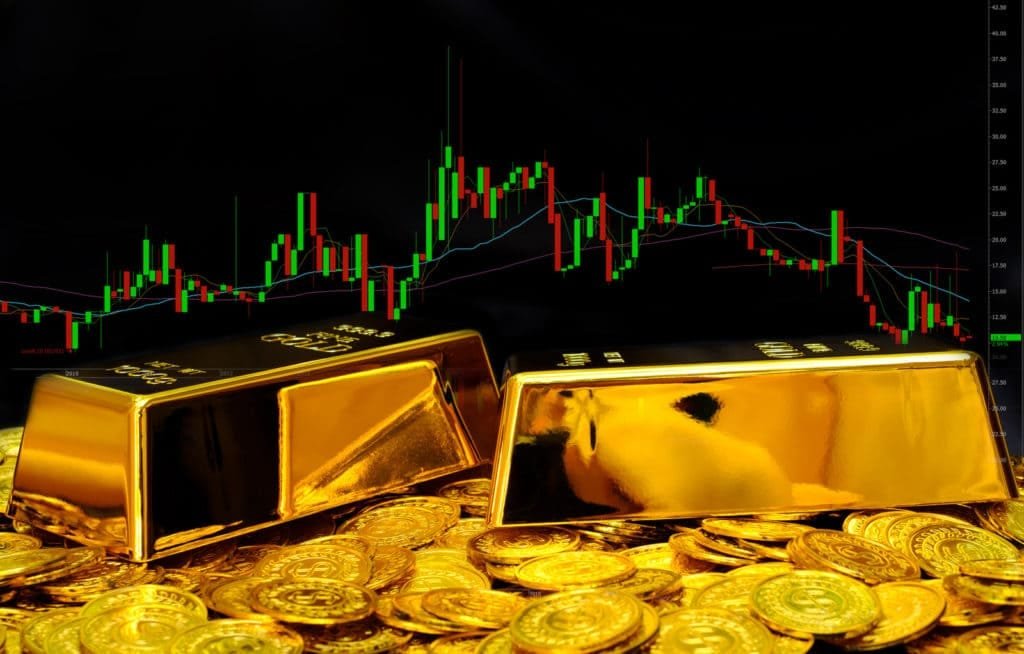
From a technical perspective, the Gold Market Volatility has pushed the metal toward its 50-day moving average. Chartists are closely monitoring whether the price can hold above the $2,350 mark (internationally) and the corresponding levels on the MCX. A breach below these support levels could trigger a deeper wave of Gold Market Volatility, potentially dragging prices down by another 3% to 5% before finding a new equilibrium.
Conversely, if the RSI (Relative Strength Index) indicates that gold is in “oversold” territory, we might see a sharp reversal. This “bounce-back” potential is what keeps the Gold Market Volatility so high, as day traders attempt to scalp profits from these rapid swings. The volatility index for gold has reached a six-month high, suggesting that the era of “stable growth” has been replaced by a period of high-frequency trading and rapid-fire price adjustments.
Impact on Retail and Jewelry Sectors
In India, the Gold Market Volatility has a direct impact on the jewelry industry. Consumers who were waiting for a price drop are now starting to enter the market, but many remain hesitant, fearing that the Gold Market Volatility might lead to even lower prices next week. Jewelers are reporting a mixed bag: while footfall has increased, the average ticket size of purchases has decreased as buyers adopt a cautious stance.
For the retail investor, the Gold Market Volatility is a double-edged sword. On one hand, it allows for cheaper entry points into Sovereign Gold Bonds (SGBs) and Gold ETFs. On the other hand, the rapid fluctuations make it difficult to plan long-term savings without significant “paper losses” in the short term. Financial advisors are currently recommending a “SIP” (Systematic Investment Plan) approach to mitigate the risks associated with the current Gold Market Volatility.
Central Bank Reserves and Global Trends
While individual investors are selling, central banks in emerging markets—including the Reserve Bank of India—continue to be net buyers of bullion. Their long-term strategy is to diversify away from the dollar, which provides a fundamental “floor” against the Gold Market Volatility. Even as the MCX sees profit booking today, the structural demand from central banks suggests that the long-term outlook remains positive despite the short-term Gold Market Volatility.
In China and Turkey, similar trends are observed. The Gold Market Volatility is being seen as a necessary correction after a period of “irrational exuberance.” Analysts believe that once the market digests the implications of the US-Iran talks and the Fed’s next move, the Gold Market Volatility will subside, giving way to a more sustainable price trajectory based on actual supply-and-demand metrics rather than speculative fervor.
The Influence of Inflation and Interest Rates
Inflationary pressures in Europe and parts of Asia are still higher than desired, which usually acts as a tailwind for gold. However, the current Gold Market Volatility suggests that the market is prioritizing interest rate yields over inflation hedging. If the Federal Reserve signals that rates will remain “higher for longer,” the Gold Market Volatility will likely continue to manifest as downward pressure, as gold provides no yield compared to US Treasuries.
This “yield competition” is a major factor in the Gold Market Volatility witnessed on global exchanges. Investors are constantly weighing the safety of gold against the guaranteed returns of government bonds. As long as the dollar remains the world’s primary reserve currency, its fluctuations will be the primary engine of Gold Market Volatility in the bullion space.
Future Outlook: What to Expect
Looking ahead to the next fiscal quarter, the Gold Market Volatility is expected to remain a permanent feature of the landscape. Between the US elections, ongoing regional conflicts, and the evolution of digital currencies, gold will continue to react sharply to every headline. Traders on the MCX are advised to keep their stop-losses tight and avoid over-leveraging their positions during these periods of extreme Gold Market Volatility.
Most brokerage houses have revised their year-end targets for gold, taking into account the recent Gold Market Volatility. While some remain ultra-bullish, others suggest a period of consolidation. The consensus remains that while the trend is upward, the path will be marked by the kind of Gold Market Volatility we are seeing today—sharp, sometimes painful, but ultimately a sign of a highly liquid and active market.
Conclusion: Navigating the Storm
The current drop on the MCX is a clear manifestation of the Gold Market Volatility that defines the 2026 financial era. Driven by profit-taking, dollar strength, and the hopeful news from the US-Iran diplomatic front, the yellow metal is undergoing a healthy correction. For the disciplined investor, the Gold Market Volatility is not a reason to panic but a signal to re-evaluate portfolio allocations.
As the “Islamabad Accord” details become clearer, the market will find its direction. Until then, the Gold Market Volatility will remain the dominant theme on the MCX and global bullion desks. Gold remains the ultimate hedge, but as today’s trading session proves, even the safest havens are not immune to the winds of market sentiment and the pressures of a volatile dollar. Understanding and respecting the Gold Market Volatility is the first step toward successful trading in this golden—yet turbulent—age.
Bloomberg – Gold Market Analysis: bloomberg.com/markets/commodities/futures/metals
Social Connect :

