

Standoff in the Gulf: U.S. Naval Blockade Tightens as Trump Dispatches Peace Envoy to Tehran
WASHINGTON, D.C. – The geopolitical landscape of West Asia is currently teetering on a knife’s edge as the Middle East Crisis 2026 enters a perilous new phase. In a series of rapid-fire developments over the last 48 hours, the United States has moved from diplomatic posturing to active maritime enforcement, while simultaneously opening a high-stakes backchannel for peace. With global energy markets reacting nervously to every headline, the Biden-Trump transition era’s foreign policy is facing its most grueling test yet.
CENTCOM Enforces the “Iron Ring” Blockade
U.S. Central Command (CENTCOM) confirmed early this morning that the naval blockade of major Iranian ports is now fully operational and “tightening by the hour.” According to official reports, American guided-missile destroyers and carrier strike groups have successfully intercepted and turned back 10 commercial vessels suspected of defying international sanctions. This escalation in the Middle East Crisis 2026 represents a significant shift in U.S. strategy, moving toward a “maximum pressure” physical intervention to choke off the Islamic Republic’s remaining economic lifelines.
Rear Admiral James Milton, speaking from a briefing room at the Pentagon, stated that the blockade’s primary objective is to prevent the shipment of dual-use technologies and illicit petroleum exports. However, the move has drawn a fierce response from Tehran. The Iranian Revolutionary Guard Corps (IRGC) issued a chilling counter-threat, promising to “halt all trade in the Gulf region” by closing the Strait of Hormuz if the blockade is not lifted immediately. Such a closure would be a catastrophic escalation of the Middle East Crisis 2026, potentially cutting off 20% of the world’s oil supply.
Trump’s “Art of the Deal” Envoy Arrives in Tehran
While the U.S. Navy flexes its muscle in the Persian Gulf, a parallel and unexpected diplomatic maneuver is unfolding in the Iranian capital. Pakistan’s Army Chief, General Asim Munir, arrived in Tehran late last night, acting as a personal peace envoy for U.S. President Donald Trump. Following a series of secret “Islamabad Dialogues” that reportedly failed to yield a breakthrough, General Munir is now carrying a formal “peace offer” directly to the Iranian leadership.
This unconventional approach is a hallmark of Trump’s involvement in the Middle East Crisis 2026. Sources close to the administration suggest the offer includes a phased lifting of maritime restrictions in exchange for a verifiable freeze on Iran’s regional proxy funding and long-range drone production. However, skepticism remains high. Critics in Washington argue that sending a Pakistani intermediary might be interpreted by Tehran as a sign of American hesitation, while supporters believe it provides the “off-ramp” necessary to prevent the Middle East Crisis 2026 from descending into a full-scale regional war.
The Washington Summit: A Historic First for Israel and Lebanon
In a development that would have seemed impossible just months ago, diplomats from Israel and Lebanon met face-to-face in Washington, D.C., for their first direct talks in over thirty years. The summit, brokered by U.S. State Department mediators, aimed to establish a maritime and land border framework that could stabilize the Levant. For many, this diplomatic milestone is a rare glimmer of hope amidst the darkening clouds of the Middle East Crisis 2026.
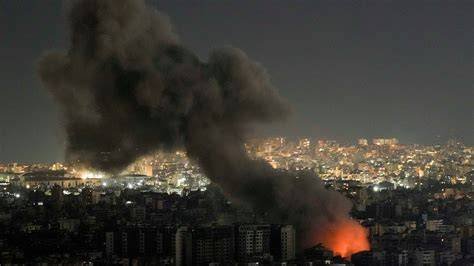
However, the “peace in the room” does not yet reflect the “war on the ground.” Even as his representatives sat across from Lebanese officials, Israeli Prime Minister Benjamin Netanyahu released a stern video address confirming that military operations against Hezbollah strongholds in Southern Lebanon will continue unabated. The Israeli government maintains that diplomatic progress cannot come at the expense of national security, especially as the Middle East Crisis 2026 emboldens non-state actors along Israel’s northern border.
Global Markets and the “War Premium”
Wall Street and global commodity exchanges are currently in a state of “high alert.” Crude oil futures jumped by 4.5% in pre-market trading following the news of the Iranian threat to close the Gulf. Economists are warning that a prolonged blockade, or a retaliatory strike by Tehran, could push gasoline prices in the U.S. well over $5.00 per gallon, further complicating the domestic inflationary outlook during this Middle East Crisis 2026.
Gold, the traditional safe-haven asset, has also seen a surge in demand as investors flee the volatility of the equities market. The “war premium” is now being priced into everything from shipping insurance to semiconductor supply chains. The Middle East Crisis 2026 is no longer just a regional security concern; it is a systemic threat to the post-pandemic global economic recovery, forcing the Federal Reserve to reconsider its projected interest rate cuts for the summer.
The Tactical Reality: Naval Maneuvers and Proxy Risks
Military analysts are closely watching the “cat-and-mouse” game playing out in the North Arabian Sea. The 10 vessels turned back by CENTCOM were reportedly flying various flags of convenience, and their peaceful compliance has so far prevented a kinetic engagement. However, the risk of a “miscalculation” remains the greatest fear of the Pentagon. If an Iranian fast-attack craft were to engage a U.S. destroyer, the Middle East Crisis 2026 would transform from a blockade into a direct shooting war within minutes.
Furthermore, the role of proxies cannot be overlooked. As the blockade tightens, intelligence reports suggest increased activity among Houthi rebels in Yemen and militias in Iraq. These groups often act as the “asymmetric arm” of Iranian foreign policy, and a coordinated strike on U.S. bases or commercial shipping in the Red Sea would be a classic Iranian response to the current Middle East Crisis 2026 pressure.
The Pakistani Intermediary: Why General Munir?
The choice of Pakistan’s Army Chief as a messenger for the Trump peace offer is a calculated gamble. Pakistan has historically maintained a delicate balancing act between its “all-weather friendship” with China, its security partnership with the U.S., and its complex neighborly ties with Iran. General Munir is viewed as a pragmatic figure who can speak the “language of the military” to the IRGC leadership.
If General Munir’s mission in Tehran succeeds, it could redefine the role of South Asian powers in resolving the Middle East Crisis 2026. However, if he returns empty-handed, the U.S. may feel it has exhausted all non-military options. The “peace offer” is being described by some as a final ultimatum wrapped in a diplomatic envelope—a common tactic used to justify further escalation should the terms be rejected during this Middle East Crisis 2026.
Humanitarian Concerns and Public Sentiment
Amidst the talk of blockades and peace envoys, humanitarian organizations are sounding the alarm regarding the civilian population in the region. Sanctions and maritime restrictions, while aimed at the regime, often have the unintended consequence of skyrocketing the cost of food and medicine. The Middle East Crisis 2026 has already displaced thousands in Southern Lebanon and created a sense of “permanent anxiety” across the Gulf states.
In the United States, public opinion is deeply divided. Recent polls suggest that while Americans support a strong stance against Iranian aggression, there is little appetite for a “boots on the ground” intervention. The memories of previous long-term conflicts in the region loom large, and the Biden-Trump transition team is under immense pressure to resolve the Middle East Crisis 2026 through a combination of economic leverage and high-level deal-making rather than kinetic force.
Technological Warfare: The Role of Cyber and Drones
A silent front in the Middle East Crisis 2026 is being fought in cyberspace. U.S. Cyber Command has reportedly detected a significant increase in attempted breaches of American critical infrastructure, traced back to groups affiliated with the Iranian Ministry of Intelligence. These digital skirmishes are the “unseen” component of the Middle East Crisis 2026, where a single successful hack could disable a power grid or a financial network without a single shot being fired.
Simultaneously, the use of AI-driven drone swarms has become a primary tactical concern. Iran’s drone program has matured significantly, and the threat to the U.S. naval blockade comes not just from traditional warships, but from low-cost, high-impact “suicide drones.” Countering these threats is a top priority for CENTCOM as they maintain the “Iron Ring” during this volatile chapter of the Middle East Crisis 2026.
Conclusion: The Path Forward
As the sun sets over the Persian Gulf tonight, the world holds its breath. The coming days will determine whether General Munir’s “peace offer” can de-escalate the Middle East Crisis 2026 or if the naval blockade will lead to a direct military confrontation. The historic talks between Israel and Lebanon prove that diplomacy is still possible, but the ongoing strikes on Hezbollah remind us that the road to peace is paved with immense obstacles.
The United States remains committed to its maritime enforcement, but the “Trump Peace Envoy” mission suggests a willingness to negotiate that was missing in previous months. Whether this “carrot and stick” approach will suffice to end the Middle East Crisis 2026 remains to be seen. For now, the “Iron Ring” remains tight, the peace envoy remains in the room, and the global community remains on edge, hoping for a resolution that preserves stability in one of the world’s most vital regions.
In the end, the Middle East Crisis 2026 is a reminder of the fragility of the international order. It is a story of power, pride, and the persistent hope that even in the darkest hours of a blockade, a path to peace can still be found through the courage of diplomats and the restraint of commanders.
U.S. Central Command (CENTCOM) Official Updates: centcom.mil/MEDIA/NEWS-ARTICLES/
Social Connect :

