

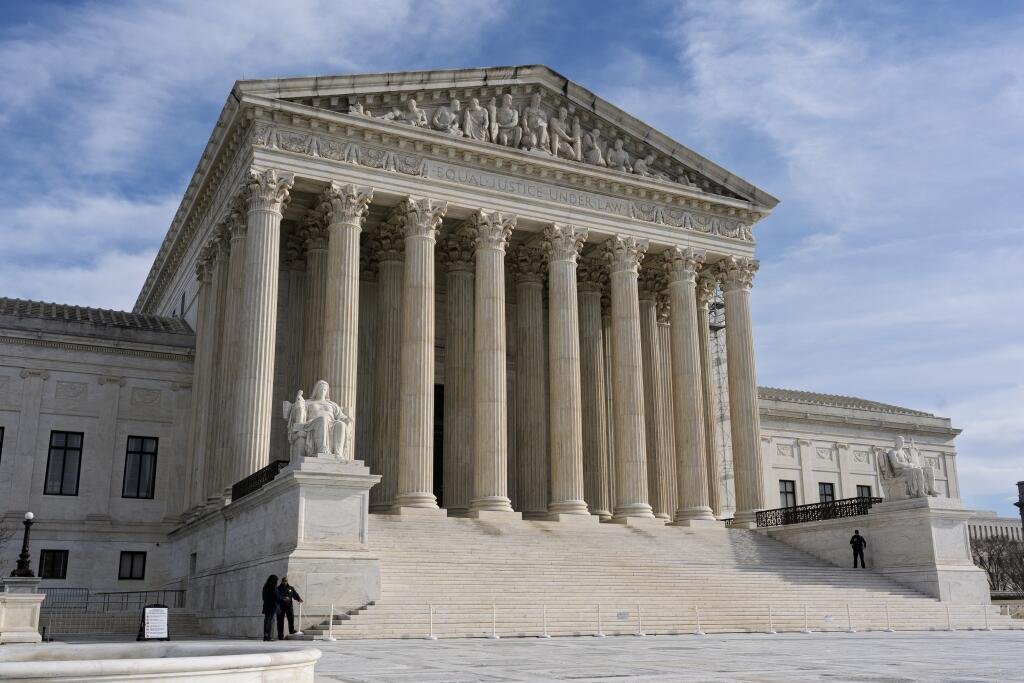
Washington in Turmoil: Executive Overreach and Judicial Friction Spark Fears of a Constitutional Crisis 2026
WASHINGTON, D.C. – The foundations of the American tripartite system of government are facing their most rigorous stress test in decades. On a day marked by legislative stalemates, executive threats, and a blistering dissent from the high court, the term Constitutional Crisis 2026 has moved from the fringes of legal academia into the heart of the national conversation. As President Trump intensifies his campaign against the Federal Reserve’s independence and the Senate clears the way for continued executive-led military action, the balance of power in the nation’s capital appears increasingly lopsided.
The Fed Under Fire: Independence vs. Executive Will
In a move that has sent shockwaves through global financial markets, President Trump has once again renewed his public threats to fire Federal Reserve Chairman Jerome Powell. Labeling Powell’s refusal to aggressively cut interest rates as a “bad job” and a “betrayal of the American worker,” the President has signaled a willingness to break a century-old precedent of central bank independence. This direct confrontation is being cited by many legal experts as a primary trigger for a potential Constitutional Crisis 2026, as the statutory authority to remove a Fed Chair “for cause” has never been tested under the premise of policy disagreement.
The White House is reportedly already vetting Kevin Warsh as a potential successor, signaling that the administration is preparing for a transition whether Powell completes his term or is forcibly removed. Financial analysts warn that if the President succeeds in subjugating the Federal Reserve to the executive branch, it would fundamentally alter the U.S. economic framework. Such a move would be a hallmark of the Constitutional Crisis 2026, where the traditional “checks and balances” designed to keep the economy insulated from short-term political cycles are dismantled by executive fiat.
War Powers: The Senate’s Narrow Rejection
On Capitol Hill, the legislative branch continues to grapple with its own role in the expanding Constitutional Crisis 2026. In a high-stakes vote this afternoon, the U.S. Senate narrowly rejected a Democratic-led resolution (52-47) aimed at curbing the President’s authority to wage an undeclared war against Iran. This marks the fourth failed attempt by the opposition to reclaim the “power of the purse” and the “sole power to declare war” since the current hostilities began on February 28.
The defeat of the War Powers Resolution suggests a growing consolidation of power within the executive branch, a central theme of the Constitutional Crisis 2026. Supporters of the President argue that in the modern era of high-speed drone warfare and regional blockades, the executive must have the agility to act without the “cumbersome” delays of congressional debate. Opponents, however, contend that by abdicating its oversight responsibilities, the Senate is allowing the Constitutional Crisis 2026 to deepen, effectively turning the President into a “commander-in-chief” with no legislative tether.
The Shadow Docket: A Supreme Court Divided
The tension isn’t limited to the executive and legislative branches; it has permeated the marble halls of the Supreme Court. Justice Ketanji Brown Jackson issued a stinging dissent today against her conservative colleagues, following the court’s use of an emergency order to stay a lower court’s ruling against the administration. In her rebuke, she labeled the majority’s reliance on the “shadow docket”—emergency orders issued without full briefing or oral argument—as “scratch-paper musings” designed to benefit the current administration.
Justice Jackson’s dissent highlights the judicial dimension of the Constitutional Crisis 2026. She argued that the court is increasingly acting as a “political shield” rather than an impartial arbiter of law. When the highest court in the land is accused of bypassing traditional legal processes to favor a specific administration, the very concept of the “rule of law” is called into question. This perceived erosion of judicial norms is perhaps the most dangerous element of the Constitutional Crisis 2026, as it undermines public trust in the final authority of the American legal system.
The Erosion of Checks and Balances
At its core, the Constitutional Crisis 2026 is about the collapse of the “auxiliary precautions” that James Madison famously argued were necessary to control the abuses of government. Whether it is the pressure on the Fed, the expansion of war powers, or the weaponization of the shadow docket, the trend is clear: the executive branch is expanding its reach while the other branches either acquiesce or struggle to respond.
Historians suggest that we are witnessing a “norm-breaking” era that defines the Constitutional Crisis 2026. In previous decades, political actors operated within “unwritten rules” of restraint. Today, those rules have been replaced by a “maximalist” approach to power. The Constitutional Crisis 2026 is the inevitable result of a system where political loyalty has superseded institutional fidelity, leading to a government that is more “unitary” than “federal.”
Public Reaction and Civil Discourse
Across the country, the response to these developments has been sharply polarized. Pro-administration rallies have championed the President’s “boldness” in taking on “entrenched bureaucrats” like Powell, viewing the Constitutional Crisis 2026 as a necessary disruption of the status quo. Conversely, legal advocacy groups and constitutional scholars have organized “Emergency Town Halls,” warning that the precedents being set today will haunt the Republic for generations.
The Constitutional Crisis 2026 has also seeped into the national discourse via social media, where the “battle for the narrative” is fought in real-time. The lack of a shared factual reality has only intensified the Constitutional Crisis 2026, as citizens view the same events—such as the Senate’s vote on war powers—through entirely different lenses of legitimacy. This social fragmentation makes a peaceful resolution to the Constitutional Crisis 2026 even more difficult to achieve.
Economic Implications of Political Instability
The uncertainty surrounding the Fed’s future has led to a “volatility premium” in the bond markets. Investors are increasingly wary that the Constitutional Crisis 2026 will result in a politicized monetary policy, leading to long-term inflationary risks. If the President can dictate interest rates, the dollar’s status as the world’s reserve currency could be jeopardized.
Economists warn that the Constitutional Crisis 2026 is no longer a theoretical concern for the Ivory Tower; it is a direct threat to the retirement accounts and purchasing power of every American. When the “political risk” of the United States begins to mirror that of developing nations, the economic fallout of the Constitutional Crisis 2026 could be more damaging than any market crash in recent history.
Legislative Gridlock and the Future of Governance
With the Senate narrowly rejecting the War Powers Resolution, the path toward a legislative solution to the Constitutional Crisis 2026 seems blocked. The 52-47 split reflects a chamber that is unable to find consensus even on fundamental questions of war and peace. This paralysis is a key characteristic of the Constitutional Crisis 2026, where the legislature becomes a spectator to the executive’s unilateralism.
Looking toward the 2026 midterms, both parties are framing the election as a “referendum on the Constitution.” However, if the mechanisms of the Constitutional Crisis 2026—such as emergency orders and executive decrees—continue to proliferate, there are concerns that the electoral process itself will be unable to provide a corrective. The Constitutional Crisis 2026 represents a “loop” where the tools of democracy are used to bypass the constraints of democracy.
Conclusion: A Republic, If You Can Keep It
As Washington, D.C., prepares for another night of intense debate and political maneuvering, the weight of the Constitutional Crisis 2026 hangs heavy over the city. The combined pressure on the Federal Reserve, the expansion of war-making authority, and the fractures within the Supreme Court suggest that the “American Experiment” is in a state of extreme vulnerability.
The Constitutional Crisis 2026 is not an event that will happen in the future; it is a process that is unfolding in real-time. Whether the system can recover its balance depends on the willingness of individual actors to prioritize the Constitution over their party. If the Constitutional Crisis 2026 continues on its current trajectory, the very definition of “The United States” may be permanently altered.
Ultimately, the resolution of the Constitutional Crisis 2026 will not be found in a single court ruling or a single bill, but in a collective recommitment to the principles of limited government and the separation of powers. Until that happens, the Constitutional Crisis 2026 will remain the defining narrative of our time, a reminder that liberty requires a “constant vigilance” that is often missing in today’s hyper-partisan climate.
Potential Consequences of the Crisis
| Sector | Impact of a Prolonged Crisis |
| Financial Markets | Bond yields may spike due to “political risk,” making it more expensive for the U.S. to borrow money. |
| Global Security | Allies may hesitate to join U.S.-led coalitions if the President’s war powers are under domestic legal challenge. |
| Public Trust | Polarization increases as citizens view the Supreme Court and the Fed as partisan entities rather than independent institutions. |
U.S. Senate Vote Records: senate.gov/legislative/votes.htm
Social Connect :

