

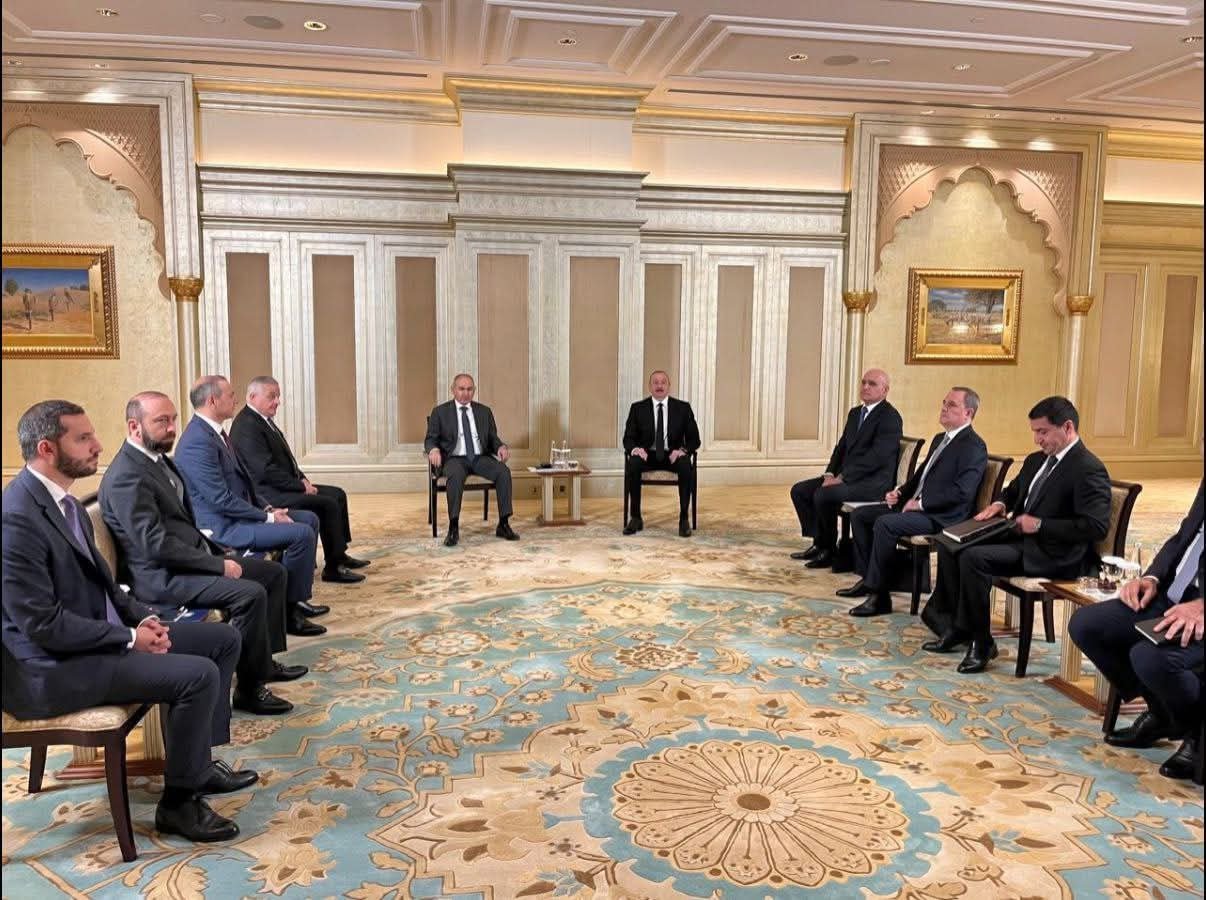
Abu Dhabi Peace Talks: High-Stakes Trilateral Summit Begins as Search for Ceasefire Intensifies
ABU DHABI – Under the gleaming skyline of the Emirati capital, a critical diplomatic gamble is unfolding that could determine the fate of millions. The second round of the Abu Dhabi Peace Talks officially commenced today, bringing together high-level negotiators from Ukraine, Russia, and the United States. This trilateral summit, hosted by the United Arab Emirates, marks the most intensive effort to date to secure a sustainable ceasefire and establish humanitarian corridors in a conflict now entering its fifth year.
The atmosphere in Abu Dhabi is described by insiders as “heavy with expectation and cautious pragmatism.” While the first round of the Abu Dhabi Peace Talks in late January established a basic framework for dialogue, this second session is intended to drill down into the granular details of a potential “freeze” on the front lines. However, the diplomatic progress is being shadowed by a fierce winter on the ground in Eastern Europe, where temperatures have plummeted, making the issue of humanitarian access a matter of life or death.
The Negotiators: Who is at the Table?
The Abu Dhabi Peace Talks feature a unique mix of seasoned military intelligence and high-level political envoys, reflecting the hybrid nature of the ongoing war.
-
Ukraine: Led by Rustem Umerov, Secretary of the National Security and Defense Council, and Kyrylo Budanov, the former spy chief turned Chief of Staff. Their focus is on “dignified peace” without unilateral territorial surrender.
-
Russia: Represented by Igor Kostyukov, the Chief of Military Intelligence (GRU). The presence of a high-ranking military official suggests Moscow is prioritizing the tactical parameters of a ceasefire over broader political settlements for now.
-
The United States: Represented by President Trump’s Special Envoy Steve Witkoff and advisor Jared Kushner. The U.S. presence is serving as the “diplomatic glue,” pushing both sides toward a compromise that aligns with the administration’s “America First” foreign policy goal of ending foreign entanglements.
The Core Conflict: Land vs. Security
At the heart of the Abu Dhabi Peace Talks is a fundamental disagreement over the geography of peace. The Kremlin continues to demand that Kyiv withdraw its forces from the remaining portions of the Donbas—territory Russia claims as its own but does not fully occupy.
Conversely, the Ukrainian delegation has proposed a “Status Quo Freeze.” Under this plan, combat would cease along the current line of contact, followed by the establishment of a 15-kilometer demilitarized zone monitored by international observers.
“We are working within clear directives to achieve a lasting peace,” stated Rustem Umerov during a break in the Abu Dhabi Peace Talks. “But there can be no rewards for aggression. Any deal must include ironclad security guarantees that prevent Russia from regrouping and attacking again in six months.”
Humanitarian Emergency: The Winter Factor
While the political debate rages, the humanitarian dimension of the Abu Dhabi Peace Talks has taken on a new urgency. Recent Russian strikes on Ukraine’s energy grid have left millions without heating during a record-breaking cold snap. A key goal of the current session is to negotiate an “Energy Truce”—a localized ceasefire specifically designed to allow engineers to repair power plants and substations without fear of bombardment.
A breakthrough was reportedly reached late Wednesday regarding a Prisoner of War (POW) exchange. President Volodymyr Zelenskyy confirmed that a “significant step” had been taken, with hundreds of detainees expected to return home in the coming days. This small success is being viewed by the Emirati hosts as a “confidence-building measure” that could pave the way for more difficult concessions later in the week.
The Role of the UAE as a Trusted Mediator
The selection of the UAE for the Abu Dhabi Peace Talks is a testament to the country’s growing influence as a neutral arbiter. Having already facilitated 17 successful mediation efforts for prisoner swaps, the UAE is one of the few nations that maintains robust strategic partnerships with Washington, Moscow, and Kyiv simultaneously.
His Highness Sheikh Abdullah bin Zayed Al Nahyan, Deputy Prime Minister and Minister of Foreign Affairs, welcomed the delegations, noting that “sustainable solutions can only be achieved through de-escalation.” The UAE’s involvement isn’t just logistical; they are reportedly providing the “back-channel” security that allows Russian and Ukrainian officials to speak directly away from the media glare.
Strategic Implications: What Happens Next?
The Abu Dhabi Peace Talks are scheduled to move into “technical working groups” starting Thursday. These groups will focus on three specific tracks:
-
Nuclear Safety: Ensuring the stability of the Zaporizhzhia Nuclear Power Plant.
-
Maritime Corridors: Maintaining the flow of grain and fertilizers through the Black Sea.
-
The Monitoring Mechanism: Defining which international body (likely a coalition of non-NATO states) would police a potential ceasefire.
Despite the “productive” label given to the first day of the second round, the Kremlin’s rhetoric remains hardline. Spokesperson Dmitry Peskov warned that the “special military operation” will continue until Kyiv makes the “appropriate decisions.” This suggests that while the Abu Dhabi Peace Talks have opened the door to peace, the threshold for walking through it remains incredibly high.
As the delegations prepare for another long night of negotiations, the world watches with bated breath. The Abu Dhabi Peace Talks represent a rare, fragile window of opportunity. If they fail, the conflict threatens to spiral into a fifth year of attrition; if they succeed, they could provide the first real blueprint for an end to Europe’s deadliest war in nearly a century.
Abu Dhabi Peace Talks: US Proposed Security Models to Balance Ukraine’s Safety and Russian Neutrality
ABU DHABI – As the second round of the Abu Dhabi Peace Talks intensifies, a clearer picture is emerging of the sophisticated “security architecture” the United States is proposing to bridge the cavernous gap between Kyiv and Moscow. Negotiators, led by US Special Envoy Steve Witkoff and Jared Kushner, are reportedly presenting a multi-tiered plan designed to provide Ukraine with “hard force” deterrence without crossing the Kremlin’s red line on NATO membership.
The Abu Dhabi Peace Talks have moved beyond mere rhetoric into a “technical subgroup” phase, where military experts are debating the specifics of a 15-year security guarantee. This model aims to transform Ukraine into a “highly-fortified neutral state,” similar to the Cold War-era status of certain non-aligned nations, but with modern, lethal enforcement mechanisms.
The Three-Layer Security Framework
The “Trilateral Proposal” currently being refined in the Abu Dhabi Peace Talks consists of three distinct layers of protection for Ukraine, intended to trigger automatically if a ceasefire is breached:
-
Level 1: The “Fortress Ukraine” Model: This involves a long-term US and European commitment to fund and equip the Ukrainian Armed Forces (AFU) to a “first-tier” global standard. The goal is to make the cost of a future Russian invasion prohibitively high by ensuring Ukraine has a permanent edge in air defense, long-range precision strikes, and drone technology.
-
Level 2: The “Coalition of the Willing”: Under this tier, a group of nations—led by France and the UK—would deploy “monitoring and verification” forces along the ceasefire line. While not under a NATO banner, these troops would serve as a “tripwire.” NATO Secretary General Mark Rutte recently confirmed that these European-led forces would have a “crucial US backstop.”
-
Level 3: “Article 5-Like” Guarantees: The most controversial aspect of the Abu Dhabi Peace Talks is the American offer of a “decisive coordinated military response” if Russia reinvades. While Ukraine would be barred from formal NATO membership, this US-led guarantee would be ratified by Congress, providing a legal mandate for American intervention in the event of renewed aggression.
The “Neutrality” Compromise
A major sticking point in the Abu Dhabi Peace Talks remains Russia’s demand for Ukraine’s total neutrality. To address this, the US delegation has suggested a “Finnish-style” constitutional amendment for Kyiv.
-
NATO Abstention: Ukraine would formally enshrine a policy of not joining NATO for a period of at least 20 years.
-
EU Path: In exchange for the NATO delay, Russia would be expected to drop its opposition to Ukraine’s full membership in the European Union, acknowledging Kyiv’s economic and political integration with the West.
-
Military Caps: Moscow is pushing for a cap on the size of the Ukrainian military (reportedly 600,000 troops). Ukraine, however, is resisting any limits that would weaken its self-defense capabilities.
The Buffer Zone and Monitoring
For a ceasefire to hold, the Abu Dhabi Peace Talks are exploring the creation of a 15-kilometer demilitarized zone (DMZ).
-
Neutral Monitors: The US has proposed that this zone be policed by peacekeeping contingents from neutral countries—potentially from the Middle East or Asia—rather than NATO or Russian personnel.
-
The “Energy Truce”: In the immediate term, the talks are prioritizing a halt to strikes on civilian infrastructure. President Trump recently noted that while a temporary “week-long pause” was partially observed, a permanent “Energy Truce” is a prerequisite for any broader security deal.
“A viable path to peace remains complicated,” noted Marco Rubio, US Secretary of State, “but the Abu Dhabi Peace Talks are the first time we’ve had all parties in a room discussing the reality of land and security in the same breath.”
The “Alaska Agreement” Shadow
Adding a layer of intrigue to the Abu Dhabi Peace Talks is the repeated mention by Russian officials of the “Alaska Agreement”—a rumored understanding reached between Presidents Trump and Putin during a summit last summer. While Washington has not confirmed the details, Moscow claims this agreement already outlines the handover of the remaining occupied territories in the Donbas. Ukraine, however, has rejected any unilateral withdrawal from fortified cities it currently holds.
Also Read this:
Trump Homes: US Builders Pitch 1 Million Unit Affordability Plan
Social Connect:

