

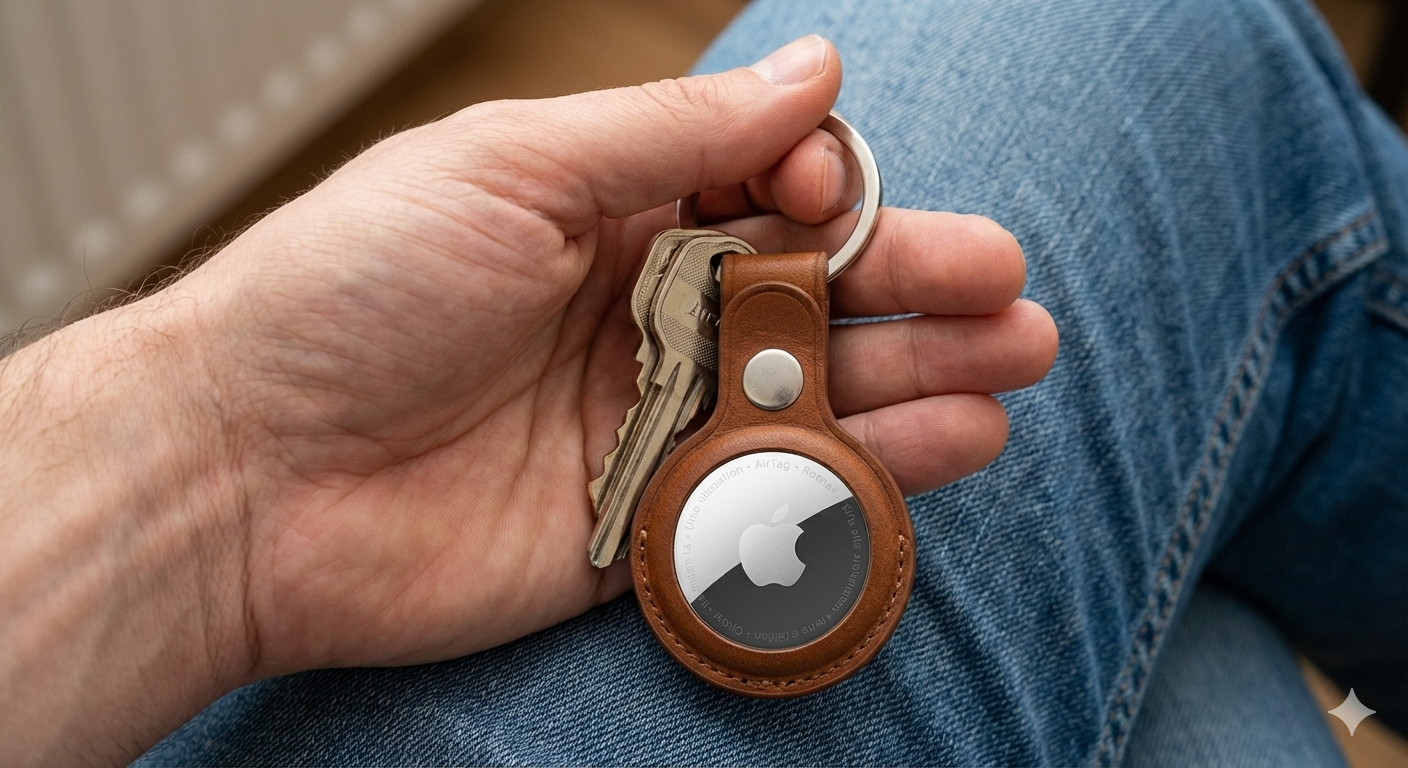
AirTag 2 Released: Why Smart Shoppers Are Still Buying the Original Model at Record-Low Prices
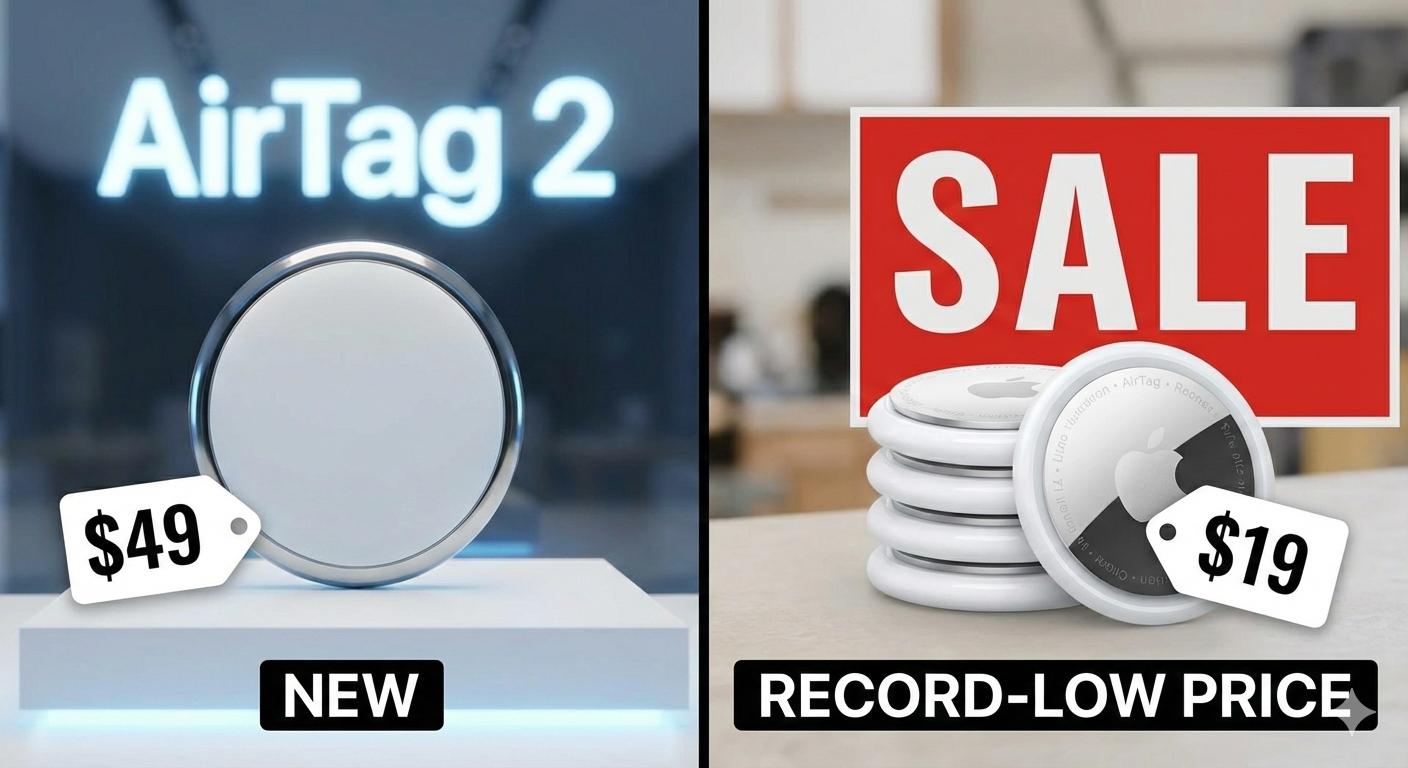
Apple’s brand-new AirTag 2 officially launched January 26, 2026, with significant upgrades—but savvy American consumers are discovering that the original AirTag, now available at steep discounts, may be the smarter purchase for most users.
Apple Launches Second-Generation AirTag After Five-Year Wait
On January 26, 2026, Apple unveiled the second-generation AirTag—officially marketed simply as “the new AirTag”—marking the tracker’s first major upgrade since its April 2021 debut. The announcement represents Apple’s first major product launch of 2026 and introduces meaningful improvements to the tracking device that has become essential for millions of Americans.
The upgraded model features Apple’s second-generation Ultra Wideband chip, the same technology found in the iPhone 17 lineup and Apple Watch Ultra 3, enabling substantially better tracking capabilities. Apple maintains its competitive pricing structure at $29 for a single unit or $99 for a four-pack, with free personalized engraving available through Apple’s website and app.
Key Upgrades in AirTag 2: What’s Actually New
Apple’s second-generation tracker delivers three primary enhancements that address common user complaints from the original model:
Extended Precision Finding Range
The new AirTag can guide users to lost items from up to 50 percent farther away than the previous generation, thanks to the advanced Ultra Wideband chip. This translates to roughly 60 meters of effective Precision Finding range, up from approximately 10-15 meters in the original model.
Significantly Louder Speaker
Apple upgraded the internal design to make the new AirTag 50 percent louder than the previous generation, allowing users to hear their AirTag from up to 2x farther than before. This improvement proves crucial when searching for items buried in couch cushions, hidden in bags, or misplaced in cluttered spaces.
Apple Watch Integration
For the first time, Precision Finding is now available on Apple Watch Series 9 and later, as well as Apple Watch Ultra 2 and later models, enabling users to locate tagged items directly from their wrist without pulling out their iPhone.
Why Original AirTags Are Flying Off Shelves at Discount Prices
Despite these genuine improvements, retailers across the United States are reporting strong sales of the original AirTag model as clearance pricing makes the previous generation increasingly attractive to budget-conscious consumers.
Current Pricing Landscape: January 2026
The first-generation AirTag four-pack is currently available for $69.99 on Amazon, down from the original price of $99.00—representing a 30% discount and bringing the per-unit cost to approximately $17.50. Single AirTags are also discounted to around $24, compared to the standard $29 retail price.
According to retail tracking data, these prices represent near-record lows, with only Black Friday 2025 seeing slightly deeper discounts (the four-pack briefly hit $64.98 during that promotional period).
The Value Proposition That’s Converting Buyers
For American consumers evaluating whether the $30 savings justifies forgoing the latest features, the math becomes compelling. That four-pack discount equals:
- Three years of replacement batteries for all four trackers
- Multiple protective accessories like key rings, adhesive mounts, or silicone cases
- An extra single AirTag at current pricing
Consumer electronics analyst Mike Chen from TechMarket Insights explains: “AirTag represents a unique product category where the core functionality—helping you find lost items—hasn’t fundamentally changed. The improvements in the second generation are incremental rather than revolutionary, making the discounted original model an intelligent choice for value-focused consumers.”
Breaking Down the Real-World Impact of AirTag 2 Upgrades
To help American shoppers make informed decisions, let’s examine whether the new features justify the price premium in practical scenarios:
Scenario 1: Finding Keys in Your Home
Original AirTag Performance: Works effectively within 10-15 meters using Precision Finding. Speaker audible from approximately 30 feet away.
AirTag 2 Performance: Extended range to 15-22 meters. Speaker audible from approximately 60 feet away.
Verdict: Marginal improvement for most home environments. Original model sufficient for typical American households under 3,000 square feet.
Scenario 2: Tracking Luggage at Airports
Original AirTag Performance: Leverages Find My network effectively. Share Item Location feature available with iOS 18.2+.
AirTag 2 Performance: Same Find My network capabilities. Enhanced integration with Share Item Location now supported by more than 50 airlines.
Verdict: Both models perform identically for luggage tracking. Original model fully capable.
Scenario 3: Locating Items on Large Properties
Original AirTag Performance: Precision Finding effective within standard residential range.
AirTag 2 Performance: 50% extended range proves beneficial on properties exceeding one acre or multi-story homes with extensive floor plans.
Verdict: New model provides meaningful advantage for large property owners, farmers, or rural residents.
The Airline Partnership Revolution: Game-Changing for Travelers
One of the most significant developments surrounding AirTag technology in 2026 isn’t hardware-related—it’s the explosive growth of airline partnerships supporting Apple’s Share Item Location feature.
How Share Item Location Works
Introduced with iOS 18.2 in late 2024, Share Item Location allows AirTag users to generate secure, temporary links that provide exact GPS coordinates of tagged items to authorized third parties, including airline customer service representatives.
According to SITA, a leading IT provider for airlines, carriers report that using Share Item Location has reduced baggage delays by 26 percent and reduced incidences of “truly lost” or unrecoverable luggage by 90 percent.
Airlines Supporting AirTag Integration (January 2026)
Major U.S. carriers now accepting Share Item Location links include:
- Delta Air Lines – Full integration across all hubs
- United Airlines – Available at all U.S. airports
- American Airlines – System-wide deployment complete
- Southwest Airlines – Recently added support
- Alaska Airlines – Full compatibility enabled
- JetBlue Airways – Active in all markets
International carriers serving American airports with support include British Airways, Lufthansa, Air France, KLM, Emirates, Qatar Airways, Singapore Airlines, Qantas, Air Canada, and Virgin Atlantic, among others.
Apple announced it has partnered with more than 50 airlines, with plans for around 15 more to support the feature soon.
Real Impact on American Travelers
Following the Department of Transportation’s report of over 220,000 mishandled baggage incidents in Q1 2024 alone, AirTags have become essential travel accessories for millions of Americans. The Share Item Location feature transforms the recovery process:
Traditional Process:
“My bag is lost” → File report → Wait hours/days → Check status repeatedly → Hope bag arrives
AirTag-Enabled Process:
Share location link → Airline locates exact position within minutes → Prioritized retrieval and delivery
Original AirTag Capabilities: Still Remarkably Capable in 2026
Despite launching nearly five years ago, the first-generation AirTag delivers robust performance that satisfies the vast majority of use cases American consumers encounter daily.
Core Features That Remain Unchanged
Find My Network Access
Both generations leverage Apple’s massive Find My network, consisting of hundreds of millions of Apple devices worldwide. This crowdsourced tracking infrastructure provides location updates whenever any Apple device passes near your AirTag—even when your own iPhone is miles away.
Precision Finding Technology
While the range differs, both models offer the directional tracking feature that provides real-time distance measurements and visual arrows guiding users to lost items. The technology works seamlessly with iPhone 11 and later models equipped with Ultra Wideband chips.
Privacy and Security Features
AirTag doesn’t physically store location data or history on device, and end-to-end encryption protects all communication with the Find My network. Both generations include industry-leading anti-stalking protections, including alerts when unknown AirTags travel with users.
Battery Life and Durability
Both models use easily replaceable CR2032 coin cell batteries rated for over one year of use. IP67 water and dust resistance ensures reliable operation in everyday conditions including rain, snow, and dusty environments common across American climate zones.
Creative AirTag Applications Americans Are Using in 2026
Beyond traditional keychains and luggage tags, American consumers have developed innovative uses for AirTags that extend their utility far beyond Apple’s original marketing:
Home and Entertainment
TV Remote Tracking
One of the most popular non-traditional applications involves attaching AirTags to frequently misplaced items like Apple TV remotes. Silicone cases with integrated AirTag compartments cost approximately $7 and solve the perpetual problem of lost remotes. Bright colors also improve visibility.
Tool and Equipment Monitoring
Homeowners and contractors increasingly attach AirTags to expensive power tools, lawn equipment, and machinery. The tracking capability deters theft and aids recovery if items are stolen from job sites or storage units.
Pet Tracking (Unofficial Use)
Despite Apple’s stated position that AirTags are designed exclusively for tracking objects, and not people or pets, millions of Americans attach them to pet collars. The trackers provide peace of mind for dog owners whose pets might escape fenced yards or slip leashes during walks.
Family and Safety Applications
Children’s Backpack Monitoring
Parents routinely place AirTags in school backpacks, providing peace of mind when children forget items on buses or leave bags at after-school activities. The practice has become standard across American school districts.
Elderly Care Assistance
Families caring for elderly relatives with memory issues discreetly attach AirTags to wallets, car keys, and personal items that frequently go missing. The technology reduces stress and improves independence for seniors experiencing cognitive decline.
Vehicle Tracking
While not a substitute for dedicated GPS trackers, AirTags hidden in vehicles provide theft recovery capabilities. Multiple news reports document successful vehicle recoveries thanks to owner-placed AirTags providing location data to law enforcement.
The Hidden Costs of AirTag Ownership: Battery Maintenance Reality
One often-overlooked factor in the original-versus-new decision involves long-term operating costs that affect both generations equally.
Annual Battery Replacement Economics
AirTags use standard CR2032 coin cell batteries available at any pharmacy, grocery store, or online retailer. Pricing ranges from $5-8 per battery for name-brand options, with generic alternatives as low as $2-3 when purchased in bulk.
For a household using four AirTags (one four-pack), annual battery replacement costs range from $8-32 depending on battery brand selection. Over a typical five-year ownership period, that adds $40-160 to total cost of ownership.
The Maintenance Challenge
To reset an AirTag 2, you need to remove the battery, leave it out for at least five seconds, and then insert the battery again, repeating the process four times, and Apple says it can take up to 12 seconds to hear the final tone. This more complex reset procedure compared to the original model may present challenges for less tech-savvy users.
The practical challenge isn’t expense—it’s remembering to purchase and replace batteries before complete depletion. Once an AirTag’s battery dies, it becomes impossible to locate, creating an ironic situation where the device designed to find lost items becomes permanently lost itself.
Pro Tip: American consumers who purchase AirTags should immediately add a recurring annual calendar reminder to check battery levels and purchase replacements proactively.
Technical Requirements: Who Can Actually Use AirTag 2?
The AirTag 2 requires iOS 26.2.1 or later, meaning it won’t work with devices that cannot run iOS 26. This compatibility requirement has significant implications for American consumers.
Compatible Devices for AirTag 2
iPhones:
- iPhone 12 and later (with iOS 26.2.1+)
- iPhone 11 (with iOS 26.2.1+ but limited Precision Finding)
- iPhone XS, XR, and earlier: Not compatible
iPads:
- Requires iPadOS 26 or later
- Models from 2018 and newer generally supported
Apple Watch:
- Precision Finding requires watchOS 26.2.1 or later on Apple Watch Series 9 and later, or Apple Watch Ultra 2 and later
Original AirTag Advantage: Broader Compatibility
The first-generation AirTag works with any iPhone running iOS 14.5 or later, providing compatibility with devices dating back to iPhone 6s (released 2015). For families with mixed-age Apple devices or Americans who prefer keeping phones longer before upgrading, the original AirTag offers superior flexibility.
Market Analysis: Projected Pricing Trends Through 2026
Industry analysts project continued price pressure on original AirTag inventory throughout 2026 as retailers clear remaining stock. Understanding these trends helps American consumers time purchases for maximum savings.
Expected Discount Windows
Presidents’ Day (February 17, 2026):
Projected four-pack pricing: $59.99-$64.99
Historical pattern: Major electronics retailers offer significant discounts
Memorial Day (May 25, 2026):
Projected four-pack pricing: $54.99-$59.99
Historical pattern: Summer travel season drives promotional pricing
Amazon Prime Day (July 2026):
Projected four-pack pricing: $49.99-$54.99
Historical pattern: Amazon’s biggest deal event of summer
Labor Day (September 1, 2026):
Projected four-pack pricing: $54.99-$59.99
Historical pattern: Back-to-school and travel season closeouts
Black Friday (November 28, 2026):
Projected four-pack pricing: $44.99-$49.99
Historical pattern: Year’s lowest prices, likely final clearance
Strategic Buying Recommendations
Technology deal tracker Sarah Martinez from DealSeeker recommends: “If you need AirTags immediately, current $69.99 pricing represents solid value. However, consumers with flexibility should wait for Memorial Day or Prime Day when we expect prices to drop into the $50s. The absolute lowest prices will likely come during Black Friday 2026 as retailers make final inventory pushes.”
Who Should Actually Buy the New AirTag 2?
Despite the compelling value proposition of discounted original models, certain American consumer segments benefit significantly from AirTag 2’s enhancements:
Power Users Who Benefit from AirTag 2
Large Property Owners
Homeowners with acreage, multi-acre estates, ranches, or farms see meaningful benefits from the extended Precision Finding range. The ability to locate items from 50% farther away proves valuable when tracking equipment across expansive properties.
Hearing-Impaired Users
The substantially louder speaker—audible from twice the distance—provides accessibility benefits for users with hearing limitations who previously struggled to locate original AirTags by sound alone.
Apple Watch Enthusiasts
Users who primarily interact with their Apple ecosystem through Apple Watch rather than iPhone benefit from native Precision Finding support on the wrist, eliminating the need to pull out phones during searches.
Tech Early Adopters
Consumers who prioritize having cutting-edge technology and longest possible manufacturer support lifecycle find value in the latest hardware, particularly given Apple’s five-year wait between AirTag generations.
Professional Applications
Photographers, videographers, and other professionals who track expensive equipment across large venues, outdoor locations, or event spaces benefit from extended range and louder alerts.
First-Time AirTag Buyers: New vs. Original Decision Tree
Americans entering the Apple tracking ecosystem face a straightforward decision framework:
Choose AirTag 2 if:
- You own iPhone 12 or newer with iOS 26.2.1
- You have Apple Watch Series 9+ or Ultra 2+
- Extended range addresses specific use cases
- You plan 5+ year ownership
- Budget allows premium pricing
Choose Original AirTag if:
- You want maximum value (save $30+)
- You have older iPhone models (11 or earlier)
- Standard range meets your needs
- You’re equipping multiple items/family members
- You prioritize immediate availability of discounts
Privacy and Security: Both Generations Excel
Apple designed both AirTag generations with industry-leading privacy protections that address concerns raised when tracking devices first gained mainstream adoption.
Anti-Stalking Measures
Both models include comprehensive protections against unauthorized tracking:
Unknown AirTag Alerts
Both generations incorporate cross-platform alerts that warn users if an unknown tracker is detected nearby, with frequently rotating Bluetooth identifiers that prevent long-term tracking without consent.
Sound Alerts for Separated AirTags
When an AirTag separated from its owner moves with another person, it automatically emits sound alerts after 8-24 hours (timeframe varies by circumstances). This feature works on both generations.
Android Compatibility
Apple released Android apps that detect nearby AirTags, extending protection beyond the iOS ecosystem. Both original and new AirTags remain detectable by Android devices.
Location Data Privacy
AirTag does not physically store location data or history on the device itself, and all communication with the Find My network is encrypted so only the owner can access the location information. No one—including Apple—can view the identity or location of devices that helped find an AirTag.
Real Stories: How AirTags Help Americans Daily
The true value of AirTag technology becomes clear through real-world recovery stories that demonstrate practical benefits beyond marketing claims.
Lost Luggage Recoveries
American travelers report thousands of successful luggage recoveries thanks to AirTags. In high-profile cases throughout 2025, passengers used AirTags to locate bags misrouted to wrong cities, left on tarmacs, or stuck in airline warehouses for weeks. The precise location data empowered travelers to advocate with airline representatives and expedite recoveries.
Vehicle Theft Prevention
Multiple law enforcement agencies across the United States credit AirTags with successful stolen vehicle recoveries. When hidden inside cars, trucks, or motorcycles, the trackers provide real-time location data that helps police locate and recover stolen property quickly.
Medical Emergency Assistance
Documented cases show AirTags facilitating medication delivery after luggage containing critical prescriptions went missing. Travelers used precise location data to coordinate same-day retrievals of life-saving medications from airline storage facilities.
Musical Instrument Tracking
Professional musicians increasingly rely on AirTags to track valuable instruments during travel. Several high-profile recovery stories document instruments worth thousands of dollars successfully located and returned thanks to AirTag tracking.
Competitor Landscape: How AirTag Compares in 2026
While Apple dominates the item tracker market among iPhone users, alternative products serve Android users and those seeking different features.
Tile Trackers
Tile pioneered the consumer tracking device market before Apple’s 2021 entry. Current Tile models offer:
Advantages:
- Works with both iOS and Android devices
- Longer battery life on some models (up to 3 years)
- Built-in key ring holes (no separate accessory needed)
- Some models feature louder speakers than original AirTag
Disadvantages:
- Smaller tracking network compared to Find My
- Less precise location tracking
- No true Precision Finding equivalent
- Requires separate Tile app installation
Samsung SmartTag 2
Samsung’s second-generation tracker launched in 2023 serves Android users:
Advantages:
- Optimized for Samsung Galaxy devices
- Similar Ultra Wideband precision to AirTag
- Compass ring for directional finding
- IP67 water resistance
Disadvantages:
- Limited to Samsung ecosystem
- Much smaller tracking network than Apple
- Higher price point than AirTag
- Less accessory options available
Chipolo and Other Find My Accessories
Third-party manufacturers like Chipolo create Find My-compatible trackers that work within Apple’s ecosystem:
Advantages:
- Built-in key ring holes and varied form factors
- Louder speakers on some models
- Often cheaper than official AirTags
- Full Find My network access
Disadvantages:
- No Precision Finding support (most models)
- Less refined industrial design
- Fewer accessory options
- Variable build quality
The Verdict: Strategic Buying Advice for Americans
After comprehensive analysis of features, pricing, and use cases, here’s tailored guidance for American consumers navigating the original-versus-new decision in January 2026:
For Budget-Conscious Families
Recommendation: Purchase original AirTag four-packs at current $69.99 pricing (or wait for further discounts).
Rationale: The $30 savings per four-pack allows families to equip more items or more family members with tracking capabilities. Original AirTag performance remains excellent for typical household use, and the extended range of AirTag 2 provides minimal practical benefit in standard American homes and apartments.
Strategic Timing: Consider waiting until Memorial Day or Prime Day for potentially lower pricing if immediate need isn’t pressing.
For Frequent Travelers
Recommendation: Mix of one or two AirTag 2 units for priority items (passport holder, main luggage) plus original AirTags for secondary bags and accessories.
Rationale: The louder speaker and extended range prove beneficial in airport chaos and large baggage claim areas. However, since both generations work identically with airline Share Item Location features, original models suffice for less-critical items.
Must-Have: Verify your primary airline supports Share Item Location before purchasing any AirTag generation.
For Large Property Owners
Recommendation: Invest in AirTag 2 for outdoor equipment and items tracked across expansive areas.
Rationale: The 50% extended Precision Finding range provides tangible benefits when locating items on multi-acre properties, farms, ranches, or large estates. Original AirTag range limitations become apparent in these scenarios.
Consider: AirTag 2’s louder speaker also helps when searching across large indoor spaces like warehouses or commercial buildings.
For Tech Enthusiasts and Apple Watch Users
Recommendation: Purchase AirTag 2 to maximize ecosystem integration and future-proof your tracking setup.
Rationale: Native Apple Watch support represents a significant convenience upgrade for users who primarily interact with their Apple ecosystem through wearables. The latest hardware ensures longest possible support lifecycle and compatibility with future iOS features.
Note: Requires Apple Watch Series 9+ or Ultra 2+ to access Precision Finding features.
For Android Users or Mixed-Ecosystem Households
Recommendation: Consider Tile or Samsung SmartTag 2 instead of either AirTag generation.
Rationale: While AirTags offer detection capabilities for Android users, the experience is severely limited without an iPhone. Dedicated cross-platform solutions provide better functionality for households with mixed device ecosystems.
How to Maximize AirTag Value: Expert Tips
Regardless of which generation American consumers choose, following these best practices maximizes investment returns:
1. Buy Quality Accessories Upfront
Cheap accessories fail quickly, leading to lost AirTags. Invest in:
- Key rings: Stainless steel or reinforced polymer ($8-15)
- Adhesive mounts: Industrial-strength 3M adhesive ($6-10)
- Luggage holders: Tamper-resistant designs with locks ($12-18)
- Pet collar holders: Waterproof silicone with secure clasps ($8-12)
2. Set Battery Replacement Reminders
Create recurring calendar events 11 months after activation to check battery levels before complete depletion. Purchase replacement batteries in bulk (10-packs under $10) to ensure availability.
3. Enable Family Sharing Strategically
Share AirTags attached to family items (shared vehicles, luggage for group trips) with up to five people. This ensures multiple family members can locate shared items during travel or emergencies.
4. Register AirTags with Meaningful Names
Use descriptive names that clearly identify items: “Dad’s Car Keys,” “Emma’s School Backpack,” “Main Suitcase,” “Bike-Blue Trek.” Clear naming prevents confusion when multiple AirTags appear in Find My app.
5. Test Precision Finding Before Travel
Practice using Precision Finding in your home before relying on it at airports or unfamiliar locations. Understanding the interface and range limitations prevents panic during actual lost-item scenarios.
6. Document AirTag Serial Numbers
Photograph or record AirTag serial numbers (visible on the battery side) for insurance claims or law enforcement reports if items are stolen. Serial numbers help prove ownership during recovery.
7. Leverage Share Item Location Proactively
When traveling, generate Share Item Location links immediately upon baggage check-in. Save these links in your phone’s notes app for instant access if issues arise. Don’t wait until luggage goes missing to create links.
Future of AirTag Technology: What’s Coming Next?
While Apple hasn’t announced specific future plans, industry analysts and patent filings suggest potential directions for AirTag technology beyond the 2026 refresh:
Rumored Features for Future Generations
Rechargeable Battery Models
Patents filed by Apple explore rechargeable battery designs that would eliminate annual CR2032 replacements. Potential wireless charging through MagSafe-style attachments could debut in AirTag 3.
Extended Battery Life
Advanced power management and more efficient chips could push battery life beyond the current one-year standard to 18-24 months between replacements.
Additional Form Factors
Apple may introduce credit card-sized AirTags for wallets, ultra-thin designs for laptops, or ruggedized versions for outdoor equipment. Third-party Find My accessory makers already offer varied form factors with less advanced technology.
Enhanced Privacy Features
Future models may include additional anti-stalking measures, potentially requiring biometric authentication to disable alerts or improved detection systems for identifying unauthorized tracking devices.
Market Expansion Opportunities
The success of AirTags in the United States positions Apple for global market expansion. Emerging markets with growing iPhone adoption represent significant opportunities, while partnerships with additional industries beyond airlines (rental cars, hotels, retailers) could expand ecosystem utility.
Environmental Considerations: Sustainability and E-Waste
As millions of Americans adopt AirTag technology, environmental impacts merit consideration:
Positive Environmental Aspects
Reduced Item Replacement
By preventing loss of valuable items like luggage, keys, and equipment, AirTags reduce unnecessary purchases of replacement goods. This decreases resource consumption and manufacturing environmental impact.
Theft Deterrence
Vehicle and equipment tracking capabilities deter theft and facilitate recovery, reducing insurance claims and replacement product manufacturing.
Environmental Concerns
Battery Waste
Annual CR2032 battery replacements for millions of AirTags generate significant battery waste. While these batteries are recyclable, many end up in landfills.
Electronic Waste
When AirTags eventually fail or become obsolete, they contribute to growing e-waste challenges. Apple offers recycling programs, but participation rates remain low.
Sustainable Usage Recommendations
American consumers can minimize environmental impact by:
- Purchasing rechargeable CR2032 batteries with appropriate chargers
- Participating in Apple’s recycling programs for old AirTags
- Buying quality accessories that extend AirTag lifespan
- Properly disposing of batteries at designated collection points
Final Recommendation: Smart Money Move for 2026
After exhaustive analysis of features, pricing trends, real-world performance, and use cases, the recommendation for most American consumers is clear: purchase original AirTags at current discounted pricing unless specific needs justify AirTag 2’s premium.
The 80/20 Rule Applied
Approximately 80% of American AirTag users will experience functionally identical performance between original and new models in their daily use cases. The core tracking capabilities—Find My network access, basic Precision Finding, lost mode functionality, and Share Item Location—work equally well on both generations.
The 20% who benefit from AirTag 2 enhancements have specific circumstances: large properties, hearing impairments, Apple Watch-centric workflows, or professional equipment tracking needs.
The Math That Matters
Current pricing creates a compelling value proposition:
- AirTag 2 four-pack: $99.00 ($24.75 per unit)
- Original AirTag four-pack: $69.99 ($17.50 per unit)
- Savings: $30.01 (30% discount)
That $30 savings per four-pack represents:
- Approximately 30% more tracking devices for the same budget
- Three years of replacement batteries for all units
- Multiple quality accessories to protect your investment
- Additional peace of mind by equipping more items
Patient Consumers Win Bigger
Americans with flexibility to wait should monitor pricing through spring and summer 2026. Based on historical patterns and retail inventory pressures, original AirTag four-packs will likely reach $54.99-$59.99 during major sale events (Memorial Day, Prime Day), with potential record lows around $44.99-$49.99 during Black Friday 2026.
For families equipping multiple members or users protecting numerous items (luggage sets, vehicle keys, pet collars, equipment), waiting for these deeper discounts multiplies savings significantly.
Conclusion: Value Beats Novelty for Most Americans
The technology industry constantly pushes consumers toward the newest, most expensive options. The AirTag market in January 2026 presents a refreshing counterexample where the smarter financial decision involves embracing previous-generation technology that performs 95% as well at 70% of the cost.
Apple’s AirTag 2 delivers genuine improvements that warrant the premium for specific users with specialized needs. But for typical American households tracking keys, wallets, backpacks, and luggage through everyday life, the original AirTag—now approaching five years old—remains thoroughly capable of its core mission.
As retail inventory continues adjusting throughout 2026 and clearance pricing potentially drops even further, patient consumers who choose the discounted original model make a financially sound decision without meaningful functional sacrifice.
The best technology isn’t always the newest technology—sometimes it’s the proven solution available at the right price.
Quick Reference: AirTag Comparison Chart
| Feature | Original AirTag | AirTag 2 |
|---|---|---|
| Current Best Price | $69.99 (4-pack) | $99.00 (4-pack) |
| Per-Unit Cost | ~$17.50 | $24.75 |
| Precision Finding Range | ~10-15 meters | ~15-22 meters (50% more) |
| Speaker Volume | Standard | 50% louder |
| Speaker Audibility | ~30 feet | ~60 feet (2x more) |
| Apple Watch Support | No | Yes (Series 9+, Ultra 2+) |
| iOS Requirements | iOS 14.5+ | iOS 26.2.1+ |
| Compatible iPhones | iPhone 6s and newer | iPhone 12 and newer |
| Share Item Location | Yes (iOS 18.2+) | Yes (enhanced) |
| Battery Life | 1+ year | 1+ year |
| Find My Network | Full access | Full access |
| Water Resistance | IP67 | IP67 |
| Free Engraving | Yes | Yes |
| Accessories Compatible | All current | All current |
| Best For | Budget shoppers, families, older iPhones | Large properties, Apple Watch users, latest features |
Last Updated: January 27, 2026
Pricing Information: Based on major U.S. retailers including Amazon, Best Buy, Target, and Apple.com as of January 26-27, 2026. Prices subject to change. Check current retailer listings for most accurate information.
Disclosure: This article contains analysis of publicly available product information and retail pricing. No affiliate relationships or sponsored content. Recommendations based solely on feature comparisons and value analysis for American consumers.
Related News :
iPhone 17e: Everything You Need to Know About Apple’s Budget Flagship (2026)
Social Connect

