


Bitcoin Crashes to $63,000 — Lowest Since Trump Took Office — As $1 Billion in Leveraged Positions Get Liquidated
Bitcoin plunged to a 15-month low of $60,062 on Thursday evening, marking one of the worst single-day crashes in the cryptocurrency’s history despite President Donald Trump’s vocal support for digital assets. The selloff, which saw more than $1 billion in leveraged positions forcibly liquidated within 24 hours, has wiped out $2 trillion in total cryptocurrency market value since October’s peak. Meanwhile, growing ethics scandals surrounding Trump’s family crypto venture World Liberty Financial — including a controversial $500 million deal with UAE royalty — are raising questions about whether the president’s crypto agenda is backfiring on the industry he promised to champion.
LATEST UPDATE (Feb. 5, 2026 — 8:30 PM EST): Bitcoin briefly crashed below $61,000 in overnight trading before recovering slightly to $63,000, down approximately 10.5% in a single day — the steepest one-day decline since the FTX collapse in November 2022. The crash has triggered over $1 billion in forced liquidations of leveraged positions. U.S. spot Bitcoin ETFs have recorded more than $12 billion in net outflows since November 2025, with institutional demand reversing dramatically. Congressman Ro Khanna announced a House investigation into World Liberty Financial over the UAE deal, calling it a potential violation of “multiple laws and the United States Constitution.”
Bitcoin’s Worst Day Since FTX Collapse
The world’s largest cryptocurrency tumbled more than 10% over a 24-hour period on Thursday, February 5, dropping to a session low of $60,062 during overnight U.S. trading hours — the weakest level since October 2024. As of 8:30 p.m. Eastern Time Thursday, Bitcoin was trading around $63,000, still down approximately 15% from the previous day’s close.
February 5, 2026 is now on track to become one of the worst days in Bitcoin’s history, with the cryptocurrency suffering its steepest one-day drawdown — 10.5% since midnight UTC — since November 8, 2022, when the collapse of crypto exchange FTX sent Bitcoin below $16,000 after a catastrophic 14.3% single-day decline.
The digital asset briefly peaked just north of $126,000 in early October 2025, buoyed by investor enthusiasm over Donald Trump’s presidential election victory and his promises to make the United States the “crypto capital of the planet.” Since that high, Bitcoin has now fallen nearly 50%, erasing hundreds of billions in market capitalization.
Forced Liquidations Accelerate the Carnage
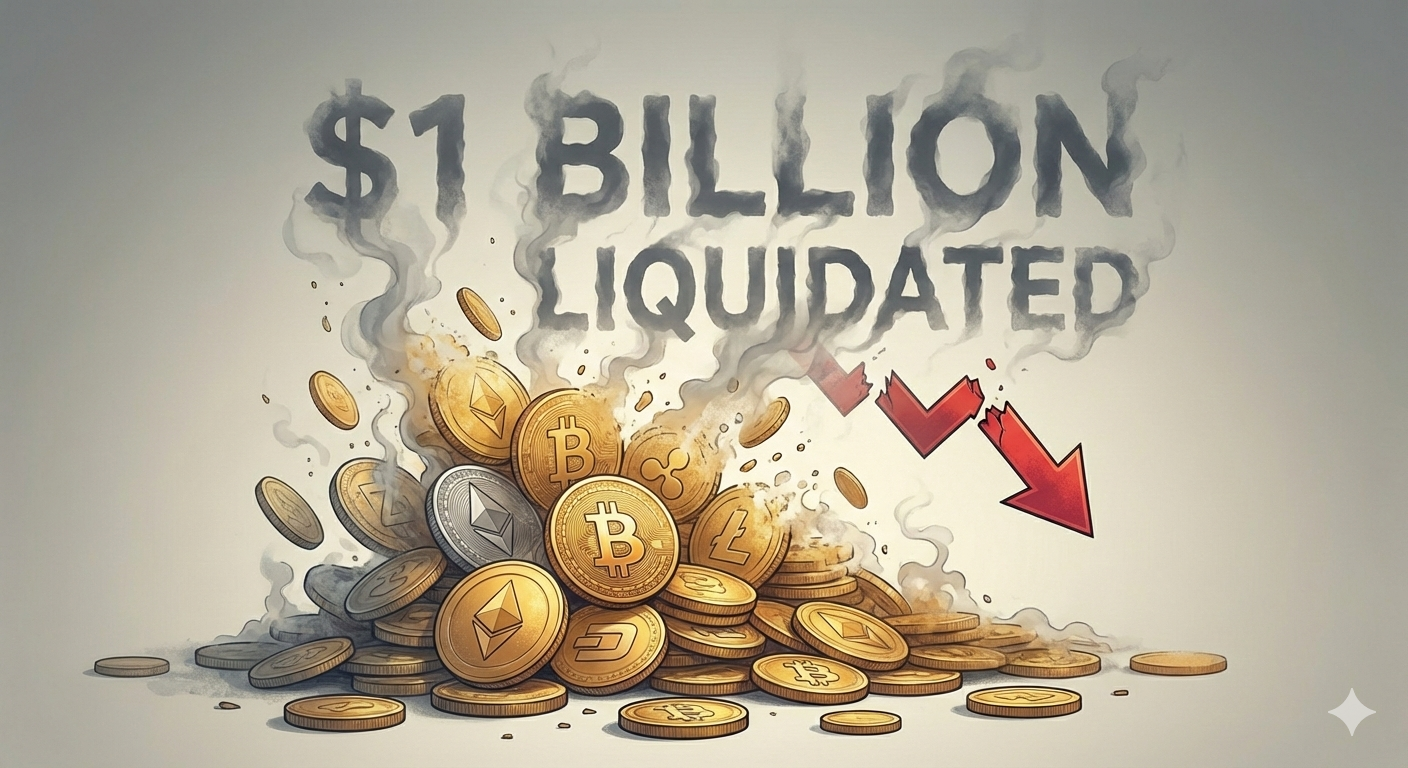
The selloff has been significantly worsened by forced liquidations — when traders’ leveraged positions are automatically sold as Bitcoin hits preset price levels. According to data from Coinglass, more than $2 billion in long and short cryptocurrency positions have been liquidated this week, with approximately $980 million in bullish leveraged bets forced to close as prices dropped Thursday alone.
Crypto liquidations exceeded $1 billion over the past 24 hours, wiping out highly leveraged traders who had bet on Bitcoin continuing its post-election rally. The cascade of forced selling created a downward spiral, as each round of liquidations pushed prices lower, triggering additional automatic sales.
Bitcoin Falls Below Key Technical Support Levels
Technical analysts are sounding alarm bells as Bitcoin has now broken through multiple critical support levels that previously acted as price floors. Most significantly, the cryptocurrency has dropped below its 365-day moving average for the first time since March 2022 — a bearish signal that historically precedes extended downturns.
Where’s the Bottom?
Market watchers had identified $70,000 as a crucial psychological level that, if breached, could trigger further declines. That threshold was decisively shattered this week. James Butterfill, head of research at CoinShares, had warned that “$70,000 is shaping up as a key psychological level,” adding that “if we fail to hold it, a move toward the $60,000 to $65,000 range becomes quite likely.”
That prediction has now come to pass, with Bitcoin trading firmly in the mid-$60,000s as of Thursday evening. Some analysts point to the 200-day moving average — currently around $58,000 to $60,000 — as the next major support level to watch. This level also aligns with Bitcoin’s “realized price,” which represents the average cost basis of all Bitcoin holders and could serve as strong multi-year support.
However, Stifel, a U.S.-based investment and research firm, has issued an even more bearish forecast, suggesting Bitcoin could drop as low as $38,000. The firm points to the cryptocurrency’s close correlation with the U.S. dollar, which recently fell to its lowest point in four years.
Institutional Investors Are Selling — Not Buying
One of the most alarming developments in the current Bitcoin selloff is the reversal of institutional demand. While large institutional investors were previously credited with supporting Bitcoin’s price through consistent purchases, those same participants are now net sellers.
Bitcoin ETF Outflows Accelerate
According to a report from CryptoQuant published Wednesday, U.S. exchange-traded funds that purchased 46,000 Bitcoin this time last year are now net sellers in 2026. The funds have recorded devastating outflows:
- January 2026: More than $3 billion in outflows
- December 2025: Approximately $2 billion in outflows
- November 2025: About $7 billion in outflows
The cumulative outflows from U.S. spot Bitcoin ETFs now exceed $12 billion over just three months, representing a dramatic reversal from the institutional buying frenzy that characterized much of 2024 and early 2025.
“Institutional demand has reversed materially,” CryptoQuant said in its report. The research firm also noted other worrying signs: “Bitcoin has broken below its 365-day moving average for the first time since March 2022 and has declined 23% in the 83 days since the breakdown — worse than the early 2022 bear phase.”
“When you consider the investigation into [Crypto.com] was dropped, the economics of this look more like a plea deal than a business deal.”
Why Is Bitcoin Crashing? Multiple Factors Converge
Analysts point to a constellation of factors driving Bitcoin’s precipitous decline, ranging from macroeconomic concerns to regulatory uncertainty and Trump-specific controversies.
Kevin Warsh Nomination Spooks Markets
Deutsche Bank analysts cited President Trump’s nomination of Kevin Warsh as the new chair of the Federal Reserve as a significant catalyst for the latest selloff. Warsh is perceived as likely to take a “hawkish” approach to monetary policy, keeping interest rates higher for longer. Looser monetary policy — lower interest rates and easier credit — tends to support investment in speculative assets like cryptocurrencies, while tighter policy has the opposite effect.
“Bitcoin price has been declining for the past four months,” Deutsche Bank noted, “and negative sentiment has been growing around cryptocurrency more broadly. This steady selling shows that traditional investors are losing interest, and overall pessimism about crypto is growing.”
Geopolitical Uncertainty and Risk-Off Sentiment
Bitcoin has fallen 16% year-to-date as investors have rotated out of risk-on assets amid growing geopolitical concerns. These include rising tensions between the U.S. and Europe over Trump’s Greenland ambitions, ongoing uncertainty about U.S.-China relations, and a recently ended partial government shutdown that delayed the release of critical economic data.
Rob Hadick, general partner at Dragonfly Capital, told CNBC that “BTC’s pullback doesn’t appear driven by any single factor. Crypto and bitcoin prices have always been volatile and this market is no different.”
Broader Market Weakness
The crypto selloff has occurred alongside sharp declines in U.S. tech stocks and other risk assets. The State Street Technology Select Sector SPDR ETF dropped 1.8% on Thursday, marking its third straight losing day. Software stocks, which often move in lockstep with Bitcoin, have continued their selloff, with the thematic iShares Expanded Tech-Software ETF declining more than 3% and now down 24% year-to-date.
Precious metals have also experienced extreme volatility. Silver plunged 15% on Thursday and is now trading almost 40% below its record high from just one week ago. Gold fell more than 2% to $4,850, though the selloff wasn’t as severe as silver’s collapse. Gold is now trading approximately 15% below last week’s record.
The Trump Crypto Paradox: Pro-Crypto Agenda Meets Scandal
Perhaps the most perplexing aspect of Bitcoin’s crash is that it’s happening despite — or perhaps because of — President Trump’s aggressive pro-cryptocurrency policies and personal financial involvement in the sector.
Trump’s Pro-Crypto Actions
Since returning to the White House in January 2025, Trump has taken numerous steps to support the cryptocurrency industry:
- Executive Order: Issued an executive order in his first week aimed at making the U.S. the “crypto capital of the planet”
- Regulatory Rollback: Dissolved a Department of Justice team focused on enforcing crypto regulations
- SEC Changes: The Securities and Exchange Commission under Trump’s appointees has dropped numerous crypto-related enforcement actions and investigations
- Legislative Support: Signed laws to support federal government backing for cryptocurrency
Trump’s Personal Crypto Holdings
What sets this administration apart is the president’s unprecedented personal financial stake in cryptocurrency:
- Personal Cryptocurrency: Trump launched his own branded cryptocurrency token shortly after taking office, with most profits flowing directly to his companies
- World Liberty Financial: The Trump family controls 75% of World Liberty Financial, a crypto investment platform that has already generated over $1 billion in profits for the family
- Total Holdings: Senate Democrats reported in November that Trump holds cryptocurrency worth more than $11 billion and has earned personal income of $800 million from crypto since entering office
🚨 THE UAE SCANDAL EXPLAINED
What Happened: Four days before Trump’s second inauguration in January 2026, World Liberty Financial sold a 49% stake to Aryam Investment, a firm backed by Sheikh Tahnoon bin Zayed Al Nahyan, the UAE’s national security adviser and brother of the UAE President.
The Deal: The UAE-linked entity paid $500 million for the stake, with $187 million going directly to Trump family entities and $31 million to entities tied to Steve Witkoff (Trump’s Middle East envoy) and his family.
The Controversy: Critics call this “unprecedented in American politics” — a foreign government official taking major ownership in a sitting U.S. president’s company. Months later, the Trump administration granted the UAE access to tightly guarded AI chips, raising conflict-of-interest concerns.
Congressional Investigation Launched
Congressman Ro Khanna announced Wednesday that he has launched a House Select Committee investigation into World Liberty Financial over the $500 million UAE deal. In a letter to World Liberty Financial CEO Zach Witkoff (son of Trump’s Middle East envoy), Khanna wrote: “These arrangements are not just a scandal, but may even represent a violation of multiple laws and the United States Constitution.”
Khanna requested documents and answers to 16 questions regarding conflicts of interest, due diligence, and whether the deal involved foreign influence over U.S. policy. He has also urged Delaware U.S. Attorney Ben Wallace to investigate a Delaware-based LLC used by the Abu Dhabi buyers for the investment.
Democrats Demand Ethics Provisions
The World Liberty Financial scandal has stalled the landmark crypto Clarity Act in the Senate, with Democrats now demanding ethics provisions that would prohibit the president from profiting off crypto holdings. Senate Democrats have called out Trump’s “pro-crypto agenda,” arguing that the president’s massive personal stake creates inherent conflicts of interest.
Senator Ro Khanna stated: “Every American should know that President Trump has betrayed our workers and has allowed our industrial base to be hollowed out” through deals that prioritize personal profit over national interest.
Altcoins Suffer Even Steeper Losses
While Bitcoin’s decline has dominated headlines, alternative cryptocurrencies (altcoins) have experienced even more brutal selloffs. Almost all major tokens tracked by CoinDesk indexes are down by more than 10% over the last 24 hours.
XRP, the cryptocurrency associated with Ripple Labs, plummeted 19% over the 24-hour period ending Thursday evening, underperforming most other large-cap cryptos. Ethereum dropped approximately 12% to around $2,200, while Solana fell similarly.
According to CoinGecko, which tracks thousands of cryptocurrencies, the total crypto market has lost over $1 trillion in value over the last month and $2 trillion in value since the market peak in October 2025.
Crypto Stocks Hammered
Publicly traded companies with significant cryptocurrency exposure have been pummeled alongside digital assets. Strategy (formerly MicroStrategy), a Bitcoin treasury company that holds massive amounts of the cryptocurrency on its balance sheet, ended Thursday’s trading session down more than 4%. The stock has become increasingly volatile as Bitcoin’s price swings intensify.
Is This the End of the Trump Crypto Rally?
The crypto industry had bet heavily on Trump’s election delivering a regulatory bonanza and legitimizing digital assets. The sector spent hundreds of millions of dollars supporting Trump’s 2024 campaign, culminating in his victory and subsequent appointment of crypto-friendly regulators.
But the current market collapse raises the question: Has Trump’s involvement in crypto actually hurt the industry more than it’s helped?
The Case Against Trump’s Crypto Agenda:
- Conflict Scandals: World Liberty Financial controversies are generating intense negative publicity and political backlash
- Legislative Stall: Ethics concerns have halted pro-crypto legislation in Congress
- Regulatory Uncertainty: Despite Trump’s promises, comprehensive crypto regulations remain elusive
- Legitimacy Questions: Critics argue Trump has turned crypto into a vehicle for selling access and enriching himself
- Market Confidence: Institutional investors are fleeing despite regulatory tailwinds
As one Fortune analysis put it: “Is Trump bad for blockchain? The industry spent hundreds of millions of dollars on the 2024 election, culminating in the coronation of Trump. But now, the landmark Clarity Act is stalled in the Senate as Democrats call for ethics provisions, and that groundswell of opposition is only likely to grow.”
Can Bitcoin Recover? What Analysts Are Saying
Despite the carnage, not all analysts believe Bitcoin is headed for a prolonged bear market. Some see the current selloff as a painful but temporary correction that will ultimately resolve with higher prices.
Bullish Case: Fundamentals Remain Strong
William Barhydt, chief executive of Abra Capital Management, an investment firm focused on cryptocurrency, expects prices to rise again despite the current turbulence. “I wouldn’t say it must rise, but I don’t see how it won’t rise,” Barhydt said, pointing out that this is far from the first time Bitcoin has experienced dramatic value swings.
“The only way it won’t rise is if war happens,” Barhydt added, suggesting that absent a major geopolitical catastrophe, Bitcoin’s long-term trajectory remains upward.
Rob Hadick from Dragonfly Capital echoed this sentiment, noting that “fundamentals for the crypto market remain strong, particularly as stablecoins and tokenized assets continue to gain traction with retail and institutional investors.”
Bearish Case: Broken Technical Structure
On the other side, bearish analysts point to deteriorating technical charts and shifting sentiment as evidence that Bitcoin could fall much further. Prediction markets on Polymarket now show traders assigning the highest probability to Bitcoin prices at or below $65,000 by year-end. Odds for deeper drawdowns into the mid-$50,000 range have climbed in recent days, while expectations for six-figure prices have faded sharply from January highs.
Deutsche Bank, while not predicting crypto’s disappearance, stated that the digital token is transitioning “from a purely speculative asset into a more realistic phase as an asset.” This suggests the bank expects more modest returns going forward compared to Bitcoin’s explosive growth in previous cycles.
What Comes Next: Key Levels to Watch
As Bitcoin attempts to find a bottom, several critical price levels and developments will determine the cryptocurrency’s near-term trajectory:
$58,000-$60,000: The 200-day moving average and realized price level represents major support. A sustained break below this range could signal a deeper correction toward $50,000 or lower.
$70,000: Recovery above this level would be an early bullish signal, though resistance is likely to be strong given the heavy selling that occurred as Bitcoin broke down through it.
ETF Flows: Any reversal in institutional selling through Bitcoin ETFs could stabilize prices and provide a foundation for recovery.
World Liberty Financial Scandal: How the congressional investigation unfolds and whether it leads to criminal charges or legislative restrictions could significantly impact sentiment.
Clarity Act: Whether Democrats’ ethics demands derail pro-crypto legislation or whether a compromise emerges will shape the regulatory environment.
Federal Reserve Policy: Kevin Warsh’s confirmation as Fed chair and his actual policy decisions will influence investor appetite for risk assets including crypto.
Lessons for Crypto Investors
The current Bitcoin crash offers several important lessons for cryptocurrency investors:
Volatility is the rule, not the exception: Bitcoin’s 50% decline from its October peak, while dramatic, is not unprecedented. The cryptocurrency has experienced multiple drawdowns of 70% or more in its history.
Leverage amplifies risk: The $1 billion in forced liquidations demonstrates the extreme danger of using borrowed money to trade volatile assets like crypto.
Regulatory risk is real: Despite Trump’s pro-crypto stance, the World Liberty Financial scandal shows how quickly political winds can shift, creating new regulatory threats.
Institutional support isn’t guaranteed: The massive ETF outflows prove that institutional investors will flee crypto just as quickly as they embraced it if market conditions deteriorate.
Political involvement cuts both ways: Trump’s crypto advocacy initially boosted prices, but his financial conflicts and scandals may now be weighing on the market.
The Road Ahead
As Bitcoin trades in the low $60,000s following its worst single-day performance since the FTX collapse, the cryptocurrency faces a critical juncture. The digital asset that was supposed to be championed to new heights by a crypto-friendly Trump administration instead finds itself mired in scandal, regulatory uncertainty, and a massive exodus of institutional capital.
Whether this represents a temporary setback before Bitcoin resumes its long-term upward trajectory, or the beginning of a prolonged bear market, remains to be seen. What is clear is that the marriage between cryptocurrency and Trumpian politics has created complications that few in the industry anticipated when they threw their support behind his presidential campaign.
For now, Bitcoin investors face a market gripped by fear, forced selling, and growing questions about whether the president’s “crypto capital of the planet” vision will ever materialize — or whether his personal profiteering from the sector will prove to be crypto’s biggest liability.
Related News :
Rupee Hits 3-Week High on $1.25T Transformative Trade Synergy with US

