

Carrier Strike Group Neutralizes Threat: Inside the High-Stakes Diplomatic Reset
ABOARD THE USS ABRAHAM LINCOLN — In the early hours of Tuesday, a U.S. Navy F-35C Lightning II fighter jet shot down an Iranian Shahed-139 drone that had “aggressively approached” the USS Abraham Lincoln carrier strike group. This kinetic engagement comes at a paradoxical moment for the Trump administration, which is simultaneously engineering a high-stakes diplomatic reset with Tehran.
The Arabian Sea Incident
According to U.S. Central Command (CENTCOM), the Iranian drone was operating approximately 500 miles from the Iranian coast when it began a direct, high-speed approach toward the carrier. Despite multiple “de-escalatory measures” and warnings issued over international channels, the unmanned craft continued its trajectory.
“The drone was acting aggressively with unclear intent,” stated Capt. Tim Hawkins, a spokesperson for CENTCOM. “The decision to engage was made in self-defense to protect the 5,700 service members on board.” No American personnel were injured, and no equipment was damaged. However, the incident served as a stark reminder of the “bad things” President Trump has warned could happen if a high-stakes diplomatic reset is not achieved soon.
Trump: “We are Negotiating Right Now”
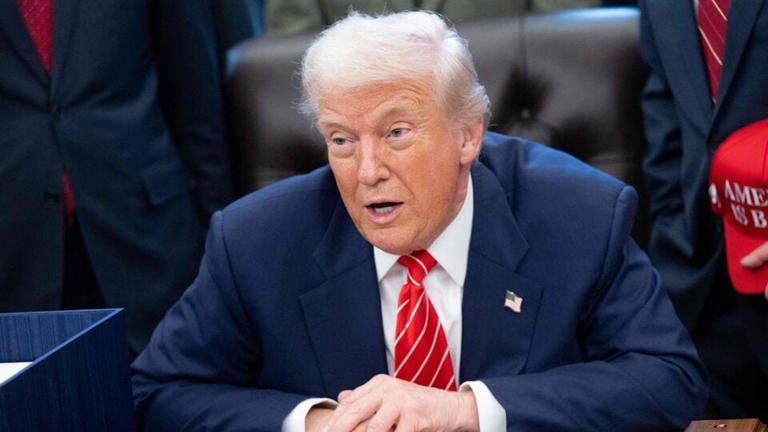
Despite the smoke still clearing over the Arabian Sea, President Trump appeared in the Oval Office later that afternoon to confirm that diplomatic channels remain open. “They’d like to do something, and we’ll see if something is going to be done,” Trump told reporters. “We are negotiating with them right now.”
This high-stakes diplomatic reset is occurring under the shadow of Operation Midnight Hammer, the June 2025 strikes that crippled three Iranian nuclear sites. The President suggested that the memory of that conflict is a primary motivator for Tehran’s current seat at the table. “I don’t think they want that happening again,” he noted, while emphasizing that a “tremendous force” of the “biggest and best” ships is currently in position should the high-stakes diplomatic reset fail.
The Istanbul-Oman Pivot
The logistics of the high-stakes diplomatic reset are shifting as quickly as the military movements. While a summit was tentatively scheduled for this Friday in Istanbul, Iranian officials have reportedly pushed for a change in format.
Tehran is now advocating for a bilateral meeting in Oman, rather than a multilateral gathering in Turkey. This shift is seen as an attempt to narrow the scope of the high-stakes diplomatic reset to focus exclusively on nuclear concessions and sanctions relief, avoiding the broader regional issues—such as the recent domestic crackdowns—that the U.S. and its Arab allies wish to address.
A “Two to Tango” Diplomacy
White House Press Secretary Karoline Leavitt confirmed that Special Envoy Steve Witkoff is still moving forward with plans to meet Iranian Foreign Minister Abbas Araghchi later this week. “President Trump is always wanting to pursue diplomacy first, but obviously it takes two to tango,” Leavitt said.
The success of this high-stakes diplomatic reset depends on whether Iran is willing to meet Trump’s core demands:
-
Zero Uranium Enrichment: A total cessation of domestic enrichment.
-
Ballistic Limits: Strict caps on missile ranges and technology.
-
Proxy Withdrawal: An end to funding for regional militant groups.
Conclusion: Peace Through Strength?
The shootdown of the Shahed-139 drone illustrates the “pressure-cooker” environment of the current administration’s foreign policy. By pairing overwhelming naval presence with an open invitation to the table, Washington is testing the limits of coercive diplomacy.
As the world looks toward the end of the week, the high-stakes diplomatic reset remains the only alternative to a widening regional war. Whether the “Persian Pivot” leads to a landmark agreement or a return to Operation Midnight Hammer remains to be seen.
The following timeline and analysis detail the high-stakes friction between the U.S. and Iran over the last 48 hours. By examining these events through the lens of a high-stakes diplomatic reset, we can see how military force is being used as a precursor to—and an enforcer of—diplomatic engagement.
Chronology of a Crisis: February 2–4, 2026
The current high-stakes diplomatic reset is operating under a “Dual-Track” strategy: kinetic military action in the Arabian Sea occurring simultaneously with top-level negotiations in Washington and Tehran.
February 2: The Diplomatic Opening
-
Morning: Iranian President Masoud Pezeshkian signals a major shift, instructing his Foreign Minister to pursue “fair and equitable” negotiations.
-
Afternoon: Reports emerge of a planned summit in Istanbul for Friday, February 6, involving U.S. Special Envoy Steve Witkoff and Iranian FM Abbas Araghchi.
-
Evening: President Trump warns that “bad things” will happen if a deal isn’t reached, referencing the devastating “Operation Midnight Hammer” strikes of 2025.
February 3: Escalation in the Arabian Sea
-
04:30 AM: An Iranian Shahed-139 drone “aggressively approaches” the USS Abraham Lincoln carrier strike group.
-
05:00 AM: After de-escalatory measures fail, a U.S. Navy F-35C fighter jet shoots down the drone 500 miles from the Iranian coast.
-
10:00 AM: In a second incident, the IRGC harasses a U.S.-flagged merchant vessel, the Stena Imperative, in the Strait of Hormuz. The USS McFaul intervenes.
-
02:00 PM: President Trump confirms to reporters at the White House: “We are negotiating with them right now.”
February 4: Venue and Format Disputes
-
Early Morning: Iran officially requests a venue change from Istanbul to Oman, seeking a direct bilateral format rather than a multilateral regional summit.
-
Current Status: White House confirms that despite the drone shootdown, the high-stakes diplomatic reset remains on track, with talks still scheduled for later this week.
The Strategic Calculus of the Reset
The shootdown of the Shahed-139 is being interpreted not as an end to diplomacy, but as a “calibration” of the high-stakes diplomatic reset. By neutralizing the drone, the U.S. has signaled that its “Maximum Pressure” campaign will continue even while envoys are packing their bags.
“President Trump is always wanting to pursue diplomacy first, but obviously it takes two to tango.” — Karoline Leavitt, White House Press Secretary
Comparison of Regional Stakes
| Factor | Impact on High-Stakes Diplomatic Reset |
| Military Presence | The “Armada” provides the U.S. with “negotiation by intimidation.” |
| Economic Pressure | 25% tariffs on countries trading with Iran have left Tehran with no “financial oxygen.” |
| Domestic Unrest | Recent crackdowns on Iranian protesters have weakened the regime’s internal legitimacy. |
| Regional Venue | Oman is seen as a “neutral” ground, preferred by Tehran for private, direct concessions. |
The shift in venue from Turkey to Oman is a significant development in this high-stakes diplomatic reset.
The Oman Factor: Why Muscat is the “Backchannel” Choice
Oman’s role as the trusted intermediary is built on a foundation of “active neutrality” and a unique historical relationship with both Washington and Tehran. Here is why the high-stakes diplomatic reset is likely to find more traction in Muscat than in Istanbul.
1. A History of Secret Success
-
The 2013 Breakthrough: Oman hosted the secret “backchannel” talks between the Obama administration and Iranian officials that eventually led to the 2015 JCPOA nuclear deal.
-
The 2023 Exchange: Muscat was the primary broker for the $6 billion prisoner swap and humanitarian deal between the Biden administration and Tehran.
-
The 2025 Preliminary Rounds: Just last year, Special Envoy Steve Witkoff and FM Abbas Araghchi held their first technical rounds in Muscat, establishing a baseline of trust for the current high-stakes diplomatic reset.
2. “Leak-Proof” Diplomacy
One of the primary reasons Iran requested the move from Istanbul is the “media circus” and intelligence surveillance prevalent in major European and Turkish hubs.
-
Privacy: Omani officials are famously discreet, refusing to “gossip” even with close regional allies. This allows for a high-stakes diplomatic reset conducted in total seclusion.
-
Security: Tehran remains wary of Israeli or Western cyber-espionage in European hotels. The Omani Foreign Ministry provides a “clean room” environment for sensitive technical nuclear discussions.
3. The Ibadi Tradition of Tolerance
Oman’s foreign policy is rooted in the Ibadi strand of Islam, which emphasizes moderation and “talking to anyone for the good of everyone.” This ideological neutrality allows Oman to maintain a defense cooperation agreement with the U.S. (including access to the Duqm port) while simultaneously being Iran’s most reliable partner in the Gulf.
Comparing the Venues
| Feature | Istanbul (Original Choice) | Muscat (The Reset Choice) |
| Format | Multilateral (Turkey, Qatar, Egypt included) | Bilateral (Direct U.S.-Iran focus) |
| Media Profile | High; significant public pressure | Low; “Quiet Diplomacy” preferred |
| Iran’s Comfort | Wary of regional “rival” influence | High; Trusted “Special Relationship” |
| U.S. Advantage | Broader regional “coalition” pressure | Direct, fast-tracked technical concessions |
The Outlook for Friday
By moving the talks to Muscat, the high-stakes diplomatic reset moves from the realm of regional grandstanding to technical negotiation. Iran is reportedly “amenable” to discussing compromises on its nuclear program to prevent a full-scale war, though it remains defiant regarding its “non-negotiable” missile capabilities.
Also Read this:
Trump Strikes U.S.-India Trade Deal, Slashing Tariffs From 50% To 18% — But Key Details Remain Murky
Social Connect:

