

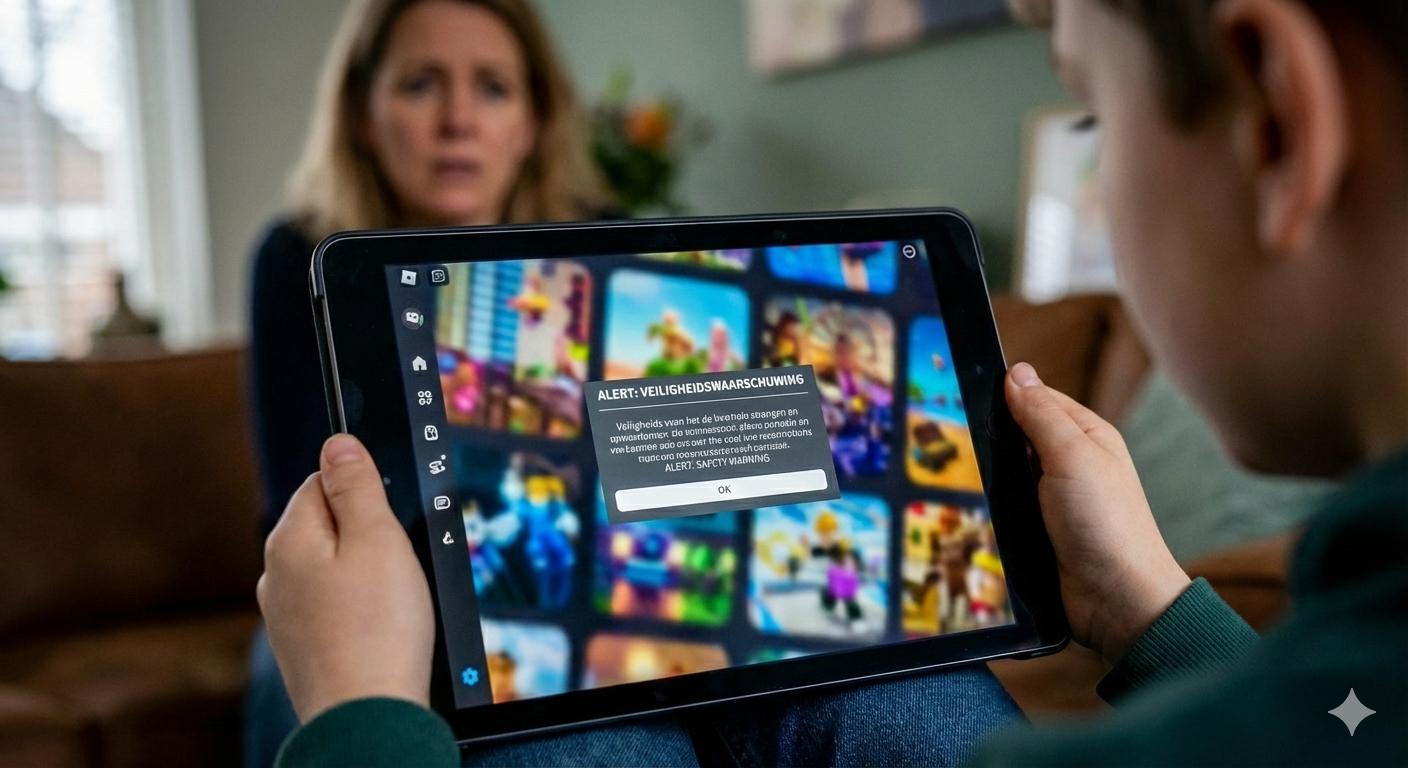
Netherlands Launches Major Investigation Into Roblox Over Child Safety Failures and Predator Risks
Dutch authorities have launched a formal investigation into gaming giant Roblox Corporation, examining whether the platform adequately protects children from sexual exploitation, violent content, and predatory behavior. The probe adds to mounting legal pressure on the company, which faces over 80 consolidated lawsuits in the United States alleging systematic failures to safeguard minors.
BREAKING UPDATE: As of January 30, 2026, the Netherlands Authority for Consumers and Markets has officially opened a year-long investigation into Roblox’s compliance with European Union child safety regulations. The announcement comes as multiple U.S. states pursue legal action against the company for similar violations.
Dutch Regulator Opens Formal Probe Into Child Protection Failures
The Netherlands Authority for Consumers and Markets announced Thursday that it has initiated a formal investigation into Roblox Corporation over potential risks to underage users across the European Union. The regulatory action focuses on whether the popular gaming platform meets mandatory child safety requirements under the EU’s Digital Services Act, which took effect in early 2024.
The Dutch consumer watchdog cited numerous concerns that prompted the investigation, including reports of minors being exposed to violent and sexually explicit games, predatory adults targeting children through the platform, and the use of deceptive design patterns to manipulate young users into making purchases.
“The platform regularly makes the news, for example, due to concerns about violent or sexually explicit games that minors are exposed to,” the ACM stated in its official announcement. The regulator added that it has received multiple reports about these issues and gathered preliminary information from Roblox over recent months before deciding to launch the formal investigation.
Why the Investigation Matters: Digital Services Act Compliance

Under the European Union’s Digital Services Act, online platforms accessible to children must implement appropriate and proportionate measures to ensure high levels of privacy, safety, and security for minors. The legislation requires companies to proactively protect young users from illegal or harmful content and to respond quickly and transparently to safety reports.
The Netherlands Authority for Consumers and Markets holds enforcement authority over platforms headquartered or legally represented in the Netherlands, including Roblox. The agency has made protection of minors from online abuse and deception one of its top priorities.
Investigation Timeline and Potential Penalties
The regulatory probe is expected to last approximately 12 months, though the duration may vary depending on the investigation’s progress and findings. During this period, the ACM will not comment publicly on the substance of the case.
If investigators determine that Roblox is violating EU child safety requirements, the company could face significant enforcement actions including binding instructions requiring specific safety improvements, substantial financial penalties, or orders subject to periodic payments until compliance is achieved.
Conversely, if the ACM concludes that Roblox meets all regulatory requirements, the case may be closed without punitive action.
Roblox’s Response: Company Defends Safety Measures
In a statement provided to media outlets on January 30, a Roblox spokesperson emphasized the company’s commitment to complying with European digital safety regulations.
“We are strongly committed to complying with the Digital Services Act,” the spokesperson said. “We have invested significantly in building robust systems that align with the DSA’s principles, including working to ensure the safety, security and privacy of minors.”
The company noted that it has been in discussions with the Dutch regulator for several months and looks forward to providing additional clarity on its child protection policies and safeguards. Roblox pointed to recent safety enhancements, including new age verification requirements for all users wishing to access chat features on the platform.
New Age Verification System Rolls Out Globally
In a significant policy shift announced earlier in January 2026, Roblox revealed it would require all users in the United States to complete age verification before accessing any chat features on the platform. The requirement, which began rolling out in December 2025 in Australia, New Zealand, and the Netherlands, represents a major change for the gaming giant that averages more than 80 million daily users worldwide.
“With this change, Roblox becomes the first large online gaming platform to require age checks for users of all ages to access chat,” the company stated in its announcement.
According to Roblox Chief Safety Officer Matt Kaufman, the company’s facial age estimation technology can assess a user’s age between 5 and 25 years with accuracy within one to two years. After verification, users will only be permitted to chat with peers in their same or adjacent age groups unless manually approved as “Trusted Connections.”
“Our commitment to safety is rooted in delivering the highest level of protection for our users,” Kaufman said. “By building proactive, age-based barriers, we can empower users to create and connect in ways that are both safe and appropriate.”

Growing Wave of U.S. Lawsuits Alleges Systematic Negligence
The Dutch investigation comes amid an avalanche of legal action in the United States, where Roblox faces more than 80 lawsuits that have been consolidated into federal multidistrict litigation. In December 2025, a federal judicial panel officially centralized dozens of child exploitation cases against the company, grouping similar claims under one judge for streamlined legal proceedings.
State Attorneys General Launch Legal Offensive
Multiple state attorneys general have filed lawsuits against Roblox Corporation, accusing the company of deceptive trade practices and failing to protect children from known dangers:
Texas: In November 2025, Texas Attorney General Ken Paxton sued Roblox for “flagrantly ignoring state and federal online safety laws while deceiving parents about the dangers of its platform.” Paxton’s lawsuit alleges the company chose to put “pixel pedophiles and corporate profit over the safety of Texas children.”
Iowa: Iowa Attorney General Brenna Bird filed suit in December 2025, accusing Roblox of engaging in deceptive trade practices by marketing its platform as safe for children while allegedly lacking adequate safeguards and facilitating sexual exploitation of minors.
Tennessee: Tennessee’s attorney general brought a civil enforcement action in January 2026 under the state’s Consumer Protection Act, challenging Roblox’s marketing of the platform as a safe environment for minors while allegedly exposing children to well-known risks.
Additional States: Attorneys general in Florida, Kentucky, and Louisiana have filed similar lawsuits alleging the platform enables predatory behavior and fails to implement basic child protection measures.
Harrowing Individual Cases Expose Platform Vulnerabilities
Court documents from individual lawsuits paint a disturbing picture of exploitation facilitated through the Roblox platform. These cases typically follow a pattern: predators pose as children to gain trust, move conversations to third-party apps like Discord or Snapchat where monitoring is minimal, then coerce minors into sharing explicit images or meeting in person.
In one Michigan case filed this month, a family alleges their 11-year-old daughter was lured by a predator posing as a 14-year-old boy through a Roblox game. According to the lawsuit, the individual coerced the child into sharing explicit images, then directed her to sneak out of her home to meet him at a motel, where she was sexually assaulted, recorded, and blackmailed into a second, more violent assault.
A Washington state lawsuit filed by the Dolman Law Group involves a 12-year-old girl who was allegedly groomed through Roblox by an adult predator who sent explicit messages and images, coercing the victim to provide explicit photos. The lawsuit claims the trauma led to multiple suicide attempts.
In a particularly tragic case from San Diego, a 15-year-old boy died by suicide after years of grooming and exploitation by a predator who contacted him through Roblox, then moved the conversation to Discord where he coerced the victim into providing explicit photographs under threat.
Platform’s Scale and Popularity Among Children Raises Stakes
Roblox operates one of the world’s most popular gaming platforms for children and teenagers, with more than 77.5 million daily active players worldwide according to company data. Approximately 40% of users are under the age of 13, making child safety concerns particularly acute.
The platform allows users to play games created by other users and interact in virtual spaces through text and voice chat features. Users can customize avatars, purchase virtual items with the platform’s currency called Robux, and explore thousands of user-created experiences ranging from simple games to complex virtual worlds.
This massive scale and young user base have made Roblox a lucrative target for predators, according to law enforcement data. The platform submitted 13,316 reports to the National Center for Missing and Exploited Children in 2023 alone, demonstrating the company’s awareness of escalating predatory activity on its service.
International Regulatory Crackdown Intensifies
Beyond the Netherlands and the United States, other countries have taken action against Roblox over child safety concerns:
Russia Blocks Platform Over Extremist Content
Russia’s telecommunications watchdog Roskomnadzor blocked access to Roblox in December 2025, citing what it described as “registered facts of massive and repeated dissemination of materials with propaganda and justification of extremist and terrorist activities, calls for committing illegal violent actions and LGBT propaganda.”
Turkey and Iraq Implement Bans
Turkey blocked Roblox in August 2024, according to a company update. Iraqi authorities have also banned the platform over child safety concerns, joining a growing list of countries restricting access to the gaming service.
Dark Patterns and Manipulative Monetization Under Scrutiny
In addition to child exploitation concerns, regulators and plaintiffs have raised alarms about Roblox’s use of what industry experts call “dark patterns” — deceptive design techniques that manipulate users, particularly children, into making purchases.
Critics argue that Roblox employs psychological tactics including limited-time events, reward systems, and virtual currency mechanics that encourage compulsive spending among young users who may not fully understand the real-world value of in-game purchases.
Some families have filed lawsuits specifically focused on gaming addiction claims, alleging that Roblox intentionally designed addictive features that have caused mental health problems, social withdrawal, and financial losses for families whose children developed compulsive gaming behaviors.
Investigative Reports Expose Weak Safety Controls
Recent investigative journalism has revealed serious vulnerabilities in Roblox’s child protection systems. Revealing Reality, a U.K.-based investigative reporting agency, conducted undercover testing of the platform’s safety features and found extremely lax standards.
Investigators posed as children and successfully created fake accounts for users as young as five years old. They were then able to access sexually explicit content and engage with adults with minimal safety intervention from the platform’s moderation systems.
A January 2026 investigation found that Roblox’s new age verification system can be easily circumvented using basic workarounds, allowing underage users to be incorrectly classified as adults. This potentially exposes children to age-inappropriate interactions and content that age-based safeguards were designed to prevent.
Company Implements New Safety Measures Amid Legal Pressure
Facing mounting regulatory and legal challenges, Roblox has announced several new safety initiatives in recent months:
Mandatory Age Verification for Chat Access
Beginning in December 2025, all users must complete facial age estimation or government ID verification to access any chat features. Users who refuse will lose chat functionality entirely. The system assigns users to age bands (Under 9, 9-12, 13-15, 16-17, 18-20, 21+) and restricts communication accordingly.
Enhanced Content Moderation Technology
In a January 29, 2026 statement, Roblox announced new technology to proactively monitor avatars and educate users about platform policies. The company says it employs a combination of AI-driven moderation and human content reviewers to identify and remove inappropriate content.
Default Restrictions for Younger Users
The platform has implemented stricter default settings for accounts belonging to users under age 13, including limitations on who can contact them, restrictions on certain types of content, and filters designed to block sharing of personal information.
Legal Experts Predict Long Battle Ahead
Attorneys representing families in the consolidated federal litigation say Roblox continues using the same legal defense tactics across dozens of similar cases. With hundreds more cases reportedly under investigation, legal experts predict the litigation could extend for years.
“This case against Roblox is a terrifying reminder of the world we live in where capitalist greed far outweighs humanity,” said attorney Matthew Dolman of the Dolman Law Group. “There have never been sufficient safety measures and protocols in place, putting our youngest and most vulnerable communities into unimaginable harm’s way every second of the day.”
The multidistrict litigation consolidation means that while each family retains its individual lawsuit, pre-trial proceedings such as discovery and motion practice will be centralized before a single judge to streamline the similar claims. This approach differs from a traditional class action lawsuit where one case represents all plaintiffs.
What Parents Need to Know: Protecting Children Online
Child safety experts urge parents to take proactive steps to protect children who use gaming platforms like Roblox:
Monitor Online Interactions: Regularly review chat logs and friend lists. Be aware that conversations may start on Roblox but often move to other apps like Discord, Snapchat, or WhatsApp where parental controls are limited.
Educate About Stranger Danger: Teach children that people online may not be who they claim to be. Emphasize that they should never share personal information, photos, or agree to meet someone from the internet in person.
Use Parental Controls: Enable all available parental control features, including communication restrictions, spending limits, and content filters. Understand that these controls have limitations and are not foolproof.
Maintain Open Communication: Create an environment where children feel comfortable reporting uncomfortable interactions without fear of losing access to games or devices.
Watch for Warning Signs: Be alert for behavioral changes including secretiveness about online activities, withdrawal from family and friends, mood swings, or expressions of shame or fear.
The Road Ahead: Accountability and Systemic Change
As the Netherlands investigation proceeds and U.S. litigation advances, the Roblox controversy highlights broader questions about corporate responsibility for child safety in digital spaces. Advocates argue that voluntary safety measures have proven insufficient and that stronger regulatory frameworks are necessary.
“Without forcing systemic change, Roblox will continue to operate anarchically,” Dolman warned in a recent statement. Plaintiffs’ attorneys are seeking not only financial compensation for victims but also court-ordered changes to platform design, moderation systems, and safety protocols.
The outcomes of these legal battles could set important precedents for how gaming platforms and social media companies are held accountable for protecting minors. With millions of children using these services daily, the stakes extend far beyond any single company or platform.
For now, regulatory authorities in the Netherlands and across the United States are sending a clear message: companies that market services to children bear a heightened responsibility to ensure those services are genuinely safe, and failure to meet that standard will result in legal consequences.
Company Stock Impact and Financial Implications
Roblox Corporation’s stock has faced pressure amid the mounting legal challenges. Investors are closely monitoring the company’s ability to manage regulatory risks while maintaining user growth and engagement. The costs associated with implementing new safety measures, defending against lawsuits, and potential regulatory fines could materially impact the company’s financial performance.
Industry analysts note that reputational damage from child safety scandals can have long-lasting effects on user trust and brand value, particularly for platforms that depend on parents allowing their children to use the service.
Note to Parents: If you believe your child has been harmed through Roblox or similar platforms, multiple law firms are currently evaluating potential cases. Documentation including medical records, therapy notes, chat logs, and evidence of in-game interactions may be relevant to potential legal claims.
Social Connect :
Related News :
NASA Orders Historic Medical Evacuation: Crew-11 Astronauts Coming Home Early from Space Station

