


Trump Pulls US Out of UN Climate Treaty Making America Only Nation Outside Global Framework
President orders withdrawal from 66 international organizations as US becomes first country to exit bedrock climate agreement
Move sparks fierce backlash from scientists, world leaders who warn of economic consequences and diplomatic isolation
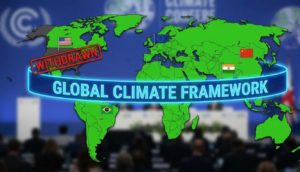
WASHINGTON — President Donald Trump ordered the United States to withdraw from the foundational UN climate treaty Wednesday, making America the first and only country in the world to exit the international agreement designed to combat global warming.
In a sweeping presidential memorandum issued January 7, Trump directed US withdrawal from the UN Framework Convention on Climate Change (UNFCCC), along with 65 other international organizations, agencies and commissions, declaring them “contrary to the interests of the United States.”
The unprecedented move has sparked fierce condemnation from climate scientists, environmental groups and international leaders who warn the decision will harm American economic competitiveness, cost US jobs, and isolate the nation from global climate cooperation.
What Is the UNFCCC and Why Does It Matter?
Foundational Climate Treaty Since 1992
The UNFCCC forms the foundation of international cooperation to address climate change and has been signed by every country in the world since its creation 34 years ago. The US joined and the Senate ratified the agreement in 1992 under President George H.W. Bush.
The treaty doesn’t require the US to cut fossil fuels or emissions, but rather sets a goal of stabilizing climate pollution in the atmosphere at levels that would prevent dangerous human-caused interference with the climate system.
The UNFCCC created the underlying framework for the Paris Agreement and serves as the structure for annual international climate summits where nations coordinate responses to rising global temperatures.
US Now Stands Alone
With Wednesday’s announcement, America becomes the only nation withdrawing from the climate treaty. The withdrawal requires one year of notice before taking effect, meaning the US would officially exit the UNFCCC in January 2027 unless a future administration reverses course.
“While all other nations are stepping forward together, this latest step back from global leadership, climate cooperation and science can only harm the US economy, jobs and living standards,” said Simon Stiell, UN climate chief and UNFCCC executive secretary, calling it “a colossal own goal which will leave the US less secure and less prosperous.”
Legal Questions Over Presidential Authority
Can Trump Unilaterally Withdraw from Senate-Ratified Treaty?
Because the Senate ratified the UNFCCC in 1992 with a two-thirds vote, legal experts question whether President Trump can unilaterally pull the country out without congressional approval.
The Constitution requires a two-thirds Senate vote to join a treaty but remains silent on the withdrawal process. While several presidents have made similar moves in the past, none have been successfully challenged in court.
Maria Ivanova, director of the School of Public Policy and Urban Affairs at Northeastern University, said Trump’s UNFCCC withdrawal could be the case that finally forces courts to decide whether unilateral presidential withdrawal is constitutional or requires congressional involvement.
“Letting this lawless move stand could shut the US out of climate diplomacy forever,” warned Jean Su, energy justice director at the Center for Biological Diversity.
Republican-Controlled Congress Unlikely to Challenge
Even if Congress has authority to block the withdrawal, the Republican majority in both chambers would likely support Trump’s move, making congressional pushback unlikely.
Fierce Backlash from Former Officials and Scientists
“Shortsighted, Embarrassing and Foolish”
Gina McCarthy, who served as White House National Climate Adviser under President Joe Biden and previously led the Environmental Protection Agency, didn’t mince words.
“This is a shortsighted, embarrassing and foolish decision,” McCarthy said. “As the only country in the world not a part of the UNFCCC treaty, the Trump administration is throwing away decades of US climate change leadership and global collaboration.”
She added: “This administration is forfeiting our country’s ability to influence trillions of dollars in investments, policies and decisions that would have advanced our economy and protected us from costly disasters wreaking havoc on our country.”
Scientists Call It “A New Low”
Dr. Rachel Cleetus of the Union of Concerned Scientists called the withdrawal “a new low” demonstrating the administration’s willingness to sacrifice public wellbeing.
“President Trump’s withdrawal of the United States from the bedrock global treaty to tackle climate change is yet another sign that this authoritarian, anti-science administration is determined to sacrifice people’s well-being and destabilize global cooperation,” Cleetus said.
Environmental Groups Warn of Economic Consequences
Manish Bapna, president of the Natural Resources Defense Council, warned the decision represents an “unforced error” that will help China dominate the clean energy economy.
“While the Trump administration is abdicating the United States of America’s global leadership, the rest of the world is continuing to shift to cleaner power sources and take climate action,” Bapna said. “The Trump administration is ceding the trillions of dollars in investment that the clean energy transition brings to nations willing to follow the science.”
US Also Exits Climate Science Panel
Withdrawal from IPCC Threatens Scientific Cooperation
The White House memorandum also directs US withdrawal from the Intergovernmental Panel on Climate Change (IPCC), the UN’s premier climate science body that produces authoritative reports on global warming used by governments worldwide.
While the president likely can’t bar US scientists from participating in IPCC reports, the move could affect federal scientists who would otherwise contribute, according to experts familiar with the organization.
The IPCC, which won the Nobel Peace Prize for documenting climate change, represents the scientific consensus of thousands of researchers from around the world.
64 Other International Organizations Targeted
Wide-Ranging Withdrawals Beyond Climate
The presidential memorandum orders withdrawal from a total of 66 international entities. Beyond climate-focused organizations, the list includes:
UN Agencies:
- UN Population Fund
- UN Entity for Gender Equality and the Empowerment of Women (UN Women)
- UN Water
- UN Oceans
Energy and Environment:
- International Renewable Energy Agency
- International Solar Alliance
- Green Climate Fund
- Carbon Free Energy Compact
Other Bodies:
- International Union for Conservation of Nature
- Partnership for Atlantic Cooperation
- International Institute for Democracy and Electoral Assistance
- Global Counterterrorism Forum
The State Department indicated additional reviews of international commitments are ongoing, suggesting more withdrawals could be announced soon.
Economic Consequences: Ceding Clean Energy Leadership to China
Trillions in Clean Energy Investment at Stake
Energy analysts warn that withdrawing from international climate frameworks will accelerate China’s dominance in the rapidly growing clean energy sector, projected to represent trillions of dollars in economic activity over coming decades.
China has already established commanding leads in manufacturing solar panels, wind turbines, electric vehicles and batteries—industries central to the global energy transition.
“There will still be opportunities for nonfederal US scientists and organizations to participate, so there will be some US perspectives in the IPCC activities,” said climate scientist Rob Jackson of Stanford University, who chairs the Global Carbon Project. However, he warned the US withdrawal “gives other nations the excuse to delay their own actions and commitments.”
Major US Corporations Embrace Clean Energy
Major American corporations have increasingly embraced clean energy and climate goals to reduce costs and meet demands from investors and consumers. The administration’s retreat from climate commitments could place US companies at a competitive disadvantage relative to international rivals.
Insurance companies have already begun pulling back from high-risk markets in states like California and Florida as climate-related disasters mount, undermining property values and economic stability.
Timing Amid LA Wildfire Anniversary
Devastating Fires Killed 31, Destroyed 16,000 Structures
The withdrawal announcement came on the one-year anniversary of devastating wildfires that tore through Los Angeles County in January 2025, claiming 31 lives and destroying thousands of homes and businesses.
The Palisades and Eaton fires exploded in size within hours on January 7, 2025, burning 37,000 acres and destroying more than 16,000 structures—the most destructive wildfire event in LA County history.
Loren Blackford, executive director of the Sierra Club, drew a direct connection between the wildfires and Trump’s climate policies.
“On the one-year anniversary of the wildfires that stole dozens of lives, thousands of homes and the sense of safety for millions as it reduced Los Angeles communities to ash, Trump is making it clear he has no interest in protecting Americans from the rapidly increasing impacts on our health and safety of the worsening climate crisis,” Blackford said.
Trump’s Climate Denial Record
“Hoax” Claims Despite Scientific Consensus
President Trump has consistently dismissed climate science, repeatedly calling global warming a “hoax” and a “scam” despite overwhelming scientific consensus that human activities—particularly burning fossil fuels—are driving dangerous planetary warming.
During his current term, Trump has actively worked to dismantle climate policies and hobble clean energy projects. His administration removed references to fossil fuels from EPA climate change webpages and has sought to boost oil and gas production while rolling back renewable energy initiatives.
Al Gore: “At the Behest of the Oil Industry”
Former Vice President Al Gore, a longtime climate activist, told media the administration has systematically undermined climate action since taking office.
“The Trump Administration has been turning its back on the climate crisis since day one, removing the United States from the Paris Agreement, dismantling America’s scientific infrastructure, curbing access to greenhouse gas emissions data, and ending essential investments in the clean energy transition,” Gore said.
“They’ve done this at the behest of the oil industry, so that billionaires can rake in even more money while polluting our planet and endangering people in America and around the world.”
State Department Defense of Withdrawals
Rubio Cites “Progressive Ideology”
Secretary of State Marco Rubio defended the mass withdrawal from international organizations, claiming they no longer serve American interests.
“We will not continue expending resources, diplomatic capital, and the legitimizing weight of our participation in institutions that are irrelevant to or in conflict with our interests,” Rubio said.
He cited diversity, equity and inclusion mandates, gender-equity campaigns, and climate “orthodoxy” as reasons international science, aid and peace organizations “actively seek to constrain American sovereignty.”
The State Department characterized many targeted organizations as “often dominated by progressive ideology and detached from national interests.”
Scientific Reality vs. Political Rhetoric
Climate Crisis Is Measurable Fact
Contrary to the administration’s characterization, the climate crisis represents overwhelming scientific consensus. Thousands of peer-reviewed studies document that human activities are warming the planet and this warming is taking a measurable and growing toll on economies and people’s lives.
In the United States, record numbers of extreme weather disasters are forcing insurance companies to abandon entire markets, undermining property values across multiple states.
Last year saw unprecedented heat records, with global temperatures briefly exceeding the 1.5°C warming threshold scientists have identified as a critical tipping point.
International Court of Justice Affirmed Climate Obligations
In July 2025, the International Court of Justice delivered a historic opinion on climate change, outlining states’ responsibilities under international law. The ICJ affirmed that a “clean, healthy and sustainable environment” is a human right.
Although not legally binding, the 133-page advisory opinion clarifies existing international law and is likely to be cited in future climate litigation.
What Happens Next
One-Year Withdrawal Process
Like the Paris Agreement, the UNFCCC requires one year of notice before a country can officially withdraw. This means the US would not formally exit until January 2027, assuming the Trump administration follows through.
However, the US has already stopped participating in many UNFCCC activities. The administration declined to send an official delegation to the most recent UN climate summit, COP30, held in Brazil in November 2025.
Rejoining Would Require Two-Thirds Senate Vote
Re-entering the UNFCCC treaty would require a new two-thirds vote from the Senate. This means Trump’s withdrawal could make it difficult for a future president to rejoin the Paris Agreement, since that accord was negotiated under the UNFCCC framework.
This creates a potentially lasting obstacle to US participation in international climate diplomacy, even if future administrations wish to re-engage.
States, Cities Continue Climate Action
Despite federal withdrawal, many US states, cities and businesses have pledged to continue climate action independently. California, New York and other states have established their own emissions reduction targets and clean energy mandates.
“Forward-looking US states and the rest of the world recognize that devastating and costly climate impacts are mounting rapidly, and collective global action remains the only viable path to secure a livable future for our children and grandchildren,” Dr. Cleetus said.
Global Reaction: Other Nations Press Forward
International Leaders Reaffirm Commitments
International leaders have made clear they will continue advancing climate action with or without US participation. The European Union, China and other major economies have reaffirmed their commitments to the energy transition and emissions reductions.
However, experts warn US absence could slow progress by creating diplomatic complications and removing pressure on other nations to maintain ambitious goals.
Impact on Developing Nations
The US has historically been one of the largest contributors to international climate finance meant to help developing countries transition to clean energy and adapt to climate impacts.
The withdrawal from the UNFCCC and associated bodies like the Green Climate Fund means these nations may receive less support, potentially slowing the global response to climate change.
Trump Administration’s Broader Anti-Climate Agenda
EPA Censored Climate Information
Last month, the EPA removed any mention of fossil fuels—the main driver of global warming—from its popular online page explaining the causes of climate change.
The move follows Trump’s continuing efforts to boost polluting fossil fuels while stalling progress on clean energy projects across the country.
Pattern of Rejecting International Cooperation
The climate withdrawal is part of a broader pattern of the Trump administration retreating from global cooperation. Trump previously withdrew from the World Health Organization and has threatened or executed withdrawals from numerous other international agreements.
The administration has launched military efforts and issued threats that have rattled allies and adversaries alike, raising questions about America’s role in the world.
Economic Analysis: Who Wins and Loses
US Workers and Companies at Disadvantage
Climate economists warn that abandoning international climate cooperation puts American workers and companies at a competitive disadvantage as the global economy transitions to clean energy.
“When you look at all these conventions and the history of participation, even when countries were not really actively engaged in negotiations, it’s pretty astonishing to walk away from the table and have decisions taken without your input,” said Kristie Ebi, a climate scientist at the University of Washington who has contributed to IPCC reports.
China Positioned to Dominate Clean Energy Markets
With the US stepping back, China is well-positioned to dominate the clean energy markets of the future, capturing manufacturing jobs and technological leadership in sectors that will define 21st-century economic competition.
Chinese companies already control significant portions of the supply chains for solar panels, batteries, and electric vehicles—industries expected to generate millions of jobs globally.
Historical Context: Trump’s Second Paris Exit
Already Left Paris Agreement
Trump began the process of pulling the US out of the Paris Agreement on his first day back in office in January 2025, marking the second time he’s withdrawn from the accord.
The Paris Agreement, signed in 2016, commits 195 participating nations to work to limit greenhouse gas emissions to ensure the planet doesn’t warm more than 1.5 degrees Celsius (2.7 degrees Fahrenheit), with an upper limit of 2 degrees C.
The US officially exits the Paris Agreement later this month, one year after Trump signed the withdrawal notice.
Broader Pattern of Climate Denial
Trump’s climate policies represent a sharp reversal from the Biden administration, which had rejoined the Paris Agreement and invested heavily in clean energy through the Inflation Reduction Act.
The current administration has worked systematically to dismantle those policies, remove climate scientists from government positions, and eliminate climate considerations from federal decision-making.
Expert Predictions: Long-Term Consequences
Permanent Damage to US Credibility
Foreign policy experts warn the withdrawal will cause lasting damage to American credibility and influence on the world stage.
“Withdrawal from the global climate convention will only serve to further isolate the United States and diminish its standing in the world following a spate of deplorable actions that have already sent our nation’s credibility plummeting, jeopardized ties with some of our closest historical allies, and made the world far more unsafe,” the Union of Concerned Scientists said.
Mounting Climate Impacts Continue Regardless
The Trump administration’s actions don’t change the physical reality of climate change. Mainstream scientists say climate change is behind increasing instances of deadly and costly extreme weather, including flooding, droughts, wildfires, intense rainfall events and dangerous heat.
Record-breaking temperatures, intensifying storms, and climate-related disasters will continue regardless of US participation in international agreements, experts warn.
Bottom Line: America Isolated on Climate
As the US moves toward international isolation on climate issues, the consequences remain uncertain but potentially far-reaching. The withdrawal represents not merely a policy shift but a fundamental rejection of scientific consensus and international cooperation that has defined the global response to climate change for more than three decades.
With extreme weather disasters becoming more frequent and costly, insurance markets destabilizing, and global temperatures continuing to rise, the Trump administration’s decision to abandon international climate frameworks puts the US on a collision course with physical and economic realities.
Whether the withdrawal stands or is reversed by a future administration, the move has already damaged America’s international credibility and created new obstacles to the global cooperation scientists say is essential to averting the worst impacts of climate change.
“The decision to defund and withdraw from the UN Framework Convention on Climate Change does not absolve the US of its legal obligations to prevent climate change and remedy climate harm,” environmental advocates noted, citing the International Court of Justice’s 2025 opinion.
As one nation stands apart from the entire world on climate action, the question remains: Will America rejoin global efforts before it’s too late, or will political ideology continue to trump scientific reality?
This is a developing story. Updates will be added as the withdrawal process unfolds and additional reactions are reported.
Key Facts: UNFCCC at a Glance
Established: 1992 at Rio Earth Summit
Member Countries: 197 (every nation until US withdrawal)
US Ratification: October 1992, signed by President George H.W. Bush
Purpose: Stabilize greenhouse gas concentrations to prevent dangerous climate interference
Framework For: Paris Agreement, annual COP climate summits
US Withdrawal Timeline: One year from notification (effective January 2027)
Rejoining Process: Requires two-thirds Senate vote
Related Coverage
- Trump Withdraws US from Paris Agreement for Second Time
- China Dominates Clean Energy as US Steps Back from Climate Action
- One Year Later: Los Angeles Wildfires Anniversary Marks Climate Turning Point
- What US Withdrawal from UNFCCC Means for Global Climate Negotiations
- States, Cities Pledge to Continue Climate Action Despite Federal Retreat
- Marco Rubio Defends Mass Withdrawal from International Organizations
Last updated: January 11, 2026 | Trump administration pulls US from foundational UN climate treaty, making America only nation outside global framework
Another News :
Social Connect

