

The Humanoid Arms Race: Meta, Tesla, and Amazon Redefine the Global Workforce
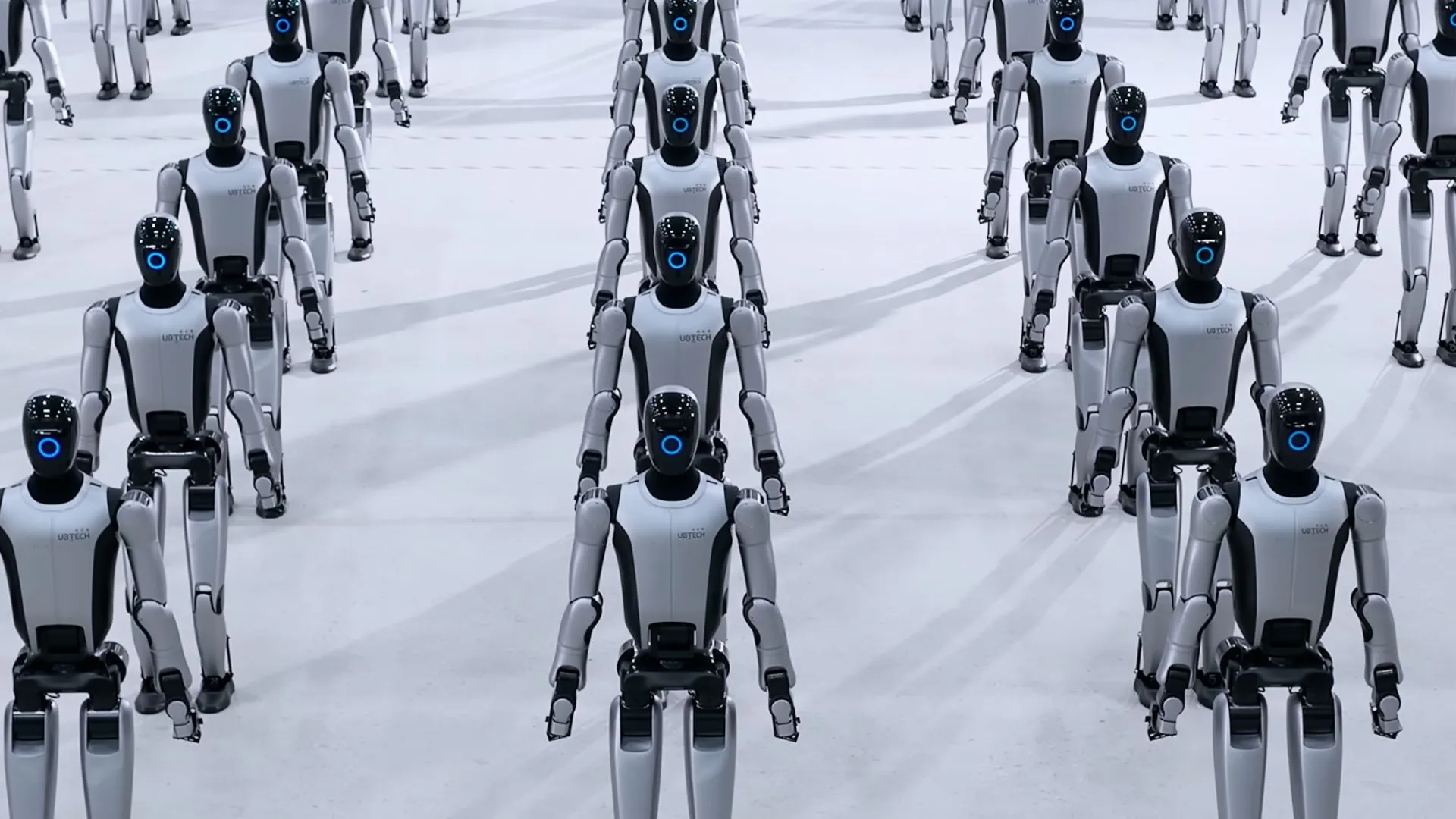
The technological landscape of 2026 has officially entered the era of Physical AI. As of May 2, 2026, the long-standing “Humanoid Arms Race” between Silicon Valley’s titans has shifted from laboratory prototypes to aggressive corporate acquisitions and mass-manufacturing milestones. While the early 2020s were defined by large language models (LLMs) that could think and speak, 2026 is the year these models were given bodies. With Meta’s latest strategic acquisition, Tesla’s accelerated production of Optimus V3, and Amazon’s pivot toward agentic logistics, humanoid robotics is no longer a futuristic curiosity—it is the new foundation of the global economy.
Meta’s Bold Entry: The “Android OS” for Humanoids
The biggest headline breaking today, May 2, 2026, is Meta’s acquisition of Assured Robot Intelligence (ARI). While Meta has long been a leader in open-source AI software, this move signals a definitive pivot into hardware. By folding ARI’s team—led by pioneers Lerrel Pinto and Xiaolong Wang—into its “Superintelligence Labs,” Meta is making a play for the foundational layer of humanoid robotics.
Unlike its competitors, who are building closed proprietary systems, Meta is reportedly developing a “Robot Android OS.” This open-source platform aims to provide the sensory-motor “brain” for any humanoid hardware, allowing smaller manufacturers to compete without building their own AI from scratch. This strategy mirrors Google’s dominance in the mobile market, positioning Meta as the central nervous system of the entire humanoid robotics industry. The ARI acquisition brings critical expertise in behavioral adaptation, allowing robots to move beyond pre-programmed tasks and instead learn to navigate complex, unpredictable human environments in real-time.
Tesla’s Optimus V3: Scaling to the Millions
While Meta builds the software ecosystem, Tesla is winning the battle of industrial scale. During the Q1 2026 earnings call, Elon Musk announced that the launch of the Optimus V3 has been pulled forward to July 2026. Tesla’s advantage lies in its “Giga-manufacturing” philosophy. By treating the robot as a “car with legs,” Tesla is leveraging its massive battery and motor supply chains to drive down the cost of humanoid robotics to under $20,000 per unit.
The Optimus V3 features significant upgrades in tactile sensing and autonomy. Equipped with Tesla’s proprietary FSD (Full Self-Driving) computer, these units are already being deployed in Giga Texas to handle internal logistics and assembly line tasks. Musk predicts that by late 2026, Tesla will have over 50,000 humanoid units operational within its own factories, proving the viability of humanoid robotics as a solution for labor shortages. For Tesla, the goal isn’t just to build a robot; it is to build the machine that builds the machine, creating a feedback loop of autonomous productivity.
Amazon’s Logistics Pivot: From Experiment to Agent
Amazon’s approach to humanoid robotics has taken a pragmatic, data-centric turn this year. Following a restructuring of its robotics division earlier in 2026, Amazon has paused experimental “blue-sky” hardware projects like Blue Jay to focus on Agentic Logistics. Through a strategic partnership with NEURA Robotics and the deployment of the “4NE1” humanoid, Amazon is integrating robots directly into its “Sequoia” warehouse systems.
In the Amazon ecosystem, humanoid robotics is viewed through the lens of efficiency. These robots are now powered by “Neuraverse,” a shared intelligence platform hosted on AWS that allows a fleet of a million robots to learn from a single unit’s mistake. If one robot in a Nashville fulfillment center slips on a spilled liquid, every other robot in the global network instantly learns to identify and avoid that specific hazard. This “swarm intelligence” is what sets Amazon apart, turning humanoid robotics into a massive, self-optimizing organism that currently handles over 75% of Amazon’s global deliveries.
The Economic Impact: A $150 Billion Frontier
The financial implications of this race are staggering. According to updated 2026 market reports from McKinsey & Co, the Total Addressable Market (TAM) for humanoid robotics is projected to hit $154 billion by 2035. This exponential growth is driven by the declining cost of sensors and the maturing of “Physical AI”—the ability for machines to understand 3D space and human intent.
We are seeing the emergence of a new “Agent Economy.” Companies are no longer just hiring human workers or buying static software; they are leasing “Robot-as-a-Service” (RaaS) fleets. This shift is particularly visible in Japan and South Korea, where aging populations have made humanoid robotics a national necessity for elderly care and precision manufacturing. In 2026, the question is no longer if a robot will take over a physical task, but which company’s operating system that robot will be running.
Ethical Challenges and the “Human-Robot” Interface
As humanoid robotics becomes a common sight in warehouses and eventually homes, society is grappling with unprecedented ethical questions. The Academy of Motion Picture Arts and Sciences recently banned AI-generated “actors,” and similar debates are happening in the labor market. Governments are now discussing “Robot Taxes” to fund universal basic income as humanoid robotics begins to displace low-skill physical labor.
However, proponents argue that humanoid robotics will actually enhance human life by taking on the “3D Jobs”—those that are Dull, Dirty, or Dangerous. In 2026, we are seeing a rise in “Human-Robot Collaboration” roles, where human supervisors manage fleets of humanoid agents. The focus has shifted from replacement to augmentation, with companies like Figure AI achieving production rates of one robot per hour to meet the surging demand for collaborative humanoid assistants.
Conclusion: The New Reality of 2026
The convergence of Meta’s software platform, Tesla’s manufacturing might, and Amazon’s logistics network has made 2026 the definitive year for humanoid robotics. We have moved past the “uncanny valley” and into the “utility valley,” where these machines are performing real work in real-world environments.
As Meta’s ARI team begins building the next generation of adaptive behaviors and Tesla’s Optimus V3 rolls off the assembly line in thousands, the boundary between the digital and physical worlds continues to dissolve. In the Post-Smartphone era, the most important “device” we own might not be in our pockets, but standing in our kitchens or working on our factory floors. Humanoid robotics has arrived, and it is reshaping the world one step at a time.
Quick Comparison: The Big Three of Humanoid Robotics (May 2026)
| Feature | Meta (ARI Acquisition) | Tesla (Optimus V3) | Amazon (4NE1/Digit) |
| Primary Strategy | Open-Source “Android” for Robots | Vertical Integration & Mass Mfg | Swarm Intelligence & Logistics |
| Key Advantage | Behavioral Adaptation AI | Battery & Motor Supply Chain | Global AWS “Neuraverse” Network |
| Current Status | Public Beta of Neural Controls | Production Ramping (Giga Texas) | Fleet Deployment in Fulfillment |
| Target Market | General Purpose/Industry Foundation | Consumer & Auto Manufacturing | E-commerce & Supply Chain |
The year 2026 has brought us to the “Interface Epoch,” where the boundary between biological intent and mechanical execution is becoming nearly invisible. As humanoid robotics manufacturers like Meta, Tesla, and Amazon scale their fleets, the focus has shifted from the robots themselves to the “Human-Robot” interface—the vital bridge that allows humans to command, collaborate with, and trust their autonomous counterparts.
1. Multimodal Interaction: Beyond the Keyboard
The most significant trend in 2026 is the move toward multimodal human-robot interfaces. We have officially moved past the era of specialized coding or clunky remote controllers. Today, interacting with a humanoid is as natural as interacting with a colleague.
-
Natural Language & Vision: Using “Agentic AI,” robots can now interpret not just what we say, but the context of our environment. If you point to a cluttered table and say, “Clean this up,” the robot uses its vision systems to identify trash versus personal items and its linguistic “brain” to understand the vague command “this.”
-
Dynamic Gestures: In industrial settings like Amazon fulfillment centers, workers use 16 standardized “dynamic gestures” to calibrate and direct robots. These include “iconic” gestures (representing an action) and “deictic” gestures (pointing to a specific object). By 2026, gesture recognition accuracy has surpassed 97%, allowing for silent, high-speed communication in noisy environments.
2. Neural and EMG Control: The Silent Command
As mentioned in recent Meta public betas, the rise of neural input via Electromyography (EMG) wristbands has revolutionized the interface. This technology captures the electrical pulses from your brain before your muscles even move.
-
The Benefit: This allows for “invisible” control. A supervisor can direct a fleet of humanoid robotics simply by thinking about the gesture, allowing for high-bandwidth communication that doesn’t require the hands to be free. This is particularly critical in “lights-out” manufacturing where humans and robots must coordinate in low-visibility or cramped spaces.
3. The Shift from “Cobots” to “Collaborative Applications”
In 2026, the industry has officially retired the term “Cobot” (Collaborative Robot) in favor of Collaborative Applications. This reflects a deeper change in the “Human-Robot” interface philosophy.
| Feature | Old Standard (Pre-2025) | New Interface Standard (2026) |
| Safety | Physical cages/fences | AI-driven “Intention Prediction” |
| Input | Teach pendants/Buttons | Voice, Gestures, and Neural EMG |
| Logic | If-This-Then-That | Self-evolving Agentic AI |
| Feedback | Error codes on a screen | Haptic pulses and Natural Speech |
Under the new ISO 10218 safety standards, the interface is now responsible for “Intention Prediction.” Using deep learning, the robot’s interface predicts where a human is likely to move in the next 500 milliseconds. If a collision is predicted, the robot doesn’t just stop—it fluidly adjusts its trajectory to stay out of the human’s way, maintaining the flow of work.
4. Designing for Trust: The Social Interface
As humanoid robotics enter our daily lives, the interface has taken on a “social design” aspect. Trust is the primary currency of 2026.
-
Non-Verbal Cues: Robots are now designed with “expressive” interfaces—LED eyes that blink, “head” tilts that indicate listening, and haptic feedback that confirms a command has been received.
-
Transparency: Following the “Failure Transparency” protocols of 2026, if a robot makes a mistake or cannot complete a task, the interface provides an “Explainable AI” (XAI) report. Instead of an error code, the robot might say, “I can’t pick up the glass because my tactile sensors detect it is too fragile for my current grip setting.”
5. Ethical Guardrails in the Interface
The “Human-Robot” interface is also the front line for ethics and data privacy. With robots constantly recording their surroundings to interpret gestures and faces, the 2026 Data Sovereignty Laws require “On-Device Interface Processing.” This means the robot’s “eyes” and “ears” process the interface commands locally; the data is never uploaded to the cloud unless the user gives explicit consent.
Furthermore, “Contestability” has become a standard interface feature. If a robot makes a decision a human disagrees with (e.g., an automated logistics agent prioritizing one shipment over another), the human has a “one-touch override” that instantly yields the robot’s autonomy back to the human supervisor.
Conclusion
The “Human-Robot” interface is no longer just a screen or a voice; it is a sophisticated, multimodal ecosystem that blends engineering, cognitive science, and human-centered design. As we scale humanoid robotics through the late 2020s, the success of these machines will depend less on their physical strength and more on the elegance and empathy of the interface that connects them to us.
For an in-depth look at the safety standards and ethical frameworks governing these new machines, visit the International Federation of Robotics (IFR) – Humanoid Research Portal.
Social Connect :

