

Ebola Outbreak Triggers Global Crisis: Vaccine Deficit Destroys Key Summit Plans
A catastrophic public health crisis has taken center stage on the international stage as a highly lethal Ebola outbreak rapidly spreads across multiple sub-Saharan borders. The deteriorating medical situation has forced the World Health Organization (WHO) to officially declare the crisis a Public Health Emergency of International Concern (PHEIC), signaling that the epidemic poses a severe global risk requiring coordinated defense mechanisms. According to official operational updates, suspected cases have officially crossed the 600 mark, with the verified death toll rising sharply to 139 individuals.
The escalating geopolitical and medical crisis has already severely disrupted the international diplomatic calendar. In a major diplomatic setback, the high-profile India–African Union Summit, which was scheduled to take place in New Delhi from May 28 to 31, 2026, has been officially postponed. Government officials from India and the African Union Commission mutually determined that hosting a massive, high-level gathering during the initial surge of this Ebola outbreak would be highly irresponsible and logistically unfeasible, given the immense screening protocols and cross-border contamination risks facing international travelers as this Ebola outbreak deepens.
The Origins and Rapid Rise of the Current Pathogen
The current medical emergency first surfaced in the highly vulnerable, conflict-ridden Ituri Province of the Democratic Republic of the Congo (DRC). Epidemiological investigative units trace the initial cluster of cases back to early May, when local healthcare facilities in the Mongbwalu Health Zone reported a sudden, unusual surge in community deaths characterized by severe hemorrhagic fever symptoms. By mid-May, specialized laboratory tracking at the National Institute of Biomedical Research (INRB) in Kinshasa confirmed that the underlying pathogen driving the current Ebola outbreak was the deadly Bundibugyo strain of the virus.
Unlike the more common Zaire strain, which has been successfully mitigated in recent years using advanced field vaccines, the Bundibugyo variant presents an entirely different tier of strategic danger. There are currently no approved, licensed vaccines or specific therapeutic options engineered to neutralize this particular strain. Consequently, clinical interventions during this Ebola outbreak are limited entirely to early supportive care, including aggressive rehydration and systemic symptom management, to keep patients stable through the worst of the Ebola outbreak.
As the Ebola outbreak accelerates, the geographical footprint of the contagion has expanded far beyond the domestic borders of the DRC. Within a matter of days, the virus managed to breach international frontiers, with medical authorities in neighboring Uganda confirming laboratory-verified cases within the transit hubs of Kampala. The cross-border transmission occurred after infected individuals traveled along high-mobility trade routes from Ituri, immediately triggering emergency containment operations across East Africa to halt the spread of the Ebola outbreak before it creates secondary urban nodes.
Critical Outbreak Timeline (2026)
The rapid operational expansion of the virus from a localized rural cluster into a full-scale international health emergency is documented in the chronological sequence below.
The Collapse of the India–Africa Forum Summit
The sudden postponement of the Fourth India–Africa Forum Summit (IAFS-IV) represents an immense disruption to South-South cooperation strategies. The high-level summit, which had been over a decade in the making since the last assembly in 2015, was designed to act as a foundational platform for launching multi-billion-dollar trade, technology, and defense partnerships between India and various African states. Dozens of African heads of state, corporate delegations, and cultural envoys had already finalized their travel arrangements to New Delhi before the sudden intervention forced by the Ebola outbreak.
In a highly coordinated joint statement issued by India’s Ministry of External Affairs (MEA) and the African Union Commission, both parties explicitly acknowledged that the decision was driven by the reality of the Ebola outbreak. The official executive release stated:
“Recognizing the absolute importance of ensuring the full, unhindered participation and engagement of African leaders and stakeholders, and mindful of the rapidly emerging public health situation on the continent caused by the Ebola outbreak, it has been mutually agreed that it is advisable to postpone the Summit.”
The strategic logic behind the delay is clear to all global health observers monitoring the Ebola outbreak. Had the summit proceeded, several high-risk delegates would have faced intensive quarantine protocols, and the focus of the event would have been entirely overshadowed by the threat of global contagion. Furthermore, the administrative leadership of the Africa CDC noted that key health ministers and emergency response coordinators from across sub-Saharan Africa could not afford to leave their home stations at a time when the Ebola outbreak threatens domestic biosecurity.
Field Challenges Facing Emergency Healthcare Providers
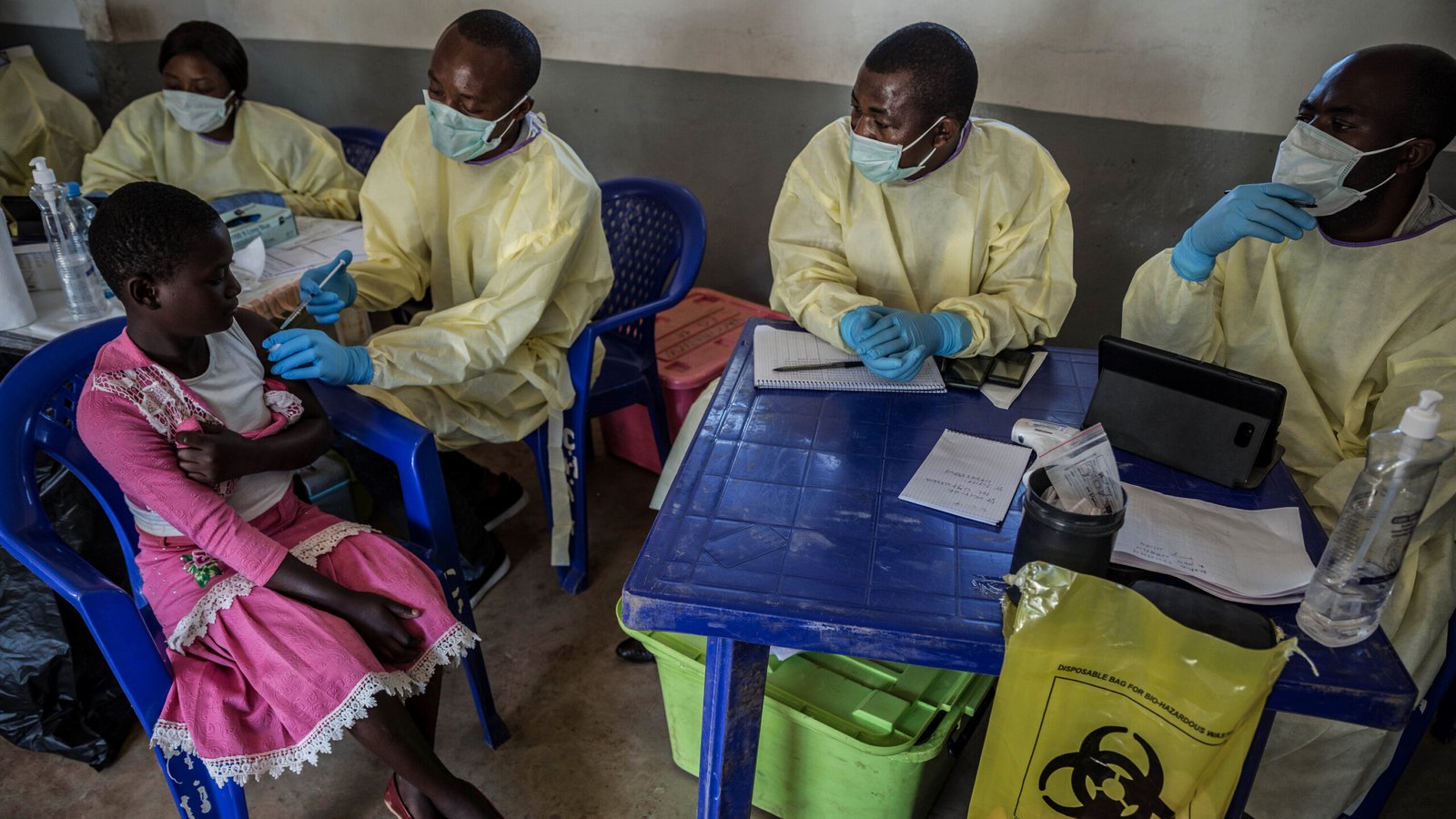
On the ground in the primary hot zones of the DRC and Uganda, frontline medical workers are facing an incredibly hazardous operational environment. The crisis is heavily compounded by long-standing regional instability, humanitarian displacement, and a widespread network of informal, unregulated healthcare providers that often inadvertently act as amplification vectors for the Ebola outbreak.
A primary concern for the WHO is the disproportionately high infection rate being recorded among professional healthcare personnel during this Ebola outbreak. In the opening weeks of the emergency, multiple doctors, nurses, and clinical workers succumbed to the virus after treating patients without access to adequate barrier nursing equipment. This vulnerability highlights severe gaps in regional infection prevention and control (IPC) measures during the Ebola outbreak.
To counter these critical systemic deficiencies, international aid organizations like Project HOPE and the World Food Programme (WFP) have initiated massive logistics pipelines to flood the affected health zones with specialized personal protective equipment (PPE) to blunt the Ebola outbreak. The emergency distribution lists include thousands of medical-grade masks, heavy-duty gloves, protective goggles, full-body fluid-resistant suits, and automated chemical decontamination showers. However, distributing these assets to remote, militia-controlled zones in the northeastern DRC remains an incredibly dangerous and slow process as the Ebola outbreak deepens.
National and Regional Containment Responses
The institutional mobilization to combat the Ebola outbreak involves layered defense strategies across local and global agencies.
| Sovereign Entity / Agency | Primary Legal & Medical Action | Core Operational Field Mandate |
| World Health Organization | Declared a Public Health Emergency of International Concern. | Directing global funding, deploying specialized field teams, and coordinating cross-border monitoring to stall the Ebola outbreak. |
| Africa CDC | Issued Continental Security Proclamation. | Distributing emergency stockpiles of protective gear and setting up regional diagnostic laboratories for the Ebola outbreak. |
| Government of India | Issued strict border control and aviation health advisories. | Requiring mandatory symptom screening at airports for passengers arriving from zones affected by the Ebola outbreak. |
| Republic of Uganda | Established isolation wards within Kampala. | Implementing aggressive contact tracing across transit networks to halt urban transmission vectors of the Ebola outbreak. |
Global Border Defenses and Aviation Security
As the realization spreads that the Ebola outbreak is expanding, sovereign governments outside the primary infection zones are moving rapidly to insulate their domestic populations. The Indian Ministry of Health and Family Welfare, operating through the Directorate General of Health Services (DGHS), has issued an immediate, binding health advisory targeting all international airports and maritime ports of entry across the country to prevent the Ebola outbreak from breaching domestic borders.
Under the new directives, any passengers arriving from, or transiting through, the designated high-risk nations associated with the Ebola outbreak—specifically the Democratic Republic of the Congo, Uganda, and South Sudan—are required to undergo comprehensive thermal screening before reaching standard immigration counters. Travelers are being instructed to immediately self-report to airport health authorities if they exhibit any baseline symptoms associated with the disease.
The official border advisory explicitly isolates a specific matrix of clinical indicators that passengers must watch for during their journeys to monitor potential exposure to the Ebola outbreak:
-
Sudden, unexplainable onset of high fever and extreme physical fatigue.
-
Severe localized muscle pain, persistent headaches, and acute sore throat conditions.
-
Gastrointestinal distress, including continuous vomiting and severe diarrhea.
-
Advanced systemic complications, such as unexplained bruising or active internal and external hemorrhaging.
Furthermore, airport authorities have established a mandatory 21-day self-monitoring window for any individual who has had direct contact with the bodily fluids of suspected patients or wild animal vectors tied to the Ebola outbreak.
The Epidemiological Horizon and Vaccine Deficit
The lack of an approved vaccine for the Bundibugyo strain remains the single biggest hurdle facing global health strategists attempting to contain the Ebola outbreak. During previous historical epidemics involving the Zaire variant, the deployment of the Ervebo vaccine allowed medical teams to implement highly effective “ring vaccination” strategies—immunizing every known contact around an infected individual to systematically suffocate the transmission chain. Because that medical tool is entirely absent in this crisis, containing the Ebola outbreak requires old-fashioned, labor-intensive public health interventions.
Epidemiologists emphasize that when an Ebola outbreak accelerates, community engagement and risk communication are just as vital as physical medical equipment. Local burial customs that involve direct contact with deceased individuals frequently serve as major super-spreader events during an Ebola outbreak. Shifting these cultural practices toward safe, dignified, and medically supervised burials is an absolute priority for field teams, though it requires building deep trust with suspicious local communities to successfully end the Ebola outbreak.
At the same time, international research consortia are scrambling to fast-track experimental therapeutic candidates into field trials to address the Ebola outbreak. Several pharmaceutical research institutions are looking into using monoclonal antibody cocktails that showed early promise in laboratory environments. However, moving these treatments from a laboratory setting into a volatile, logistically broken conflict zone presents an immense challenge for those attempting to manage the Ebola outbreak.
Conclusion: A Test of Global Health Resilience
The coming weeks will determine whether the international community can successfully isolate and suppress the virus before the Ebola outbreak secures a permanent foothold in major urban transit hubs. The complete postponement of major international events like the India–African Union Summit proves that modern global leaders understand the immense economic and social risks associated with an uncontained Ebola outbreak.
The unfolding crisis serves as a stark reminder that public health infrastructure cannot be treated as a localized concern. As long as the Ebola outbreak continues to challenge international containment protocols, the entire interconnected global network remains vulnerable. Reversing the trajectory of this epidemic will require sustained financial investment, unhindered diplomatic cooperation, and an unwavering commitment to supporting the frontline health workers who are currently risking their lives in the hot zones of Central and East Africa to defeat the Ebola outbreak and prevent a larger global catastrophe.
For more information:- Disease Outbreak News
Social Connect:

