

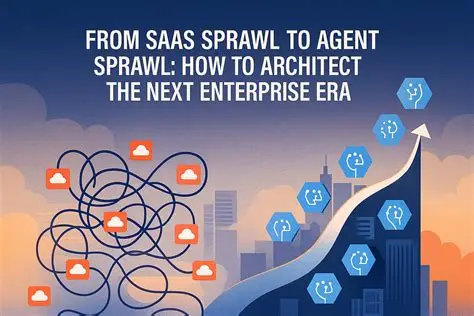
Tech Operations Shock: Managing the Chaos of Agent Sprawl and Intent-Driven Code
The rapid transformation of enterprise technology has brought the global IT industry to a critical tipping point. For the past several years, corporate technology discussions focused almost exclusively on the implementation of basic generative utilities. Workers relied heavily on basic textual autocomplete functions, code-generation assistants, and basic chatbots to speed up their daily routines. However, the operational landscape of 2026 has fundamentally shifted. The technology sector has abruptly moved past simple assistive tools. Today, the core focus of enterprise infrastructure revolves around autonomous AI agents—fully independent, digital workers capable of navigating multi-step corporate workflows, executing database transactions, and coordinating with other software platforms without direct human intervention.
This sudden leap in capabilities has created two massive structural trends that are concurrently rewriting the rules of corporate management and software engineering. On one hand, corporate operational departments are reeling under a wave of uncoordinated automation known across the sector as agent sprawl. On the other hand, the foundational methods used to design, deploy, and maintain software are undergoing an epochal shift toward intent-driven development, a paradigm where human engineers step away from typing lines of syntax and instead act as system architects who dictate high-level intent.
Understanding the intersection of these two trends is no longer an abstract academic exercise; it is an urgent economic necessity for every enterprise trying to survive the modern digital shift.
Part I: The Operational Chaos of Agent Sprawl
To understand how the corporate ecosystem reached its current state of anxiety, one must look at the mechanics of tool distribution. When artificial intelligence tools were first introduced to corporate departments, they operated within a strict, sandbox-style framework. An employee would input a text prompt, receive a text or code output, and manually copy that output into their destination program. The human remained the sole bridge, the definitive execution layer, and the ultimate firewall against system errors.
That bridge has been dismantled. Modern multi-agent systems are native digital workers. Equipped with API access tokens, advanced logical reasoning loops, and read-write privileges across core enterprise systems—ranging from Slack and Salesforce to internal financial ledgers—these digital workers act on behalf of human employees. This autonomous execution environment is what allows intent-driven development to function seamlessly at the software layer, but on the business side, it introduces significant coordination challenges.
This brings us to the core dilemma facing modern corporations: agent sprawl.
Defining the Sprawl
Agent sprawl refers to the uncoordinated, unmonitored, and decentralized proliferation of autonomous AI agents across various departments of a single enterprise. Because modern low-code and no-code AI development frameworks have eliminated technical barriers, any employee with basic natural language skills can design and launch a custom digital worker tailored to their specific immediate needs.
Consider a modern marketing department. A mid-level growth specialist, frustrated by the repetitive manual steps required to scrape leads, verify email addresses, cross-reference data against a CRM, and launch tailored outreach campaigns, decides to automate the task. Using an easy-to-access agentic platform, they build a localized agent. They instruct the agent via natural language: “Every morning, find ten new leads matching this profile, verify their information using our corporate API, write a highly personalized pitch, and send it through our corporate email system.”
The agent functions perfectly. It saves the employee hours of manual work. The immediate department marks it as a clear success. However, duplicate this scenario across thousands of employees in finance, human resources, procurement, customer support, and legal operations, and a massive governance crisis emerges. This decentralized, organic explosion of unmapped automation is the driving force behind modern corporate agent sprawl.
+------------------------------------------------------------------------+
|                      THE SILENT EXPOSURE GRID                          |
+------------------------------------------------------------------------+
|  Marketing Dept.   -->  Launches Lead-Scraping Outbound Agents         |
|  Finance Dept.     -->  Deploys Automated Ledger-Reconciliation Agents |
|  HR Operations     -->  Creates Autonomous Resume-Screening Agents     |
|  Procurement Team  -->  Builds Self-Executing Vendor Invoice Agents     |
+------------------------------------------------------------------------+
|  CRITICAL GAP: No central IT oversight, shared logs, or unified audit  |
+------------------------------------------------------------------------+
The Broken Process Trap
The primary risk of widespread agent sprawl is not that the underlying technology fails to execute tasks. The real problem is that it executes them perfectly, relentlessly, and at scale, regardless of whether the underlying process makes sense. The technology sector has abruptly pivoted from asking “how do we deploy AI?” to a far more difficult question: “how do we stop our employees from over-automating broken processes?”
When a human employee runs an inefficient, poorly structured corporate process, the built-in friction of human fatigue acts as a natural buffer. If a data entry system requires navigating a messy, error-prone labyrinth of spreadsheets, a human can only process a dozen entries an hour, usually raising flags when system inconsistencies pop up.
When an autonomous AI agent is assigned that exact same broken, poorly designed workflow, it doesn’t pause to question the systemic logic. It loops endlessly, executing the flawed, messy workflow thousands of times per minute. If the process includes an uncorrected operational error, the agent accelerates that error across the company’s entire software ecosystem. An uncoordinated invoice-matching agent, for instance, might misinterpret a formatting glitch in an invoice and systematically clear thousands of duplicate payments in minutes, completely bypassing traditional manual checks.
The Governance Gap and Compliance Nightmares
Beyond pure operational errors, agent sprawl introduces profound compliance, regulatory, and security exposures to the modern enterprise. In an era governed by strict international data frameworks like the EU AI Act and updated privacy regulations, visibility is everything. Organizations must be able to explain exactly how data is processed, where it flows, and why specific operational decisions were made.
Widespread agent sprawl shatters this visibility. When hundreds of localized digital workers operate independently inside different departmental silos, they create a massive traceability crisis. If a customer-data agent accidentally exfiltrates protected personal identifiable information (PII) to an external unauthorized model for processing, or if an automated human resources agent relies on biased logic to reject thousands of job applicants, identifying the breakdown is incredibly difficult.
Without centralized corporate monitoring, determining which specific agent invoked which API token, under what contextual prompt, and with what level of authority becomes a digital needle in a haystack. This lack of clear operational visibility leaves companies highly exposed to regulatory penalties, data breaches, and severe reputational damage.
Part II: The Corporate Pivot to Orchestration-Led Governance
Faced with the mounting operational risks of unchecked automation, forward-looking enterprises are rapidly abandoning laissez-faire approaches to departmental AI usage. The corporate tech playbook is being rewritten to transition from localized, chaotic tool deployment to a model of orchestration-led governance.
This shift requires establishing a centralized, highly monitored platform layer that sits directly between individual enterprise software systems and the active AI agent workforce. Rather than banning automation outright—a move that modern tech executives admit simply drives developers and tech-savvy employees to use unsanctioned “Shadow AI” tools—companies are implementing strict architectural boundaries to tame agent sprawl.
+-------------------------------------------------------------------------+
|                  ORCHESTRATION-LED GOVERNANCE LAYER                     |
+=========================================================================+
|   [Central Agent Registry]  --> Tracks owners, risk tiers, and audits  |
|   [Least-Privilege Scoping] --> Restricts database and API access       |
|   [Human-on-the-Loop]       --> Mandatory human approval for high-risk |
+-------------------------------------------------------------------------+
1. Centralized Agent Registries
Every autonomous assistant deployed within an enterprise ecosystem must be formally cataloged inside a unified corporate directory. This directory functions much like a traditional human resources database, tracking who built the agent, which models power its logic, its specific operational purpose, its assigned risk tier, and its historical access path. Unregistered autonomous code sequences are automatically detected and blocked at the network layer by automated security protocols.
2. Least-Privilege Tool Scoping
To prevent a localized agent from causing widespread system damage, organizations are moving away from broad API keys. Instead, digital workers are restricted to highly specific, sandboxed operational parameters. A customer support agent might have permission to read a tracking number from a shipping log, but it is explicitly barred from editing customer billing addresses or accessing parent server directories.
3. Human-on-the-Loop Validation
For high-impact corporate operations—such as approving vendor contracts, moving corporate funds, or sending public-facing communications—enterprises are enforcing mandatory human evaluation checkpoints. The agent can autonomously execute research, draft the documentation, and structure the transaction, but it cannot hit the final “execute” button without explicit, authenticated approval from a human operator.
Part III: The Software Engineering Shift to Intent-Driven Development
While corporate management struggles to govern the explosion of automated workflows on the business side, an equally profound transformation is disrupting the core software engineering world. The foundational methods used to design, write, deploy, and maintain software systems are undergoing an irreversible shift away from traditional, manual syntax creation toward a paradigm known as intent-driven development.
For decades, the standard software development lifecycle (SDLC) followed a highly structured, execution-centric approach. Human engineers spent the majority of their working hours translating business requirements into precise lines of code. This required diving deep into specific language syntax, manually designing complex database schemas, mapping delicate service boundaries, writing boilerplate APIs, and configuring intricate infrastructure deployment manifests. Even with the introduction of early AI code assistants, the human programmer remained heavily anchored to the keyboard, painstakingly reviewing code line by line and manually stitching together separate repositories.
The emergence of intent-driven development turns this classic model completely on its head. In an ecosystem governed by intent-driven development, human input shifts away from manual coding execution entirely. Instead, human developers focus their attention on the conceptual boundaries of a software project: defining the overarching goals, enforcing strict security parameters, and declaring precise success criteria.
The heavy execution phase—the actual step-by-step writing of source code, structural system integration, edge-case testing, and continuous deployment management—is handed over entirely to synchronized networks of specialized autonomous software agents.
The Functional Architecture of Intent-Driven Development
In a mature framework powered by intent-driven development, software engineering follows a highly automated, multi-tiered pipeline:
-
Intent Formulation as the Core Asset: Rather than writing a massive backlog of separate development tasks, a human engineer working within an intent-driven development ecosystem begins by writing a highly detailed, testable specification document using clear natural language or specialized logic frameworks. This specification details the system’s objective, data boundaries, compliance requirements, and operational rules.
-
Multi-Agent Orchestration Loops: Once the core intent is explicitly declared, it is fed into an autonomous development engine that coordinates several specialized digital agents:
-
Architectural Planning Agents analyze the specification, map out required microservices, and design optimal relational database models.
-
Code Generation Agents write clean, production-ready source code across multiple languages, automatically generating the necessary APIs and internal connection code.
-
Infrastructure-as-Code (IaC) Agents generate configuration files (such as Terraform or Kubernetes manifests) to set up server environments safely.
-
-
Autonomous Verification and Self-Healing: Once the system is generated, a dedicated group of Testing Agents subjects the application to thousands of automated edge-case evaluations, automated security audits, and intensive simulated load tests. If a bug or system vulnerability is identified, the system doesn’t stop to alert a human engineer; instead, it automatically routes the error back to the generation loop, allowing the model to rewrite and self-heal the code autonomously until it matches the stated intent. This continuous self-healing loop represents the operational peak of intent-driven development.
+------------------------------------------------------------------------+
|                 INTENT-DRIVEN DEVELOPMENT PIPELINE                     |
+------------------------------------------------------------------------+
|  1. Human Input       --> Declares High-Level Intent & Guardrails      |
|  2. Planning Agents   --> Maps Microservices & DB Architecture          |
|  3. Build Agents      --> Writes Production Code & IaC Manifests       |
|  4. Testing Agents    --> Simulates Edge Cases & Runs Security Audits   |
|  5. Deployment        --> Launches Self-Healing, Verified System       |
+------------------------------------------------------------------------+
Comparing Paradigms: Traditional Agile vs. Intent-Driven Development
The structural differences between traditional development and the modern intent-driven paradigm show why this shift is rewriting tech industry roles:
| Metric / Development Phase | Traditional (Agile / Copilot Assisted) | Intent-Driven Development |
| Primary Human Responsibility | Writing syntax, building logic, breaking down granular sprint tasks. | Defining context, designing test specs, setting architectural guardrails. |
| Primary Role of AI | Inline code autocomplete, localized function generation. | End-to-end planning, autonomous testing, and self-healing deployments. |
| Core Development Artifact | Manual code repositories, User Stories, Jira tracking points. | Executable Intent Specifications, automated Test-as-Spec validation layers. |
| System Maintenance | Manual debugging, on-call engineer rotations, hand-written patches. | Automated telemetry monitoring with autonomous self-healing code loops. |
Part IV: The New Premium Skill: Context Engineering
As intent-driven development becomes the standard for software creation, the long-term value of memorizing programming language syntax or learning specific software framework rules is dropping rapidly. When an autonomous AI engine can write thousands of lines of perfectly optimized, secure code in seconds, the primary constraint on software creation is no longer coding speed or typing efficiency.
The critical bottleneck has shifted entirely to Context Engineering, which forms the logical bedrock of intent-driven development.
Context engineering is the ability to express a complex business goal or technical system architecture with enough logical clarity, structural completeness, and parameter precision that an autonomous AI network can safely plan and execute the build without hallucinating dependencies or introducing security flaws.
A modern software engineer in an intent-driven development environment operates less like a traditional construction worker laying individual bricks of code, and more like a master architect directing an automated construction system. If the human architect’s instructions are vague, incomplete, or logically contradictory, the autonomous system will build an unstable, insecure application.
Success in this automated landscape requires deep system design thinking, strong analytical logic, a comprehensive understanding of data flow dynamics, and the communication skills needed to write flawless, unambiguous specifications that feed directly into the intent-driven development lifecycle.
Part V: Navigating the Autonomous Frontier
The simultaneous rise of agent sprawl on the corporate side and intent-driven development on the engineering side marks a definitive shift in the history of computing. Technology is no longer a passive tool that sits waiting for explicit human keyboard commands; it has become an active, autonomous participant in the design and execution of global business workflows.
For enterprise leaders, taming the chaos of agent sprawl requires accepting that employees will naturally seek out automation. The solution is not to impose restrictive, outdated IT bans that stall innovation, but rather to deploy modern, orchestration-led governance frameworks that provide complete visibility, safeguard data security, and keep a human firmly in control of critical decisions.
For software engineers, the transition to intent-driven development should not be viewed as a threat to their careers, but rather as a massive elevation of their professional leverage. By offloading the tedious, repetitive work of manual syntax writing, boilerplate code generation, and manual bug hunting to autonomous systems, developers are freed up to focus on what matters most: solving complex structural problems, optimizing system design, and engineering the precise context that will shape the next generation of digital infrastructure through intent-driven development.
The industry is rapidly discovering that the future belongs exclusively to those who can master the art of declaring intent, setting firm guardrails, and safely steering autonomous technology toward meaningful real-world outcomes.
Vogue Business – Technology Section: voguebusiness.com/technology
Social Connect :

