

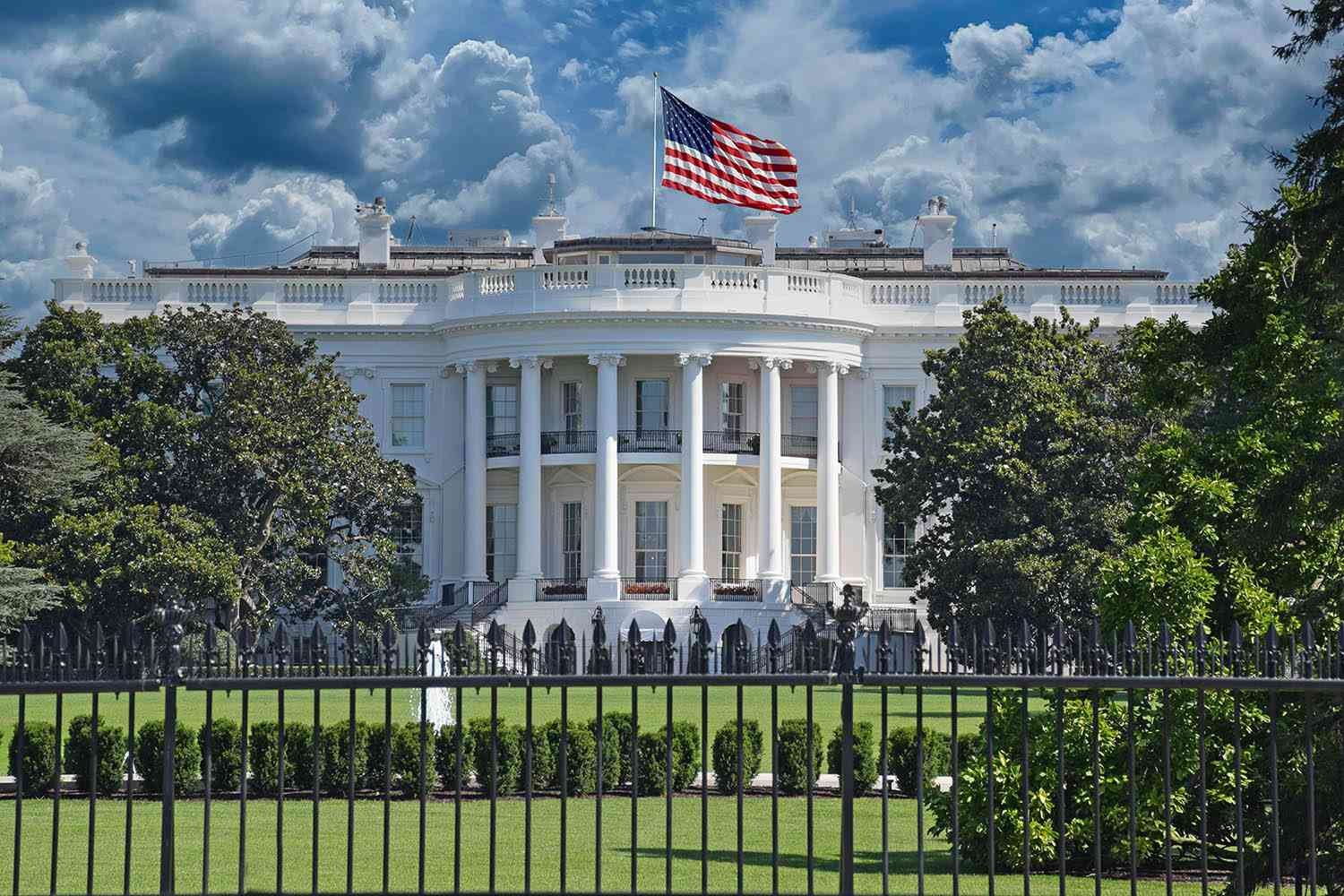
HIGH ALERT IN THE CAPITAL: ARMED SUSPECT NEUTRALIZED BY SECRET SERVICE OFFICERS NEAR WHITE HOUSE SECURITY GATE
WASHINGTON, D.C. — A dramatic and violent security breach unfolded along the perimeter of the executive mansion on Saturday evening, prompting an immediate lockdown of the nation’s most heavily fortified political complex. Members of the United States Secret Service fatally shot an armed individual who approached an active pedestrian security checkpoint, produced a firearm from a concealed bag, and opened fire directly on law enforcement personnel.
The rapid, high-stakes exchange of gunfire, which echoed across the White House North Lawn shortly after 6:00 p.m. EDT, wounded a civilian bystander and sent members of the international press corps sprinting for emergency cover inside the James S. Brady Press Briefing Room.
The fatal shooting represents a stark escalation in the security challenges facing federal law enforcement in the nation’s capital. Federal agencies confirmed that the Secret Service Uniformed Division engaged the hostile actor within seconds of the first weapon discharge, utilizing trained counter-action protocols to prevent the gunman from penetrating deeper into the secure perimeter of the complex.
While the primary protectee, President Donald Trump, was inside the executive mansion at the exact moment the tactical engagement occurred, agency spokespeople assured the public that the president and his immediate staff were completely unimpacted by the localized violence.
Part I: The Geometry of the Engagement Area
The critical incident occurred at the bustling intersection of 17th Street and Pennsylvania Avenue NW, a vital entry node situated on the northwest edge of the executive complex. This specific geographical intersection sits directly adjacent to the historic Eisenhower Executive Office Building, a facility that houses the core administrative offices of the West Wing staff.
Because of its strategic location, this specific gate features a permanent, reinforced security booth manned continuously by the specialized personnel of the Secret Service Uniformed Division. The checkpoint acts as a primary filter for staff, authorized visitors, and members of the media seeking entry into the inner grounds of the complex.
                  +----------------------------------+
                  |  CRITICAL GATE DISRUPTION RADAR  |
                  +----------------------------------+
                                   |
         +-------------------------+-------------------------+
         |                                                   |
         v                                                   v
[Engagement Hub: 17th & Penn]                     [Inner Complex Status]
Gunman opens fire at outer booth;                 White House locked down immediately;
neutralized by Uniformed Division.                President Trump safe inside West Wing.
According to official incident logs compiled by federal investigators, the armed suspect approached the security post on foot, blending in with the typical weekend crowds of tourists and local commuters moving through Lafayette Square. Upon reaching the immediate vicinity of the guard booth, the individual suddenly stopped, reached into a carrying bag, and produced a functioning revolver.
Without issuing a warning or stating an operational motive, the gunman raised the weapon and began firing multiple rounds directly at the glass and structure of the security booth. The sudden crack of gunfire shattered the early evening calm, forcing nearby civilians to scramble for safety along the concrete barriers.
The physical distance between the site of the shooting and the main executive mansion is roughly 300 meters. While several layers of reinforced fencing, automated anti-vehicle barriers, and heavily armed tactical teams stand between that outer gate and the building’s interior, any active discharge of weapons near the perimeter triggers an immediate, automated defensive response from the Secret Service command center. Within moments of the initial shots, automated alerts were broadcast to all tactical units, moving the entire complex from a standard security posture to a maximum-threat lockdown state.
Part II: Operational Timeline and Tactical Response
The tactical timeline demonstrates the speed with which specialized federal law enforcement officers operate when a threat materializes at the perimeter. The first shot was recorded at approximately 6:01 p.m., as the suspect unleashed a succession of rounds from his handgun.
Witnesses on the scene, including broadcast journalists preparing for evening television segments on the North Lawn, reported hearing between 15 and 30 distinct gunshots ring out over a brief, intense interval. The volume of fire indicated a sustained exchange of lethal force between the attacker and the law enforcement officers stationed at the gate.
[THE ENGAGEMENT ARCHITECTURE]
┌───────────────────────┬──────────────────────────────────┐
│ Suspect Advance       │ Individual approaches 17th & Penn checkpoint on foot. │
├───────────────────────┼──────────────────────────────────┤
│ Firearm Weapon Drawn  │ Suspect pulls revolver from bag and opens fire at booth. │
├───────────────────────┼──────────────────────────────────┤
│ Tactical Neutralization│ Secret Service Uniformed Division returns fire within seconds. │
├───────────────────────┼──────────────────────────────────┤
│ Medical Evacuation    │ Suspect transported to local hospital; later pronounced dead.│
└───────────────────────┴──────────────────────────────────┘
Stationed inside and around the targeted security kiosk, the Secret Service police officers reacted instantly to the incoming rounds. Drawing their service weapons, the officers executed their tactical training by establishing a defensive perimeter, returning fire, and striking the suspect multiple times to eliminate the immediate threat.
The rapid response of the Secret Service effectively pinned the gunman to the sidewalk outside the gate, preventing him from advancing toward the secondary perimeter lines or targeting additional pedestrians in the area.
As the suspect collapsed to the pavement, specialized tactical units, including the Secret Service Counter Assault Team (CAT), flooded the intersection with heavy armor and long rifles to secure the surrounding streets. Paramedics from the District of Columbia Fire and Emergency Medical Services Department, who operate in constant coordination with federal authorities, arrived on the scene within minutes.
The wounded gunman was stabilized on the blood-stained pavement before being loaded into an armored ambulance and transported under armed escort to George Washington University Hospital. Despite aggressive resuscitation efforts by emergency room trauma teams, the individual succumbed to his injuries and was pronounced dead shortly after arrival.
Part III: Identity of the Gunman and Threat Background by Secret Service
In the hours following the fatal encounter, federal intelligence analysts and local homicide detectives worked to piece together the identity and background of the deceased attacker. Multiple senior law enforcement officials later identified the suspect as 21-year-old Nasire Best, a resident of nearby Maryland.
An initial review of federal databases quickly revealed that Best was not an anonymous actor to the Secret Service protective intelligence division; rather, he possessed an extensive, documented history of erratic behavior and prior security violations targeting the executive mansion.
               [SUSPECT INTERACTION TIMELINE]

   June 2025: Detained for blocking White House entry lane; mental hold.
                                      │
                                      ▼
   July 2025: Arrested by Secret Service for restricted area intrusion.
                                      │
                                      ▼
   Late 2025: Formal federal "stay-away order" issued to suspect.
                                      │
                                      ▼
   May 23, 2026: Attacks 17th & Pennsylvania Avenue security checkpoint.
Investigative records indicate that Best had been the subject of multiple behavioral interventions over the preceding eighteen months. In June of the prior year, the suspect was detained by the Secret Service after using his personal vehicle to block a secure entry lane leading into the complex. During that encounter, Best exhibited profound psychological distress, claiming to be a religious deity and explicitly demanding that officers place him under arrest. Following that incident, he was transferred to the Psychiatric Institute of Washington for a comprehensive, involuntary mental health evaluation.
Despite the clinical intervention, the suspect’s fixation on the secure facility continued to intensify. In July 2025, Best was arrested a second time by the Secret Service after deliberately ignoring clear verbal commands and attempting to scale an outer security barrier.
This second infraction resulted in criminal charges and the issuance of a formal, legally binding federal stay-away order designed to bar him from entering the immediate vicinity of the complex. Furthermore, digital forensics teams analyzing social media accounts linked to the suspect discovered a history of erratic posts, including explicit expressions of violence directed toward the administration and renewed declarations of spiritual delusions.
Part IV: Civilian Wounded and Forensic Investigation and No Injury to Secret Service
While no members of the Secret Service sustained physical injuries during the gun battle, the incident was marred by the wounding of an innocent civilian bystander. The individual, whose identity has been withheld by authorities pending family notification, was caught in the direct line of fire while walking along the public sidewalk adjacent to Pennsylvania Avenue.
Emergency medical technicians located the wounded pedestrian suffering from a severe gunshot wound and rushed them to a local tier-one trauma center, where they remain in critical condition.
+--------------------------------------------------------------------------+
|                  FORENSIC SCENE PROTOCOLS ACTIVATED                     |
+--------------------------------------------------------------------------+
|  • BALLISTIC TRACKING   | Over 40 orange markers placed to trace the     |
|                         | exact trajectories of discharged rounds.       |
|                                                                          |
|  • MULTI-AGENCY AUDIT   | FBI Evidence Response Teams working alongside  |
|                         | ATF ballistic experts to process the scene.    |
|                                                                          |
|  • DIGITAL FORENSICS    | Recovery of the suspect's phone and personal  |
|                         | bag items for deep network analysis.           |
+--------------------------------------------------------------------------+
The immediate aftermath of the shooting transformed one of Washington’s most iconic thoroughfares into a massive, meticulously managed forensic crime scene. Yellow police tape was stretched across multiple blocks, sealing off all pedestrian and vehicular traffic from 17th Street to 15th Street NW.
Federal Bureau of Investigation (FBI) agents, working in concert with forensic specialists from the Bureau of Alcohol, Tobacco, Firearms and Explosives (ATF), spent the night processing the area under high-powered floodlights.
Forensic technicians placed dozens of orange evidence markers across the pavement, mapping out the precise resting places of spent shell casings, shattered glass fragments, and discarded medical gear left behind by the first responders. Investigators recovered the suspect’s weapon—a high-caliber revolver—which was transported to an FBI laboratory for comprehensive ballistic testing and fingerprint analysis.
The primary objective of the ongoing multi-agency investigation is to determine how the suspect obtained the firearm despite his documented history of severe mental instability and existing law enforcement records.
Part V: Broad Context of White House Security Challenges for Secret Service
The violent confrontation at the 17th Street gate does not exist in a political vacuum; rather, it represents the latest link in a troubling chain of security incidents that have targeted the executive branch over a compressed timeframe. Public health and law enforcement commentators have noted that this is the third distinct incident involving gunfire in the immediate vicinity of the president within a single month.
This sustained pattern of threats has placed immense operational strain on the Secret Service, forcing the leadership to continuously re-evaluate its defensive protocols and perimeter architectures.
                    +-----------------------------+
                    |  RECENT CAPITAL THREAT MAP  |
                    +-----------------------------+
                                   |
         +-------------------------+-------------------------+
         |                                                   |
         v                                                   v
[May 4: Washington Monument]                      [April 26: WHCA Dinner]
Armed actor engages police;                       Ballroom perimeter breached;
teenage bystander wounded nearby.                 Agent injured by shotgun blast.
Just weeks prior to Saturday’s shooting, the agency was forced to respond to an armed individual who opened fire near the Washington Monument, an incident that also resulted in a bystander injury and required a rapid tactical intervention.
Even more alarming was the high-profile breach during the White House Correspondents’ Association dinner on April 26, where a gunman penetrated an outer security cordon at a major Washington hotel, discharging a shotgun that wounded a Secret Service agent before the threat was neutralized.
This series of near-continuous challenges has amplified anxieties within Congress regarding the long-term sustainability of protective operations. Lawmakers from both major political parties have expressed deep concern over the frequency with which emotionally disturbed or heavily armed individuals are managing to approach the outer boundaries of the executive complex.
The Secret Service is facing intense scrutiny regarding its threat-assessment capabilities, with critics questioning whether existing protective intelligence mechanisms are sufficient to track and neutralize known, high-risk individuals before they decide to launch a physical assault on a secure facility.
Part VI: Executive Reaction and Future Capital Security Plans to the Secret Service
Hours after the lockdown was officially lifted and reporters were permitted to return to the North Lawn, President Trump took to social media to address the nation. In an early Sunday morning broadcast, the president expressed his profound gratitude to the Secret Service for their swift, decisive, and professional action in the face of direct fire.
He alleged that the deceased gunman possessed a long-standing obsession with the historic architecture of the executive mansion, framing the attack as the actions of a deeply troubled individual.
+--------------------------------------------------------------------------+
|                    TRUMP CAMPAIGN BALLROOM PROPOSAL                      |
+--------------------------------------------------------------------------+
|  GOAL            • Construct an impenetrable, ultra-secure corporate     |
|                  | pavilion within the borders of Washington, D.C.       |
|                                                                          |
|  SECURITY INTENT • Eliminate reliance on external hotel ballrooms;       |
|                  | establish absolute control over entry environments.   |
|                                                                          |
|  OPPOSITION      | Urban planners cite historic preservation issues;     |
|                  | civil rights advocates worry about city militarization.|
+--------------------------------------------------------------------------+
However, the president also used the security scare to advance a highly controversial infrastructure project that has been a point of contention within his administration. Referencing both the Saturday night shooting and the prior attack at the correspondents’ dinner, Trump argued that all future presidents require a completely new, custom-built, ultra-secure event pavilion within the capital.
This proposed facility, often referred to by critics as the “Presidential Ballroom Project,” would allow the commander-in-chief to host large-scale media events, political galas, and diplomatic dinners inside a fully armored environment, eliminating the need to travel to commercial hotels or public venues across the city.
The ballroom proposal has ignited an intense debate among urban planners, congressional budget committees, and federal security architects. Proponents of the plan argue that the modern threat landscape requires a radical re-engineering of presidential transit and event logistics, noting that moving a protectee through public city streets exposes them to unmanageable risks.
Conversely, opponents express concern that building an insulated, militarized fortress inside Washington would further sever the symbolic connection between the presidency and the American public, creating an unwanted precedent of isolation in response to domestic threats.
Part VII: Institutional Lessons and the Road Ahead
As the investigation into Nasire Best’s background continues to yield new details, the leadership of the Secret Service is under immense pressure to implement systemic reforms. The central dilemma facing the agency is institutional: how to balance the necessity of absolute physical protection with the reality of an open, democratic society where citizens have a right to access public spaces near their government buildings.
While the tactical execution of the Uniformed Division during Saturday’s shooting was flawless, the fact remains that a known, high-risk individual with an active stay-away order was able to approach within arm’s reach of a White House gate with a loaded firearm.
+-------------------------------------------------------------------------+
|                  FUTURE REFORM RADAR FOR THE AGENCY                     |
+-------------------------------------------------------------------------+
|  [INTELLIGENCE] • Integrate local psychiatric holds with federal        |
|                 | protective databases for real-time monitoring.        |
|                                                                         |
|  [PERIMETER]    • Expand the outer biometric scanning corridors         |
|                 | surrounding the main pedestrian plazas.               |
|                                                                         |
|  [COORDINATION] • Formalize real-time data handshakes with D.C. police  |
|                 | to track individuals violating stay-away orders.       |
+-------------------------------------------------------------------------+
To prevent future breaches, security experts are calling for a substantial overhaul of how the Secret Service manages its protective intelligence databases. Analysts suggest that local law enforcement agencies, psychiatric facilities, and federal protective teams must build real-time data-sharing networks.
Had a more integrated monitoring system been active, the moment Best violated his stay-away order by entering the immediate perimeter zone, automated surveillance systems could have alerted patrolling units, potentially allowing officers to intercept him before a weapon could be drawn.
The weeks ahead will likely see intense congressional hearings as committees demand answers from agency directors regarding budget allocations, personnel shortages, and tactical readiness. For the men and women of the Secret Service, the incident at the 17th Street checkpoint serves as a stark reminder of the non-stop vigilance required to safeguard the nerve center of American political power.
As Washington adjusts to an environment of heightened security and persistent threats, the agency must continue to evolve its tactics, ensuring that its protective shield remains unbroken while navigating the complex social and political realities of a divided nation.
Social Connect:

