

MARITIME FLASHPOINT: INDIA ISSUES STERN DEMARCHE TO UNITED STATES AFTER KINETIC OIL TANKER STRIKE CLAIMS LIVES OF INDIAN SAILORS OFF OMAN
NEW DELHI — In an unprecedented and highly consequential diplomatic escalation, the Government of India has formally lodged a “strong protest” against the United States after an American military strike targeted a commercial oil tanker in international waters. The maritime assault, which occurred in the volatile waters off the coast of Oman, has directly cost the lives of innocent civilian crew members, throwing New Delhi’s calibrated West Asia foreign policy into sharp conflict with Washington’s regional military strategies.
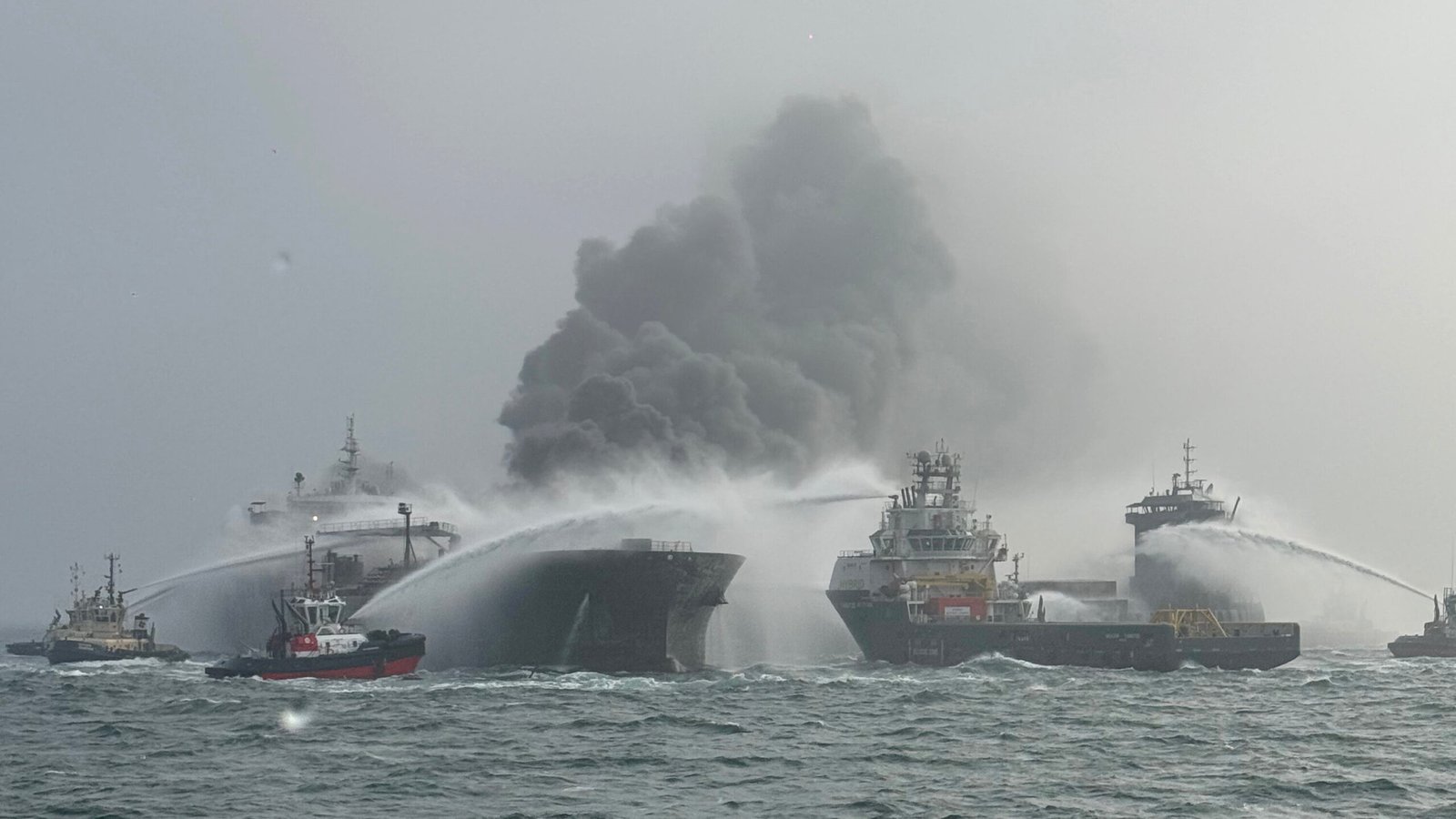
The targeted vessel, a Palau-flagged chemical and products tanker named MT Settebello, was carrying an entirely civilian crew when it was interdicted by U.S. Central Command (CENTCOM) naval assets. The devastating kinetic strike triggered an immediate, uncontrollable inferno inside the ship’s engine room, forcing the evacuation of the vessel.
While emergency maritime response teams managed to pull the majority of the crew out of the burning waters, the Forward Seamen’s Union of India (FSUI) has officially confirmed a grim outcome: two Indian seafarers have tragically died, and the ship’s chief engineer remains missing at sea.
                      [MT SETTEBELLO KINETIC STRIKE]

         [U.S. CENTCOM Blockade Enforcement] -> Precision Munitions Fired
                                                      │
                                                      ▼
         [Palau-Flagged MT Settebello] --------> Engine Room Fire Initiated
                                                      │
                                                      ▼
         [Humanitarian Emergency Casualties] --> 21 Rescued / 2 Dead / 1 Missing
The tragedy has sparked profound outrage within international maritime labor networks and forced South Block to abandon its usual public silence regarding U.S. blockade operations in the Middle East. Seeking immediate accountability, the Ministry of External Affairs (MEA) took the rare step of summoning U.S. Charge d’Affaires and Deputy Chief of Mission Jason Meeks to its headquarters in New Delhi.
During an intense, closed-door 25-minute meeting, Indian diplomats delivered a blistering demarche condemning the use of destructive military force against non-combatant merchant shipping. The government explicitly emphasized to American officials that the lives of merchant seafarers must never be treated as collateral damage in broader geopolitical standoffs.
Part I: The Anatomy of the Strike in the Gulf of Oman
The physical interception of the MT Settebello took place approximately 20 nautical miles northeast of Oman’s crucial commercial port of Sohar. The vessel was transiting through the outer corridors of the Gulf of Oman when U.S. naval forces engaged it.
According to official briefings provided by U.S. Central Command, American aircraft deployed precision munitions directly into the tanker’s engineering and steering spaces after the crew allegedly failed to comply with repeated, formal maritime instructions to alter their course.
Washington defended the strike as a routine enforcement action under its ongoing naval blockade of Iranian shipping networks. However, the use of lethal explosive ordinances against a vessel operating with civilian seafarers has drawn intense international criticism.
+--------------------------------------------------------------------------+
|                     MT SETTEBELLO SPECIFICATIONS & INCIDENT TRACE       |
+--------------------------------------------------------------------------+
|  • REGISTRY FLAG     | Republic of Palau (Civilian Merchant Registry)    |
|  • TOTAL COMPOSITION | 24 Active Crew Members (100% Indian Nationality)  |
|  • LOCATION OF STRIKE| 20 Nautical Miles Northeast of Port of Sohar, Oman|
|  • PRIMARY WEAPONRY  | Airborne Precision-Guided Munitions (US CENTCOM)  |
|  • DAMAGE SUSTAINED  | Complete Engine Room Destabilization & Fire Block |
+--------------------------------------------------------------------------+
As the precision missiles tore through the stern of the ship, the engine room was instantly engulfed in a massive fire, knocking out the vessel’s primary electrical grids and communication systems. The catastrophic loss of power left the remaining crew members completely blind in a smoke-filled hull.
Omani maritime authorities and nearby international naval vessels responded rapidly to the ship’s automated SOS distress signals, launching an emergency evacuation that successfully pulled 21 of the 24 Indian seafarers from the flaming deck.
Tragically, those working deepest within the mechanical compartments bore the full brunt of the physical blast. The Forward Seamen’s Union of India later identified the deceased deck cadet and engine rating as young men caught directly in the line of fire, illustrating the deadly risks now faced by commercial seafarers in regional waters.
Part II: The Diplomatic Confrontation in New Delhi
The political response from New Delhi was immediate, highly strategic, and deliberate. Ministry of External Affairs Additional Secretary (Americas) Nagaraj Naidu led the formal diplomatic tongue-lashing handed to the American envoy.
In the extended meeting, India pointed out a crucial legal discrepancy that separates this tragedy from previous regional maritime incidents: unlike other vessels that have been disabled by Western forces, the MT Settebello was not officially blacklisted or sanctioned by the United States Office of Foreign Assets Control (OFAC).
By using lethal force against an unsanctioned commercial vessel staffed completely by foreign seafarers, the U.S. military has set a highly dangerous international precedent.
          [DIPLOMATIC ESCALATION & DEMARCHE LIFTCYCLE]

   MEA Summons Top U.S. Diplomat: Jason Meeks arrives at South Block.
                                      │
                                      ▼
   Legal Discrepancy Enforced: India notes Settebello was not an OFAC-sanctioned ship.
                                      │
                                      ▼
   Humanitarian Protest Lodged: Focus shifts heavily to safety of civilian seafarers.
                                      │
                                      ▼
   Multilateral Policy Demand: Call for immediate de-escalation of the blockade.
India’s official demarche noted that while it respects the enforcement of sovereign maritime policies, it cannot tolerate actions that disregard basic humanitarian protections. Global trade lanes are entirely dependent on the physical security of merchant seafarers, who have no involvement in the geopolitical disputes between sovereign nations.
The MEA’s public statement explicitly declared that continuing incidents of attacks on shipping in the region are deeply worrisome and create an unacceptable environment of fear for international trade.
The government demanded that the United States immediately review its naval engagement protocols, reminding Washington that the primary duty of any democratic naval force must be the preservation of human life, particularly the lives of civilian seafarers who keep global supply chains moving.
Part III: Maritime Labor Unions Demand Immediate Accountability
As news of the deaths spread across major shipping hubs, international maritime labor organizations expressed deep outrage over the military’s actions. The Forward Seamen’s Union of India launched a furious public campaign criticizing the lack of protection provided to merchant crews traveling through dangerous global chokepoints.
Union leadership completely rejected the Pentagon’s explanation that the strike was a necessary enforcement measure due to non-compliance. They argued that modern naval surveillance systems possess exact, real-time data regarding the identities and nationalities of every person on board commercial vessels long before any weapons are fired.
                  +----------------------------------+
                  |  UNION CIVIL DEFENSE DEMANDS     |
                  +----------------------------------+
                                   |
         +-------------------------+-------------------------+
         |                                                   |
         v                                                   v
[Real-Time Transparency]                           [Non-Lethal Interdiction]
Naval forces must verify civilian crew             Enforce compliance via mechanical delays,
nationalities before firing weapons.               never through explosive engine strikes.
The union asserted with absolute certainty that U.S. naval forces knew exactly how many Indian seafarers were working inside the engine spaces of the MT Settebello. If the vessel’s operators failed to heed radio commands, the military had numerous non-lethal options available, such as blocking its path or disabling its propellers, rather than launching precision missiles into an enclosed workspace.
The maritime labor community has warned international shipping conglomerates that if global navies continue to use commercial seafarers as targets for target practice, crew members will collectively refuse to work on ships traveling through Middle Eastern trade lanes.
This growing labor unrest presents a massive threat to global commercial shipping, as the global maritime economy cannot function without the specialized skills of these civilian seafarers.
Part IV: The Growing Cost of the Middle East Blockade
The tragic strike on the MT Settebello is not an isolated event, but part of a highly aggressive, ongoing maritime blockade initiated by the United States. Since its launch, the regional naval blockade has aimed to completely stop the movement of energy products coming out of sanctioned ports.
Under these strict rules of engagement, U.S. Central Command has already disabled eight separate commercial vessels and forced over 130 ships to redirect away from their intended destinations.
However, because international shipping registries are incredibly complex, the civilian seafarers running these vessels are increasingly getting caught in the middle of this high-stakes economic warfare.
+--------------------------------------------------------------------------+
|                     U.S. CENTCOM REGIONAL BLOCKADE RECORD                |
+--------------------------------------------------------------------------+
|  • SHIPS DISABLED     | 8 Merchant Vessels (Including MT Settebello)     |
|  • SHIPS REDIRECTED   | 134 Commercial Cargo & Oil Tankers               |
|  • HUMANITARIAN TRACE | 42 Authorized Aid Vessels Permitted to Transit   |
|  • RISK TARGET MATRIX | Unsanctioned vessels operating with global crews |
+--------------------------------------------------------------------------+
Just 48 hours before the attack on the MT Settebello, American fighter jets launched a similar strike on another Palau-flagged vessel, the MT Marivex, which was also operated by an entirely Indian crew. Fortunately, in that earlier incident, all 24 seafarers were successfully rescued by Omani coast guard units before the engine fire could breach the living quarters.
The fact that two major military attacks involving Indian seafarers occurred within a three-day window shows a systemic flaw in the blockade’s execution.
International security experts warn that the use of airborne precision strikes against complex chemical and oil tankers carries extreme risks; a single misplaced munition could easily crack a ship’s cargo tanks, triggering a historic ecological disaster alongside a massive loss of life for the civilian seafarers on board.
Part V: Macroeconomic Structural Threats to Global Commerce
The geopolitical friction surrounding the MT Settebello strike has sent shockwaves through the global maritime insurance and commercial transport sectors. The maritime corridor stretching through the Gulf of Oman and into the Strait of Hormuz is the single most vital chokepoint for the movement of global energy supplies, handling over 20% of the world’s daily petroleum consumption.
As military forces transition from passive cargo inspections to active missile strikes, global insurance firms have responded by raising war-risk insurance premiums for all vessels traveling through the region.
               [MARITIME RISK INFLATION PIPELINE]

   Kinetic Missile Strikes: Military forces target commercial vessels directly.
                                      │
                                      ▼
   Premium Escalation: Insurance firms raise war-risk insurance premiums.
                                      │
                                      ▼
   Route Diversion: Ships avoid the Gulf of Oman, sailing around Africa instead.
                                      │
                                      ▼
   Global Consumer Inflation: Extended transit times drive up retail commodity prices.
These rapidly rising insurance costs are forcing major shipping conglomerates to reconsider their routes entirely. Instead of risking the lives of their seafarers in the volatile waters of the Middle East, several prominent fleet operators have begun redirecting their tankers around the Cape of Good Hope in South Africa.
This major route diversion adds over 10 to 14 days of travel time to standard voyages, massively increasing fuel consumption and tying up global shipping capacity.
The secondary economic effects of these longer routes are already showing up in global commodity markets, as companies pass the increased shipping costs down to retail consumers. This trend demonstrates how a localized breakdown in maritime safety can quickly turn into a broad, inflationary threat for the global economy.
Part VI: Emergency Search and Rescue Efforts Off the Coast of Oman
While diplomats debate international maritime law in air-conditioned offices, a highly critical humanitarian crisis continues to play out in the waters off Oman. The Indian Embassy in Muscat has set up an emergency task force to coordinate directly with the Royal Navy of Oman and regional maritime security centers.
Their top priority is running a continuous, round-the-clock search and rescue operation to locate the missing Indian chief engineer, who was separated from the rest of the crew during the chaotic evacuation following the missile strike.
+--------------------------------------------------------------------------+
|                     EMERGENCY RESPONSE OPERATIONAL MATRIX                |
+--------------------------------------------------------------------------+
|  GOAL            • Locate the missing chief engineer and ensure safety   |
|                  | of all surviving crew members from MT Settebello.     |
|                                                                          |
|  ARCHITECTURE    • Deploy Omani naval assets alongside regional search   |
|                  | and rescue planes across the Gulf of Oman corridor.   |
|                                                                          |
|  REGULATIONS     | Enforce temporary maritime exclusion zones around the |
|                  | burning hull to allow specialized teams to work safely.|
+--------------------------------------------------------------------------+
The search efforts face significant challenges due to the heavy smoke and chemical fumes coming from the drifting, damaged hull of the MT Settebello. Specialized marine salvage units have been deployed to cool down the exterior plates of the vessel, preventing a secondary structural collapse that could sink the ship and destroy vital physical evidence.
The 21 surviving Indian seafarers have been safely transported to housing facilities in Muscat, where they are receiving emergency medical treatment and psychological support for severe smoke inhalation and trauma.
Indian consular officials are working to fast-track the necessary travel documentation to return these traumatized seafarers to their families in India as quickly as possible, while simultaneously arranging to bring home the bodies of the two crew members who lost their lives.
Part VII: Strategic Imperatives for the Safety of Indian Crews
The tragic loss of life aboard the MT Settebello serves as a powerful turning point for how major labor-exporting nations manage the security of their citizens working abroad. India provides a massive percentage of the global seafaring workforce, with over 150,000 highly trained Indian nationals serving on merchant vessels worldwide.
This large presence means that when global shipping lanes face military conflict, Indian seafarers are almost always exposed to the highest level of risk on the front lines of global trade.
+-------------------------------------------------------------------------+
|                  NATIONAL SEAFARER PROTECTION COMPASS                  |
+-------------------------------------------------------------------------+
|  [IDENTIFICATION] • Establish a real-time federal tracking registry     |
|                   | for all citizens working in high-risk naval zones.   |
|                                                                         |
|  [PROTECTION]     • Deploy Indian Navy escort vessels to protect commercial|
|                   | ships carrying large numbers of domestic crews.    |
|                                                                         |
|  [DIPLOMACY]      • Require foreign shipowners to sign strict safety    |
|                   | guarantees before hiring domestic maritime labor.   |
+-------------------------------------------------------------------------+
To prevent future tragedies, maritime policy analysts are calling for a complete overhaul of the state’s merchant shipping safety guidelines. The Ministry of Shipping is considering a new regulatory framework that would ban domestic seafarers from signing employment contracts with vessel operators that intentionally travel through active, undeclared war zones without a formal naval escort.
Additionally, India is pushing for a new international maritime convention that would classify any deliberate military attack on civilian crews as a severe violation of international law.
By taking a firm diplomatic stand against the actions of the U.S. military, New Delhi is sending a clear message to the international community: the safety of its citizens is non-negotiable, and it will hold any global superpower accountable if its military actions threaten the lives of civilian seafarers.
Social Connect:

