

The Islamabad Accord: A Strategic Reset in Global Diplomacy and Maritime Security
ISLAMABAD – In a development that has fundamentally altered the geopolitical trajectory of 2026, a comprehensive ceasefire agreement has officially taken effect today. Known formally as the Islamabad Accord, this landmark deal was brokered by Pakistani mediators after sixteen months of intensive, non-linear diplomacy. The agreement brings a definitive halt to the dangerous brinkmanship between the United States and the Islamic Republic of Iran that has threatened to ignite a regional conflagration for nearly two years.
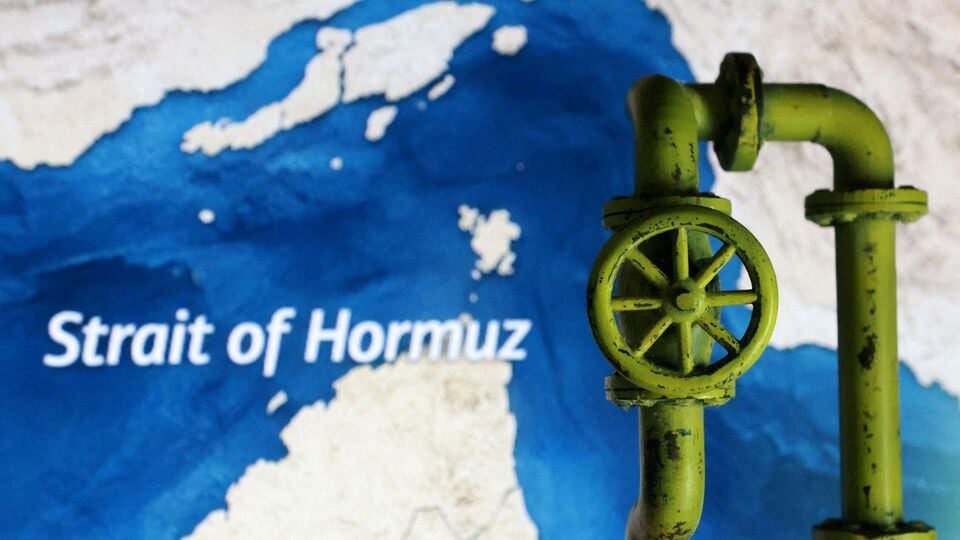
The most immediate and visible result of this diplomatic breakthrough has been the normalization of traffic through the Strait of Hormuz. Following the formal activation of the truce, Iranian naval assets and United States Fifth Fleet strike groups initiated a coordinated withdrawal to designated standoff zones. This repositioning has allowed commercial tankers, many of which had been idling in the Gulf of Oman for weeks, to begin their transit through the world’s most vital energy artery. For a global economy battered by supply chain disruptions, the Islamabad Accord serves as a vital stabilization mechanism.
The Road to the Islamabad Accord
The path to this moment was characterized by high-stakes negotiations and several near-collapses. Since the beginning of last year, the Persian Gulf has been a theater of constant friction. Drone swarms, electronic warfare engagements, and the seizure of oil tankers had driven Brent Crude prices toward unsustainable levels, sparking riots in developing nations and record inflation in the West. The breakthrough finally arrived when Pakistan, acting as a “trusted intermediary” with deep ties to both Washington and Tehran, proposed a framework that decoupled immediate nuclear demands from the urgent need for maritime security.
Observers suggest that the Islamabad Accord succeeded because it provided a face-saving exit for both superpowers. Rather than demanding total ideological capitulation, the mediators focused on the “Economy of Peace.” By centering the discussions on the freedom of navigation and the mutual benefit of stabilized oil exports, the facilitators created a environment where pragmatism could outweigh pride.
Restoring the Pulse of Global Energy
The reopening of the Strait of Hormuz is the primary triumph of the current ceasefire. As roughly one-fifth of the world’s liquid energy supply passes through this narrow waterway, any disruption acts as a stranglehold on international industry. With the Islamabad Accord now operational, the “war risk” surcharges that had doubled shipping costs overnight have begun to evaporate.
Financial analysts at the World Bank have noted that the successful implementation of the Islamabad Accord could effectively halt the global inflationary spiral. In major industrial hubs across East Asia and Europe, the news has been met with a surge in manufacturing confidence. The restoration of predictable energy flows allows central banks to reconsider their hawkish interest rate positions, potentially averting a deep global recession.
Core Pillars of the Agreement
While the intricate technical annexes of the deal remain under wraps, leaked summaries of the Islamabad Accord outline a sophisticated three-tiered approach to de-escalation:
-
Maritime Safety Zones: The first phase establishes a “Blue Corridor” through the Gulf, monitored by a neutral third-party maritime task force. This ensures that commercial vessels can navigate without fear of harassment or accidental engagement.
-
Economic Calibration: In exchange for the cessation of naval provocations, the United States has agreed to targeted sanctions waivers. This allows Iran to access frozen assets specifically for the purchase of humanitarian goods, food, and medicine, providing a “peace dividend” to the Iranian populace.
-
Long-term Security Architecture: The third pillar of the Islamabad Accord seeks to transition from a simple ceasefire to a permanent regional security framework. This includes a “hotline” between Tehran and Washington to prevent future miscalculations from escalating into full-scale war.
Pakistan’s Emergence as a Global Arbiter
The successful negotiation of this treaty represents a significant victory for Pakistani foreign policy. By facilitating the Islamabad Accord, the country has demonstrated the efficacy of middle-power diplomacy in a multipolar world. For years, the international community has struggled to find a mediator that possesses both the strategic depth and the regional trust required to bring these two specific adversaries to the table.
The Prime Minister’s Office in Islamabad emphasized that the deal was a victory for the “Spirit of Dialogue.” They noted that the Islamabad Accord serves as a blueprint for how regional players can take ownership of their own security challenges rather than relying solely on external intervention. The global community has responded by praising the technical skill of the Pakistani diplomatic corps in balancing the conflicting interests of two nuclear-capable regions.
Market Sentiment and Economic Outlook
The reaction from global financial centers was instantaneous. Stock exchanges in New York, London, and Tokyo all posted significant gains within minutes of the announcement. Commodity traders, who had been betting on a prolonged conflict, were forced to rapidly adjust their positions as oil prices stabilized. Beyond energy, the Islamabad Accord has had a profound impact on the “soft” commodity markets.
Because natural gas is a primary component in the production of fertilizers, the stabilization of the Gulf has direct implications for global food security. Agriculture-heavy economies in Africa and South America are expecting a significant drop in production costs, which will eventually translate to lower food prices for consumers worldwide. The Islamabad Accord is thus being hailed not just as a military truce, but as a “Global Staples Protection Act.”
Navigating Potential Obstacles
Despite the widespread optimism, seasoned diplomats remain wary of the challenges that lie ahead. A ceasefire is only as strong as the trust between the parties, and decades of animosity cannot be erased by a single signing ceremony. Hardline factions within both governments remain skeptical of the Islamabad Accord, viewing any form of compromise as a strategic weakness.
To safeguard the progress, the agreement includes a rigorous verification process. International monitors have been deployed to key ports and naval installations to ensure compliance. The Islamabad Accord also utilizes a “tiered response” mechanism—if a minor violation occurs, it is handled via a diplomatic committee rather than an immediate military escalation, preventing small sparks from becoming infernos.
The Broader Geopolitical Ripple Effect
The significance of this accord reaches far beyond the borders of the Middle East. It has sent a powerful message to other regions currently mired in “frozen” or active conflicts. The Islamabad Accord proves that even the most intractable disputes have a diplomatic solution if the economic costs of war become high enough and the mediation is sufficiently skilled.
In Europe, the de-escalation is expected to lower the cost of living, which has been the primary driver of political instability over the last year. In the United States, the administration is using the success of the Islamabad Accord to demonstrate a commitment to “Diplomacy First” foreign policy, which could have major implications for the upcoming election cycle. For the United Nations, the deal represents a much-needed win for international law and multilateralism.
Future Prospects: The Transition to Permanent Peace
As the first week of the ceasefire concludes, the focus is shifting toward the implementation of the second phase. Technical teams are currently meeting in neutral locations to finalize the specifics of the sanctions waivers and the nuclear monitoring protocols. The Islamabad Accord is currently in a “probationary” period, where every action is scrutinized by a global audience.
However, the momentum appears to be on the side of peace. Businesses that had pulled out of the region are already beginning to re-evaluate their presence. The “Islamabad Accord” has become a shorthand for the possibility of a “New Middle East”—one defined by trade corridors and technological cooperation rather than proxy wars and ideological battles.
Conclusion: A Milestone for the 21st Century
The Islamabad Accord stands as the most significant diplomatic achievement of the current decade. By successfully reopening the Strait of Hormuz and de-escalating a potential nuclear-scale conflict, the negotiators have provided the world with a rare moment of collective relief. It is a reminder that in an interconnected global economy, the price of war is too high for any nation to pay indefinitely.
For the average citizen, the results of the Islamabad Accord will be felt in the coming months through more stable prices, safer travel, and a reduced fear of global conflict. While the road to a permanent, formal peace treaty remains long and filled with potential pitfalls, the foundation laid in Islamabad is solid. The Islamabad Accord has not only silenced the guns in the Persian Gulf but has also provided a new model for conflict resolution in an increasingly complex and dangerous world.
As the world moves forward, the “Islamabad Accord” will likely be studied in history books and diplomatic academies for generations. It represents the triumph of the pen over the sword and the realization that the survival of the global order depends on the ability of nations to find common ground, even in the midst of deep-seated distrust. Today, the world breathes a little easier, thanks to the successful mediation of the Islamabad Accord.
See the pictures of Strait of Hormuz:-
islamabad accord us-iran ceasefire reopens hormuz images – Search Images
Also read this:-
Trump Tariffs 2026: How Trade War Is Impacting Prices Jobs And Economy
Social Connect :

