

Grounded in the Skies: Inside the Sudden and Catastrophic Spirit Airlines Collapse
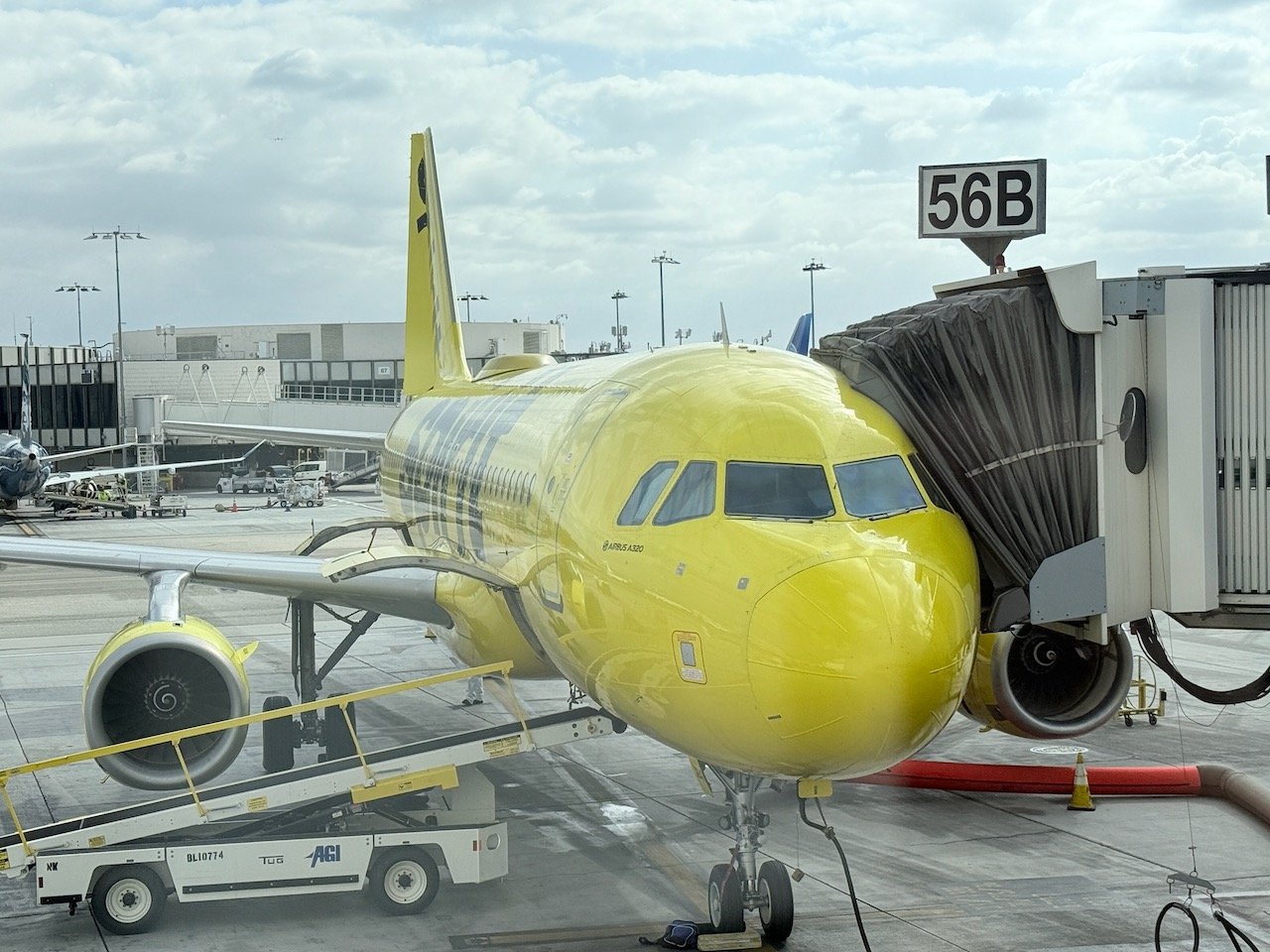
MIRAMAR, FL — The landscape of North American commercial aviation has experienced a seismic and historic disruption following the sudden, overnight cessation of operations by the region’s largest ultra-low-cost carrier. In a dramatic middle-of-the-night maneuver that has sent shockwaves through the global travel industry, Spirit Airlines officially terminated all flight operations, permanently grounding its distinct canary-yellow fleet. The catastrophic Spirit Airlines collapse leaves hundreds of thousands of budget travelers stranded across the United States, Canada, the Caribbean, and Latin America, fundamentally redrawing the economics of consumer air travel.
The operational shutdown, which took effect at 3:00 AM Eastern Time on Saturday, May 2, 2026, was executed with absolute urgency to ensure that all active aircraft safely reached their final destinations before the corporate entity went dark. In an official, bleak statement published on its digital channels, the carrier instructed ticket holders to avoid traveling to local transport hubs, warning that airport kiosks were completely dark. The sudden Spirit Airlines collapse marks the end of a 34-year pioneering run in budget aviation, exposing the deep vulnerabilities of ultra-low-cost business models to modern geopolitical and macroeconomic shocks.
The industry-wide fallout from the Spirit Airlines collapse was felt immediately across major domestic corridors. Industry analysts note that the Spirit Airlines collapse represents the single largest airline failure in the United States in over two decades. As travelers struggle to find alternative bookings, the true structural impact of this historic Spirit Airlines collapse is beginning to emerge, showing how deeply the market relied on cheap air fares.
Part I: Anatomy of a Flight Shockwave — The Mechanics of the Shutdown
To fully grasp the scale of the Spirit Airlines collapse, one must observe the coordinated logistics that brought a major commercial airline to an immediate standstill. The parent organization, Spirit Aviation Holdings Inc., deliberately timed the going-out-of-business directive for the pre-dawn hours to ensure its 114 Airbus A320-family aircraft were securely positioned on airport tarmacs. The final commercial flight under the carrier’s banner, operating from Detroit Metropolitan Wayne County Airport to Dallas/Fort Worth International Airport, landed just past midnight, closing the book on the airline’s operational history and finalizing the Spirit Airlines collapse.
The immediate aftermath of the sudden Spirit Airlines collapse triggered widespread chaos at international transit terminals. Because the company terminated its communication links simultaneously with the operational freeze, thousands of passengers holding morning boarding passes arrived at airports only to find unstaffed ticketing counters. On day one of the Spirit Airlines collapse alone, more than 277 flights were abruptly wiped from schedules, leaving over 50,000 daily passengers stranded. This immediate operational paralysis proved that the Spirit Airlines collapse would cause structural issues throughout the summer travel ecosystem.
+------------------------------------------------------------------------+
|                    SPIRIT AIRLINES COLLAPSE: AT A GLANCE               |
+========================================================================+
|  1. Sudden Operations Ceased --> Effective May 2, 2026 at 3:00 AM ET   |
|  2. Total Flights Canceled  --> 277 Flights Abandoned on Day One       |
|  3. Global Impacted Workforce -> 17,000 Employees Terminated Globally   |
|  4. Fleet Status            --> 114 Aircraft Grounded; Moving to Desert|
+------------------------------------------------------------------------+
|  TOTAL REVENUE LOSS MATRIX  --> $0 Generated Daily Post-Liquidation    |
+------------------------------------------------------------------------+
The financial fallout for consumers caught in the Spirit Airlines collapse is complex and divided by purchasing channel. The carrier announced that automated refunds would be initiated for customers who purchased tickets directly via standard debit or credit cards, offering small relief amid the wider Spirit Airlines collapse.
However, individuals who arranged travel through independent, third-party online travel agencies face an uphill battle, as they must seek recourse through external entities due to the sudden Spirit Airlines collapse.
Furthermore, passengers holding frequent flyer points, promotional vouchers, or loyalty credits have been informed that their assets are frozen, with their ultimate financial value to be determined during the chaotic corporate liquidation process triggered by the Spirit Airlines collapse.
The loss of these loyalty assets has added a layer of consumer frustration to the ongoing Spirit Airlines collapse.
Part II: The Double Bankruptcy and the Failure of Project Soar
While the ultimate shutdown appeared to happen overnight, the Spirit Airlines collapse is the culmination of a multi-year financial struggle marked by severe corporate headwinds and multiple trips to federal bankruptcy courts. The carrier had been operating under severe financial strain since the global pandemic, accumulating over $2.5 billion in total losses without posting a single full-year profit before the Spirit Airlines collapse. The airline’s core structural troubles deepened significantly in January 2024, when a federal judge blocked a proposed $3.8 billion corporate merger with JetBlue Airways, an event that set the stage for the eventual Spirit Airlines collapse.
The blocking of that merger eliminated the carrier’s primary plan to manage its mounting debt, kicking off a series of legal restructurings that ultimately accelerated the final Spirit Airlines collapse. In November 2024, the airline filed its first Chapter 11 bankruptcy, a prearranged restructuring effort designed to convert roughly $795 million of debt into corporate equity, allowing the company to briefly exit court protection in March 2025. However, this legal maneuvering failed to prevent the Spirit Airlines collapse, as operating losses continued to expand through the summer months.
By August 2025, the carrier was forced to return to bankruptcy court for a second time, launching an aggressive operational turnaround plan called Project Soar to avert a total Spirit Airlines collapse. Project Soar sought to stabilize cash reserves by shrinking the active fleet to 76 aircraft, cutting internal staff, and focusing entirely on high-margin domestic routes.
Despite these sweeping cuts, the structural weaknesses within the corporate ledger made it impossible to shield the company from external market disruptions, rendering the Spirit Airlines collapse inevitable.
                 THE FINANCIAL TIMELINE TO LIQUIDATION

     [ Jan 2024: JetBlue Merger Blocked ] -------------------+
                         Federal court kills $3.8B deal,      |
                         trapping Spirit with mounting debt. |
                                                             |
     [ Nov 2024: First Chapter 11 Filing ] <-----------------+
                         Prearranged debt-to-equity shift;
                         briefly exits in March 2025.
                                                             |
     [ Aug 2025: Second Chapter 11 Filing ] -----------------+
                         "Project Soar" slashes fleet size;   |
                         targets a summer 2026 exit plan.    |
                                                             |
     [ May 2026: Total Corporate Collapse ] <----------------+
                         Iran war fuel spike drains all cash;
                         bailout talks fail, causing shutdown.
The failure of Project Soar proved that the structural issues under the hood could not be resolved by simple route optimization, directly leading to the Spirit Airlines collapse. Corporate filings from early 2026 showed minor improvements, but the company remained vulnerable to external economic shocks.
When the broader macroeconomic environment turned hostile, the fragile financial scaffolding collapsed, forcing executive leadership to accept the reality of the impending Spirit Airlines collapse.
Part III: The Geopolitical Catalyst — How the 2026 Iran War Sealed Spirit’s Fate
The definitive catalyst that accelerated the final Spirit Airlines collapse was a sudden, violent flare-up of geopolitical instability in the Middle East. Following coordinated military strikes launched by the United States and Israel against infrastructure inside Iran early in 2026, global commodity markets experienced an immediate and sustained supply shock. The resulting surge in energy pricing hit the aviation industry with brutal force, targeting the single largest variable expense for any commercial airline and guaranteeing the Spirit Airlines collapse.
For an ultra-low-cost carrier operating on razor-thin margins, a sustained spike in fuel prices is a fatal operational hurdle that makes a Spirit Airlines collapse unavoidable. The core business model relies on filling aircraft to maximum capacity using ultra-cheap tickets, while offsetting costs through unbundled ancillary fees.
According to emergency court disclosures filed by Spirit’s legal team during the onset of the Spirit Airlines collapse, the company’s restructuring model was built on the assumption that jet fuel prices would average around $2.24 per gallon throughout 2026.
+-------------------------------------------------------------------------+
|                  JET FUEL PRICE PERFORMANCE MISALIGNMENT                |
+=========================================================================+
|   [Projected Restructuring Cost Target] --> $2.24 / Gallon             |
|   [Post-Conflict Market Price Spike]    --> $4.24 / Gallon             |
|   [Unplanned Operational Expense Surge] --> +$100 Million (March/April) |
+-------------------------------------------------------------------------+
By mid-April 2026, the global supply crunch pushed the market price of jet fuel to an astronomical $4.24 per gallon—nearly double the threshold required for survival, directly triggering the Spirit Airlines collapse. This price expansion added an unplanned $100 million to Spirit’s monthly operating expenses during March and April alone.
This massive drain systematically emptied the airline’s remaining liquid cash reserves, cementing the Spirit Airlines collapse as the company ran completely out of money to purchase fuel.
The energy crisis triggered by the 2026 conflict effectively closed the door on any independent recovery, transforming the threat of a Spirit Airlines collapse into a sudden operational shutdown. Analysts points out that no low-cost business framework could withstand such an intense operational cost increase without massive cash reserves.
As a result, the external oil price spike sealed the fate of the carrier, making the Spirit Airlines collapse a case study in macroeconomic vulnerability.
Part IV: The Failed Bailout and Legal Transition to Liquidation
As cash reserves dwindled toward zero in late April, executive leadership launched a desperate effort to secure a federal rescue package to prevent the Spirit Airlines collapse. Spirit officials entered into confidential, round-the-clock emergency negotiations with the second Trump administration, presenting a detailed proposal for a $500 million emergency cash injection designed to avert the Spirit Airlines collapse. The aviation company argued that a sudden exit from the market would hurt lower-income consumers and reduce competition across major travel corridors.
However, the federal government maintained a strict stance against deploying public funds to rescue a corporate entity that had spent years cycling through restructuring courts, allowing the Spirit Airlines collapse to proceed. U.S. Transportation Secretary Sean Duffy publicly confirmed the breakdown of the emergency talks, noting plainly that the administration did not have half a billion dollars readily available to salvage an unsustainable corporate structure, paving the way for the final Spirit Airlines collapse.
The failure of these federal rescue talks eliminated the carrier’s final source of emergency liquidity, leaving management with no choice but to initiate the Spirit Airlines collapse.
| Operational Restructuring Vector | Pre-Collapse Target Profile | Post-Collapse Liquidation Reality |
| Active Fleet Management | 76 optimized Airbus passenger jets in service. | 114 owned/leased planes permanently grounded. |
| Corporate Payroll Footprint | 17,000 active airline industry workers. | Skeleton crew of 130 professionals for asset wind-down. |
| Passenger Travel Options | Ultra-low-cost unbundled fares across 80+ cities. | Zero active routes; market shared by legacy rivals. |
Three days after the initial shutdown, on Tuesday, May 5, 2026, Spirit’s legal counsel appeared before U.S. Bankruptcy Judge Sean Lane to request immediate authorization to transition the corporate estate into a rapid liquidation framework, formalizing the legal realities of the Spirit Airlines collapse. The court granted swift approval for the request, noting that any delay would create operational chaos.
The carrier is now systematically dismantling its entire business in the wake of the Spirit Airlines collapse, selling off physical infrastructure—including its 28 wholly owned Airbus airframes and 18 spare turbine engines—to generate liquid cash for its secured creditors.
Part V: The Desert Fleet and the Grim Future for Budget Travelers
The long-term effects of the Spirit Airlines collapse are already reshaping the consumer travel experience across North American airspace. In the days following the grounding, aviation logistics firms began the process of removing dozens of leased, canary-yellow commercial aircraft from major metropolitan hubs, a visual reminder of the total Spirit Airlines collapse. Specialized ferry pilots are actively flying these empty jetliners across domestic airspace, delivering them to remote storage yards in the Arizona desert, where they will sit as physical monuments to the Spirit Airlines collapse.
For the 17,000 airline employees who suddenly lost their livelihoods, the Spirit Airlines collapse represents a profound personal and professional disruption. While competing legacy carriers have reached out to absorb displaced flight crews, thousands of corporate, administrative, and ground support staff face a highly uncertain employment environment due to the Spirit Airlines collapse. The sudden termination of these specialized jobs highlights the human cost associated with the broader Spirit Airlines collapse.
               THE MACROECONOMIC IMPACT ON CONSUMER FARES

     [ Pre-Collapse Pricing Grid ] --------------------------+
                         Abundant ultra-low-cost seating      |
                         forcing legacy price matching.      |
                                                             |
     [ Spirit Market Exit ] <--------------------------------+
                         Removal of 50,000 daily budget seats
                         creates supply void.

     [ Post-Collapse Fare Inflation ] -----------------------+
                         Rival budget and legacy airlines    |
                         raising prices on uncompeted routes.|
Concurrently, budget-conscious consumers are facing immediate financial pain as a direct result of the Spirit Airlines collapse. The sudden removal of Spirit’s ultra-low-cost capacity has eliminated the primary downward pressure on domestic airfares, enabling surviving legacy carriers to raise prices, compounding the consumer impact of the Spirit Airlines collapse. In the weeks leading up to the summer travel season, travelers have reported immediate price spikes on routes previously served by Spirit, proving that the Spirit Airlines collapse will drive long-term fare inflation.
As the final skeleton crew of 130 corporate officers oversees the systematic distribution of Spirit’s physical remains, the broader travel market is confronting a permanent structural shift brought on by the Spirit Airlines collapse. The historic Spirit Airlines collapse has proved that in an era marked by intense geopolitical volatility, surging energy markets, and rigid regulatory frameworks, the ultra-low-cost aviation model may no longer possess the financial insulation required to survive.
The era of cross-country flights priced lower than a standard train ticket has drawn to an end, leaving behind an industry defined by higher base costs, reduced consumer choice, and the quiet desert graveyard of the bright yellow planes that once democratized the skies, bringing a final, quiet close to the monumental Spirit Airlines collapse.
Official Liquidation Coverage: Spirit Airlines shuts down as company says it can’t keep up with higher oil prices | Associated Press
Social Connect :

