

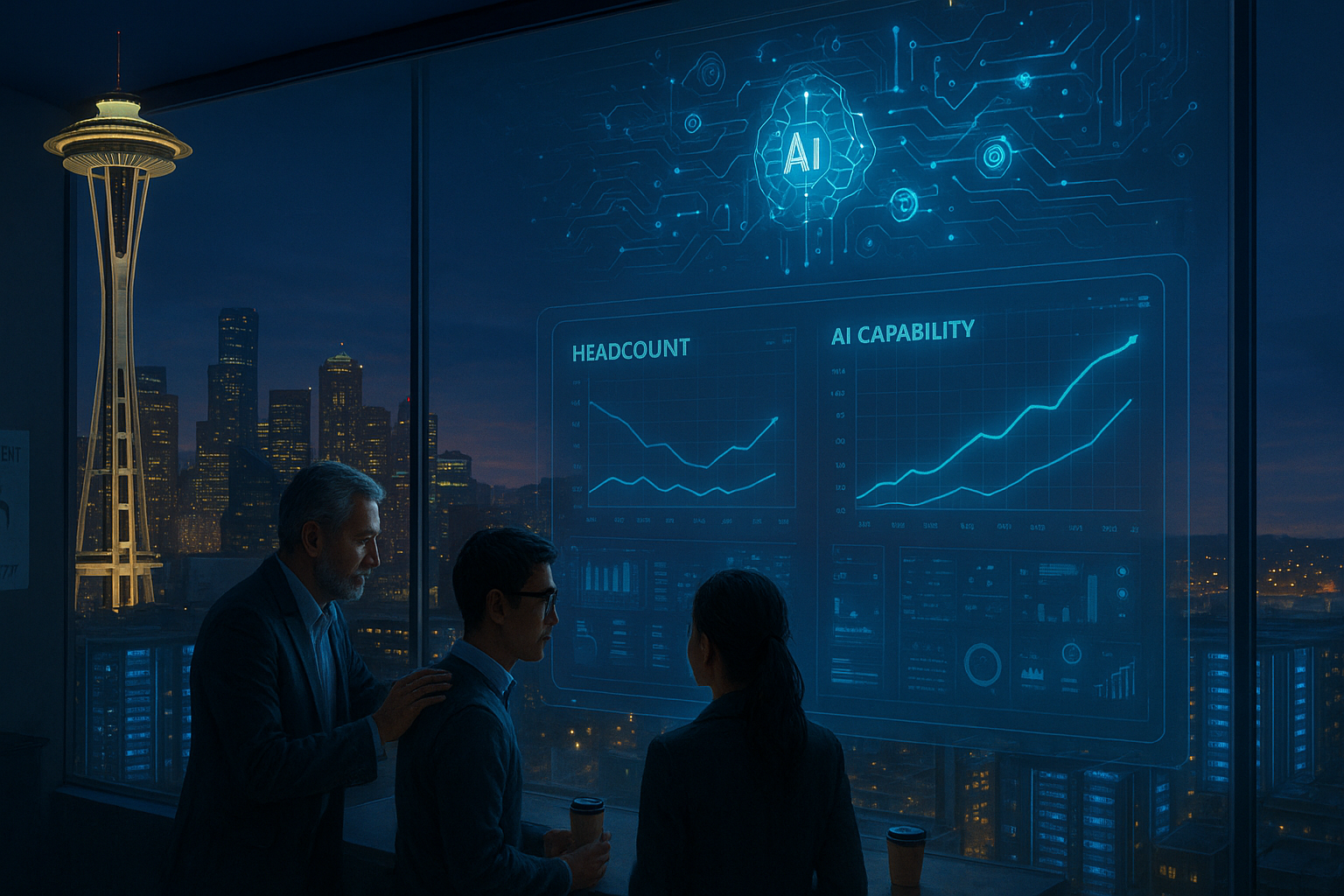
The Corporate AI Shift: Inside Meta’s Massive Workforce Layoffs and Realignment
MENLO PARK, CA — The global technology sector is witnessing an unprecedented architectural transformation as the race for artificial intelligence dominance forces the world’s largest digital platforms to completely reinvent their operational design. In the most aggressive and sweeping move of its kind, Meta Platforms Inc. has officially initiated a monumental restructuring program that relies heavily on sweeping workforce layoffs. This high-stakes strategy, unsealed via an internal memo authored by Chief People Officer Janelle Gale on Monday, May 18, 2026, represents a fundamental shift away from legacy operational frameworks in favor of a lean, automated engineering model that eliminates roughly 10% of the company’s global staff.
The impending workforce layoffs are not merely a cost-cutting response to temporary macroeconomic pressures. Instead, these targeted workforce layoffs serve as the foundation for a radical organizational pivot. In tandem with the execution of these global workforce layoffs, Meta is aggressively launching a massive reallocation plan to migrate roughly 7,000 existing employees out of traditional operational divisions and directly into newly formed, high-priority AI workflow initiatives.
By simultaneously pruning its core headcount through these painful workforce layoffs, deleting 6,000 unfulfilled open positions, flattening its middle-management layers, and injecting thousands of specialized personnel into its advanced engineering wings, the social media titan is proving that modern workforce layoffs are being used to build an automated, ultra-efficient enterprise.
Part I: Anatomy of a Tech Realignment — Deconstructing the 10% Cuts
To fully comprehend the operational impact of Meta’s latest corporate maneuver, one must examine the precise timeline and internal mechanics governing these massive workforce layoffs. According to leaked internal documents corroborated by the company, the global workforce layoffs will be executed in three distinct, synchronized batches. Employees impacted by these workforce layoffs across three major geographical regions will receive formal termination notices via their corporate and personal communication channels beginning at 4:00 AM local time on Wednesday, May 20, 2026.
To minimize workplace disruption during the execution of the workforce layoffs, Meta executives have instructed all North American corporate staff to perform their duties remotely on the day the notices are finalized.
+------------------------------------------------------------------------+
|                      META MAY 2026 WORKFORCE BLUEPRINT                 |
+========================================================================+
|  1. Core Headcount Cuts    --> WORKFORCE LAYOFFS (~8,000 Positions)    |
|                                Severance: 16 weeks base + 2 weeks/year.|
|  2. Reallocation Mandate   --> 7,000 EMPLOYEES REASSIGNED              |
|                                Migrated directly to AI workflow units. |
|  3. Open Requisitions      --> 6,000 POSITIONS CANCELLED               |
|                                Total freeze on traditional open roles. |
+------------------------------------------------------------------------+
|  TOTAL STRUCTURAL IMPACT --> 14,000 Positions Eliminated or Overhauled |
+------------------------------------------------------------------------+
For the departures triggered by these workforce layoffs, Meta is deploying an extensive severance protocol intended to cushion the transition for affected personnel within the United States. Terminated employees caught in the wave of workforce layoffs are slated to receive a baseline package comprising 16 weeks of standard base salary, supplemented by an additional two weeks of compensation for every completed year of tenure at the firm. International packages for those affected by the workforce layoffs will be adjusted to comply with localized labor laws and regional regulatory frameworks, though the core financial parameters are expected to remain consistent.
However, the real story lies in how these sudden workforce layoffs interact with the company’s long-term talent acquisition strategy. By erasing 6,000 active open listings from its global recruitment database alongside the active workforce layoffs, Meta is effectively freezing traditional corporate growth.
When combining the 8,000 active workforce layoffs with the 6,000 permanently discarded roles, the total structural footprint of this optimization wave extends to 14,000 total corporate positions. This drastic contraction proves that the era of scaling tech companies through sheer human volume has drawn to a close, with corporate workforce layoffs paving the way for automated systems to achieve extreme productivity.
Part II: The Death of Middle Management and the Flat Organization
A primary objective of these historic workforce layoffs is the systematic dismantling of industrial middle management. For years, major technology enterprises accumulated dense layers of intermediate directors, team leads, and program managers whose primary responsibilities centered on oversight, inter-departmental communication, and the cross-validation of software deliverables. By implementing these strategic workforce layoffs, CEO Mark Zuckerberg is actively realizing his public critique of these multi-layered hierarchies, noting that an excess of managerial tiers slows down production cycles and insulates executive leadership from frontline software development.
Under the new operational design principles detailed by Janelle Gale, the current wave of workforce layoffs is being used to aggressively enact a “flatter team structure” that systematically removes these intermediate organizational buffers. Software engineering teams remaining after the workforce layoffs will transition to a decentralized model where individual contributors report directly to senior technical directors, eliminating the traditional web of middle managers.
               THE ARCHITECTURAL FLATTENING OF CORPORATE TEAMS

     [ Legacy Management Tier ] -----------------------------+
                         Multiple layers of middle managers  |
                         handling reporting and oversight.   |
                                                             |
     [ Automated Workflow Inversion ] <----------------------+
                         Managerial oversight replaced by
                         automated system telemetry.

     [ Flat AI Engineering Grid ] ---------------------------+
                         Direct integration between teams    |
                         and advanced workflow systems.      |
The removal of these managerial nodes via targeted workforce layoffs allows the organization to achieve dual objectives. Financially, the workforce layoffs purge some of the most expensive non-producing payroll items from the corporate ledger. Operationally, the vacancy left by the workforce layoffs clears the path for advanced software tools to take over routine administrative tasks, tracking metrics, and project mapping.
The traditional responsibilities of mid-level managers—such as tracking task completion, resource allocation, and timeline auditing—are being entirely absorbed by integrated internal software frameworks following the workforce layoffs. By shifting from human-driven bureaucracy to automated system tracking, the engineering groups retained after the workforce layoffs can test, iterate, and deploy consumer-facing features at a fraction of the historical timeline.
Part III: Inside the 7,000-Employee AI Workflow Migration
While the immediate departures caused by the workforce layoffs have captured global financial headlines, the internal reallocation of 7,000 core staff members directly into specialized engineering units represents the true operational engine of this strategy. These internal reassignments, happening in the shadow of the workforce layoffs, represent a profound pivot toward restructuring how software is conceived, authored, and optimized across the entire app ecosystem. Rather than developing isolated features for standalone applications, employees spared from the workforce layoffs will be embedded into cross-functional teams tasked with rebuilding the foundational infrastructure of Meta’s business.
This massive internal migration following the workforce layoffs is structurally divided into two primary institutional pillars designed to overhaul core operations:
1. The Applied Engineering Initiative
This group is tasked with integrating predictive software intelligence directly into the underlying codebases of Facebook, Instagram, WhatsApp, and Threads. By embedding advanced algorithmic logic into the core network architecture, this initiative—boosted by personnel shifted away from departments impacted by the workforce layoffs—aims to optimize backend server operations, automate dynamic content delivery systems, and establish hyper-efficient database querying mechanisms. The goal is to create a self-optimizing application ecosystem that automatically adjusts computing resource allocation based on global user traffic patterns without requiring manual engineering interventions.
2. The Agent Transformation Accelerator
This division is focused entirely on automating the company’s internal corporate workflows, product support networks, and international enterprise business interactions. Personnel migrated into this accelerator during the company-wide workforce layoffs will build and train highly specialized, domain-specific systems capable of managing complex enterprise tasks. These tools will handle everything from automated codebase bug detection and patch deployment to managing real-time global customer support matrices and optimizing digital advertising delivery pipelines for millions of enterprise clients.
| Restructuring Vector | Historical Human Framework | Next-Gen Automated Framework |
| Software Quality Engineering | Manual code review, regression testing, and multi-stage managerial sign-offs. | Automated system auditing, predictive bug isolation, and self-healing repositories. |
| Ad Delivery Optimization | Human account managers optimizing targeting matrices for major enterprise clients. | Advanced predictive algorithms managing real-time ad placement and performance adjustments. |
| Enterprise Technical Support | Tiered human support centers handling complex integration and billing anomalies. | Domain-specific virtual agents resolving advanced technical queries natively. |
By reallocating nearly 10% of its retained workforce toward these initiatives while executing dramatic workforce layoffs, Meta is actively turning its own internal operations into a testing ground for large-scale automation. The company is betting that a software engineer supported by an advanced, automated workspace can match or exceed the productivity of a traditional multi-person development team, justifying the severe nature of the workforce layoffs.
Part IV: The $145 Billion Infrastructure Bet
To understand why Meta is willing to absorb severe internal disruption, crater employee morale, and face public scrutiny over thousands of sudden workforce layoffs, one must look at the staggering capital requirements of the current technological landscape. During recent quarterly financial presentations, executive leadership revealed that the company’s projected capital expenditure for the 2026 fiscal year has reached an astronomical $145 billion. This unprecedented capital deployment is channeled directly into acquiring cutting-edge hardware, constructing massive modular data centers, and securing massive clouds to scale next-generation computing matrices.
A primary example of this aggressive capital allocation occurred in early 2026, when Meta expanded its long-term infrastructure partnership with AI cloud provider CoreWeave, signing a massive multi-year contract extension worth an estimated $21 billion. This agreement brought Meta’s total active contracts with CoreWeave to a staggering $35 billion, ensuring long-term access to specialized hardware clusters through December 2032.
+-------------------------------------------------------------------------+
|                  META 2026 CAPITAL SPENDING DISTRIBUTION                |
+=========================================================================+
|   [Hardware Cluster Acquisition] --> Specialized Computing Matrices    |
|   [Data Center Infrastructure]   --> Modular Next-Gen Processing Facilities|
|   [Cloud Capacity Contracts]    --> $35B CoreWeave Long-Term Allocation   |
|   [Internal Workflow Overhaul]   --> Restructuring Retained Core Talent  |
+-------------------------------------------------------------------------+
When an enterprise commits $145 billion annually to computing infrastructure, it creates an intense financial strain on the corporate ledger that often results in extensive workforce layoffs. To appease Wall Street and protect corporate margins, executive leadership must find ways to offset these massive hardware investments.
The strategy chosen by Meta is an explicit exchange of human capital for physical computing power, with workforce layoffs acting as the primary tool. By reducing its traditional payroll liabilities through global workforce layoffs and eliminating middle-management overhead, the company can free up billions of dollars in liquid capital to fund its insatiable appetite for physical data infrastructure.
Part V: Internal Friction, Workplace Surveillance, and the Road Ahead
The speed and aggressiveness of this structural shift have triggered unprecedented internal friction across Meta’s corporate campuses. The announcement of the May 20 workforce layoffs, combined with reports that leadership is already planning potential secondary downscaling waves for late summer and autumn that could eventually impact up to 20% of the total workforce, has caused internal morale to plummet.
On internal collaboration platforms like Workplace, employees have expressed intense frustration regarding a prolonged state of structural ambiguity fueled by the threat of future workforce layoffs. The tension is further compounded by a widespread sense that the company is using its remaining workforce to train the very automated systems designed to eventually execute further workforce layoffs.
Adding fuel to this internal fire is a growing employee backlash against advanced workplace surveillance mechanisms deployed across the firm’s software environments to monitor teams spared from the workforce layoffs. Over 1,000 Meta engineers recently signed an internal petition protesting the implementation of automated mouse-tracking software and real-time keystroke telemetry systems.
Management has defended these systems as vital performance monitoring tools required to maintain engineering velocity following the workforce layoffs. However, internal critics assert that this data is actually being captured to feed internal models designed to map and automate human programming behaviors, effectively forcing current engineers to program their own automated successors and trigger subsequent workforce layoffs.
As the corporate notifications roll out across the globe on Wednesday morning, the technology sector will be watching the execution of these workforce layoffs with intense interest. Meta’s strategy represents a clean break from the traditional Silicon Valley corporate handbook.
If Mark Zuckerberg’s $145 billion infrastructure bet and the workforce layoffs successfully drive product innovation and protect corporate profit margins, it will establish a new structural blueprint for the entire technology industry.
However, if the elimination of thousands of roles through aggressive workforce layoffs and the dismantling of traditional team structures result in systemic system instability, lost engineering institutional knowledge, and a permanent collapse in employee morale, Meta may find that substituting core human talent with computational automation yields diminishing returns that no amount of workforce layoffs can fix.
Corporate Restructuring Coverage: Meta cuts workers across Instagram, WhatsApp, Reality Labs | Reuters
Social Connect :

