

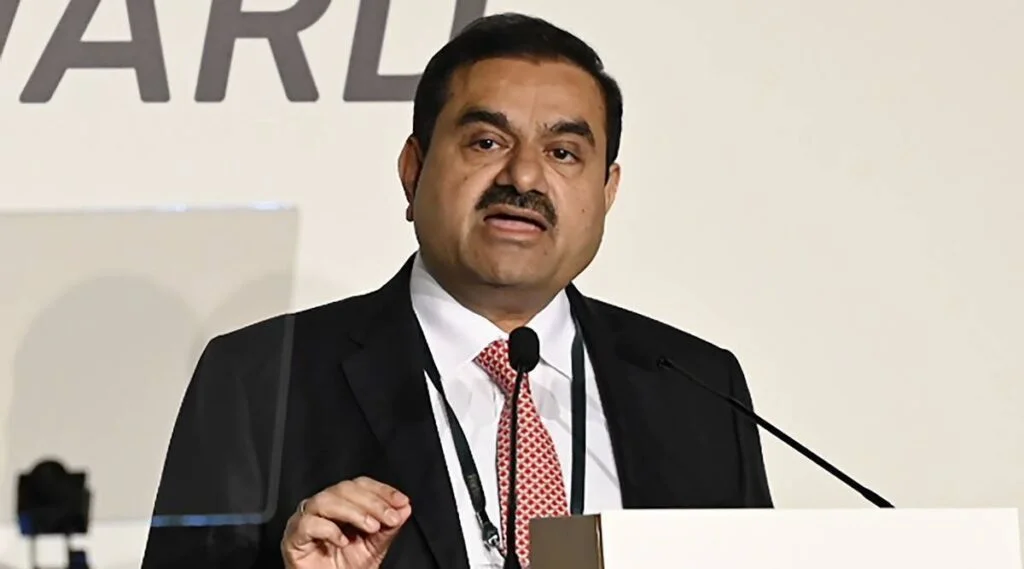
Absolute Dismissal: U.S. Prosecutors Permanently Drop All Criminal Fraud Charges Against Billionaire Gautam Adani
NEW YORK, NY — In a stunning and definitive resolution to one of the most high-profile corporate white-collar legal battles in recent history, the United States Department of Justice (DOJ) has moved to permanently dismiss all criminal fraud and conspiracy charges against Indian billionaire businessman Gautam Adani. The monumental filing, submitted on May 18, 2026, in the United States District Court for the Eastern District of New York, brings a complete and irreversible closure to a multi-billion-dollar legal dispute. The original charges against Gautam Adani had previously rattled global financial markets, created diplomatic friction, and threatened to derail the international expansion strategy of one of Asia’s largest industrial conglomerates.
The federal prosecution team’s decision to drop the indictment against Gautam Adani with prejudice—meaning the specific criminal charges cannot be refiled or reopened by the American government—marks a dramatic U-turn from the sweeping indictments first unsealed in late 2024. The sudden legal resolution for Gautam Adani transpired in parallel with a series of coordinated global settlements across multiple U.S. regulatory bodies, including a $275 million civil resolution with the U.S. Department of the Treasury and an $18 million aggregate settlement with the Securities and Exchange Commission (SEC).
Furthermore, the legal climax follows heavily scrutinized corporate presentations indicating that the corporate network of Gautam Adani is fully prepared to execute a massive, previously announced $10 billion investment strategy directed squarely into the modernization of vital United States infrastructure projects. The strategic economic maneuvers orchestrated by Gautam Adani underscore a broader intent to deepen ties with American industrial sectors.
Part I: The Genesis and Fall of the Multi-Million Dollar Indictment
The legal saga surrounding Gautam Adani originally captured global headlines in November 2024, when federal prosecutors in Brooklyn secured a grand jury indictment against the industrial titan, his nephew Sagar Adani, and several senior executives affiliated with Adani Green Energy Ltd. The original core of the Department of Justice’s criminal case against Gautam Adani was rooted in severe anti-corruption and anti-fraud statutes. Authorities alleged that between 2020 and 2024, senior executives under the leadership of Gautam Adani orchestrated an elaborate, $250 million bribery scheme directed toward Indian government officials.
According to the initial 2024 filings, these alleged payments were designed to secure highly lucrative, multi-gigawatt solar energy supply contracts with state-owned distribution companies, which were projected to yield more than $2 billion in post-tax profits over a multi-decade operational lifespan for the firms controlled by Gautam Adani.
+------------------------------------------------------------------------+
|                      ADANI U.S. LEGAL CASES DISPOSITION                |
+========================================================================+
|  1. DOJ Criminal Court     --> DISMISSED WITH PREJUDICE                |
|                                Permanent closure; no future prosecution. |
|  2. SEC Civil Claims       --> SETTLED VIA CONSENT DECREE               |
|                                $6M penalty paid without admitting fault. |
|  3. Treasury (OFAC) Probe  --> RESOLVED WITH TREASURY SETTLEMENT        |
|                                $275M paid to close LPG sanctions review. |
+------------------------------------------------------------------------+
|  ECONOMIC OUTCOME: Runway cleared for $10B U.S. Investments            |
+------------------------------------------------------------------------+
The primary mechanism that brought this conduct under the territorial jurisdiction of United States authorities was the method by which the energy projects of Gautam Adani were financed. Federal prosecutors asserted that while the physical solar infrastructure was situated entirely within the Indian subcontinent, the capital utilized to fund the initiatives was raised, in significant part, from American institutional investors through dollar-denominated green bond offerings on Wall Street.
The DOJ argued that by issuing formal bond prospectuses that explicitly omitted the existence of the alleged bribery scheme, Gautam Adani and his co-defendants had fundamentally misled American financial markets, thereby committing systemic wire fraud, securities fraud, and conspiracy.
For over 17 months, the shadow of these severe criminal allegations hung heavily over the conglomerate’s financial operations. International credit rating agencies placed several entities linked to Gautam Adani on negative outlooks, international capital access tightened, and political opposition parties within India seized upon the American indictment to allege widespread corporate governance failures.
Throughout the entire process, however, Gautam Adani maintained a fierce defense, repeatedly labeling the allegations as completely baseless and aggressively mobilizing an elite team of top-tier American defense firms to dismantle the prosecution’s jurisdictional and evidentiary framework.
Part II: Inside the Strategic Defense and Jurisdictional Challenges
The turning point in the case came when the defense team representing Gautam Adani, led by high-profile white-collar defense attorneys including Robert Giuffra Jr. of Sullivan & Cromwell, launched a formidable counter-offensive in federal court. In comprehensive legal submissions presented before U.S. District Judge Nicholas Garaufis, the defense systematically picked apart the prosecution’s foundational theories.
The core of the defense strategy rested on the doctrine of extraterritoriality, arguing that the U.S. government was committing a flagrant act of regulatory overreach by attempting to apply American criminal statutes to foreign nationals for conduct that occurred almost exclusively outside the borders of the United States.
+-------------------------------------------------------------------------+
|                  CORE PILLARS OF LEGAL DEFENSE FOR GAUTAM ADANI         |
+=========================================================================+
|   [Extraterritoriality] --> Alleged conduct occurred entirely in India  |
|                             between foreign nationals and officials.    |
|   [Lack of US Linkage]  --> Securities were not publicly traded on U.S. |
|                             exchanges; no documented investor losses.  |
|   [Statutory Recasting] --> Argued that unviable anti-bribery claims     |
|                             were improperly forced into fraud statutes. |
+-------------------------------------------------------------------------+
The defense team’s 100-page presentations to senior Department of Justice officials demonstrated that the securities issued by the green energy arm of Gautam Adani were not listed on any public American stock exchange, but were instead sold through private placements to sophisticated global institutional buyers. Furthermore, the defense proved that all financial obligations attached to the green bonds had been continuously met, resulting in zero actual financial losses for any U.S.-based investor.
The legal filings forcefully asserted that the SEC and DOJ were attempting to “recast” unviable overseas anti-bribery allegations into domestic securities fraud claims.
Crucially, the defense explicitly established that Gautam Adani had never authorized the issuance of any misleading bond statements and that there was a complete absence of direct evidentiary links connecting the chairman to the operational activities of local intermediaries in India. Faced with these compounding hurdles and a distinct lack of clear U.S. territorial linkages, federal prosecutors ultimately concluded that the criminal allegations against Gautam Adani could not be sustained at a standard capable of securing a conviction at trial.
Part III: The $10 Billion Infrastructure Pledge and Enforcement Shifts
As news of the impending dismissal began to filter through corporate and legal circles, international media outlets shed light on a critical presentation slide shown during high-stakes corporate meetings between the legal representatives of Gautam Adani and senior justice officials in Washington. The slide highlighted a massive, pre-existing corporate capital expenditure plan wherein the group headed by Gautam Adani pledged to inject $10 billion directly into the United States economy, an industrial commitment projected to create more than 15,000 highly skilled jobs across the domestic energy security and logistics sectors.
While some external market commentators initially attempted to frame this multi-billion-dollar commitment as an “unusual offer” constructed to barter for legal leniency, a review of corporate records reveals that the $10 billion investment blueprint was actually a long-standing public objective. Gautam Adani had publicly announced this strategic infrastructure commitment via global communication channels immediately following the U.S. presidential election in November 2024, emphasizing his conglomerate’s desire to partner with the incoming administration to fortify transatlantic energy supply chains.
               THE INVERSION OF THE CORPORATE CAPITAL TIMELINE

     [ Nov 2024: Public Pledge ] ---------------------------+
                         Gautam Adani publicly commits $10B |
                         to U.S. infrastructure.            |
                                                            |
     [ 2025: Legal Gridlock ] <-----------------------------+
                         Criminal indictment freezes the
                         deployment of corporate capital.

     [ May 2026: Dismissal ] -------------------------------+
                         DoJ drops charges with prejudice;  |
                         runway cleared for investment.     |
The defense team successfully argued that the continuation of an unviable, jurisdictionally flawed criminal indictment acted as a severe regulatory roadblock, freezing the deployment of this massive capital pool. Prosecutors explicitly stated in separate filings that the potential corporate investment played no formal role in the legal mechanics of their prosecutorial evaluation.
However, legal experts note that the resolution reflects a broader, systemic shift in enforcement priorities under the current executive administration. The decision to permanently drop the case against Gautam Adani echoes a growing trend in Washington toward practical white-collar enforcement, characterized by a distinct preference for resolving complex cross-border corporate disputes through comprehensive civil monetary penalties and structured regulatory compliance remediation rather than pursuing long, legally fragile criminal trials against foreign executives.
Part IV: Global Regulatory Settlements and Financial Closure
The total termination of the criminal case against Gautam Adani was further secured by a series of exhaustive financial settlements that cleared the conglomerate’s remaining regulatory ledger in the United States. Chief among these resolutions was a separate, major settlement finalized with the Treasury Department’s Office of Foreign Assets Control (OFAC). The flagship enterprise of Gautam Adani agreed to execute a $275 million civil penalty to permanently resolve an intense regulatory probe into historical liquefied petroleum gas (LPG) import operations managed through a Dubai-based supplier between late 2023 and mid-2025.
The OFAC investigation centered on whether these energy shipments inadvertently violated complex secondary U.S. sanctions targeting Iranian petroleum products. While the Treasury Department labeled the apparent compliance oversights as egregious, they explicitly commended the firm owned by Gautam Adani for extending “extensive, proactive cooperation” throughout the corporate audit and implementing robust, non-monetary compliance infrastructure to prevent future supply chain vulnerabilities.
| Regulatory Body | Settlement Quantum | Admission of Fault | Mandatory Remedial Action |
| Department of Justice (DOJ) | $0 (Dismissed With Prejudice) | No Admission | Complete termination of the criminal fraud indictment against Gautam Adani. |
| Department of the Treasury (OFAC) | $275 Million | No Admission | Implementation of enhanced, independent supply chain tracking systems. |
| Securities & Exchange Commission (SEC) | $18 Million (Aggregate Group) | No Admission | Permanent restraint from future U.S. Securities Act disclosure violations. |
Simultaneously, the civil litigation initiated by the Securities and Exchange Commission was brought to an amicable conclusion. Under the terms of the consent decrees submitted for judicial approval, Gautam Adani agreed to a personal civil monetary penalty of $6 million, while Sagar Adani agreed to a separate $12 million penalty.
Crucially, both executives entered into these agreements under standard corporate consent terms, explicitly neither admitting nor denying any of the SEC’s specific fraud allegations. By utilizing this dual-pronged civil settlement approach, Gautam Adani managed to completely neutralize his legal exposures in the United States without creating any adverse legal precedents or binding admissions of wrongdoing that could be weaponized in domestic Indian courts or by international regulators.
Part V: The Global Horizon for the Adani Conglomerate
With the formal removal of the American criminal indictment, the structural hurdles that had constrained the international fundraising operations of Gautam Adani have effectively dissolved overnight. The complete dismissal of the fraud charges with prejudice provides an unshakeable level of legal certainty that will allow Gautam Adani to aggressively return to Western debt markets, secure favorable refinancing rates for his capital-intensive green energy projects, and resume his ambitious cross-border expansion.
The resolution is already triggering an immediate, powerful rally across the publicly traded equities of Gautam Adani on the Bombay Stock Exchange (BSE) and the National Stock Exchange (NSE) in India, restoring tens of billions of dollars in combined market capitalization that had been erased during the initial wave of legal panic.
The definitive closure of the U.S. case also carries profound domestic political implications within India. For nearly two years, the legal troubles of Gautam Adani in New York served as the primary political weapon for opposition coalitions, who frequently used the American indictment to allege that the ruling administration maintained an improper relationship characterized by crony capitalism with the billionaire.
By achieving a total, prejudice-backed dismissal from the United States Department of Justice, Gautam Adani has effectively neutralized this long-running domestic narrative, framing the ultimate collapse of the American case as a total vindication of his conglomerate’s corporate integrity and compliance ethics.
As the corporate task forces under Gautam Adani shift their focus from high-stakes courtroom litigation back to physical industrial execution, preparation is already underway to fulfill the historic $10 billion infrastructure development plan across the United States. The massive capital injection is expected to target critical bottlenecks in America’s commercial port systems, regional green hydrogen distribution networks, and grid-scale renewable energy storage facilities.
By successfully navigating the treacherous waters of the American federal judicial system and emerging with his corporate empire entirely intact, Gautam Adani has not only secured his personal liberty but has firmly cemented his position as an indispensable, globally integrated titan of modern industrial infrastructure.
For more:- DOJ moves to drop charges against Indian billionaire Gautam Adani | Politico
Social Connect :

