

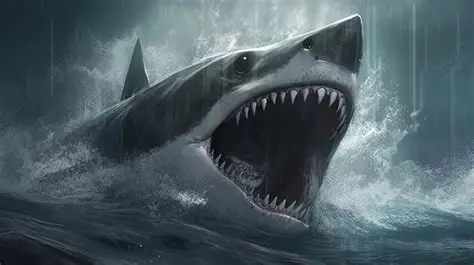
TRAGEDY ON THE REEF: FATAL ATTACK NEAR KENNEDY SHOAL SPARKS AGGRESSIVE MARINE SAFETY OVERHAUL IN AUSTRALIA
CAIRNS, AUSTRALIA — The idyllic, turquoise waters of Far North Queensland have become the center of a profound national tragedy and an intense biosecurity debate following a horrific marine encounter over the weekend. A 26-year-old Australian marine biologist and passionate conservationist was fatally mauled by a large apex predator while conducting routine ecological surveys near Kennedy Shoal, a remote coral formation situated within the southern maritime boundaries of the Great Barrier Reef Marine Park.
The fatal shark strike, which occurred late Saturday afternoon, has sent shockwaves through the regional tourism industry and prompted emergency marine safety actions across Australia’s northeastern coastline.
The victim, identified by Queensland Police as 26-year-old Julian Harrison, was part of an independent four-person research team documenting coral bleaching patterns when the predatory encounter occurred. According to harrowing accounts provided by his colleagues, Harrison was preparing to re-enter the research vessel following a standard, shallow-water dive when an unidentified, large shark species emerged from the deep channel bordering the reef shelf.
Despite immediate, heroic extraction efforts by his diving partner and the rapid application of military-grade tourniquets on board, Harrison succumbed to catastrophic blood loss before emergency medical helicopters could reach the remote marine coordinates.
Part I: The Geography of Kennedy Shoal and Apex Predator Habitats
Kennedy Shoal is a distinct, largely isolated coral structure located approximately 30 kilometers off the coast of Cardwell, positioned within the high-biodiversity waters of the Rockingham Bay region. This particular geographic matrix features a shallow coral flat that drops off sharply into a deep-water shipping channel, creating a natural funnel for large marine life.
Oceanographers note that these underwater drop-offs are active hunting grounds where a transient shark population will routinely intercept schools of migratory pelagic fish, making the area inherently high-risk for human divers during specific times of the year.
                  +----------------------------------+
                  |  KENNEDY SHOAL GEOGRAPHIC MATRIX |
                  +----------------------------------+
                                   |
         +-------------------------+-------------------------+
         |                                                   |
         v                                                   v
[Shallow Coral Flat: Survey Zone]               [Deep-Water Channel: Drop-off]
Extreme biodiversity; low-visibility            Apex predator highway; high transient
shallows ideal for reef ecosystem studies.       shark activity during pelagic migrations.
Marine scientists tracking Apex predator patterns along the Queensland coast emphasize that Kennedy Shoal has historically recorded elevated levels of wildlife activity. The confluence of seasonal water temperature changes and the annual migration of baitfish creates a highly competitive feeding environment.
In such settings, an aggressive shark can mistake a human diver, wearing a dark neoprene wetsuit and moving near the water’s surface, for a distressed seal or a large sea turtle. This behavioral reality underpins many of the tragic encounters recorded along the coast.
Following the initial attack, Queensland Surf Lifesaving units and drone surveillance teams were deployed to map the immediate waters around the shoal. Aerial footage confirmed the presence of several large predatory species, including tiger sharks and bull sharks, moving through the deep-water channels adjacent to the research grid.
The presence of these apex predators has forced an absolute, indefinite suspension of all recreational diving, commercial snorkeling, and marine research activities within a 50-kilometer radius of the incident hub, as authorities work to determine whether a single, resident shark was responsible for the unprovoked strike.
Part II: Emergency Response and Technical Timeline
The operational timeline compiled by the Australian Maritime Safety Authority (AMSA) illustrates the extreme challenges of executing a critical medical evacuation in the remote, outer reaches of the reef. The initial emergency distress beacon was activated by the research vessel’s captain at exactly 3:42 p.m. AEST, moments after Harrison was pulled from the water.
The crew’s immediate medical log records that the diver sustained extensive, irreversible trauma to his lower extremities, consistent with a high-velocity shark bite from an animal estimated to be over four meters in length.
[TACTICAL MEDICAL EVACUATION TIMELINE]
┌───────────────────────┬──────────────────────────────────┐
│ 3:42 p.m. AEST        │ Distress beacon activated; crew applies trauma tourniquets. │
├───────────────────────┼──────────────────────────────────┤
│ 3:55 p.m. AEST        │ CQ Rescue helicopter dispatched from regional base.          │
├───────────────────────┼──────────────────────────────────┤
│ 4:32 p.m. AEST        │ On-board cardiac arrest recorded due to severe blood loss.    │
├───────────────────────┼──────────────────────────────────┤
│ 4:48 p.m. AEST        │ Flight paramedics arrive on scene; victim pronounced dead.   │
└───────────────────────┴──────────────────────────────────┘
The vessel’s crew, trained in advanced wilderness first aid, worked frantically to control the bleeding using specialized trauma kits, while navigating the vessel toward a clearer extraction zone. At 3:55 p.m., a specialized rescue helicopter was dispatched from its regional base, carrying a dedicated team of critical care flight paramedics.
However, the vast physical distance between the mainland emergency infrastructure and the outer reef shelf meant the flight transit time exceeded forty-five minutes, a critical window when dealing with arterial trauma caused by a massive shark strike.
As the helicopter arrived over the research vessel at 4:41 p.m., winching operations were immediately commenced despite choppy sea conditions. Paramedics who boarded the vessel found the young scientist in full cardiac arrest, brought on by profound hypovolemic shock.
Despite executing advanced life support protocols and administering emergency blood transfusions on the deck of the vessel, the medical team was unable to restore a heartbeat. Harrison was officially pronounced dead on site at 4:48 p.m., turning a complex rescue mission into a formal forensic and coronial investigation.
Part III: The Victim and the Scientific Context
The loss of Julian Harrison has deeply impacted the close-knit scientific community of northern Queensland. A brilliant graduate of James Cook University, Harrison had dedicated his brief but impactful career to understanding the symbiotic relationships within coral ecosystems.
Ironically, his academic publications included extensive field studies on how a healthy shark population acts as a critical stabilizer for reef health, keeping mid-level predatory fish from overpopulating and devastating vital herbivorous fish stocks.
               [ECOLOGICAL REEF SYMBIO PIPELINE]

   Apex Predators (Shark Population) Maintain Marine Balance
                                      │
                                      ▼
   Regulation of Mid-Level Carnivores (Groupers & Snappers)
                                      │
                                      ▼
   Protection of Herbivorous Fish (Parrotfish & Surgeonfish)
                                      │
                                      ▼
   Algae Suppression ───> Sustainable Coral Growth & Regeneration
Harrison’s colleagues emphasize that he was fully aware of the inherent risks associated with open-ocean blue-water diving. His research required spending hundreds of hours in remote environments where human-wildlife interactions are common.
University administrators released a statement confirming that Harrison’s research group was operating under strict, approved institutional safety guidelines. The team utilized standard deterrent arrays, including wearable electronic pulse devices designed to emit a localized electromagnetic field that deters an approaching shark by overstimulating its highly sensitive jelly-filled sensory organs, known as the Ampullae of Lorenzini.
Forensic teams are currently auditing the specific electronic safety equipment used during the fatal dive to ascertain whether a technical malfunction occurred, or if the sheer velocity and angle of the shark‘s ambush attack bypassed the device’s defensive radius.
The tragic reality that an experienced marine scientist equipped with modern deterrent technology could still fall victim to an unprovoked strike has forced research institutions across Australia to halt all field programs, pending a thorough re-evaluation of open-ocean diving safety rules.
Part IV: The Great Barrier Reef Marine Safety Debate
The tragedy near Kennedy Shoal has reignited an intense, often polarizing socio-political debate across Australia regarding the management of the regional shark population. Far North Queensland’s economy relies heavily on international marine tourism, drawing millions of visitors annually who wish to snorkel and dive along the world-famous coral structures.
Any perceived rise in fatal encounters threatens to inflict severe, long-term damage on regional coastal economies, leading to intense public pressure on lawmakers to implement aggressive intervention strategies.
+--------------------------------------------------------------------------+
|                  REGIONAL SHARK INTERVENTION RADAR                       |
+--------------------------------------------------------------------------+
|  • SMART DRUM LINES     | Baited hooks connected to GPS beacons; alerts  |
|                         | contractors to tag and relocate caught animals.|
|                                                                          |
|  • ACOUSTIC NETWORKS    | Underwater listening stations tracking tagged |
|                         | predators; triggers instant public beach alerts. |
|                                                                          |
|  • TRADITIONAL NETS     | Destructive capture barriers; high rates of    |
|                         | marine mammal bycatch and ecosystem damage.    |
+--------------------------------------------------------------------------+
Historically, the Queensland Government has deployed a combination of traditional netting arrays and baited drum lines near popular swimming beaches to catch and kill large predatory species. However, these lethal control methods are fiercely opposed by environmental organizations and marine biologists, who argue that indiscriminate nets destroy the reef ecosystem by drowning harmless marine mammals, sea turtles, and non-target fish.
Furthermore, conservationists stress that killing an apex shark does nothing to lower the statistical probability of a random encounter in the open ocean, as these wide-ranging animals move across thousands of kilometers of coastline.
In response to the current crisis, coastal communities are demanding an accelerated shift toward non-lethal, high-tech safety measures. Government funding is being directed to expand the “Smart Drum Line” program, which uses baited hooks attached to digital GPS beacons.
When a large shark takes the bait, a sensor alerts local maritime contractors, who rapidly arrive to tag, assess, and release the animal several kilometers out to sea. This approach allows authorities to manage public safety risks without reducing the population of a vulnerable, ecologically vital species.
Part V: Advancements in Real-Time Marine Tracking Technology
To prevent future fatalities in remote locations, Australian tech firms and marine engineers are working to build an integrated, real-time tracking network along the northeastern coast. The cornerstone of this initiative is the deployment of an extensive array of satellite-linked acoustic listening stations mounted on deep-water buoys.
When a tagged shark passes within 500 meters of an acoustic node, its unique acoustic signature is instantly transmitted to a central cloud network, triggering automated safety alerts to nearby vessels and emergency services.
                    +-----------------------------+
                    |  INTEGRATED MONITORING AXIS |
                    +-----------------------------+
                                   |
         +-------------------------+-------------------------+
         |                                                   |
         v                                                   v
[Acoustic Buoy Telemetry]                          [AI Drone Patrol Arrays]
Instant satellite broadcast of tagged             Computer-vision cameras scanning
predator movements near dive sites.                shallow flats for specific profiles.
At the same time, surf lifesaving organizations are increasing their reliance on advanced AI-powered drone patrol networks. These autonomous aerial drones fly pre-programmed search patterns over high-activity zones, utilizing onboard computer-vision systems to identify the distinct swimming profile of a large shark through the water column.
If a potential threat is detected near an active dive team or a public beach, the drone can broadcast real-time warning audio via integrated speakers, while dropping emergency flotation devices if an encounter is already underway.
The main technological challenge is extending this protective tracking envelope to remote, offshore locations like Kennedy Shoal. The vast size of the Great Barrier Reef makes it difficult to maintain a continuous, high-bandwidth communication grid using standard cellular infrastructure.
To overcome this limitation, marine safety agencies are testing next-generation satellite data handshakes. These systems ensure that even isolated research vessels can receive instant, automated updates on nearby predator movements, allowing teams to adjust their dive schedules based on real-time wildlife tracking data.
Part VI: Socio-Economic Impacts on the Diving Industry
The economic fallout from the Kennedy Shoal tragedy is already being felt across the regional tourism sector. In towns like Cairns and Port Douglas, commercial charter operators report an immediate wave of cancellations from international tour groups and recreational dive enthusiasts.
Industry representatives warn that a prolonged panic regarding shark safety could devastate hundreds of small businesses that are still recovering from the economic disruptions of recent years.
+--------------------------------------------------------------------------+
|                     TOURISM RISK MANAGEMENT PLAN                         |
+--------------------------------------------------------------------------+
|  GOAL            • Restore international consumer confidence in the      |
|                  | safety of Great Barrier Reef diving operations.       |
|                                                                          |
|  ACTION ITEMS    • Equip all certified eco-tour guides with advanced    |
|                  | military-grade personal electronic deterrent units.   |
|                                                                          |
|  REGULATIONS     | Mandatory pre-dive safety briefs covering local       |
|                  | predator behavior, current patterns, and exit paths.  |
+--------------------------------------------------------------------------+
To counter rising public anxiety, the Association of Marine Park Tourism Operators is rolling out a comprehensive risk management program. Under this updated framework, all certified tour vessels operating within the Marine Park will be required to carry advanced, commercial-grade personal deterrent arrays.
Furthermore, dive masters must conduct detailed safety briefings before any guest enters the water, educating tourists on how to remain calm and maintain a vertical posture if an inquisitive shark approaches, a technique proven to minimize the risk of a defensive strike.
Local operators are also shifting their marketing focus toward guided eco-educational tours. Instead of hiding the presence of apex predators, operators are teaching tourists about the vital role these animals play in maintaining the beauty and biodiversity of the reef.
By replacing fear with clear, scientific understanding, the industry hopes to foster a culture of respect for the marine environment, demonstrating that humans can safely explore the underwater world by practicing vigilance and using modern technology.
Part VII: Institutional Overhaul and the Path to Coexistence
As the formal investigation into Julian Harrison’s death moves forward, federal and state authorities are committed to building a long-term framework for human-wildlife coexistence along the coastline. A dedicated parliamentary task force has been formed to review current marine safety legislation, with an explicit focus on updating safety rules for commercial, recreational, and scientific diving.
The ultimate goal is to create a predictable ecosystem where human activity and native shark populations can exist safely alongside one another.
+-------------------------------------------------------------------------+
|                  FUTURE REFORM RADAR FOR MARINE SAFETY                  |
+-------------------------------------------------------------------------+
|  [DATA]         • Mandate the tagging of all predatory specimens        |
|                 | captured near high-frequency human activity zones.    |
|                                                                         |
|  [INFRASTRUCTURE]• Install autonomous solar-powered warning towers     |
|                 | across all major offshore research mooring grids.     |
|                                                                         |
|  [GOVERNANCE]   • Standardize multi-agency response plans to guarantee   |
|                 | immediate helicopter airlifts for remote trauma.      |
+-------------------------------------------------------------------------+
The weeks ahead will see intense collaboration between marine biologists, software engineers, and emergency services to deploy the initial phases of the smart tracking network. For the scientific community, the tragedy at Kennedy Shoal highlights the profound sacrifices required to document and protect our planet’s fragile ecosystems.
As Australia navigates the emotional aftermath of this loss, the focus remains firmly on building a safer future. By combining advanced tracking technology with a deep respect for marine life, the nation aims to honor Harrison’s memory by ensuring that the wild waters of the Great Barrier Reef remain a vibrant, open laboratory for generations to come.
For more:- Shark attack: man dies on Great Barrier Reef in far north Queensland | Queensland | The Guardian
Social Connect:

