



The Metaverse Red Carpet: How Interactive Digital Fashion Stole the 2026 Met Gala
NEW YORK – For over seven decades, the First Monday in May has been the undisputed pinnacle of physical high fashion. However, 2026 will be remembered as the year the velvet rope was finally dismantled. While the traditional elite gathered at the Metropolitan Museum of Art in Manhattan, a historic shift occurred in the digital ether. The inaugural “Digital Met Gala” launched in the Metaverse, welcoming over 10 million fans via VR headsets and ushering in the era of Interactive Digital Fashion.
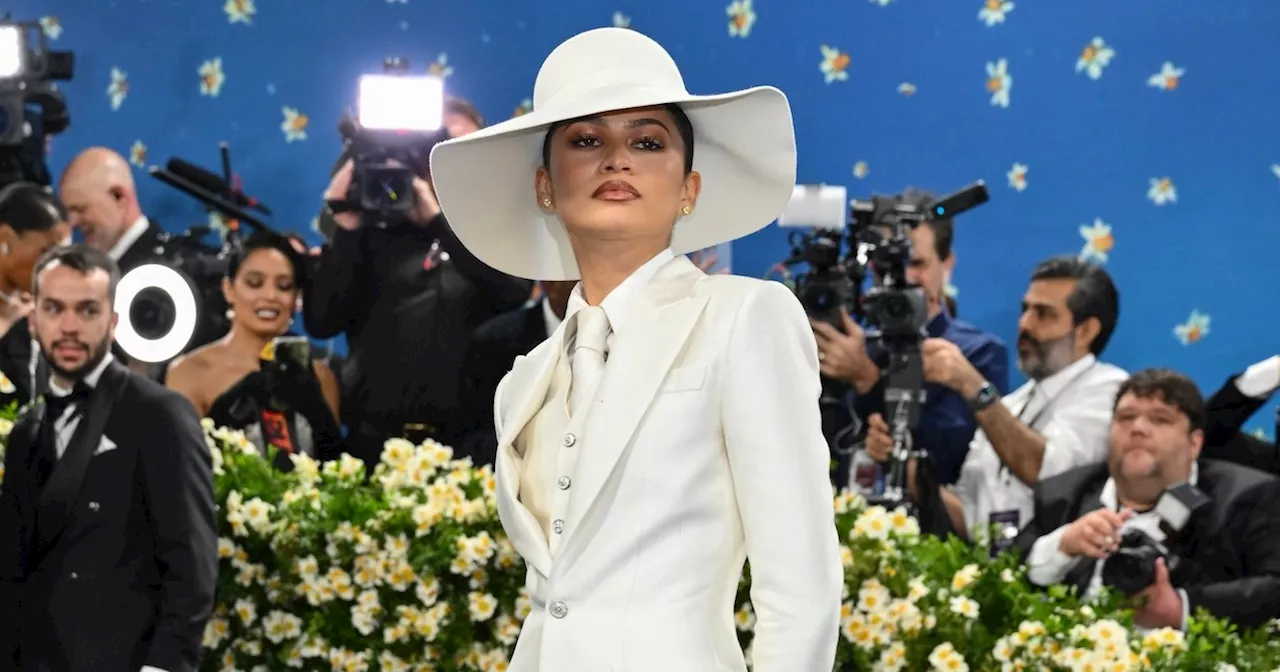
The centerpiece of this cultural intersection was a collaboration that redefined the boundaries of textiles and technology. Zendaya, a perennial favorite of the gala, donned a “Living Dress” designed by the visionary Iris van Herpen. This wasn’t merely a piece of digital art; it was a masterpiece of Interactive Digital Fashion that reacted in real-time to the global sentiment of social media comments. As the internet cheered, the dress bloomed; as curiosity spiked, its colors shifted—proving that the future of style is no longer static, but social.
The Digital Met Gala: Democracy in High Fashion
The expansion of the Met Gala into the Metaverse addresses a long-standing tension in the industry: the gap between the event’s massive online engagement and its extreme physical exclusivity. By creating a parallel digital event, the Costume Institute allowed millions of users to walk a virtual red carpet, interact with 3D avatars of celebrities, and experience Interactive Digital Fashion firsthand.
Unlike a simple livestream, the Digital Met Gala offered an immersive simulation. Fans didn’t just watch Zendaya; they stood “beside” her avatar. This proximity highlighted the intricate details of van Herpen’s work—digital “fabrics” that defied gravity and light-bending textures that are physically impossible to replicate in the real world. This democratized access is the primary driver behind the rapid adoption of Interactive Digital Fashion by major luxury houses.
Zendaya’s “Living Dress”: A Sentiment-Driven Masterpiece
The technical complexity of Zendaya’s digital look cannot be overstated. Utilizing a specialized API connected to major social platforms, the dress functioned as a visual data-translator. This specific application of Interactive Digital Fashion used AI to categorize millions of comments into “emotional bins.”
-
Joy/Excitement: When the sentiment was positive, the dress expanded its translucent “petals,” mimicking a flower in time-lapse photography.
-
Awe/Wonder: High engagement levels triggered a shift toward iridescent, holographic color palettes.
-
Calm/Sophistication: During quieter moments, the dress settled into deep, rhythmic pulses of violet and navy.
This real-time feedback loop created a sense of collective ownership. For the first time, the audience wasn’t just observing the trend; they were literally shaping the Interactive Digital Fashion they were seeing. Every “like” and every “fire” emoji contributed to the visual evolution of the garment, making the global audience a co-designer for the evening.
Iris van Herpen and the New Tech-Couture
Iris van Herpen has long been the bridge between traditional craftsmanship and futuristic tech. With the move into the Metaverse, her expertise in 3D printing and fluid dynamics has found its natural home. In the realm of Interactive Digital Fashion, the constraints of the physical world—such as the weight of materials or the structural integrity of a bodice—are non-existent.
“In the physical world, I am limited by gravity and the limitations of skin,” van Herpen remarked in a pre-Gala digital press conference. “With Interactive Digital Fashion, the garment can become an extension of the wearer’s aura. It can react to their heartbeat, their environment, or, as we saw tonight, the collective pulse of the world.” This philosophy is at the heart of the 2026 theme, “Digital Divinity: The Persistence of Craft in the Ether.”
The Technology Behind the Glow
To achieve the seamless transitions seen in the Digital Met Gala, developers utilized a “Live-Mesh” rendering system. Unlike traditional digital clothing that is pre-rendered, Interactive Digital Fashion requires a high-bandwidth connection to a cloud-rendering engine. As sentiment data flows in, the geometry of the 3D model is altered in real-time, which is then streamed directly to the VR headsets of the 10 million attendees.
This level of immersion is only possible due to the “Spatial Compute” chips now standard in 2026 VR hardware. These chips allow for the complex lighting and refraction calculations necessary to make Interactive Digital Fashion look as “real” as the physical silk and satin worn by celebrities on the actual New York steps.
The Economic Frontier: Digital Twins and NFTs
Beyond the spectacle, the Digital Met Gala is a massive economic engine. Luxury brands are now releasing “Digital Twins” of their gala looks. For a fraction of the price of a physical gown, fans can purchase Interactive Digital Fashion for their own avatars.
Zendaya’s “Living Dress” was immediately made available as a limited-edition digital collectible. This move signifies a shift in how value is perceived in the industry. The resale market for Interactive Digital Fashion has already eclipsed that of physical high-street fashion, with collectors betting on the long-term prestige of owning “Original Metaverse Artifacts.”
Sociological Shift: The Celebrity Avatar
The Digital Met Gala also raises interesting questions about celebrity identity. Many stars chose to attend the digital event with avatars that were not perfect replicas of their physical selves. This use of Interactive Digital Fashion allowed celebrities to experiment with their “digital brand.”
Some stars appeared as ethereal beings made of liquid gold, while others chose animalistic or abstract forms. Zendaya’s choice to remain recognizable but wearing a reactive, impossible garment was a strategic move to maintain her human connection while embracing the potential of Interactive Digital Fashion. It highlights the growing importance of “Digital Presence” in a world where we spend increasing amounts of time in virtual spaces.
Challenges: Latency and Digital “Gatecrashers”
The night was not without its hurdles. With 10 million simultaneous users, the servers faced significant “Sentiment Lag.” There were moments where the Interactive Digital Fashion would stutter or reset to its base state when social media traffic spiked too quickly.
Furthermore, the Digital Met Gala faced issues with “unauthorized shaders”—users who hacked the interface to overlay their own unauthorized graphics onto the red carpet. Maintaining the “prestige” and security of Interactive Digital Fashion in an open metaverse remains the primary technical challenge for the 2027 season.
Sustainability: The Greenest Met Gala in History
One of the most praised aspects of the digital expansion is its sustainability. Traditional fashion is one of the world’s most polluting industries. Interactive Digital Fashion, however, produces zero physical waste. There are no shipping emissions, no fabric scraps, and no one-time-use plastics.
Environmental advocates have pointed out that the carbon footprint of the server farms required to host 10 million VR users is still significant, but it remains a fraction of the environmental cost of a traditional global fashion event. As the industry moves toward “Green Computing,” Interactive Digital Fashion is being positioned as the ethical alternative for the future of luxury.
A New Era of Expression
As the sun rises over the Metropolitan Museum of Art, the physical cleanup begins. But in the Metaverse, the party continues. The success of the 2026 Digital Met Gala has proved that Interactive Digital Fashion is not a passing fad or a marketing gimmick. It is a new medium of human expression.
Zendaya’s “Living Dress” will be remembered as the “shot heard ’round the world” for the digital fashion movement. It proved that technology could enhance the emotional power of clothing, turning a dress into a conversation and an audience into a community. In the coming years, we can expect Interactive Digital Fashion to become standard—not just for the Met Gala, but for how we present ourselves in all digital interactions.
The wall between the physical and the virtual has been breached by a needle and thread made of code. As we look forward to 2027, the question is no longer “What are you wearing?” but rather, “What is your clothing saying, and how is it reacting to me?” The answer, thanks to Interactive Digital Fashion, is as limitless as the human imagination.
Vogue Business – Technology Section: voguebusiness.com/technology
Social Connect :


