



The Final Frontier of Connectivity: BlueBird 7 and the Dawn of Space-Based Cellular Broadband
CAPE CANAVERAL – In the history of telecommunications, a few moments stand out as true pivots: the first transatlantic cable, the launch of the first GPS satellite, and the birth of the modern internet. Tomorrow morning, at the Kennedy Space Center, another chapter will be written. As the countdown begins for the launch of BlueBird 7, the world is on the cusp of a connectivity revolution powered by Space-Based Cellular Broadband. This launch, utilizing a SpaceX Falcon 9 booster, isn’t just about placing hardware in orbit; it is about the final elimination of the “dead zone.”
For decades, the limitation of mobile technology has been the horizon. If you weren’t within range of a terrestrial cell tower, you were effectively off the grid. Space-Based Cellular Broadband changes that equation by turning satellites into “cell towers in space,” capable of communicating directly with the unmodified 5G smartphone already in your pocket.
The Giant in the Sky: Understanding BlueBird 7
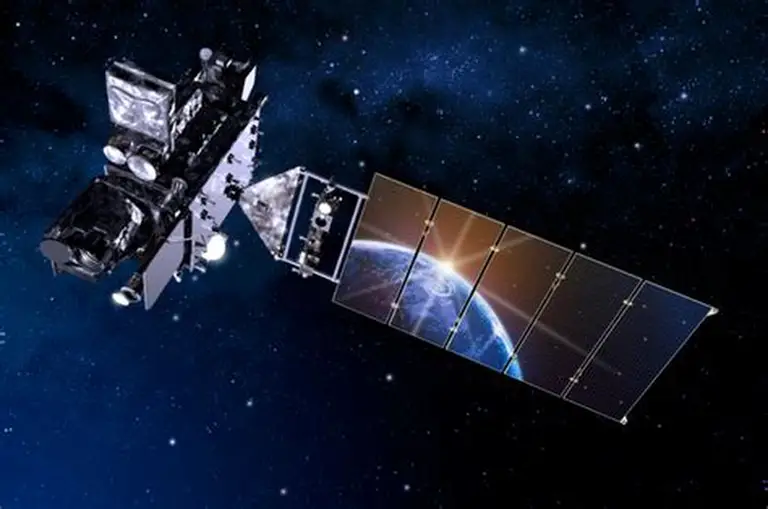
BlueBird 7 is not a typical satellite. It is a behemoth of engineering, featuring the largest commercial communications array ever deployed in low Earth orbit (LEO). This massive surface area is required to catch the relatively weak signals sent by standard handheld devices from hundreds of miles below. The success of Space-Based Cellular Broadband relies on this massive scale to act as a sensitive “ear” in the vacuum of space.
Unlike previous satellite phone systems that required bulky handsets and specialized antennas, Space-Based Cellular Broadband via BlueBird 7 is designed to be invisible to the end user. When a user moves out of range of their local carrier’s towers, their phone will seamlessly hand off the connection to the BlueBird constellation. This transition is the cornerstone of the “Direct-to-Device” (D2D) movement that has dominated the tech headlines of 2026.
The Socio-Economic Impact of Universal Connectivity
The implications of Space-Based Cellular Broadband go far beyond the convenience of checking social media on a remote hiking trail. In developing nations and rural heartlands, the lack of digital infrastructure has long been a barrier to economic growth. Space-Based Cellular Broadband acts as an immediate bridge over the digital divide.
Imagine a farmer in a remote region of the India-Pakistan border, an area currently witnessing historic geopolitical shifts. With Space-Based Cellular Broadband, that farmer can access real-time commodity prices, weather alerts, and digital banking without the need for a single miles-long fiber optic cable. By bypassing the need for expensive terrestrial infrastructure, Space-Based Cellular Broadband provides a “leapfrog” technology that could accelerate GDP growth in emerging markets by providing instant, high-speed internet access to billions.
Eliminating the Oceanic Dead Zone
The maritime industry is perhaps the greatest beneficiary of Space-Based Cellular Broadband. Historically, sailors and cargo ship crews relied on expensive, high-latency satellite internet systems that required specialized onboard equipment. BlueBird 7 changes this by extending the cellular reach hundreds of miles into the ocean.
For the crew of a container ship, Space-Based Cellular Broadband means the ability to video call family members using their personal phones, even in the middle of the Atlantic. For shipping companies, it means real-time telemetry and cargo tracking without the overhead of proprietary satellite contracts. The “Oceanic Dead Zone” is officially being closed by the arrival of Space-Based Cellular Broadband.
The SpaceX Partnership: A Reusable Revolution
The launch of BlueBird 7 would not be economically feasible without the advancements in rocket reusability led by SpaceX. The Falcon 9 booster slated for tomorrow’s mission has already successfully completed ten previous flights. This “bus service to orbit” is what has allowed companies like AST SpaceMobile to focus their capital on the payload—the Space-Based Cellular Broadband technology itself—rather than the cost of the launch vehicle.
The synergy between SpaceX’s launch capabilities and AST’s Space-Based Cellular Broadband hardware represents the peak of the 2026 “Space Economy.” As we watch the Falcon 9 lift off from Cape Canaveral, we are seeing two distinct branches of innovation merge to create a global utility that will soon be taken for granted as much as electricity or running water.
Privacy and Security in a Satellite-Driven World
As with any technology that monitors global signals, Space-Based Cellular Broadband brings questions of data privacy to the forefront. Critics have raised concerns about the potential for mass surveillance if a single satellite constellation can “see” every active smartphone on a continent.
In response, the architecture of Space-Based Cellular Broadband has been built with end-to-end encryption at the hardware level. The satellites act as “dumb pipes,” passing encrypted packets from the user to the carrier’s core network on the ground. This ensures that while the Space-Based Cellular Broadband provides the connection, it cannot “read” the data being sent. This “Privacy-by-Design” approach has been essential in gaining regulatory approval from the FCC and other international telecommunications bodies.
The Competitive Landscape: The Battle for the Sky
AST SpaceMobile is not alone in the pursuit of Space-Based Cellular Broadband. Competitors like SpaceX’s Starlink (in partnership with T-Mobile) and Lynk Global are also racing to populate the LEO environment. However, BlueBird 7’s unique phased-array technology gives it a distinct advantage in bandwidth and signal penetration.
The “Great Satellite Race” of 2026 is fundamentally a race for spectrum. As more players enter the Space-Based Cellular Broadband market, the management of orbital slots and frequency interference becomes a complex diplomatic puzzle. The success of tomorrow’s launch will solidify AST’s position as a leader in this high-stakes environment, proving that their specific approach to Space-Based Cellular Broadband is the most scalable for a global audience.
Humanitarian and Emergency Services
The most critical use case for Space-Based Cellular Broadband remains emergency response. During natural disasters—hurricanes, earthquakes, or wildfires—terrestrial cell towers are often the first things to fail. Space-Based Cellular Broadband provides a “failsafe” network that remains operational regardless of what happens on the ground.
Search and rescue teams in 2026 are already being equipped with devices optimized for Space-Based Cellular Broadband. This allows them to maintain coordination in the most hostile environments. Furthermore, for a lost hiker or a victim of a remote accident, the ability to send an SOS via Space-Based Cellular Broadband from a standard phone will undoubtedly save thousands of lives in the coming years.
Technical Challenges: The Physics of 5G from Space
To understand why BlueBird 7 is a marvel, one must understand the physics it overcomes. A standard 5G signal is designed to travel a few miles. Transmitting that same signal 300 miles into space while accounting for the “Doppler effect” (the shift in frequency caused by the satellite moving at 17,000 miles per hour) is a monumental task.
The internal processors of BlueBird 7 are capable of making these micro-adjustments billions of times per second. This ensures that the Space-Based Cellular Broadband remains stable and the user experiences a “five-bar” connection even as the satellite streaks across the sky. This is the “Magic” of modern Space-Based Cellular Broadband: the complexity is hidden behind a simple “connected” icon on the user’s screen.
The Future: 6G and Beyond
Even as BlueBird 7 prepares for launch, engineers are already looking toward the 2030s. The lessons learned from this iteration of Space-Based Cellular Broadband will form the foundation for 6G standards, which are expected to integrate satellite connectivity into the core specification from day one.
We are moving toward a world of “Ambient Connectivity,” where the source of the signal—whether a tower, a drone, or a satellite—is irrelevant. Space-Based Cellular Broadband is the first step toward this total integration. In the future, the very concept of a “no service” area will be a historical curiosity, much like the “long-distance” phone charges of the past.
Conclusion: A Connected Humanity
As the sun sets over the launchpad at Cape Canaveral tonight, the team at AST SpaceMobile and SpaceX are performing their final checks. BlueBird 7 is more than a satellite; it is a testament to human ingenuity and the relentless pursuit of a more connected world. Through Space-Based Cellular Broadband, we are finally realizing the promise of the digital age: that every person, in every corner of the globe, has a voice and a seat at the digital table.
The launch of BlueBird 7 marks the end of isolation. Whether you are in the depths of the Amazon, the middle of the Pacific, or a rural village in a conflict zone, the arrival of Space-Based Cellular Broadband means you are never alone. Tomorrow morning, when the Falcon 9 ignites, it won’t just be carrying a satellite into the heavens—it will be carrying the hopes of a truly unified global community.
The countdown is on. The era of Space-Based Cellular Broadband has arrived.
SpaceX – Upcoming Launches: spacex.com/launches/
Social Connect :


