



The Shift in Global Climate Governance: UN Backs Landmark ICJ Ruling While India Resigns COP33 Ambitions
The landscape of international environmental law and multilateral diplomacy has been fundamentally altered. In a historic dual development, the United Nations General Assembly (UNGA) has voted overwhelmingly to endorse a landmark advisory opinion from the International Court of Justice (ICJ), altering the legal architecture of global climate governance. Yet, even as the international community celebrates this monumental victory for environmental justice, structural shifts are widening following New Delhi’s quiet, official withdrawal of its bid to host the high-profile COP33 summit in 2028. Together, these parallel tracks signal a fracturing dynamic in how global powers perceive, enforce, and balance their domestic socio-economic commitments against an intensifying regime of legal accountability under global climate governance.
The Historic UNGA Vote: Elevating Climate Mandates to International Law
On Wednesday, the United Nations General Assembly took a definitive stand on environmental accountability by passing a resolution that formally acknowledges and seeks to operationalize the International Court of Justice’s July 2025 advisory opinion. Pioneered by the vulnerable Pacific island nation of Vanuatu alongside a broad coalition of climate-threatened states, the resolution passed with a resounding majority of 141 votes in favor, 8 votes against, and 28 abstentions. This legislative milestone reshapes the very foundations of global climate governance.
The core takeaway of this decision is simple yet revolutionary: addressing the escalating ecological crisis is no longer an optional, discretionary political choice for sovereign governments—it is an unambiguous legal duty. For decades, institutional frameworks lacked teeth, but this vote infuses strict enforcement metrics into global climate governance.
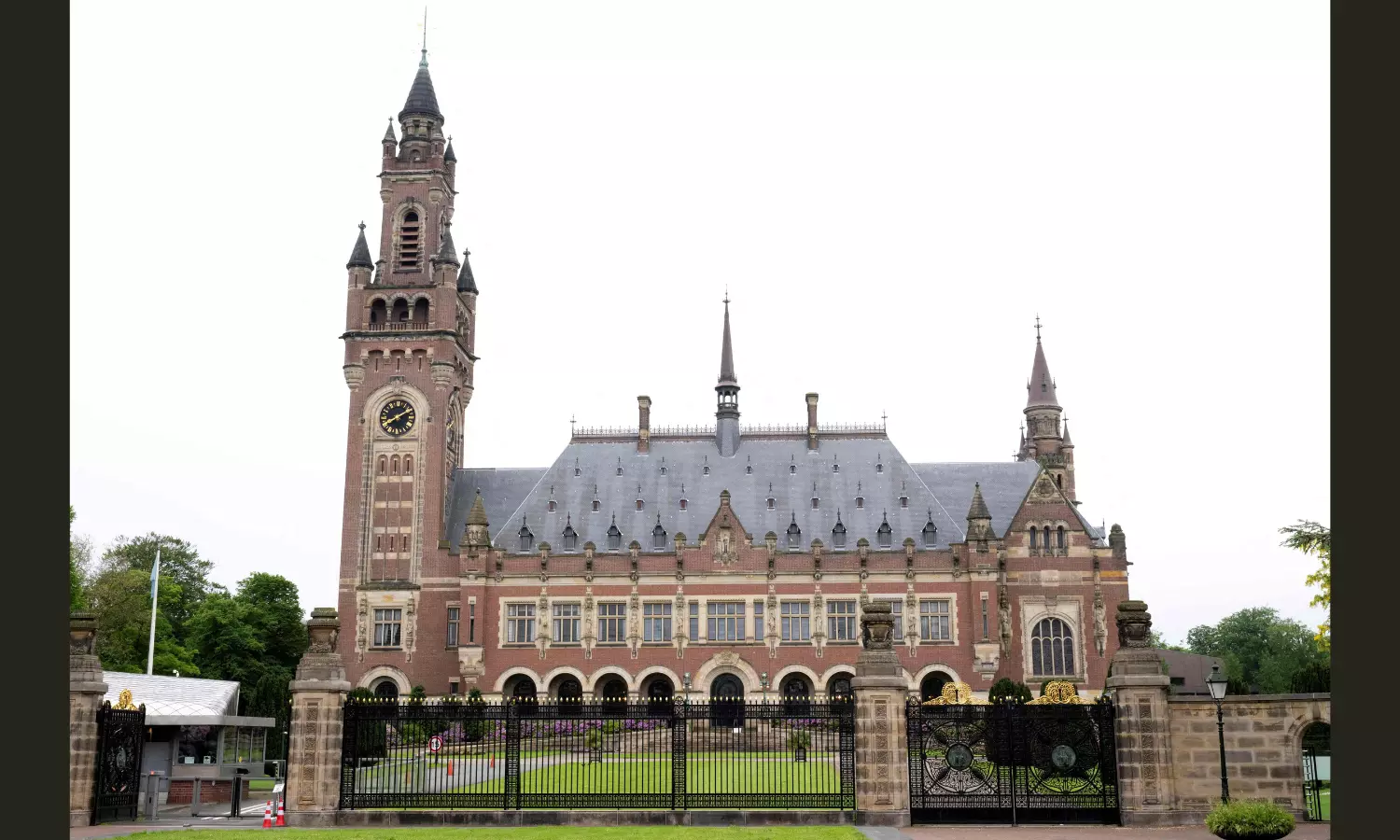
While advisory opinions delivered by the ICJ at the Peace Palace in The Hague are technically non-binding, they hold immense judicial weight. They represent the definitive interpretation of existing treaties, customary international law, and foundational human rights doctrines. By overwhelmingly endorsing the ICJ ruling, the General Assembly has signaled that a state’s failure to reduce greenhouse gas emissions, dismantle fossil fuel subsidies, or enforce rigid environmental regulations constitutes a breach of international state responsibility. This breakthrough marks a structural victory for legal accountability, establishing a brand-new precedent for global climate governance.
UNGA Resolution Vote Breakdown (May 2026):
-------------------------------------------
In Favor:    141 (Including Canada, UK, Germany, Australia, France)
Against:     8   (Including United States, Russia, Saudi Arabia, Iran)
Abstentions: 28  (Including India, China, Turkey, Brazil, Nigeria)
The division on the assembly floor perfectly illustrates the deep fractures splitting modern global climate governance. Opposing the resolution were the world’s primary historic emitters and leading petrostates, including the United States, Russia, Saudi Arabia, and Iran. Representatives from these dissenting states frequently argued that transforming non-binding environmental guidelines into strict legal liabilities undermines the consensus-driven nature of the Paris Agreement framework, disrupting the fragile equilibrium of global climate governance. Conversely, the 28 abstentions—led by major emerging economies such as India, China, and Brazil—highlighted systemic anxieties regarding how aggressive international law might conflict with the bedrock doctrine of “Common but Differentiated Responsibilities” (CBDR), potentially penalizing developing economies as they seek to guarantee energy security for their citizens under the evolving rules of global climate governance.
India’s Quiet Retreat: The Withdrawal from COP33
Simultaneously, a contrasting narrative of diplomatic recalculation unfolded in New Delhi, showcasing how national interests interface with global climate governance. The Indian government has officially confirmed the withdrawal of its long-standing bid to host the 33rd Conference of Parties (COP33) to the United Nations Framework Convention on Climate Change (UNFCCC) in 2028. The original offer had been boldly proposed by Prime Minister Narendra Modi during his high-level address at the COP28 summit in Dubai in December 2023, where he positioned India as a crucial bridge within global climate governance between the industrialized West and the Global South.
The formalization of the retreat came via an official executive communication from Rajat Agarwal, the senior environment ministry official responsible for UNFCCC coordination, addressed directly to the chairperson of the UN’s Asia-Pacific Group. According to official diplomatic channels, New Delhi chose to step back “following a thorough review of its comprehensive domestic and international commitments for the year 2028.” This sudden exit alters the leadership dynamics of global climate governance.
Timeline of India's COP33 Candidacy Lifecycle:
----------------------------------------------
December 2023: PM Narendra Modi announces India's bid to host COP33 at Dubai.
July 2025:     BRICS alliance issues a joint statement supporting India's bid.
August 2025:   Indian Environment Ministry forms a specialized 11-member host cell.
April 2026:    Official diplomatic letter sent withdrawing the candidacy.
May 2026:      MEA explicitly confirms the shift, citing 2028 schedule reviews.
While Ministry of External Affairs (MEA) spokesperson Randhir Jaiswal emphasized that India remains an absolute leader in green energy deployment—standing out as one of the few G20 members to hit its targeted Nationally Determined Contributions (NDCs) ahead of schedule—the sudden cancellation has sent shockwaves through regional diplomatic channels. The decision leaves the hosting rights for COP33 completely up in the air within the Asia-Pacific bloc, introducing a unique leadership vacuum in global climate governance and positioning South Korea as the highly probable remaining contender to step up.
Decoding the Strategy: Why Did New Delhi Step Back?
External analysts, domestic political strategists, and international policy experts have spent the weeks following the announcement attempting to parse the underlying factors behind India’s sudden retreat from the center stage of global climate governance. Organizing a United Nations climate change summit is no ordinary feat; it requires hosting upwards of 75,000 international delegates, state leaders, non-governmental organizations, and media professionals for over two weeks of highly charged, multi-tiered negotiations that shape the future of global climate governance.
Three primary schools of thought have emerged to explain New Delhi’s calculated diplomatic pivot away from the forefront of global climate governance:
1. Avoidance of Competing Large-Scale Administrative Demands
Strategic planners suggest that the decision is rooted in practical resource management rather than a rejection of global climate governance. The year 2028 falls just months ahead of India’s next highly anticipated general election cycle. Furthermore, the central government is currently heavily invested in preparing for and securing bids for several alternative “big-ticket” global events, such as a comprehensive bid for future Olympic Games or the Commonwealth Games in Ahmedabad. Balancing the astronomical security, urban management, and administrative demands of a massive multi-week environmental summit alongside these structural sports and political campaigns likely pushed the administrative machinery to its limits.
2. Shielding Against Aggressive International Legal and Regulatory Scrutiny
By assuming the presidency of a UN climate summit, a host country willingly places its own domestic energy infrastructure and carbon footprint directly under a global microscope. In light of the freshly passed UNGA resolution validating the ICJ’s environmental liability parameters, a COP hosted on Indian soil would have inevitably drawn intense, coordinated pressure from Western blocs and activist networks demanding that New Delhi accelerate its phase-out of domestic coal power. Hosting the summit in 2028 would have forced the country into an uncomfortable defensive posture, forcing it to navigate intense demands for higher carbon reduction ambitions at a time when industrial manufacturing growth remains the core driver of its poverty alleviation programs. Avoiding this defensive trap was a calculated move to maintain autonomy within the regime of global climate governance.
3. A Calculated Shift in Global South Advocacy Architecture
Prominent environmental policy experts, including Harjeet Singh of the Delhi-based Satat Sampada Climate Foundation, have openly characterized the withdrawal as a strategic missed opportunity for India to assert its authority over global climate governance. A home-turf summit could have provided India an unprecedented, unyielding platform to force wealthy Western nations to deliver on historical emissions accountability and finance reparations for loss and damage. However, by stepping away from the presidency, India may be signaling a tactical preference to lobby from within the negotiating trenches rather than managing the neutral, compromise-driven responsibilities of the executive chair. This allows New Delhi to safeguard its economic interests and maintain deep alignment with the BRICS+ alliance without sacrificing its sovereign policy flexibility under the strict eye of global climate governance.
The Broader Implications for Global Climate Accountability
The collision of these two watershed events—the institutionalization of the ICJ’s environmental liability parameters by the United Nations and India’s logistical retreat—marks a brand-new, highly litigious chapter for global climate governance. The era of purely voluntary compliance, which defined the early years of the post-Paris Agreement era, is rapidly drawing to a close.
As activist groups and vulnerable island states prepare to weaponize the UNGA-endorsed ICJ ruling to file a wave of groundbreaking liability lawsuits in regional and domestic courts, the real-world costs of industrial emissions are set to skyrocket, introducing unpredictable judicial trials into global climate governance. Emerging economies are increasingly realizing that participating in massive international climate spectacles may bring more regulatory risk and economic pressure than genuine diplomatic reward. The events of May 2026 clearly reveal that while the moral and legal framework for international action is growing sharper and more robust on paper, the practical, geopolitical willingness of major regional powers to expose themselves to that very mechanism remains profoundly complex, guarded, and fiercely contested within the shifting paradigms of global climate governance.
For an explicit, on-the-ground official perspective regarding New Delhi’s rationale and its ongoing international environmental commitments, you can watch the Ministry of External Affairs Briefing on COP33. This short video features the official statements from the MEA spokesperson clarifying India’s updated 2028 goals.
Social Connect:


