

Silicon Ascent: Tech Surge Propels US Market Record Highs Amidst Industrial Divergence
NEW YORK, NY — The trading floor of the New York Stock Exchange witnessed a historic decoupling on Friday, April 24, 2026, as a relentless appetite for artificial intelligence and semiconductor prowess pushed the broader markets into uncharted territory. By the closing bell, the financial world stood witness to a series of US market record highs, signaling a profound shift in investor sentiment that favors the “digital brain” of the economy over its traditional “industrial muscle.”
The day’s action was characterized by an explosive rally that saw the S&P 500 and the Nasdaq Composite reach levels that were unthinkable just twelve months ago. While the celebration was palpable in the corridors of Silicon Valley, the broader indices told a more nuanced story of a bifurcated economy, where tech-heavy growth is currently shielding investors from the cooling winds of the cyclical sectors.
The S&P 500: A $7.6 Trillion Recovery
The benchmark S&P 500 index rose 0.8% on Friday to settle at a record-breaking 7,165.08. This milestone is not just a numerical achievement but a psychological one, marking the peak of a recovery that began with the “Spring Pivot” of March 30. Since that local bottom, the index has added a staggering $7.6 trillion in market value, driven largely by the consolidation of wealth in a handful of high-growth technology firms.
This massive influx of capital underscores the durability of these US market record highs. Analysts point out that the sheer scale of the value added since late March suggests a deep institutional commitment to American equities, despite persistent concerns regarding inflation and global trade stability. The S&P 500’s performance has become a bellwether for the “AI Efficiency” era, where investors are pricing in massive productivity gains across the next decade.
The Nasdaq Leap: Semiconductors Lead the Charge
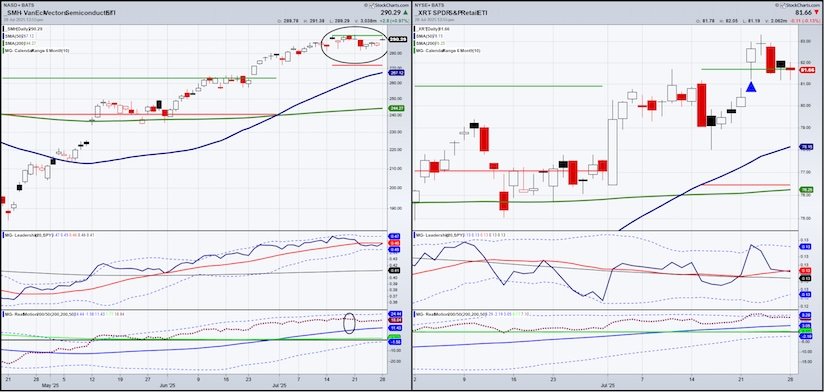
The Nasdaq Composite was the undisputed champion of Friday’s session. The tech-heavy index jumped 1.63% to finish at 24,836.60, a new record that solidifies the current era of US market record highs. The primary catalyst for this surge was an aggressive rally in the semiconductor sector, which acted as the high-octane fuel for the day’s gains.
Giant chipmakers reported order backlogs that stretch into 2028, largely due to the global infrastructure build-out for sovereign AI clouds. Companies that provide the foundational hardware for machine learning saw their valuations swell by billions in a single afternoon. For the Nasdaq, these US market record highs represent a fundamental re-rating of what “growth” looks like in a post-autonomous economy.
The Dow Divergence: A Warning in the Industrial Sector
Contrastingly, the Dow Jones Industrial Average painted a sober picture. The blue-chip index underperformed its peers, falling 79.61 points (0.16%) to close at 49,230.71. As tech pushed for US market record highs, cyclical and financial stocks languished, weighed down by higher-for-longer interest rate projections and a slowdown in traditional manufacturing.
This divergence suggests that while the US market record highs are impressive, they are not universal. Investors are rotating out of sectors like banking and heavy machinery—traditional pillars of the Dow—and into the perceived “safety” of high-margin software and hardware. This “tech-wash” of the indices is creating a market environment where indices are moving upward even as a majority of individual stocks remain flat or negative.
AI and the “Intelligence Premium”
The current streak of US market record highs is being attributed to what economists are calling the “Intelligence Premium.” As companies across all sectors integrate generative AI into their workflows, the companies providing that technology are reaping unprecedented rewards. Friday’s rally was a clear indication that the market is no longer treating AI as a speculative bubble, but as a mandatory utility for the 21st century.
Institutional investors have shifted their portfolios significantly over the last month to ensure exposure to the “Magnificent Seven” and their emerging competitors. This concentration of capital is a primary reason why we are seeing US market record highs even as the Federal Reserve maintains a cautious stance on monetary easing. The market’s belief in tech-driven deflationary forces is currently overpowering the fear of high borrowing costs.
The March 30 Bottom in Retrospect
To understand the magnitude of today’s US market record highs, one must look back to the volatility of late March. The March 30 bottom was a period of intense skepticism, fueled by regional bank stresses and geopolitical uncertainty. However, the subsequent $7.6 trillion rally has proven the “buy the dip” mentality remains the dominant force in American finance.
The recovery has been characterized by its vertical nature. Unlike previous bull markets that were slow and broad, this run toward US market record highs has been sharp and targeted. It is a market that rewards precision and punishes diversification into underperforming legacy industries.
Global Implications of American Market Dominance
As the US market record highs continue to dominate headlines, global capital flows are increasingly favoring New York over London, Frankfurt, or Hong Kong. The “American Exceptionalism” in tech has created a magnet effect, drawing liquidity away from emerging markets and into the US tech sector.
This trend is both a blessing and a curse. While it bolsters the US dollar and strengthens domestic retirement funds, it creates an imbalanced global financial system. Central banks in Europe and Asia are watching these US market record highs with a mix of awe and anxiety, as their own domestic markets struggle to keep pace with the sheer velocity of the American tech ascent.
Technical Indicators and Market Overextension
Despite the euphoria surrounding US market record highs, some technical analysts are raising red flags. The Relative Strength Index (RSI) for both the S&P 500 and the Nasdaq is hovering in “overbought” territory, suggesting that a short-term correction may be on the horizon.
However, the “momentum trade” has a habit of defying gravity. Every time a pullback seemed imminent over the last three weeks, a fresh round of AI-related news or semiconductor earnings has pushed the indices back toward US market record highs. For now, the “fear of missing out” (FOMO) is outweighing the “fear of a fall.”
The Role of Retail Investors in 2026
The retail sector has played a pivotal role in the Friday session. Fractional trading and AI-managed personal portfolios have allowed a new generation of investors to contribute to the US market record highs. Unlike the speculative “meme stock” craze of years past, the current retail participation is focused on long-term themes like space exploration, clean energy, and—most significantly—semiconductors.
This steady stream of retail capital provides a “floor” for the market, preventing the kind of rapid sell-offs that were common in previous cycles. As long as the narrative of tech dominance remains intact, retail support is expected to continue fueling the drive for US market record highs.
Sector Rotation: The Great Migration
While tech is the star, the movement of money is a Zero-Sum game. The underperformance of the Dow highlights a major sector rotation. Capital is fleeing the “Old Economy”—oil, gas, traditional banking, and retail—and seeking refuge in the “New Economy.” This migration is the fundamental engine behind the US market record highs.
Financial analysts suggest that this rotation might be permanent. If AI can indeed automate the majority of administrative and analytical tasks, the profit margins of tech companies will forever outpace those of traditional industries. In this scenario, US market record highs could become a frequent occurrence as the S&P 500 reweights itself more heavily toward silicon and code.
The Federal Reserve’s Silent Watch
The Federal Reserve has remained uncharacteristically quiet during this latest run toward US market record highs. With inflation hovering just above the 2% target, the central bank is in a “wait and see” mode. The market, however, has interpreted this silence as a “green light.”
The “Fed Put”—the idea that the central bank will step in to save the market if things go south—has been replaced by the “AI Put.” Investors believe that even if the Fed remains hawkish, the productivity gains from technology will provide enough of an economic cushion to sustain US market record highs for the foreseeable future.
Future Outlook: Can the Momentum Last?
As we head into the final week of April, the question on every trader’s mind is how long this “Silicon Ascent” can continue. Historically, markets that experience a $7.6 trillion surge in under a month are prone to volatility. Yet, the underlying fundamentals of the companies driving these US market record highs—massive cash reserves, dominant market positions, and essential products—are stronger than ever.
The path to 2027 seems paved with digital gold. If the upcoming earnings season confirms that AI integration is translating into real-world profits, the current US market record highs might just be the baseline for a much larger expansion.
Conclusion: A New Financial Era
Friday’s close was more than just a good day for the bulls; it was a validation of a new economic reality. The S&P 500 at 7,165.08 and the Nasdaq at 24,836.60 are symbols of a world that has placed its bets firmly on the future of technology. While the Dow’s slight dip serves as a reminder that the transition to this new economy is not without its casualties, the momentum is clearly behind tech.
The US market record highs achieved this week reflect a global confidence in American innovation. As the weekend begins, the $7.6 trillion added since March 30 stands as a testament to the resilience of the market and the transformative power of the semiconductor revolution. For now, the “All-Time High” is the new normal.
CNBC – Real-Time Market Data: cnbc.com/markets
Social Connect :

