



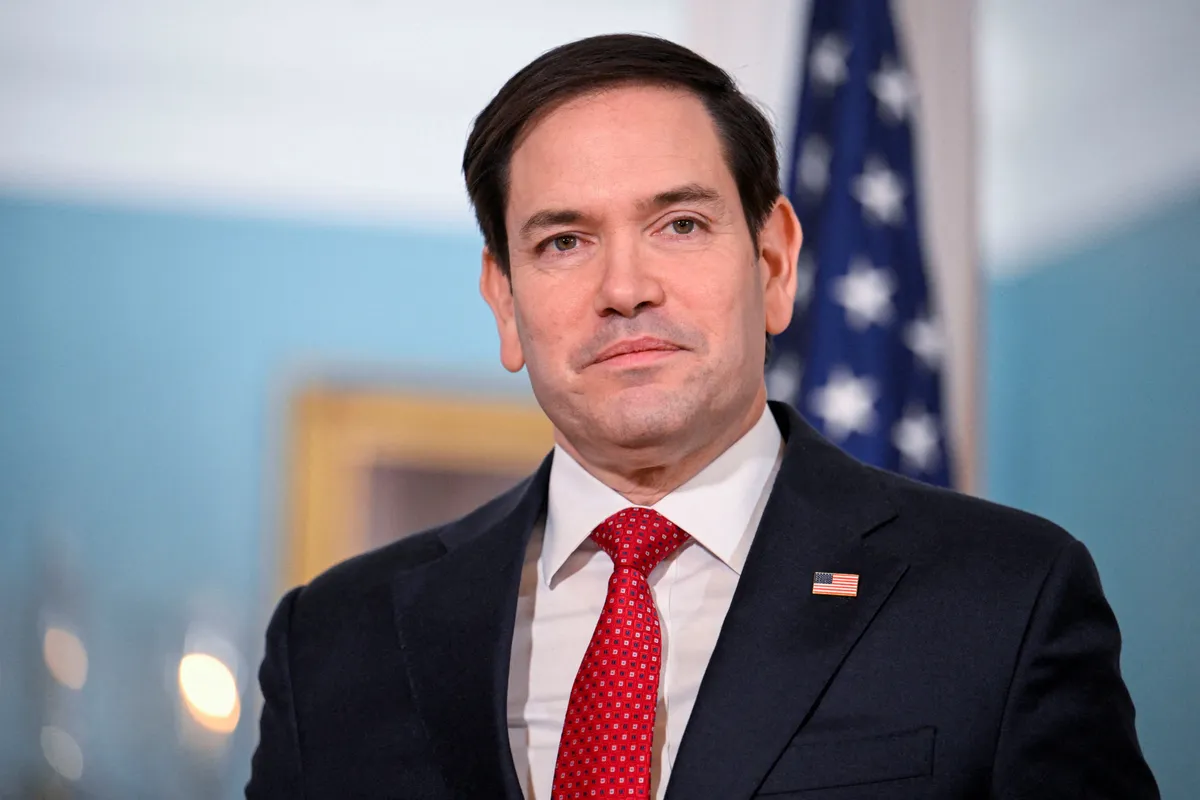
THE INDO-PACIFIC AXIS: MARCO RUBIO LANDS IN KOLKATA FOR CRUCIAL QUAD SUMMIT AND BILATERAL TALKS
KOLKATA, INDIA — In a major geopolitical move that underscores the shifting center of gravity in global security, United States Secretary of State Marco Rubio has landed in the historic eastern metropolis of Kolkata. The arrival marks the commencement of a high-stakes, four-day diplomatic mission designed to reinforce Washington’s strategic alliances in South Asia.
Faced with escalating maritime friction in the South China Sea and sudden vulnerabilities in global oil supply chains, Rubio’s extensive itinerary is being watched closely by international observers. The secretary is scheduled to hold critical bilateral talks with India’s External Affairs Minister, S. Jaishankar, before joining his counterparts for an emergency meeting of the Quadrilateral Security Dialogue (Quad) foreign ministers.
The choice of Kolkata as the primary venue for this diplomatic push highlights a conscious effort by both Washington and New Delhi to project operational influence across the Bay of Bengal, an increasingly contested maritime corridor. As the global economy grapples with energy supply shocks and changing trade routes, this long-planned diplomatic gathering is expected to produce actionable defense frameworks, unified energy security strategies, and updated maritime protocols. These outcomes aim to stabilize the broader Indo-Pacific region against unilateral revisionism and sudden economic shocks.
Part I: The Arrival and Spatial Symbolism of Kolkata
Secretary Rubio’s transport touched down at Netaji Subhash Chandra Bose International Airport under tight security, greeted by a high-ranking Indian diplomatic delegation and state officials. The atmosphere surrounding the arrival reflected the gravity of the discussions ahead.
For decades, standard U.S.-India state visits were confined to the political corridors of New Delhi. By redirecting this vital diplomatic engagement to West Bengal, both administrations are signaling a renewed focus on India’s “Act East” policy, positioning Kolkata as a gateway to Southeast Asia.
                  +----------------------------------+
                  |  RUBIO'S FOUR-DAY MISSION RADAR  |
                  +----------------------------------+
                                   |
         +-------------------------+-------------------------+
         |                                                   |
         v                                                   v
[Bilateral Track: Jaishankar]                     [Multilateral Track: Quad]
Focus: Defense technology sharing,               Focus: Indo-Pacific shipping lanes,
counter-coercion, supply chains.                 energy security, oil routing fixes.
Immediately upon arrival, U.S. embassy staff emphasized that the four-day window was intentionally designed to allow for deep, unhurried consultations. This contrasts with the brief stopovers that often characterize modern international relations.
The extended timeline gives Rubio and Jaishankar the space to address long-standing structural issues in the bilateral relationship, while also allowing the full Quad framework to reach consensus on critical security matters. This diplomatic effort comes at a time when the Biden-led Western security apparatus is eager to prove that its commitments to Asian security remain steady despite ongoing security challenges in Europe and the Middle East.
Part II: The Rubio-Jaishankar Bilateral Agenda
The centerpiece of the mission’s first phase is a private bilateral meeting between Secretary Rubio and External Affairs Minister S. Jaishankar. Known for his sharp, national-interest-driven approach to foreign policy, Jaishankar has consistently steered India along a path of multi-alignment. This stance requires careful, continuous diplomatic management from Washington.
The primary goal of the American team is to anchor India more firmly into the Western security architecture without infringing upon New Delhi’s prized strategic autonomy.
[BILATERAL RESTRUCTURING ARCHITECTURE]
┌───────────────────────┬──────────────────────────────────┐
│ Defense Tech Transfer │ GE F414 jet engine co-production; advanced drone assembly. │
├───────────────────────┼──────────────────────────────────┤
│ Intelligence Sharing  │ Real-time maritime domain tracking across the Indian Ocean. │
├───────────────────────┼──────────────────────────────────┤
│ Economic De-risking   │ Semiconductor supply line integration and critical mineral access. │
└───────────────────────┴──────────────────────────────────┘
Topping the bilateral agenda is the expansion of the U.S.-India Initiative on Critical and Emerging Technology (iCET). Rubio intends to use this diplomatic channel to fast-track defense joint ventures, including the co-production of GE F414 fighter jet engines and the transfer of advanced unmanned aerial vehicle technologies.
By removing bureaucratic hurdles to technology sharing, the United States hopes to position itself as India’s primary defense partner. This shift would gradually reduce New Delhi’s historic reliance on Russian military hardware, achieving a long-standing U.S. diplomatic objective.
However, the talks will also need to navigate delicate economic frictions. Jaishankar is expected to raise concerns regarding Western trade regulations and immigration caps that impact India’s tech sector.
American officials, meanwhile, plan to push for greater market access and stronger intellectual property protections within the subcontinent. Navigating these economic differences requires a sophisticated diplomatic approach, ensuring that trade disputes do not undermine the core defense and intelligence-sharing agreements that form the foundation of the modern U.S.-India partnership.
Part III: The Quad Foreign Ministers’ Emergency Summit
Following the bilateral talks, the focus will shift to a ministerial meeting of the Quadrilateral Security Dialogue. Rubio and Jaishankar will be joined by Australian Foreign Minister Penny Wong and Japanese Foreign Minister Takeshi Iwaya. This multilateral diplomatic format has evolved from an informal maritime coalition into a cornerstone of Indo-Pacific security, drawing regular criticism from Beijing, which views the group as an containment mechanism.
               [THE QUAD MARITIME SECURITY PIPELINE]

   Indo-Pacific Domain Awareness (IPMDA) Satellite Integration
                                      │
                                      ▼
   Real-Time Data Handshakes: US - India - Japan - Australia
                                      │
                                      ▼
   Coordinated Naval Patrols & Port Access Authorization
                                      │
                                      ▼
   Secured Shipping Lanes & Shielded Global Energy Transit
The primary focus of this emergency session is the implementation of the Indo-Pacific Partnership for Maritime Domain Awareness (IPMDA). This initiative allows member nations to monitor regional waters in real time, tracking illegal fishing, maritime militias, and unflagged naval vessels.
Through this diplomatic framework, the Quad aims to provide smaller Southeast Asian nations with the tracking capabilities needed to protect their territorial waters. This approach offers a non-military, law-enforcement-focused alternative to counter assertive behavior in disputed waters.
The ministers will also focus on expanding the Quad’s infrastructure delivery capabilities. Recognizing that regional influence is driven by economic investments as much as naval power, this diplomatic track will review joint funding mechanisms for undersea telecommunications cables, port modernizations, and green energy grids across the Pacific Islands and South Asia.
By offering transparent, high-quality alternatives to state-backed international loans, the Quad seeks to demonstrate that its alignment provides tangible economic benefits to the region, reinforcing international law through shared economic growth.
Part IV: Addressing Global Oil Disruptions and Energy Security
The most urgent issue injecting tension into the Kolkata summit is the ongoing volatility in global energy markets. Recent maritime disruptions along key choke points, including the Strait of Hormuz and the Bab-el-Mandeb, have caused sharp spikes in global oil prices, threatening inflation-weary domestic economies in both East and West.
Resolving this energy crisis requires intense diplomatic coordination among the Quad partners, who represent some of the world’s largest energy consumers and producers.
+--------------------------------------------------------------------------+
|                  ENERGY DEFENSE RADAR: CHOKEPOINT THREATS                 |
+--------------------------------------------------------------------------+
|  • STRAIT OF HORMUZ     | Persistent geopolitical friction; high risk of|
|                         | supply disruptions for East Asian allies.      |
|                                                                          |
|  • BAB-EL-MANDEB        | Non-state actor interference; forces costly    |
|                         | re-routing around the Cape of Good Hope.       |
|                                                                          |
|  • STRAIT OF MALACCA    | High traffic congestion; vulnerability to      |
|                         | strategic blockades and maritime piracy.       |
+--------------------------------------------------------------------------+
India’s position on energy trade remains a central topic of discussion. New Delhi has maintained significant imports of crude oil from sanctioned regimes, defending the choice as an economic necessity to protect its developing domestic market.
Secretary Rubio’s goal is to present alternative energy solutions that align with Western sanctions without triggering a domestic energy shortage in India. This complex problem can only be resolved through confidential, high-level diplomatic channels.
The Quad ministers are working toward a coordinated strategy to protect global energy lanes. Plans under discussion include establishing a joint naval escort framework for commercial tankers transiting unstable corridors, alongside agreements to coordinate the release of strategic petroleum reserves during sudden supply drops.
By taking a unified stance on energy security, the Quad aims to reassure global energy markets and deter non-state actors or hostile nations from targeting commercial shipping. This highlights how modern diplomatic alliances must blend traditional military defense with economic statecraft to protect global supply chains.
Part V: Countering Maritime Coercion and Assertive Behavior
While energy security dominates the economic discussions, the long-term challenge connecting the Quad nations is the shifting balance of power in the Pacific. Beijing’s ongoing naval expansion and its construction of fortified outposts in disputed waters present a direct challenge to the rules-based international order that has supported regional growth for three decades.
The Kolkata meeting provides a vital diplomatic platform to align individual national strategies into a unified, predictable regional policy.
                    +-----------------------------+
                    |    QUAD STRATEGIC OUTLOOK   |
                    +-----------------------------+
                                   |
         +-------------------------+-------------------------+
         |                                                   |
         v                                                   v
[Freedom of Navigation]                            [Integrated Deterrence]
Upholding UNCLOS standards via                     Linking naval tracking networks
joint transit maneuvers.                           across the two oceans.
The ministers are expected to issue a joint statement reasserting their commitment to the United Nations Convention on the Law of the Sea (UNCLOS). They will explicitly oppose any unilateral attempts to alter the regional status quo by force or coercion.
This diplomatic stance will be backed by plans for expanded joint naval maneuvers, such as the annual Malabar exercises. These drills will feature deeper integration of submarine tracking technologies and coordinated amphibious landing training.
At the same time, the Quad is careful to avoid framing its actions as an explicitly aggressive military alliance. The group’s diplomatic messaging focuses on building a resilient, open region where nations of all sizes can make sovereign choices free from external pressure.
By prioritizing humanitarian assistance, disaster relief operations, and vaccine distribution frameworks alongside traditional security measures, the Quad aims to build a broad base of support among ASEAN and Pacific island nations. This strategy positions the alliance as a reliable, constructive partner for regional stability.
Part VI: The Structural Hurdles to Absolute Alignment
Despite the public displays of unity, the four-day visit must navigate real divergence in national priorities. Washington views the Quad primarily through the lens of global systemic competition, seeking to enlist democratic partners in a broad effort to preserve Western international leadership.
India, by contrast, focuses its diplomatic and military assets primarily on immediate border security challenges along the Himalayas and within the Indian Ocean, remaining cautious about becoming entangled in far-off conflicts in the Western Pacific or Europe.
+--------------------------------------------------------------------------+
|                    REGIONAL STRATEGIC CONTRASTS                          |
+--------------------------------------------------------------------------+
|  UNITED STATES   • Views alliances through a global systemic lens.       |
|                  • Seeks broad commitments across multiple oceans.       |
|                                                                          |
|  INDIA           • Prioritizes the immediate Indian Ocean arena.         |
|                  • Preserves strategic autonomy; avoids fixed blocs.    |
|                                                                          |
|  JAPAN & AUS     • Face direct geographic vulnerabilities in West Pacific.|
|                  • Dependent on secure, open sea lanes for vital trade.  |
+--------------------------------------------------------------------------+
Australia and Japan bring their own geographic perspectives to the table. Both are formal treaty allies of the United States, yet their economies are deeply tied to regional trade networks, requiring a balanced approach that combines strong security deterrence with pragmatic economic engagement.
The skill of the diplomatic teams in Kolkata will be tested by their ability to weave these distinct national interests into a coherent shared strategy. The goal is to build an alliance where individual actions reinforce the collective defense of a free and open Indo-Pacific.
Part VII: Looking Beyond Kolkata: The Future of the Axis
As Secretary Rubio’s four-day visit moves forward, the discussions in Kolkata are set to shape the regional security landscape for years to come. The agreements reached here—from defense technology sharing to joint energy security frameworks—will serve as a blueprint for how democratic nations organize to protect shared interests in an increasingly fractured world.
By demonstrating that the Quad can deliver practical solutions for global challenges like energy inflation and supply chain vulnerability, the summit aims to cement the group’s role as a primary coordinator of international policy.
The ultimate success of this diplomatic mission will depend on how effectively these high-level statements are converted into operational realities on the ground and at sea. As teams work through complex language and shared commitments, the broader world is receiving a clear message: the Indo-Pacific partnership is deepening, built on shared democratic values and a mutual interest in a stable, law-based international order.
The path forward remains challenging, but the sustained, serious work underway in Kolkata offers a strong framework for stability, ensuring that the critical sea lanes connecting global trade remain open, safe, and free.
For more:- After short Kolkata visit, Marco Rubio leaves for Delhi | Live – The Hindu
Social Connect:


