

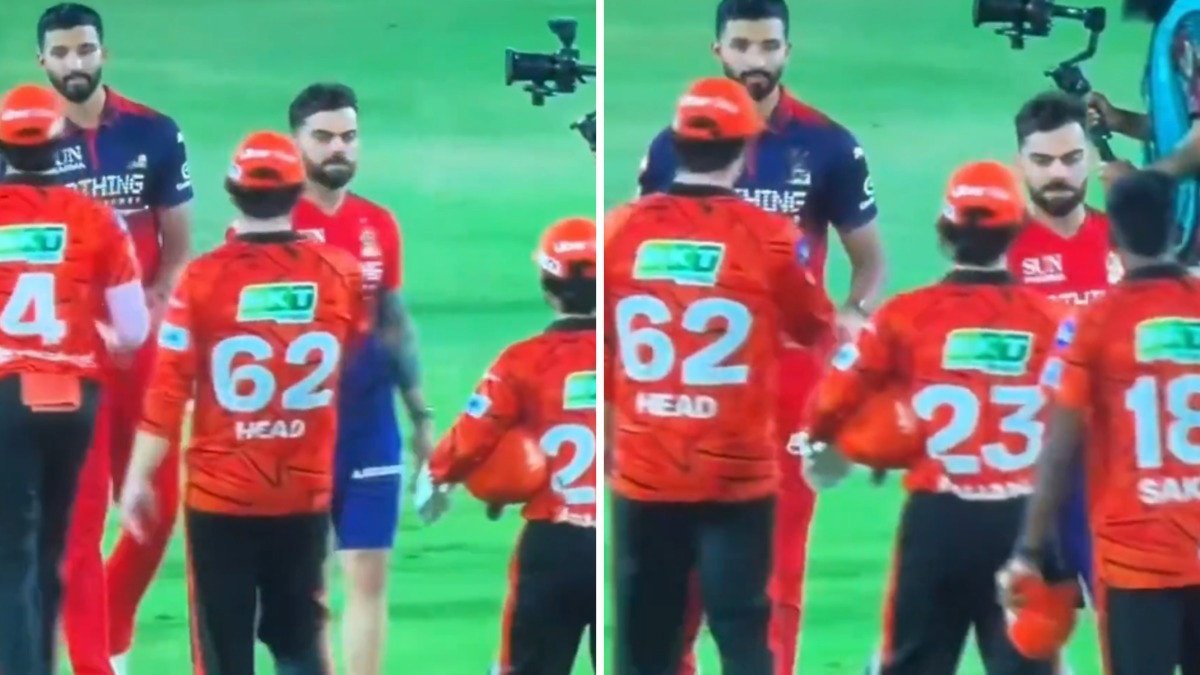
Handshake Snub: 5 Shocking Truths Behind the Brutal Kohli vs. Head Feud
The world of international cricket is no stranger to intense rivalries, fiery exchanges, and on-field drama that spills over into the public consciousness. However, few incidents in recent memory have captured the collective attention of the global sporting community quite like the dramatic confrontation between Indian batting maestro Virat Kohli and Australian explosive top-order batsman Travis Head. Dubbed by fans, pundits, and media outlets as the ultimate modern cricketing feud, this specific conflict has escalated from a standard competitive exchange into a full-blown cultural phenomenon.
At the absolute center of this storm is a single, highly scrutinized moment captured by broadcast cameras and amplified across every major digital platform: a post-match handshake snub that has fundamentally divided opinion across continents. This analytical news report provides an exhaustive, multi-dimensional breakdown of the unfolding situation, tracing its origin on the pitch, its rapid amplification across global social media networks, the historical context of India-Australia cricketing tensions, and the broader implications this specific incident holds for the traditional code of sportsmanship in the modern digital era. When analyzing the raw data, the sheer impact of this encounter becomes legacy-defining.
1. The Incident: Breakdown of the On-Field Flashpoint
To fully understand why the cricketing community is so deeply polarized by this post-game choice, one must look closely at the precise sequence of events that transpired during the final overs of the match. The tension between the two titans had been simmering for the better part of two sessions. Travis Head, known for his aggressive, counter-attacking style, had been anchoring a difficult chase, frequently engaging in verbal volleys with the Indian slip cordon. Virat Kohli, whose competitive energy often acts as the emotional heartbeat of the Indian team, was actively marshaling the field, celebrating every dot ball and wicket with his trademark intensity.
The literal flashpoint occurred in the 47th over of the innings. After hitting a boundary off a leading Indian spinner, Head turned toward Kohli and exchanged a series of sharp words. While the precise audio remains obscured by the roar of the stadium crowd, stump microphones captured fragments of an intense verbal altercation that directly contributed to the dramatic standoff. Kohli, visibly animated, stepped down from his position at short cover to confront Head mid-pitch, requiring the immediate intervention of the stationary field umpires to prevent physical contact before the team lines formed.
[Timeline of the Confrontation]
|
|-- 46.2 Overs: Head hits a boundary; minor verbal exchange with slips.
|-- 46.4 Overs: Kohli adjusts the field aggressively; holds an extended stare.
|-- 47.1 Overs: Head plays a dot ball; turns directly to Kohli.
|-- 47.2 Overs: Mid-pitch verbal confrontation; umpires intervene.
|-- Post-Match: Teams line up; Kohli executes the historic handshake snub.
The real controversy, however, crystallized during the traditional post-match custom. As both teams formed lines to exchange casual pleasantries and handshakes, broadcast cameras tracked Kohli moving down the queue. When he reached Travis Head, Kohli visibly broke eye contact, retracted his right hand, and executed a definitive handshake snub, bypassing the Australian batsman entirely and moving forward to shake the hand of the adjacent player. Head appeared visibly stunned by the sudden cold shoulder, pausing for a brief second before shaking his head and continuing down the line. Within minutes, television production crews replayed the footage from multiple angles, cementing the harsh reality of the moment.
2. Digital Disruption: How the Feud Went Viral Online
If the initial on-field confrontation was the spark, global social media was the gasoline that turned this moment into an unmanageable wildfire. Within thirty minutes of the match concluding, short-form video clips of the explicit interaction surfaced on platforms like X (formerly Twitter), TikTok, Instagram, and Reddit. The algorithmic architecture of these modern networks rapidly pushed the handshake snub content to millions of users globally, making the incident the number one trending topic in India, Australia, the United Kingdom, and South Africa simultaneously.
The nature of modern digital sports consumption means that fans are no longer passive observers; they are active creators of narratives surrounding this conflict. On X, dedicated hashtags tracking the handshake snub generated millions of individual impressions in a matter of hours. Fan bases quickly divided into fiercely protective camps, creating a digital proxy war mirroring the physical tension observed during the actual match.
The Indian Digital Perspective
For the vast majority of Indian supporters, Kohli’s action was viewed not as a breach of etiquette, but as a justified manifestation of competitive pride. Across popular platforms, supporters argued that Head had repeatedly crossed the line of acceptable “sledging” during the match, allegedly making personal remarks that provoked the Indian icon to deliver a cold response. Digital creators compiled slow-motion montages of Head’s earlier expressions to justify the retaliation, framing Kohli’s subsequent actions as a powerful statement against disrespect. To this segment of the audience, the handshake snub was an act of raw authenticity—a complete refusal to pretend everything was fine for the sake of public relations when genuine animosity existed.
The Australian Digital Perspective
Conversely, the narrative across Australian digital spaces was heavily critical of the Indian superstar. Prominent sports analysts, former players, and fans flooded forums to label the gesture as “unprofessional,” “petty,” and “against the spirit of the game.” Australian media outlets published articles emphasizing that regardless of what occurs during the heat of battle on the field, the post-match handshake is a sacrosanct ritual designed to restore civility. On social media, fans highlighted Head’s restrained reaction to the handshake snub as a sign of maturity, contrasting it with Kohli’s highly emotional demeanor to paint the line movement as the work of a poor sportsman.
3. Historical Precedent: The Fiery Legacy of India vs. Australia
To contextualize the sheer weight of this latest flashpoint, it is essential to recognize that this icy exchange does not exist in a vacuum. This controversial handshake snub is merely the newest chapter in a long, storied history of highly volatile encounters between the Indian and Australian men’s cricket teams. For over three decades, series between these two nations have consistently produced moments of intense personal friction, often eclipsing the actual tactical nuances of the sport, just as this latest spat has done.
Historical Grid of Notable India-Australia On-Field Flashpoints
+------+-----------------------+------------------------------------------+
| Year | Incident Name         | Primary Elements Involved                |
+------+-----------------------+------------------------------------------+
| 2001 | The Kolkata Tension   | Sledging escalates during historic Test  |
| 2008 | The "Monkeygate" Case | Andrew Symonds & Harbhajan Singh dispute |
| 2014 | The Adelaide Volleys  | Virat Kohli vs. Mitchell Johnson feud    |
| 2017 | The "Brain Fade" Saga | Steve Smith DRS review controversy       |
| 2026 | The Handshake Snub    | Virat Kohli vs. Travis Head standoff     |
+------+-----------------------+------------------------------------------+
The relationship between these two cricketing superpowers shifted permanently during the late 1990s and early 2000s, setting the stage for future incidents of mutual defiance. The famous 2001 series in India established a template of competitive aggression, but it was the infamous 2008 “Monkeygate” scandal in Sydney that fundamentally altered the diplomatic relationship between the two boards and teams, showing that an on-field dispute can legacy-build into an absolute refusal to engage down the line. That event proved that on-field disputes could transform into international diplomatic incidents, altering perceptions of sportsmanship long before this handshake snub took place.
Virat Kohli himself has been a central protagonist in reshaping how India handles Australian aggression, leading directly to the mindset behind the competitive friction. Unlike previous generations of Indian cricketers who often favored quiet determination, Kohli introduced an explicitly confrontational philosophy that makes a public standoff completely unsurprising to long-time viewers. From his very first tour of Australia in 2011/12, and most notably his fiery battle with Mitchell Johnson in 2014, Kohli made it clear that India would match Australia word for word, stare for stare. Therefore, his latest handshake snub directed at Travis Head is a direct continuation of a decades-long career spent refusing to defer to Australian psychological tactics.
4. Analytical Comparison: Decoding the Two Protagonists
Understanding the dynamics of this specific confrontation requires a deeper comparative look at the two distinct personalities involved. Both players are undisputed match-winners for their respective countries, yet they approach the game of cricket from completely opposite psychological and cultural standpoints, which explains the occurrence of the handshake snub.
       [Virat Kohli]                          [Travis Head]
   --------------------                   --------------------
   - Hyper-Expressive Icon                - Calculated Aggressor
   - Initiates the Snub                   - Target of the Standoff
   - Direct Confrontation                 - Psychological Agitator
   - Traditionalist Core                  - Modern Pragmatist
Virat Kohli: The Hyper-Expressive Icon
Kohli operates on an emotional plane that is entirely transparent, a trait that directly fuels a moment like a post-match refusal. Every boundary conceded is a source of visible frustration; every wicket taken is celebrated with an explosive release of pure adrenaline. This extreme vulnerability and intensity are precisely what make him a compelling figure to watch and explain his willingness to enforce a handshake snub in front of millions. He views the game of cricket as a combat sport disguised as a gentleman’s game. For Kohli, entering the field requires a total psychological transformation. If he perceives an opponent is attempting to compromise his focus or disrespect his team, his response is immediate, highly vocal, and deeply personal.
Travis Head: The Nonchalant Disruptor
Travis Head, by contrast, represents a different brand of modern Australian competitive grit, making him the perfect target for a fiery reaction. On the surface, Head often appears completely relaxed, sporting an old-school mustache and a casual demeanor that masks an incredibly sharp, ruthless cricketing intellect. His aggression is not typically characterized by wild celebrations or furious gestures; rather, it is embedded in his batting style and his ability to deliver devastating counter-punches when his team is under severe pressure. When Head engages in verbal sparring on the pitch, it is often a calculated tactical tool designed to disrupt a bowler’s rhythm or break a captain’s concentration. This contrast between Kohli’s hot, burning intensity and Head’s cold, mocking pressure creates an incredibly volatile dynamic whenever they cross paths, inevitably exploding into a dramatic handshake snub.
5. Media Landscape: Echo Chambers and Editorial Divides
The global media’s coverage of this incident provides an illuminating case study in geographic bias and the nature of modern sports journalism. As expected, news outlets in India and Australia viewed the entire situation through completely different cultural lenses, creating two entirely separate media narratives for the exact same event.
The Indian Corporate Media Coverage
Major Indian television networks and digital sports platforms dedicated hours of airtime to dissecting the confrontation, largely defending Kohli. Prominent news anchors framed the handshake snub incident as a narrative of a proud Indian captain defending his territory against unprovoked hostility. Editorial pieces suggested that the Australian team, realizing they could not defeat India purely through cricketing skill, resorted to old-school psychological manipulation to rattle the top order, which naturally provoked the harsh reaction. Commentary from former Indian domestic legends frequently repeated the sentiment that modern Indian cricket is defined by its refusal to back down from anyone, framing Kohli’s actions as an empowering symbol of national pride rather than a breach of manners.
The Australian Corporate Media Coverage
Across the Tasman Sea, Australian broadsheets, television programs, and digital networks presented an entirely different reality regarding the line incident. Headlines labeled Kohli’s handshake snub behavior as an unnecessary, childish tantrum that tarnished an otherwise spectacular match. Editorial boards published long analytical pieces arguing that Kohli’s emotional volatility makes him a liability to the sport’s image, using the dramatic post-match avoidance as definitive proof. Australian news commentary focused heavily on the mechanics of the custom, calling for the International Cricket Council (ICC) to review the footage of the handshake snub and consider fines or formal reprimands under the official Code of Conduct for executing such a blatant avoidance.
6. The Broader Question: Repercussions for Modern Sportsmanship
Beyond the immediate drama, the internet statistics, and the nationalistic media arguments, this high-profile incident forces the global sporting community to confront an existential question: What does sportsmanship actually mean in the modern, hyper-commercialized, digitally recorded sporting era dominated by the fallout of this feud?
               The Spectrum of Sportsmanship Post-Snub

  [Traditional Idealism] <--------------------> [Modern Realism]
  - Condemns the Snub                            - Validates True Feelings
  - Strict Etiquette Standards                   - Strategic Psychological Warfare
  - Suppression of Personal Emotion              - Acceptance of Open Animosity
For over a century, cricket has proudly branded itself as the “Gentleman’s Game,” a sport uniquely governed not just by written laws, but by an unwritten moral code known simply as the Spirit of Cricket. This ethos dictates that no matter how hostile or intense a match becomes, the moment the final wicket falls, all animosity must be instantly discarded. The post-match handshake, followed by shared conversations in the dressing rooms, has long been viewed as the definitive ritual that separates cricket from more inherently combative sports, a ritual completely shattered by this handshake snub.
However, the rise of multi-million dollar franchise leagues, constant 24/7 social media scrutiny, and the immense pressure of national expectations have fundamentally altered this dynamic, paving the way for the normalization of raw tension. To many modern players and contemporary fans, the traditional expectation of instant post-match friendliness feels completely performative and artificial when contrasted with a raw, authentic reaction. If two athletes genuinely dislike each other due to intense personal conflict on the field, forcing them to smile and shake hands for a camera can be seen as a form of public relations theater, which makes the handshake snub a refreshing alternative to some.
The choice made by Virat Kohli is a direct challenge to this historic code of conduct. It poses a difficult question: Is it better for an athlete to maintain an artificial standard of polite etiquette, or is it more respectable to display raw, unfiltered, and honest human emotion via a handshake snub? As cricket continues to evolve into an increasingly global entertainment product, the tension between these two philosophies highlighted by this incident will only intensify.
7. What Lies Ahead: The Future of the Feud
As the dust slowly begins to settle on this specific match, the international cricket calendar ensures that these two formidable rivals will see plenty of each other in the coming months, carrying the baggage of this spat with them. With an upcoming multi-match Test series and major global ICC tournaments on the horizon, the unresolved tension from this handshake snub is bound to dominate pre-match press conferences and promotional advertising campaigns.
Expected Timeline of Upcoming Encounters Post-Snub
 📅 Next Month: Pre-Series Press Conferences (Addressing the Tension)
 📅 Month 3: Opening Test Match (First Encounter Since the Snub)
 📅 Month 5: ICC Multi-Nation Tournament (High-Stakes Post-Snub Rematch)
Team managements from both cricket boards have remained relatively quiet in the immediate aftermath of the match, attempting to lower the temperature behind closed doors. The match referees and ICC officials are currently reviewing the official match footage of the handshake snub and audio transcripts from the stump microphones to determine if any formal code-of-conduct breaches occurred alongside the verbal altercations during the 47th over. However, regardless of whether official fines or warnings are issued for the gesture, the psychological boundary has been crossed permanently.
The next time Virat Kohli steps onto the field to face a delivery from an Australian bowler, or the next time Travis Head walks out to bat with Kohli stationed in the slips, the entire sporting world will be watching with hyper-focused attention, looking out for another potential flashpoint. The famous handshake snub has elevated a standard athletic contest into a compelling human drama, proving once again that cricket is far more than just a game of runs and wickets—it is a theater of intense human emotion, conflict, and unyielding pride defined by the legacy of this icy rivalry.
Social Connect:

