



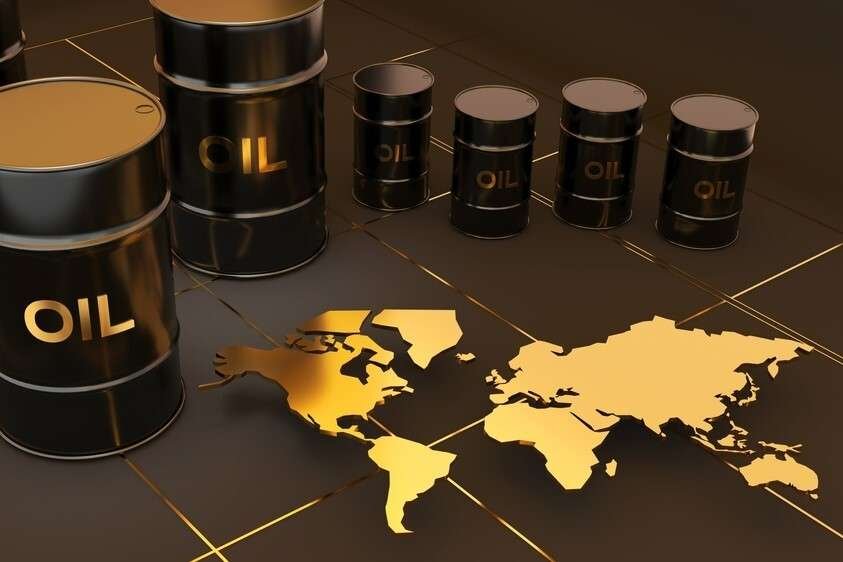
The $96 Barrel: Oil Markets Brace for a Global Economic Shift 2026 Amid Geopolitical High-Stakes
LONDON / SINGAPORE – The global financial landscape is currently caught in a pincer movement of escalating energy costs and shifting cultural influence. As Brent Crude hovers at a precarious $96 per barrel, international markets are signaling a profound Global Economic Shift 2026. Traders, institutional investors, and central bankers are currently locked in a “wait-and-see” pattern, balanced between the terrifying prospect of a total Gulf trade shutdown and the fragile hope offered by a high-level diplomatic mission to Tehran.
This era of uncertainty defines the Global Economic Shift 2026, where traditional market indicators are increasingly overshadowed by geopolitical “wildcards” and the rising soft power of technological and social leaders.
The Crude Reality: Why $96 is a Tipping Point
Energy markets are the primary engine of the Global Economic Shift 2026. The recent spike to $96 per barrel isn’t just about supply and demand; it’s a “fear premium” resulting from the naval blockade in the Persian Gulf. With U.S. Central Command (CENTCOM) enforcing an “Iron Ring” around Iranian ports, the risk of a retaliatory closure of the Strait of Hormuz has never been higher.
If trade through the Strait—which handles 20% of the world’s liquid petroleum—is halted, analysts predict oil could easily surpass $150 per barrel. Such a spike would accelerate the Global Economic Shift 2026 by triggering a worldwide recessionary wave, forcing nations to abruptly pivot away from carbon-heavy dependencies out of sheer necessity rather than policy choice.
The Munir Mission: A Diplomatic Lifeline
Against this backdrop of market anxiety, the eyes of every commodities trader are on General Asim Munir. Pakistan’s Army Chief is currently in Tehran, acting as a bridge between the Islamic Republic and the U.S. administration. The success or failure of this mission will likely determine the trajectory of the Global Economic Shift 2026.
If Munir can facilitate a breakthrough, we could see an immediate “de-risking” of the oil markets, bringing prices back down to the $80 range. However, a failure would solidify the Global Economic Shift 2026 as an era of “permanent volatility.” The diplomatic “carrot” offered—a phased lifting of the blockade—is being weighed against the “stick” of total economic isolation, creating a binary outcome for global growth.
TIME 100: Soft Power in a Hard Power World
While the “hard power” of naval blockades dominates the headlines, the release of the TIME 100 Most Influential People list highlights the “soft power” drivers of the Global Economic Shift 2026. The inclusion of Sundar Pichai is particularly noteworthy. As Google leads the charge in the “AI Industrial Revolution,” the move toward automated economies and generative intelligence is a cornerstone of the Global Economic Shift 2026.
Pichai’s recognition isn’t just about corporate success; it represents the migration of economic value from natural resources (oil) to digital intelligence (AI). This transition is a fundamental part of the Global Economic Shift 2026, where the most “influential” entities are no longer just those who control pipelines, but those who control algorithms.
Cultural Influence and the Peace Movements
The TIME 100 also recognized various activists involved in West Asia peace movements. These individuals are shaping the Global Economic Shift 2026 by pressuring governments to find non-military solutions to regional conflicts. Their influence is creating a “social mandate” for diplomacy, which in turn affects how corporations and sovereign wealth funds allocate their capital.
In this Global Economic Shift 2026, the boundary between “activism” and “economics” has blurred. When high-profile influencers and peace advocates sway public opinion, they directly impact the “political risk” assessments of major banks. This proves that the Global Economic Shift 2026 is being driven as much by human sentiment as it is by interest rates.
The Tech-Energy Paradox
A fascinating contradiction within the Global Economic Shift 2026 is the relationship between AI and energy. While leaders like Pichai are recognized for digital innovation, the massive data centers required for AI are incredibly energy-intensive. This creates a feedback loop: as we push for a Global Economic Shift 2026 driven by technology, we inadvertently increase the demand for the very energy resources currently under geopolitical threat.
This paradox means that the Global Economic Shift 2026 will likely be defined by a massive surge in investment toward “clean tech” and nuclear fusion. Nations that can solve the energy-AI equation will emerge as the dominant victors of the Global Economic Shift 2026, while those reliant on traditional fossils will find their influence waning.
Market Reactions: From New York to Mumbai
Across the globe, stock exchanges are reacting to the Global Economic Shift 2026 in varied ways. In New York, defense and tech stocks are reaching all-time highs, while in Mumbai, the surging cost of crude is putting immense pressure on the Rupee. The Global Economic Shift 2026 is widening the gap between energy importers and energy exporters, reshaping the “Global South” hierarchy.
India’s recent launch of an indigenous quantum facility in Amaravati is a strategic move to insulate itself from the Global Economic Shift 2026. By building internal technological capacity, India hopes to offset the economic pain caused by high oil prices. This is a classic example of how middle powers are navigating the Global Economic Shift 2026—by diversifying their “influence” beyond simple trade.
The Federal Reserve and the Political Risk
Back in Washington, the Global Economic Shift 2026 is causing friction between the White House and the Federal Reserve. With oil at $96, inflation is naturally creeping back up. If the Fed raises rates to combat this “imported inflation,” it risks cooling the economy too much.
This creates a “policy trap” that characterizes the Global Economic Shift 2026. Unlike previous cycles, the tools of monetary policy are less effective when the inflation is driven by geopolitical blockades rather than domestic demand. This loss of central bank “omnipotence” is a scary but real component of the Global Economic Shift 2026.
Logistics and Supply Chain Fragility
The Global Economic Shift 2026 has also revealed the extreme fragility of global logistics. The naval blockade isn’t just stopping oil; it’s delaying thousands of containers filled with consumer electronics and medical supplies. Shipping insurance premiums have quintupled in the last month, a cost that is being passed directly to consumers.
This “logistics crisis” is a key symptom of the Global Economic Shift 2026. Companies are now moving from “just-in-time” to “just-in-case” inventory models, leading to a massive buildup of warehouses and a decline in capital efficiency. This structural change is a permanent mark of the Global Economic Shift 2026, signaling the end of the hyper-globalized era of the early 2000s.
The Role of Sovereign Wealth Funds
Sovereign Wealth Funds (SWFs) in the Gulf and Norway are currently the most powerful financial actors in the Global Economic Shift 2026. With oil at $96, these funds are accumulating “petrodollars” at a record pace. How they choose to invest this windfall—whether into Silicon Valley AI startups or regional infrastructure—will dictate the winners of the Global Economic Shift 2026.
We are seeing a trend where these funds are prioritizing “influence” over “returns.” By buying significant stakes in global media, sports, and tech firms, they are ensuring that their voice remains central to the Global Economic Shift 2026, regardless of what happens in the Strait of Hormuz.
Conclusion: Navigating the New Economic Order
As we look toward the remainder of the year, the Global Economic Shift 2026 appears to be an era of profound transition. We are moving from a world where “influence” was measured in barrels of oil to one where it is measured in “compute power” and “diplomatic capital.”
The $96 barrel of oil is a reminder of our past dependencies, while the TIME 100 list is a map of our future possibilities. The Global Economic Shift 2026 requires a new type of resilience—one that balances the hard realities of geopolitical conflict with the soft opportunities of technological innovation.
Ultimately, the Global Economic Shift 2026 will be judged by how well the international community manages this “double-edged” progress. If diplomacy fails and the blockade leads to war, the shift will be one of decline. But if the “peace envoy” model succeeds and leaders like Pichai continue to innovate responsibly, the Global Economic Shift 2026 could pave the way for a more stable and intelligent global economy.
For now, the world watches the screens: one displaying the price of Brent Crude, and the other displaying the latest breakthrough in Artificial Intelligence. Both are equally responsible for the Global Economic Shift 2026.
International Energy Agency (IEA):- iea.org/reports/oil-market-report
Social Connect :


