



THE REVERSAL: TRUMP HALTS LETHAL IRAN ENERGY STRIKES AS OVAL OFFICE PROCLAIMS HISTORIC “GREAT SETTLEMENT” IN EUROPE
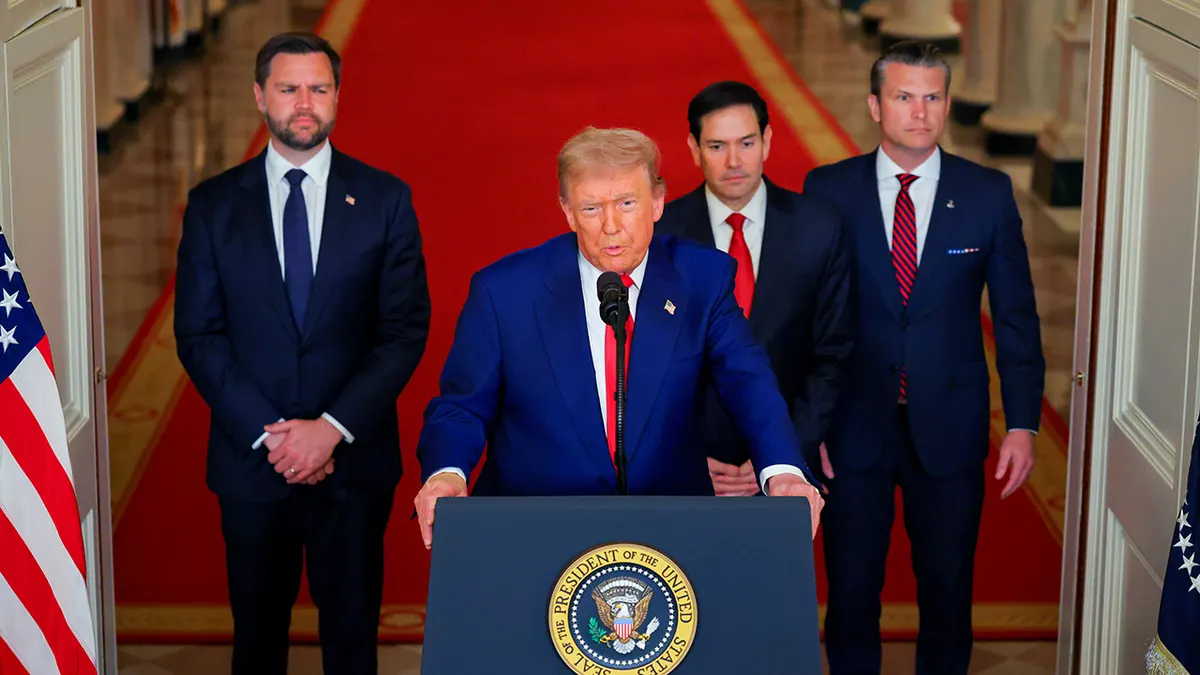
WASHINGTON, D.C. — In a spectacular and dizzying turn of events that has upended the geopolitical landscape of West Asia, U.S. President Donald Trump has called off a massive, pre-scheduled waves of aerial military strikes targeting Iran’s primary energy hubs, declaring instead that a historic breakthrough is at hand. Speaking directly from behind the Resolute Desk in the Oval Office, President Trump shocked the international press corps by announcing that a framework for an overarching settlement to end the three-month-old war has been reached at the highest levels of governance.
The unexpected move came just hours after the administration had issued an ultimatum on social media, threatening to deploy precision bombers to assume total operational control of Iran’s internal oil markets and level critical installations on Kharg Island.
Instead of a catastrophic military escalation, the administration is now steering toward a diplomatic exit strategy. Trump asserted that the extensive documentation for a permanent settlement is in its final stages of completion, with a multilateral signing ceremony expected to take place over the weekend in Europe.
                      [THE WEST ASIA DIPLOMATIC PIVOT]

         [U.S. CENTCOM Kinetic Threat] -------> "Very Hard" Strikes Ordered
                                                      │
                                                      ▼
         [Backchannel Diplomatic Breakthrough] -> Highest Levels in Tehran Approve
                                                      │
                                                      ▼
         [Trump Halts Retaliatory Orders] -----> De-escalation Order Issued
                                                      │
                                                      ▼
         [European Signing Matrix] ------------> VP JD Vance Dispatched for Settlement
The high-stakes announcement marks the most significant diplomatic development since the regional ceasefire collapsed earlier this week under the weight of intense tit-for-tat missile exchanges. According to the White House briefing, the proposed settlement would explicitly bar Iran from ever pursuing or developing nuclear weapons capability while immediately reopening vital commercial shipping traffic through the heavily blockaded Strait of Hormuz.
However, the unilateral declaration from Washington has been met with extreme caution across regional capitals. In Tehran, the Iranian Foreign Ministry released a highly measured statement confirming that while a large portion of the text has indeed been hammered out through neutral intermediaries, the Islamic Republic has not yet reached a final, binding conclusion on the settlement.
Foreign Ministry spokesperson Esmaeil Baqaei warned that the nation will not compromise on its core sovereign rights, noting that the United States has repeatedly altered its negotiating positions at the eleventh hour.
Part I: The Anatomy of a Midnight De-escalation
The road to this potential diplomatic settlement was paved by a night of extreme military tension that brought the world’s superpower to the absolute brink of total war. Following a series of coordinated Iranian drone and missile barrages that targeted five separate U.S. military bases across Jordan, Bahrain, and Kuwait, U.S. Central Command had fully mobilized its regional strike wings.
Trump had initially posted an aggressive message warning that American forces would hit back incredibly hard, raising fears that a full-scale campaign against mainland sovereign infrastructure was imminent.
+--------------------------------------------------------------------------+
|                     CHRONOLOGY OF THE STRIKE DE-ESCALATION               |
+--------------------------------------------------------------------------+
|  • INITIAL CAUSE     | Drone and missile attacks on five regional US bases |
|  • MILITARY TARGETS  | Kharg Island crude facilities and radar arrays      |
|  • FORCE ORDERS      | CENTCOM bombers airborne and locked onto coordinates |
|  • PIVOT POINT       | Intermediary confirmation of a conceptual agreement|
|  • DIPLOMATIC RESULT | Retaliation frozen in favor of a European settlement|
+--------------------------------------------------------------------------+
Yet, as stealth bombers were moving into position, a flurry of emergency communications passing through Swiss and Pakistani diplomatic channels altered the course of the crisis. Realizing that an all-out assault on Kharg Island would permanently close the global energy economy, negotiators rushed to finalize a workable settlement blueprint.
Trump later explained to reporters that he ordered the immediate halt of the kinetic operations because discussions had successfully been brought directly to the highest tiers of leadership in Tehran.
The administration believes that the current leadership group has demonstrated a much more pragmatic approach to these backchannel communications than previous regimes, clearing a viable path toward a long-term settlement that could stabilize global oil flows.
Part II: The Global Energy Core and the Strait of Hormuz
The primary economic objective underlying the frantic rush for a comprehensive settlement is the immediate reopening of the Strait of Hormuz. The three-month conflict has choked off the world’s most critical maritime energy chokepoint, forcing hundreds of commercial supertankers to abandon their routes or face destructive missile strikes.
Trump explicitly highlighted this issue during his press conference, promising that the strategic waterway will officially reopen the exact moment the final settlement documents are signed.
          [THE STRATEGIC MARITIME REOPENING TIMELINE]

   Naval Blockade Active: US forces hold strict containment patterns.
                                      │
                                      ▼
   Draft Documents Finalized: Text reviewed by legal experts in Washington.
                                      │
                                      ▼
   Signing in Europe: VP JD Vance signs the final settlement framework.
                                      │
                                      ▼
   Strait Reopened: Maritime corridor cleared for global commercial traffic.
The economic costs of the prolonged maritime closure have been staggering, pushing global crude benchmarks to dangerous thresholds and feeding global inflationary spirals. The mere mention of an impending settlement caused an immediate, dramatic correction in global energy markets, with Brent crude futures plunging over 3.6% within minutes of the Oval Office announcement.
Corporate shipping executives have indicated that if the European settlement is finalized, it will eliminate the need for costly route diversions around Africa.
However, international underwriting cartels have stated that war-risk insurance premiums will remain elevated until the structural components of the settlement are fully implemented on the water.
Part III: The Nuclear Safeguards and the Verification Gap
At the absolute center of the American domestic defense of this settlement is the absolute restriction on Iran’s nuclear ambitions. The White House has maintained a firm stance that any permanent diplomatic agreement must feature ironclad, verifiable safeguards that completely dismantle Tehran’s enriched uranium stockpiles.
Trump told reporters that securing a definitive guarantee against a nuclear-armed Iran was the primary justification for the severe economic and military pressure applied over the past ninety days, framing the settlement as a complete strategic victory.
                  +----------------------------------+
                  |    CORE SECURITY ENFORCEMENT     |
                  +----------------------------------+
                                   |
         +-------------------------+-------------------------+
         |                                                   |
         v                                                   v
[Nuclear Prohibitions]                             [Sanction Relief Rails]
Tehran must forfeit enriched stockpiles            Billions in frozen assets unfrozen
under monitored settlement verification.           solely upon compliance milestones.
To achieve these strict goals, the text of the proposed settlement outlines an intensive, multi-phase inspection matrix overseen by independent international regulatory observers. In exchange for these extensive structural concessions, Iran is demanding the comprehensive lifting of all international banking sanctions and the immediate release of billions of dollars in frozen foreign assets.
American defense analysts remain highly skeptical of the enforcement mechanisms, pointing out that a conceptual settlement could easily fall apart during the technical verification stage.
The White House countered these concerns by stating that the naval blockade will remain fully operational until every individual aspect of the settlement is officially signed and verified.
Part IV: Regional Reactions and the Israeli Response
The sudden pivot toward an international settlement has drawn a complex mix of praise and deep strategic anxiety from key regional actors. In Jerusalem, the Office of Israeli Prime Minister Benjamin Netanyahu issued a carefully worded diplomatic communication regarding the ongoing developments.
While Israel is not an active signatory to the proposed memorandum of understanding, the administration welcomed the core American demand that the final settlement must ensure the permanent removal of all enriched nuclear material from Iranian soil.
+--------------------------------------------------------------------------+
|                     REGIONAL POSITION MATRIX ON PROPOSED DEAL            |
+--------------------------------------------------------------------------+
|  • UNITED STATES     | Pushing for a swift, high-profile European settlement|
|  • ISLAMIC REPUBLIC  | Approving conceptual text but guarding sovereign lines|
|  • STATE OF ISRAEL   | Demanding absolute elimination of nuclear capacity   |
|  • ARAB ALLIES       | Backing any settlement that halts regional missile runs|
+--------------------------------------------------------------------------+
Behind the scenes, Israeli security officials are reportedly concerned that Washington’s haste to secure a diplomatic settlement might result in a weak verification framework that allows Tehran to retain its underground enrichment facilities. Meanwhile, traditional Arab allies along the southern shores of the Persian Gulf have quietly signaled their full support for the diplomatic intervention.
These nations have spent weeks warning that continued military strikes threaten their own infrastructure, making an international settlement the only realistic path to safeguard regional real estate.
The challenge for American diplomats will be balancing these competing security demands to ensure the settlement does not trigger a secondary political crisis among its closest Middle Eastern partners.
Part V: The Constitutional and Political Battle in Washington
As the administration prepares to send its diplomatic delegation across the Atlantic, a fierce constitutional and political debate is brewing within the United States. President Trump confirmed that Vice President JD Vance will travel to Europe to sign the memorandum of understanding on behalf of the nation, a choice that has drawn sharp criticism from congressional leaders.
Opponents argue that an international agreement of this magnitude should be framed as a formal treaty, requiring a two-thirds majority vote in the Senate rather than an executive settlement.
               [DOMESTIC CONSTITUTIONAL FRICTION]

   Executive Action: White House constructs a conceptual settlement framework.
                                      │
                                      ▼
   Delegation Dispatched: Vice President Vance departs for European talks.
                                      │
                                      ▼
   Congressional Pushback: Lawmakers demand Senate review of the settlement.
                                      │
                                      ▼
   Legal Precedent: Administration defends the deal as a memorandum of understanding.
The White House has brushed off these domestic legal challenges, insisting that the fast-moving nature of the West Asia conflict requires decisive executive action to prevent a global economic depression. Supporters of the administration are praising the proposed settlement as a masterclass in coercive diplomacy, proving that the threat of overwhelming military force can compel an adversary to accept a highly restrictive peace agreement.
However, congressional hawks are warning that a conceptual settlement that relies heavily on the goodwill of Tehran’s leadership is inherently dangerous.
They claim that without explicit legislative approval, any such settlement will lack the permanent legal authority required to bind future American administrations, leaving the underlying conflict unresolved.
Part VI: Intermediaries and the Secret European Talks
The true architectural work behind this budding international settlement did not take place in public view, but through weeks of highly secretive, backchannel negotiations hosted in neutral European capitals. Specialized diplomatic teams, led by senior real estate executive and special envoy Steve Witkoff, have been quietly shuttling between Washington and various European venues to meet with Iranian representatives.
These covert sessions continued even during the hottest weeks of active combat, providing a baseline communication channel that prevented the war from escalating completely out of control.
+--------------------------------------------------------------------------+
|                     SECRET NEGOTIATION ARCHITECTURE                      |
+--------------------------------------------------------------------------+
|  LEAD ENVOY      • Special Representative Steve Witkoff coordinates      |
|                  | the backchannel logistics for the White House.       |
|                                                                          |
|  VENUE STRATEGY  • Neutral European locations chosen to allow deniable   |
|                  | and secure legal drafting of the settlement text.     |
|                                                                          |
|  COMMUNICATIONS  | Swiss and Pakistani channels used to transmit urgent  |
|                  | ceasefire details directly to supreme leadership.     |
+--------------------------------------------------------------------------+
The critical breakthrough in the drafting of the settlement occurred when the American team agreed to decouple the core nuclear restrictions from broader regional ballistic missile programs. This major concession allowed the negotiators to build a focused framework centered entirely on nuclear non-proliferation and maritime transit safety.
While critics label this compromise a significant retreat, the White House maintains that a narrow, highly enforceable settlement is vastly superior to an unachievable comprehensive treaty.
As the technical teams scramble to clean up the final clauses of the documents, the international community remains intensely focused on these European venues, waiting to see if this conceptual settlement can finally transform into a durable reality.
Part VII: The Long-Term Outlook for West Asian Stability
Even if Vice President Vance successfully signs the final settlement documents over the weekend, foreign policy experts warn that achieving long-term stability in West Asia will require years of careful diplomatic cultivation. The deep-seated mistrust generated by months of devastating naval blockades and precision missile strikes cannot be erased by a single executive agreement.
The proposed settlement must be viewed as the first step in a prolonged, multi-stage reconstruction of the regional security architecture.
+-------------------------------------------------------------------------+
|                  WEST ASIA REGIONAL STABILITY COMPASS                   |
+-------------------------------------------------------------------------+
|  [PHASE I]   • Execute the immediate terms of the European settlement   |
|              | to secure the permanent reopening of shipping corridors. |
|                                                                         |
|  [PHASE II]  • Establish a joint maritime monitoring task force to      |
|              | prevent localized accidental escalations in the strait.  |
|                                                                         |
|  [PHASE III] • Leverage the initial non-proliferation settlement to     |
|              | launch broader economic and security talks across the Gulf.|
+-------------------------------------------------------------------------+
For the settlement to survive the intense political pressures from hardliners in both Washington and Tehran, it must deliver immediate, tangible economic benefits to all participating parties. For the United States and its global trading partners, this means a swift return to normalized energy prices and guaranteed safety for civilian merchant crews.
For Iran, the settlement must translate into real economic relief through the removal of crippling banking restrictions that have devastated its domestic economy.
If these mutual benefits fail to materialize within the coming weeks, the entire settlement framework will likely collapse, plunging West Asia back into an even more destructive cycle of all-out war that no diplomat will be able to stop.
For more: West Asia War LIVE: U.S. forces shoot down two Iranian attack drones, official says – The Hindu
Social Connect:


