



The Alpine Last Stand: Switzerland Hosts Emergency Summit to Launch the Glacial Shield Initiative
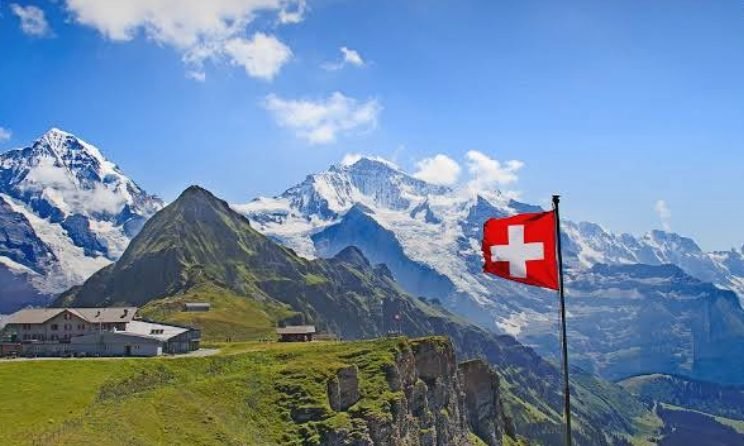
ZERMATT, SWITZERLAND – High in the thinning air of the Pennine Alps, against a backdrop of receding white peaks and exposed gray rock, the world’s leading climate scientists and heads of state have convened for the 2026 Alpine Summit. The data presented suggests that European glaciers are melting at a rate that has doubled since 2022. The centerpiece of this emergency gathering is a radical, multi-billion-dollar proposal known as the Glacial Shield Initiative.
If approved, this project would represent the largest coordinated geoengineering effort in human history. The plan involves the deployment of advanced, UV-reflective “blankets” over critical ice caps across the Alps, from the Eiger to the Matterhorn. As the summer months approach, bringing with them unprecedented heatwaves, the Glacial Shield Initiative aims to slow the “albedo-flip”—the process where melting ice turns into dark rock, absorbing more heat and accelerating the destruction.
The Science of Reflection: How the Blankets Work
The technical core of the proposal rests on the principle of solar radiation management. The proposed “blankets” are not traditional fabrics but are composed of multi-layered, geotextile polymers embedded with microscopic glass beads. These materials are designed to reflect up to 95% of incoming solar radiation back into the atmosphere.
By physically shielding the ice from direct sunlight, the Glacial Shield Initiative creates a micro-environment of artificial cooling. During previous small-scale trials on the Rhone Glacier, these covers successfully reduced ice loss by nearly 60% during the peak of August. However, scaling this up to cover thousands of square kilometers presents logistical challenges that have never been faced by the scientific community.
An Emergency Mandate: Why 2026 is the Tipping Point
The urgency of this mandate is driven by the “tipping point” theory. Glaciologists at the summit have presented evidence that once a glacier loses a certain percentage of its mass, it enters a state of “self-reinforcing melt.” The ice becomes too thin to maintain its own internal temperature, causing the glacier to slide into warmer, lower elevations.
This strategy is viewed by many as the “emergency brake” for this process. “We are no longer in a phase where emission cuts alone can save the Alpine ecosystem,” stated Dr. Hans Mueller, a lead climate researcher. “The Glacial Shield Initiative is a desperate measure for a desperate time. We are essentially putting the mountains in a refrigerated suit to buy us the twenty years we need to reach Net Zero.”
The $50 Billion Debate: Economic Sustainability vs. Survival
While the environmental necessity of the Glacial Shield Initiative is widely accepted by scientists, the economic feasibility is the subject of fierce debate. The projected cost is a staggering $50 billion annually. This figure includes the manufacturing of specialized textiles, high-altitude helicopter deployments, and the massive labor force required to secure the blankets against Alpine winds.
Economists at the summit have questioned the long-term viability of the program. “Fifty billion dollars a year is more than the GDP of some participating nations,” argued Elena Rossi, a fiscal policy advisor. “If this becomes a permanent fixture of our budget, we are diverting funds from renewable energy infrastructure. Is it a shield, or is it an expensive bandage?”
Environmentalist Support: A Necessary Evil?
Interestingly, the project has found surprising allies in mainstream environmental groups. Traditionally, “geoengineering” is a taboo term in green circles. However, the loss of the Alps is so catastrophic to European water security that many have embraced the Glacial Shield Initiative as a necessary evil.
The Alpine glaciers serve as the “water towers” of Europe, feeding major rivers. Without this intervention, these waterways face the risk of running dry, threatening the drinking water of 40 million people. For many, the Glacial Shield Initiative isn’t about “fixing” the planet; it’s about preventing a total collapse of the European hydrological cycle.
Logistics of the “High-Altitude Curtain”
The physical implementation of the high-altitude curtain would be a feat of engineering. The blankets must be breathable to prevent “greenhouse” heat trapping beneath the fabric, yet strong enough to withstand 100 mph gusts.
Under the Glacial Shield Initiative, specialized teams of “Alpine Rangers” would be deployed each May. These teams would use heavy-lift drones and modified helicopters to roll out the white sheets across the glaciers. By October, the blankets would be stored in climate-controlled mountain bunkers to prevent them from becoming buried under winter snows.
The Role of Artificial Intelligence
To maximize the efficiency of the $50 billion spend, the Glacial Shield Initiative will utilize advanced AI modeling. Satellites equipped with thermal imaging will feed data to an AI “Command Center” in Geneva. This system will tell the teams exactly which square meters of ice are at the highest risk of melting on any given day.
By using “Precision Covering,” the program could potentially reduce the total amount of fabric needed, lowering costs and environmental impact. This data-driven approach is what separates the Glacial Shield Initiative from previous, more primitive attempts at glacial protection. It is a fusion of 21st-century software and massive-scale physical intervention.
Conclusion: A Shield Against the Sun
As the 2026 Alpine Summit draws to a close, the “Zermatt Declaration” is expected to be signed by at least twelve nations, providing seed funding for the Glacial Shield Initiative. The world is watching with a mixture of hope and skepticism.
This plan is more than just a project to save ice; it is a test of human ingenuity and our willingness to protect the natural world. In the coming weeks, as the first rolls of reflective fabric are airlifted onto the peaks, the Glacial Shield Initiative will begin its work. The sun will beat down on the Alps as it always has, but this year, the mountains will finally have a shield to fight back.
The Intergovernmental Panel on Climate Change (IPCC): ipcc.ch/report/srocc/
Social Connect :


