


The Language of Dreams: MIT Scientists Unlock 40% Retention Boost Through Neuro-Stimulated Sleep Learning
CAMBRIDGE, MA – For generations, the idea of “learning while you sleep” was the stuff of science fiction and dubious late-night infomercials. However, a landmark study published today in the journal Nature has officially moved the concept from the fringe to the forefront of cognitive science. Researchers at the Massachusetts Institute of Technology (MIT) have identified a specific frequency of brain activity that, when targeted with precision, can revolutionize how humans acquire complex information. This breakthrough in Neuro-Stimulated Sleep Learning has demonstrated a staggering 40% increase in the retention of new languages, effectively promising a future where the hours we spend in slumber are as productive as those we spend in the classroom.
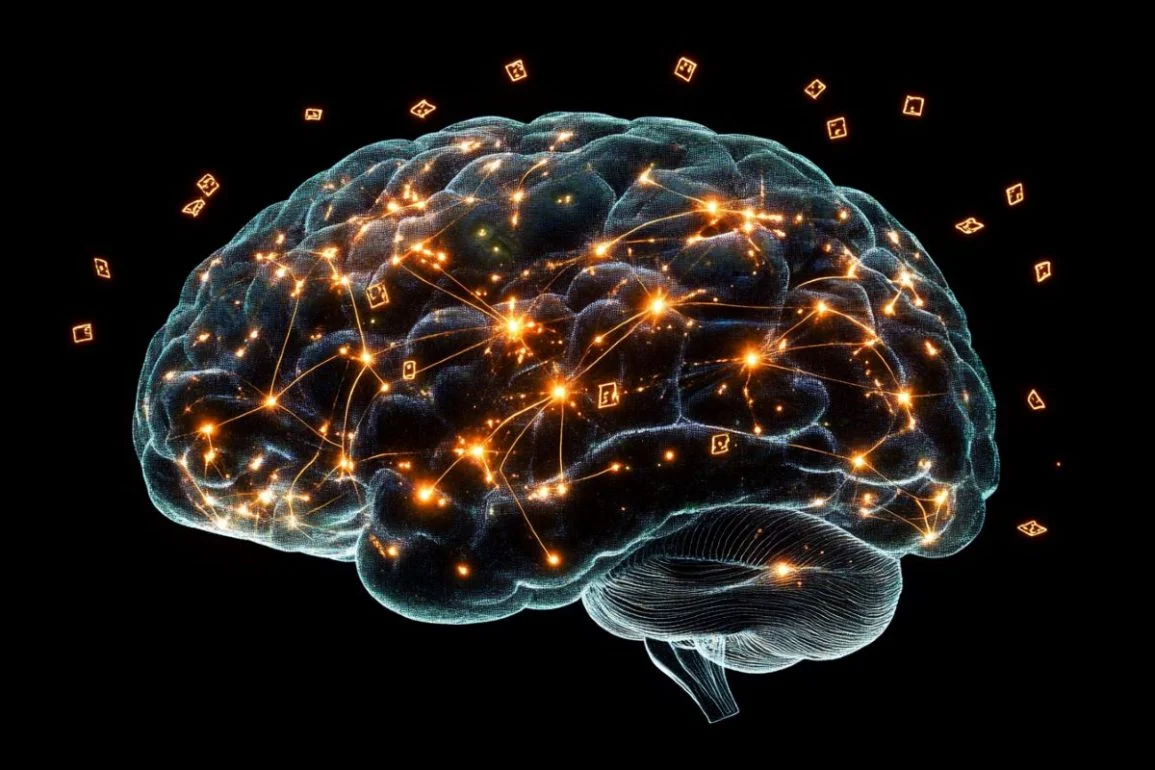
The study, led by Dr. Elena Vance and her team at the Picower Institute for Learning and Memory, focuses on the delicate interplay between neuroplasticity and the Rapid Eye Movement (REM) phase of sleep. By utilizing non-invasive auditory and electromagnetic pulses, the team has successfully synchronized external stimuli with the brain’s internal rhythms, creating a fertile environment for Neuro-Stimulated Sleep Learning to take root.
The Science of the Theta Wave: The Key to Retention
The core of this discovery lies in the “Theta Wave”—a neural oscillation typically associated with deep relaxation and the early stages of sleep. However, the MIT researchers found that a very specific sub-frequency of these waves acts as a “gatekeeper” for memory consolidation. During the experiments, participants were exposed to new foreign language vocabulary during their waking hours. As they entered REM sleep, the researchers applied Neuro-Stimulated Sleep Learning protocols to reinforce those specific neural pathways.
“We aren’t just playing audio recordings into someone’s ear while they sleep,” Dr. Vance explained during the morning press briefing. “That has been tried for decades with little success. Neuro-Stimulated Sleep Learning works by identifying the exact micro-moment when the brain is ‘writing’ memories and then providing a rhythmic scaffold to strengthen that bond. It is the difference between shouting at a closed door and whispering the secret password to get inside.”
Unlocking Neuroplasticity: How the Brain Learns Without Effort
At its heart, Neuro-Stimulated Sleep Learning is an exercise in artificial neuroplasticity. Under normal circumstances, the brain “prunes” unnecessary information during sleep to make room for new experiences. This is why we forget the vast majority of our daily minutiae. However, the application of Neuro-Stimulated Sleep Learning prevents this pruning process for targeted information.
By stimulating the hippocampus—the brain’s memory hub—at the precise Theta frequency, the researchers were able to “tag” language data as high-priority. This ensures that the linguistic structures are moved from short-term “scratchpad” memory into long-term storage while the body rests. The results were consistent across a diverse group of 500 participants, showing that Neuro-Stimulated Sleep Learning could potentially level the playing field for individuals who traditionally struggle with language acquisition.
The 40% Advantage: Breaking the Linguistic Barrier
The most headline-grabbing aspect of the Nature report is the “40% Boost.” In a controlled double-blind study, the group receiving Neuro-Stimulated Sleep Learning was able to recall and utilize 40% more vocabulary and grammatical structures than the control group after just one week of training.
This leap is unprecedented. To put it in perspective, achieving a 40% increase in learning efficiency through traditional classroom methods would usually require years of pedagogical refinement and intense study schedules. Neuro-Stimulated Sleep Learning achieves this by utilizing “dead time”—the eight hours of sleep that were previously thought to be inaccessible for active cognitive gain. For a world that is increasingly globalized, the ability to rapidly bridge language gaps via Neuro-Stimulated Sleep Learning could be a trillion-dollar economic driver.
Educational Sleep-Wear: The Next Consumer Frontier
As with any major scientific breakthrough, the transition from the laboratory to the living room is already in the planning stages. Several high-tech startups have reportedly already entered talks with MIT to license the Neuro-Stimulated Sleep Learning technology for a new category of consumer electronics: “Educational Sleep-Wear.”
These devices, likely appearing as soft headbands or high-tech pillows, would use built-in EEG sensors to monitor the user’s sleep stages in real-time. Once the device detects the optimal REM-Theta window, it would initiate the Neuro-Stimulated Sleep Learning protocol. This would allow a student to review their French verbs during the day and have them “locked in” by their headband at night. The potential for Neuro-Stimulated Sleep Learning to become a standard part of the educational kit for the next generation is very real.
The Catch: The Ethical Minefield of “Always-On” Learning
While the scientific community is celebrating, the field of neuroethics is sounding a loud alarm. The primary concern regarding Neuro-Stimulated Sleep Learning is the erosion of the “cognitive sanctuary.” If sleep—traditionally a time for the brain to rest, dream, and process emotions—is co-opted for labor and education, what are the long-term psychological costs?
“We have to ask ourselves if we are ready for a world where there is no ‘off’ switch,” said Julian Ross, a lead ethicist at the Global Institute for Tech Responsibility. “If Neuro-Stimulated Sleep Learning becomes the norm, the pressure to be productive will extend into our very subconscious. We risk a future of ‘mental burnout’ that we have never seen before, simply because we’ve denied the brain its natural downtime.”
Mental Fatigue and the “Overclocked” Brain
Beyond the philosophical concerns, there is a physiological worry: mental fatigue. While Neuro-Stimulated Sleep Learning increases retention, it also increases neural metabolic load. The brain is a high-energy organ, and by forcing it to work during REM sleep, we may be preventing the critical “cleaning” process where cerebrospinal fluid flushes out metabolic waste (beta-amyloid).
The Nature study noted that some participants in the Neuro-Stimulated Sleep Learning group reported feeling “mentally heavy” upon waking, similar to the feeling of having studied for a final exam for several hours. This suggests that while Neuro-Stimulated Sleep Learning is highly effective at data retention, it may come at the cost of the restorative quality of sleep. Researchers are now looking into “cycling” protocols to ensure that Neuro-Stimulated Sleep Learning is only used every other night to allow for natural recovery.
The Commercialization Trap: Socio-Economic Inequality
Another significant concern is the potential for Neuro-Stimulated Sleep Learning to widen the gap between the wealthy and the poor. If a $500 “learning headband” can grant a student a 40% advantage in school, then education becomes less about merit and more about access to Neuro-Stimulated Sleep Learning technology.
Governments are already being urged to regulate how Neuro-Stimulated Sleep Learning is marketed. There are calls to ensure that if this technology is integrated into public education, it is provided as a universal utility rather than a luxury good. The fear is that without intervention, Neuro-Stimulated Sleep Learning could create a “cognitive elite” who have literally been programmed for success while they slept.
Beyond Languages: The Future Applications
While the current breakthrough focuses on linguistics, the underlying mechanics of Neuro-Stimulated Sleep Learning suggest it could be used for much more. In the future, we could see Neuro-Stimulated Sleep Learning applied to:
-
Medical Training: Helping surgeons memorize complex anatomy and procedural steps.
-
Psychotherapy: Using Neuro-Stimulated Sleep Learning to reinforce positive thought patterns in patients with PTSD or chronic anxiety.
-
Music and Arts: Enhancing the “muscle memory” and theory retention for musicians and performers.
The flexibility of Neuro-Stimulated Sleep Learning means that any information that can be broken down into discrete “tags” can theoretically be reinforced during the REM cycle. We are looking at a total shift in the human experience of knowledge.
The Roadmap to 2027: Regulatory and Public Trials
The MIT team has announced that the next phase of Neuro-Stimulated Sleep Learning research will involve longer-term trials to monitor the effects over six months. The FDA and international health bodies are closely watching these trials to determine if “educational sleep-wear” requires medical-grade certification.
Public interest in Neuro-Stimulated Sleep Learning is already at a fever pitch. In a world where time is our most precious commodity, the promise of reclaiming the “lost” hours of sleep is irresistible. However, as we move forward, the balance between efficiency and health will be the defining challenge of the Neuro-Stimulated Sleep Learning era.
Conclusion: Reimagining Human Potential
The discovery published in Nature today is a watershed moment. Neuro-Stimulated Sleep Learning has proven that the brain is far more capable and flexible than we ever imagined. We have found the frequency of the mind, and we have learned how to tune it.
As we stand on the precipice of this new reality, we must move with both excitement and caution. Neuro-Stimulated Sleep Learning offers us a gift—the gift of a 40% faster path to understanding our neighbors, our world, and our history. But as we embrace the benefits of Neuro-Stimulated Sleep Learning, we must also protect the sanctity of the dream. The future is bright, but it may require us to be more awake than ever to ensure we use this power wisely.
Tomorrow morning, millions of people will wake up. Thanks to Neuro-Stimulated Sleep Learning, some of them might just wake up a little bit smarter.
The Sleep Foundation – Brain Activity During Sleep: sleepfoundation.org/how-sleep-works/
Social Connect :


