



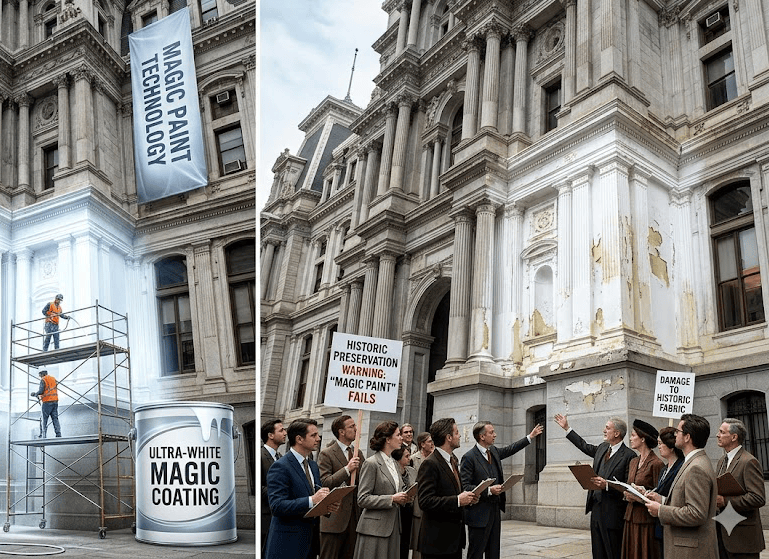
Trump Wants to Paint a Landmark Federal Building White With ‘Magic Paint.’ Preservation Experts Say It Won’t Work
President Trump is pushing a mineral silicate coating for the historic Eisenhower Executive Office Building — but a panel of 25 preservation experts warns the product is chemically incompatible with granite and could cause irreversible damage.

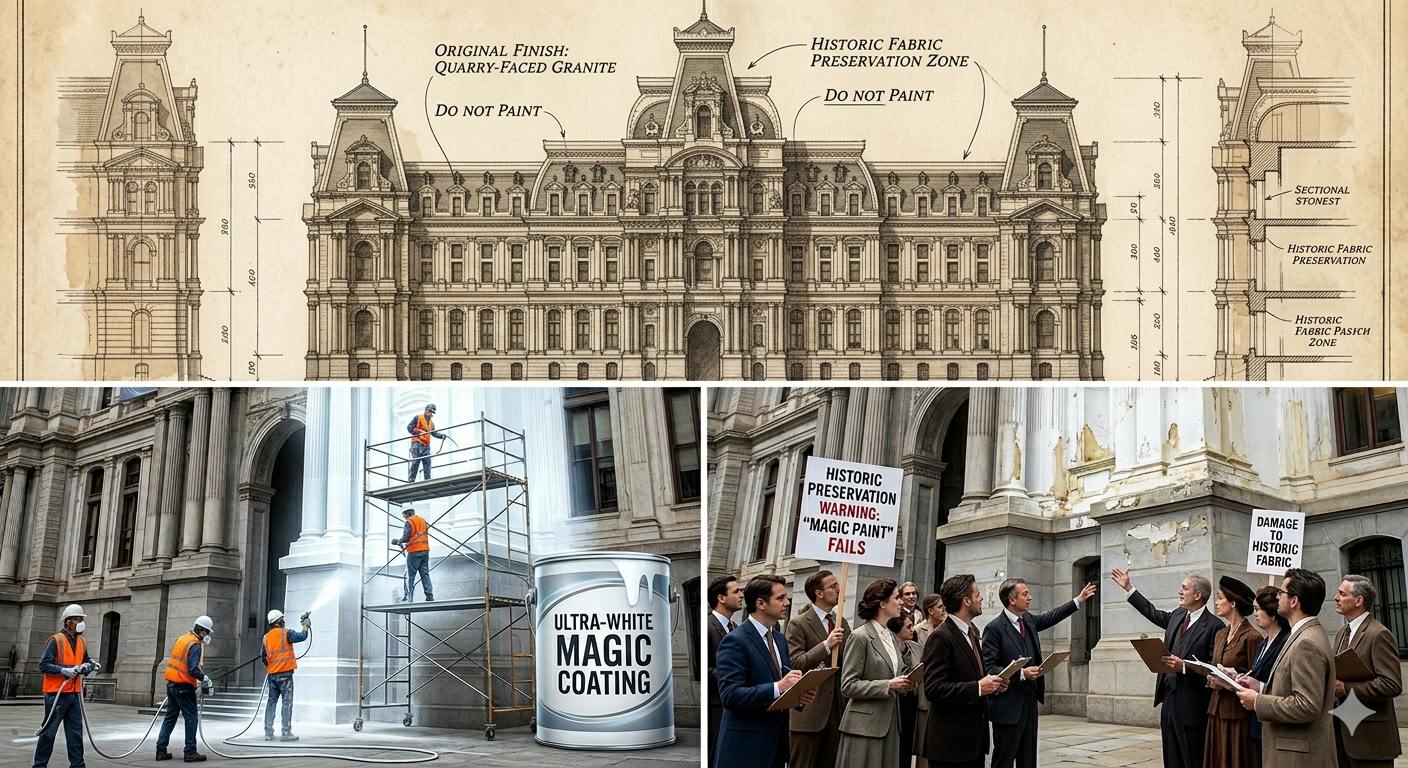
President Donald Trump has been quietly lobbying to coat one of Washington’s most architecturally distinctive federal buildings in a bright white mineral silicate product he calls “magic paint” — a move that preservation experts say is both legally questionable and physically incompatible with the 19th-century structure’s granite exterior.
The building at the center of the dispute is the Eisenhower Executive Office Building (EEOB), the ornate French Second Empire landmark that sits directly next to the White House and houses key presidential staff offices, including the National Security Council and the Office of the Vice President.
What Is Trump Proposing — and Why?
Trump, who has devoted considerable attention during his second term to reshaping the visual identity of White House properties and Washington’s federal architecture, envisions painting the entire EEOB a crisp, brilliant white. According to a document reviewed by CNN, Trump has privately argued the mineral silicate coating would “strengthen the stone, keep water out, prevent staining, be easy to apply, and rarely require painting.”
The White House sent materials ahead of a key Thursday review meeting stating the EEOB “has been largely neglected since its construction in the late 1800s,” citing granite staining, surface abrasions, and cracks resulting from “years of poor or non-existent exterior maintenance, and general disregard.”
Completed in 1888, the EEOB originally housed the State, War and Navy departments. It took approximately 17 years to construct and contains 553 ornately gilded rooms, bronze stair balusters, hand-painted tiles, carved wooden fixtures, stained glass rotundas, and intricate cast iron. It now serves as ancillary office space for senior White House staff.
Two design renderings submitted to the Commission of Fine Arts — the federal body that oversees aesthetic changes to government buildings — show the proposed options: one painting the entire structure white, and a second that coats the main building white while leaving the exposed basement and sub-basement in their original granite finish.
Experts Warn the Paint Is Incompatible With Granite
A coalition of two historic preservation organizations — the DC Preservation League and Cultural Heritage Partners — commissioned an independent technical analysis and assembled a panel of 25 unnamed specialists. According to the groups, these experts have overseen major restoration projects involving mineral silicate paints on prominent stone buildings, including both the White House and the U.S. Capitol.
Their conclusion was unambiguous: mineral silicate paints are not suited for granite surfaces because the stone does not chemically bond with this type of coating.
“Mineral silicate paints are not suited for use on granite — the stone does not chemically bond with this type of paint.”
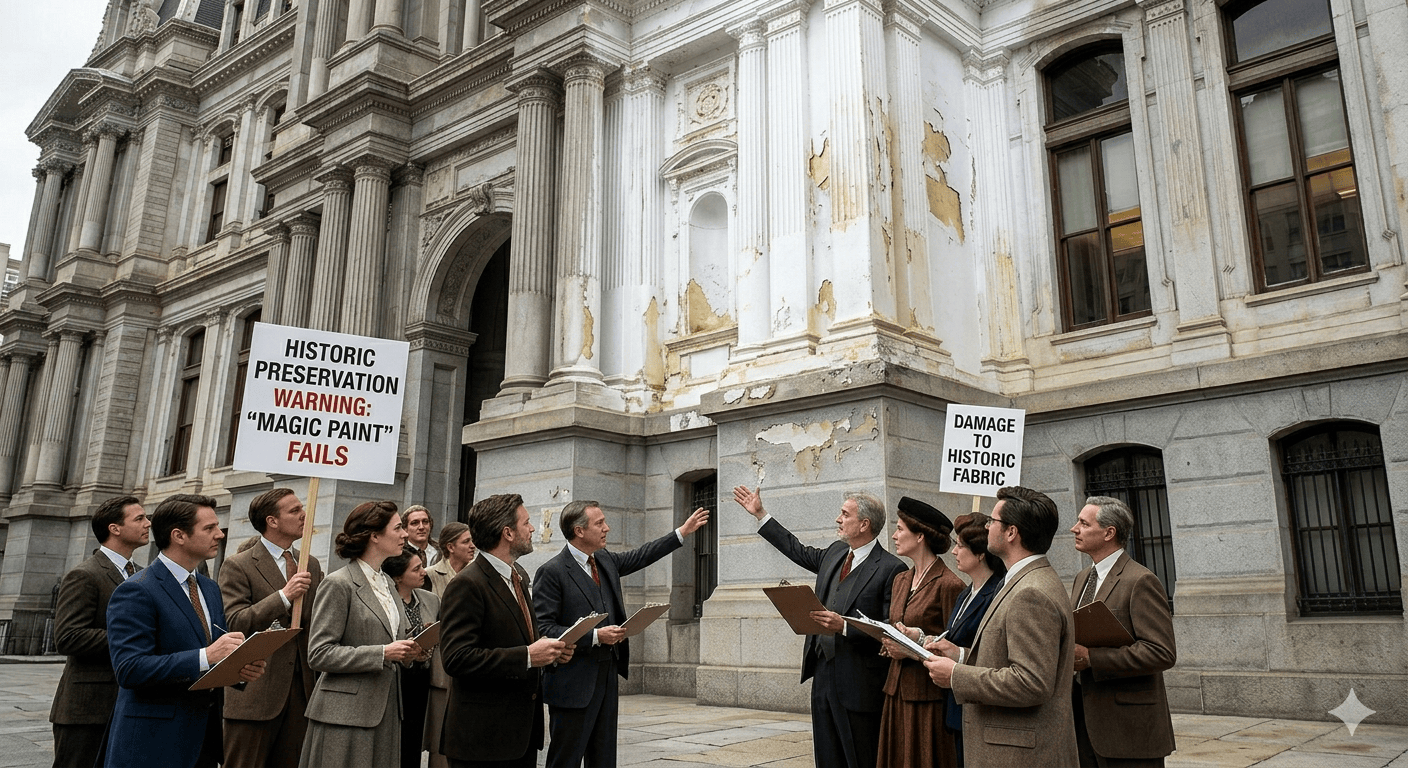
The expert panel further determined that any attempt to prime the granite surface before applying the paint would cause “permanent damage.” The coating would also fail to deliver on Trump’s stated goals — it would not structurally strengthen the granite, improve its durability, or reliably prevent staining. In fact, the experts warned that staining “is likely to be much more visible on paint than on the existing granite surface.”
What the Preservationists Are Proposing Instead
Rather than painting the building, Cultural Heritage Partners prepared an alternative slide deck for the Trump administration outlining a series of conservation-grade upgrades. The proposed measures include a professional cleaning program, refinishing of the building’s ironwork, installation of window film to brighten the façade’s appearance, upgraded exterior lighting, and improved landscaping — all without altering or damaging the original stone.
A Lawsuit and a Legal Battle Over Review Requirements
The preservation groups are not only challenging the project on technical grounds — they have taken legal action to stop it. After Trump first floated the painting idea during a Fox News interview in November 2024, the DC Preservation League and Cultural Heritage Partners filed suit in the U.S. District Court for the District of Columbia, asking the court to block any exterior modifications to the EEOB until the administration completes required environmental and historic preservation reviews.
The legal challenge argues that bypassing these standard federal review processes would be unlawful and could result in irreversible damage to a nationally significant structure. The Trump administration has not publicly responded to the groups’ specific technical findings; CNN reached out to the White House for comment.
The Commission of Fine Arts Weighs In
On Thursday, the Commission of Fine Arts — the advisory panel tasked with reviewing aesthetic changes to federal buildings in Washington — is scheduled to examine the EEOB painting proposals for the first time. The commission has faced scrutiny for having been stacked with Trump administration loyalists during the president’s second term, raising concerns about the independence of its review process.
A Building With a Long History of Controversy
The EEOB has never been without its critics. The French Second Empire structure took roughly 17 years to build, and by the time it was completed, architectural fashions had moved on. The style was considered passé by the Gilded Age establishment — dismissed as an embarrassing relic of outdated Victorian taste.
The building became so notorious that tour guides on the White House grounds have long been heard quoting Mark Twain, who reportedly described it as “the ugliest building in America.” Yet despite its polarizing reputation, the EEOB has been recognized for its extraordinary interior craftsmanship and historical significance.
What Happens Next
The outcome of Thursday’s Commission of Fine Arts review is expected to be a major inflection point for the project. Separately, the federal lawsuit filed by the preservation groups remains active, and a court ruling could determine whether the administration is required to undergo full historic preservation review before any work begins.
As of now, no exterior work on the EEOB has commenced. The dispute puts the Trump administration’s aggressive renovation agenda on a collision course with federal preservation law — and with the scientific consensus of the nation’s leading stone-restoration specialists.
Also Read this:
Starlink Direct-to-Device: SpaceX’s Global Satellite-to-Mobile Launch
Social Connect :


